
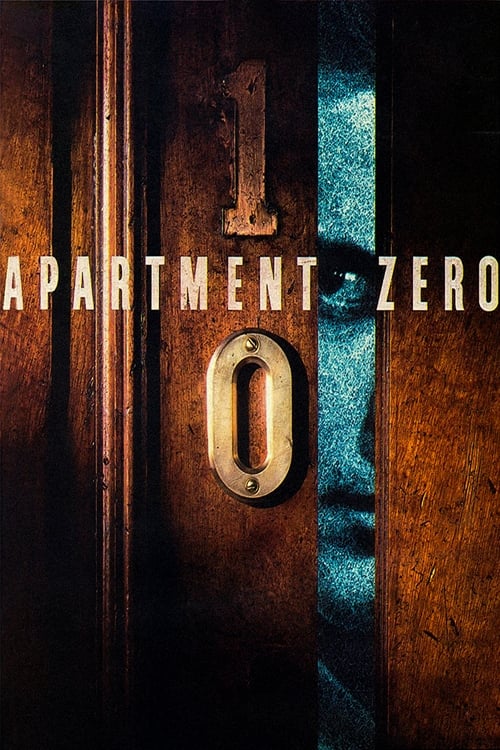














Popular
What is the significance of the character Adrian's obsession with the films of the past?
How does the relationship between Adrian and Jack develop throughout the film?
What role does the setting of the apartment play in the story?
How does Adrian's character evolve from the beginning to the end of the film?
What is the significance of the film's exploration of identity and deception through the characters?
Should I watch it?
Ask Your Own Question

What is the plot?
Sorry, we aren't able to watch and write up a full detailed plot yet. Check back in a few days.






What is the ending?
In the ending of "Apartment Zero," Adrian, the main character, confronts his roommate Jack, who has been revealed to be a dangerous and manipulative figure. The tension escalates, leading to a violent confrontation. Ultimately, Adrian is left alone in the apartment, grappling with the aftermath of betrayal and loss.
As the film approaches its climax, the atmosphere in the apartment grows increasingly tense. Adrian, played by Colin Firth, is a reclusive and anxious man who has been struggling to maintain his life in Buenos Aires. His roommate, Jack, portrayed by Hart Bochner, has been charming yet enigmatic, hiding a darker side that Adrian is only beginning to uncover.
In the penultimate scenes, Adrian discovers Jack's true nature. The revelation comes when Adrian finds evidence of Jack's involvement in a series of violent acts, including the murder of a man who had been a threat to him. This discovery shatters Adrian's already fragile sense of security. The apartment, once a sanctuary for Adrian, becomes a prison filled with paranoia and dread.
The confrontation occurs in the dimly lit living room, where shadows dance across the walls, reflecting the turmoil within Adrian. Jack, with a calm demeanor, tries to manipulate Adrian, attempting to convince him that he is still the friend he once was. However, Adrian's fear and anger boil over. He confronts Jack, demanding to know the truth about his actions and intentions. The dialogue is charged with emotion, revealing Adrian's desperation to reclaim control over his life.
As the confrontation escalates, Jack's facade begins to crack. He reveals his true self, a man who thrives on chaos and manipulation. The tension reaches a breaking point, and in a moment of violent struggle, Adrian fights back against Jack. The struggle is raw and visceral, showcasing Adrian's internal battle between fear and the need to assert himself.
In the aftermath of the confrontation, Adrian stands alone in the apartment, the silence deafening. Jack is gone, leaving behind a void filled with betrayal and loss. Adrian's emotional state is one of profound isolation; he has lost not only a friend but also a part of himself in the process. The apartment, once filled with the promise of companionship, now feels like a tomb, echoing with the memories of what once was.
The film closes on Adrian, sitting in the dim light of the apartment, surrounded by the remnants of his life. The camera lingers on his face, capturing the mix of relief and sorrow. He is left to grapple with the consequences of his choices and the haunting realization that trust can lead to devastating betrayal. The ending leaves viewers with a sense of unresolved tension, reflecting the complexities of human relationships and the darkness that can lurk beneath the surface.
Is there a post-credit scene?
The movie "Apartment Zero," produced in 1989, does not have a post-credit scene. The film concludes without any additional scenes or content after the credits roll. The story wraps up with a tense and dramatic finale that leaves the audience reflecting on the complex relationship between the main characters, Adrian and Jack, and the psychological themes explored throughout the film. The absence of a post-credit scene aligns with the film's overall tone, focusing on the emotional and psychological turmoil rather than providing a light-hearted or additional narrative twist.
What is the significance of the character Adrian's obsession with the films of the past?
Adrian, played by Colin Firth, is deeply affected by his obsession with classic films, which reflects his desire for a life filled with romance and excitement that contrasts sharply with his mundane reality. His fixation on these films serves as a coping mechanism for his loneliness and isolation, as he often finds solace in the cinematic world rather than engaging with the people around him.
How does the relationship between Adrian and Jack develop throughout the film?
Adrian's relationship with Jack, portrayed by Hart Bochner, begins with a sense of intrigue and admiration. Jack's charismatic and confident demeanor captivates Adrian, who is initially drawn to him as a potential friend and roommate. However, as the story unfolds, the dynamics shift, revealing Jack's darker, more manipulative side, which ultimately leads to a tense and destructive relationship filled with jealousy and betrayal.
What role does the setting of the apartment play in the story?
The apartment itself is a crucial element of the narrative, symbolizing both Adrian's isolation and his yearning for connection. It serves as a physical space where the tension between Adrian and Jack escalates, reflecting Adrian's internal struggles. The cluttered, dimly lit environment mirrors Adrian's chaotic emotional state, while also becoming a battleground for the psychological conflict that unfolds between the two men.
How does Adrian's character evolve from the beginning to the end of the film?
At the beginning of the film, Adrian is portrayed as a reclusive and anxious individual, struggling with his identity and place in the world. As he becomes entangled with Jack, he experiences a range of emotions, from infatuation to fear. By the end, Adrian's character undergoes a transformation marked by a painful awakening to the reality of his situation, leading him to confront his fears and ultimately take a stand against Jack's manipulations.
What is the significance of the film's exploration of identity and deception through the characters?
The film delves into themes of identity and deception primarily through the contrasting personas of Adrian and Jack. Adrian's struggle with his own identity is exacerbated by Jack's facade of charm and confidence, which masks a more sinister nature. This exploration highlights the complexities of human relationships, as both characters grapple with their true selves and the facades they present to the world, ultimately leading to a dramatic confrontation that forces them to confront their realities.
Is this family friendly?
"Apartment Zero," produced in 1989, is not considered family-friendly due to its mature themes and content. Here are some potentially objectionable or upsetting aspects that may affect children or sensitive viewers:
-
Violence and Threats: The film contains scenes of violence and intimidation, which may be distressing for younger audiences.
-
Sexual Content: There are explicit sexual situations and themes that are not suitable for children.
-
Psychological Tension: The film explores themes of obsession and mental instability, which can be unsettling and may provoke anxiety.
-
Substance Abuse: There are references to drug use and the impact of addiction, which could be troubling for sensitive viewers.
-
Dark Themes: The overall atmosphere of the film is quite dark, dealing with loneliness, betrayal, and moral ambiguity, which may not be appropriate for younger viewers.
These elements contribute to a tone that is more suited for adult audiences.







