
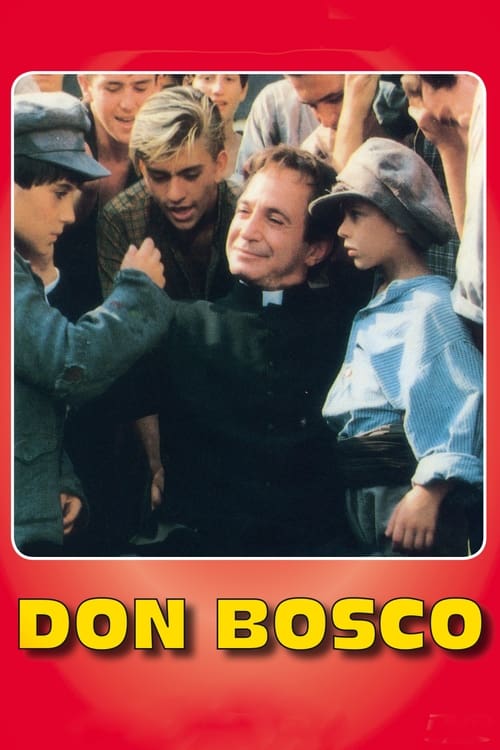


























Popular
What challenges does Don Bosco face in his early life that shape his future mission?
How does Don Bosco's relationship with the boys at the orphanage develop throughout the film?
What role does Don Bosco's mother play in his life and mission?
How does Don Bosco confront the societal issues of his time, such as poverty and child labor?
What significant events lead to the establishment of the Salesian Society in the film?
Should I watch it?
Ask Your Own Question

What is the plot?
Sorry, we aren't able to watch and write up a full detailed plot yet. Check back in a few days.







What is the ending?
In the ending of the movie "Don Bosco," the film culminates with the establishment of the Salesian order, showcasing Don Bosco's unwavering commitment to the youth. He faces challenges but ultimately finds support from his friends and the community. The film concludes with a sense of hope and fulfillment as Don Bosco's vision for a better future for the children is realized.
As the final scenes unfold, we see Don Bosco, portrayed with deep compassion and determination, continuing his mission to help the impoverished youth of Turin. The atmosphere is charged with a mix of hope and struggle. The camera captures the bustling streets of Turin, where Don Bosco tirelessly works to provide shelter and education for the boys who have been abandoned or neglected.
In one poignant scene, Don Bosco gathers the boys in a makeshift classroom. The room is filled with laughter and chatter, but there is an underlying tension as the boys express their fears and uncertainties about the future. Don Bosco, with his warm smile and reassuring presence, encourages them to believe in themselves and their potential. He shares stories of perseverance and faith, instilling a sense of purpose in each boy. The emotional weight of this moment is palpable, as the boys look up to him with admiration and hope.
As the narrative progresses, we witness the challenges Don Bosco faces from the authorities and societal norms that oppose his unconventional methods. There are moments of conflict where he stands firm against those who doubt his vision. The tension escalates when a local official confronts him, questioning the legitimacy of his work. Don Bosco, undeterred, passionately defends his mission, emphasizing the importance of love and education in transforming lives. This confrontation highlights his unwavering resolve and the sacrifices he is willing to make for the sake of the children.
In the climax of the film, Don Bosco's efforts begin to bear fruit. He successfully establishes the Salesian order, which becomes a beacon of hope for many. The scene shifts to a grand celebration where the community comes together to honor Don Bosco's achievements. The atmosphere is filled with joy and gratitude as the boys, now thriving under his guidance, express their appreciation. The camera pans over the smiling faces of the children, showcasing their transformation from lost souls to confident individuals ready to face the world.
As the film draws to a close, we see Don Bosco reflecting on his journey. He stands in front of the school he built, surrounded by the boys who have become like family to him. There is a sense of fulfillment in his eyes, but also a hint of weariness, as he acknowledges the ongoing challenges that lie ahead. The final moments capture him walking away from the school, hand in hand with a group of boys, symbolizing the legacy he has created and the lives he has touched.
In terms of character fates, Don Bosco continues his mission, embodying the spirit of hope and resilience. The boys he has helped are now empowered to pursue their dreams, illustrating the impact of his work. The film ends on a hopeful note, emphasizing the importance of compassion, education, and community in overcoming adversity.
Is there a post-credit scene?
The movie "Don Bosco," produced in 1988, does not feature a post-credit scene. The film concludes with a poignant ending that encapsulates the life and mission of Saint John Bosco, focusing on his dedication to the education and welfare of impoverished youth in 19th-century Italy. The final moments emphasize his legacy and the impact he had on the lives of many, leaving the audience with a sense of inspiration and reflection on his teachings and values.
What challenges does Don Bosco face in his early life that shape his future mission?
In his early life, Don Bosco faces significant challenges, including poverty and the loss of his father at a young age. These hardships instill in him a deep empathy for the underprivileged and a strong desire to help others. He experiences the struggles of the working-class youth in Turin, which motivates him to dedicate his life to their education and welfare.
How does Don Bosco's relationship with the boys at the orphanage develop throughout the film?
Don Bosco's relationship with the boys at the orphanage evolves from initial skepticism to deep trust and affection. He begins by understanding their backgrounds and struggles, gradually earning their respect through his kindness and dedication. His innovative teaching methods and personal attention create a nurturing environment, fostering a sense of family among the boys.
What role does Don Bosco's mother play in his life and mission?
Don Bosco's mother, Margaret, plays a crucial role in his life, serving as a moral compass and source of inspiration. Her unwavering faith and support during his formative years instill in him the values of compassion and service. She encourages his dreams of helping the youth, and her sacrifices highlight the importance of family in his mission.
How does Don Bosco confront the societal issues of his time, such as poverty and child labor?
Don Bosco confronts societal issues by establishing educational programs and vocational training for impoverished youth. He actively advocates against child labor, providing a safe haven for boys to learn and grow. His innovative approach combines education with spiritual guidance, addressing both the physical and emotional needs of the children.
What significant events lead to the establishment of the Salesian Society in the film?
Significant events leading to the establishment of the Salesian Society include Don Bosco's growing recognition of the need for organized support for youth, his collaboration with like-minded individuals, and the successful implementation of his educational methods. Key moments include the first group of boys he gathers, the challenges they face together, and the eventual formalization of their mission into a religious society dedicated to education and care for the young.
Is this family friendly?
The movie "Don Bosco," produced in 1988, is generally considered family-friendly, as it portrays the life and teachings of Saint John Bosco, focusing on his dedication to helping disadvantaged youth. However, there are a few scenes and themes that might be potentially objectionable or upsetting for children or sensitive viewers:
-
Depictions of Poverty: The film portrays the harsh realities of poverty, including children living in squalor and facing neglect, which may be distressing for younger viewers.
-
Abuse and Neglect: There are scenes that depict the mistreatment of children, including physical and emotional abuse, which could be upsetting.
-
Conflict with Authority: The film includes moments of conflict between Don Bosco and local authorities, showcasing the struggles he faced in his mission, which may be intense for some viewers.
-
Emotional Struggles: Characters experience significant emotional turmoil, including feelings of abandonment and despair, which may resonate deeply and evoke strong emotions.
-
Death and Loss: Themes of loss and the impact of death are present, particularly in relation to the children Don Bosco helps, which could be sensitive for some audiences.
Overall, while the film carries a positive message of hope and redemption, these elements may require parental guidance for younger viewers.






