




































Popular
Should I watch it?
Ask Your Own Question

What is the plot?
Sorry, we aren't able to watch and write up a full detailed plot yet. Check back in a few days.




What is the ending?
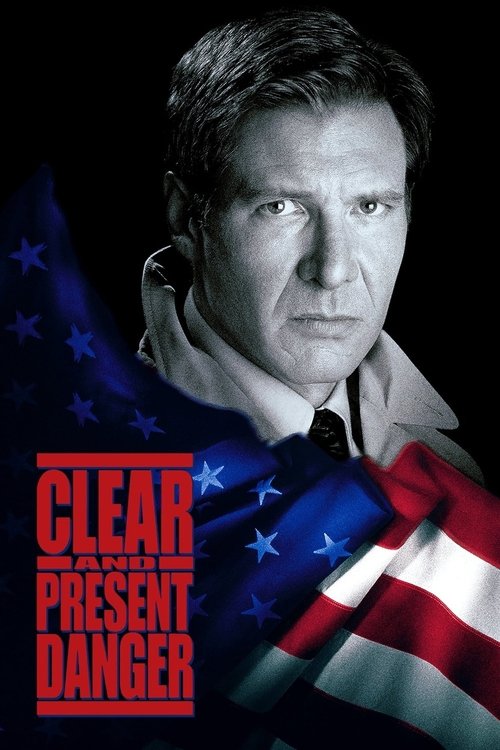
In the ending of "Clear and Present Danger," Jack Ryan confronts the consequences of the covert operations against drug cartels in Colombia. The film concludes with Ryan exposing the truth about the illegal actions taken by the U.S. government, leading to a confrontation with the President. The fate of key characters is revealed, with some facing justice while others remain in power.
As the film approaches its climax, Jack Ryan, played by Harrison Ford, finds himself in a precarious position. He has been investigating the covert operations against the Colombian drug cartels, which have spiraled out of control. The tension builds as Ryan uncovers the truth about the U.S. government's involvement in illegal activities, including the assassination of a Colombian politician, which was intended to destabilize the drug trade.
In a pivotal scene, Ryan confronts the President, James Greer, and other high-ranking officials in a tense meeting. The atmosphere is thick with unease as Ryan lays out the implications of their actions. He is visibly frustrated and morally conflicted, knowing that the operations have led to significant loss of life, including the deaths of innocent people. Ryan's internal struggle is palpable; he is a man of principle caught in a web of political machinations.
As the meeting progresses, Ryan's determination to reveal the truth becomes evident. He understands that the operations were not only illegal but also morally reprehensible. The President, portrayed by Donald Moffat, attempts to downplay the situation, insisting that the ends justify the means. However, Ryan stands firm, advocating for accountability and transparency. His emotional state shifts from frustration to resolve as he realizes that he must take a stand against the corruption that has infiltrated the government.
Meanwhile, the fate of the operatives involved in the covert mission unfolds. John Clark, played by Willem Dafoe, is a key figure in the operations. He has been deeply involved in the on-ground actions against the drug lords. As the story reaches its conclusion, Clark is left to deal with the fallout of the mission. He is portrayed as a man who has followed orders but is now faced with the moral implications of those orders. His character embodies the complexities of loyalty and the burdens of carrying out government directives.
In the final scenes, Ryan's efforts to expose the truth lead to a confrontation with the President, who is unwilling to accept responsibility for the actions taken in his name. The tension culminates in a powerful moment where Ryan asserts that the American people deserve to know the truth, regardless of the political ramifications. This moment serves as a critical turning point, highlighting Ryan's transformation from a passive analyst to an active participant in the fight for justice.
As the film concludes, Ryan's future remains uncertain, but he has made a significant impact by standing up against the corruption within the government. The final shots depict him walking away from the political turmoil, symbolizing his commitment to integrity and the pursuit of truth, even in the face of overwhelming opposition.
In contrast, the President and his administration remain largely unscathed, illustrating the often harsh realities of political power and the consequences of unchecked authority. The film ends on a note of ambiguity, leaving viewers to ponder the implications of Ryan's actions and the ongoing struggle between morality and power in the world of politics.
Is there a post-credit scene?
The movie "Clear and Present Danger," produced in 1994, does not have a post-credit scene. The film concludes with a tense resolution to the conflict surrounding the drug cartels and the political machinations in the United States. After the climactic events, the story wraps up without any additional scenes or epilogues during or after the credits. The focus remains on the main narrative and the implications of the characters' actions throughout the film.
What role does Jack Ryan play in the story?
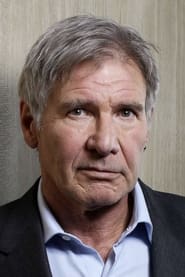
Jack Ryan, portrayed by Harrison Ford, is a CIA analyst who becomes embroiled in a covert operation against drug cartels in Colombia. Initially, he is tasked with assessing the situation and providing intelligence, but as the operation escalates, he finds himself grappling with the moral implications of the actions taken by the government and the consequences of the war on drugs.
How does the character of James Greer influence the plot?
James Greer, played by Morgan Freeman, is Ryan's superior and a key figure in the CIA. He supports Ryan's insights and provides guidance throughout the operation. Greer's character embodies the complexities of intelligence work, as he navigates the political landscape and the ethical dilemmas posed by the covert actions against the drug lords.
What is the significance of the character Felix Cortez?
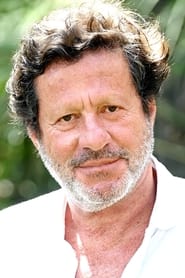
Felix Cortez, portrayed by Joaquim de Almeida, is a Colombian drug lord who becomes a central antagonist in the film. His character represents the ruthless nature of the drug trade and the lengths to which he will go to protect his empire. Cortez's interactions with both the CIA and the Colombian government highlight the intricate web of corruption and power that defines the drug war.
What motivates the character of Robert Ritter in the film?
Robert Ritter, played by Henry Czerny, is a high-ranking official in the CIA who is driven by ambition and a desire to expand the agency's influence. His motivations lead him to orchestrate the covert operation against the drug cartels, often prioritizing political gain over ethical considerations. Ritter's character serves as a foil to Ryan, showcasing the darker side of intelligence work.
How does the film portray the impact of the drug war on Colombian civilians?
The film depicts the devastating effects of the drug war on Colombian civilians through various scenes of violence and chaos. Innocent people are caught in the crossfire of the CIA's operations and the drug cartels' retaliations, illustrating the collateral damage of the conflict. This portrayal adds emotional weight to the narrative, emphasizing the human cost of the political and military decisions made by the characters.
Is this family friendly?
"Clear and Present Danger," produced in 1994, is a political thriller that contains several elements that may not be suitable for children or sensitive viewers. Here are some potentially objectionable or upsetting aspects:
-
Violence: The film features intense action sequences, including gunfights, explosions, and scenes of military operations that result in casualties. The depiction of violence can be graphic and may be distressing.
-
Drug Trafficking: The central theme revolves around drug cartels and the war on drugs, which includes discussions and portrayals of drug use and trafficking. This may be inappropriate for younger audiences.
-
Mature Themes: The film explores complex political and ethical dilemmas, including betrayal, corruption, and the moral implications of government actions. These themes may be difficult for children to understand.
-
Death and Loss: Characters experience significant loss, and there are scenes that depict the aftermath of violence, including mourning and emotional distress.
-
Language: There are instances of strong language and profanity throughout the film, which may not be suitable for younger viewers.
Overall, while "Clear and Present Danger" is a gripping narrative, its mature content and themes make it more appropriate for older teens and adults.









