
















Popular
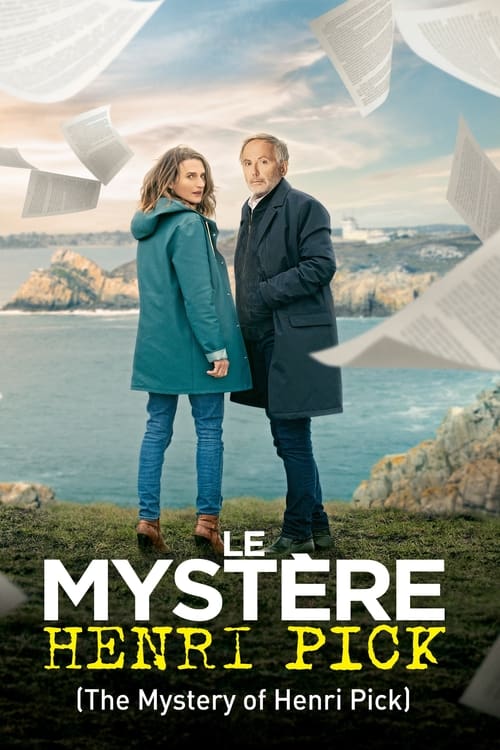
Who is Henri Pick and what is his significance in the story?
What motivates the character of Jean-Michel Rouche to investigate the origins of the manuscript?
How does the character of Fanny Pick react to the discovery of her father's manuscript?
What role does the town of Crozon play in the narrative?
What are the key themes explored through the character of Jean-Michel Rouche during his investigation?
Should I watch it?
Ask Your Own Question

What is the plot?
Sorry, we aren't able to watch and write up a full detailed plot yet. Check back in a few days.




What is the ending?
In the ending of "The Mystery of Henri Pick," the protagonist, Jean-Michel Rouche, discovers the truth about the origins of the manuscript attributed to Henri Pick. He learns that the manuscript was not written by Pick but rather by his daughter, who had been hiding her talent. This revelation leads to a deeper understanding of the characters and their motivations, particularly regarding the nature of authorship and the impact of storytelling.
As the film concludes, Jean-Michel reflects on the journey he has taken, realizing that the search for truth can sometimes lead to unexpected and profound discoveries about oneself and others. The film ends with a sense of ambiguity about the nature of literature and the stories we tell.
As the final act of "The Mystery of Henri Pick" unfolds, we find Jean-Michel Rouche, a literary critic, deeply engrossed in his investigation into the origins of the manuscript that has captivated the literary world. The scene opens in a dimly lit room filled with books, where Jean-Michel is poring over notes and documents, his brow furrowed in concentration. The tension is palpable as he races against time to uncover the truth behind the enigmatic Henri Pick, a pizza maker from a small town who supposedly penned a remarkable novel.
In the next scene, Jean-Michel visits the small town of Crozon, where Henri Pick lived. The atmosphere is quaint yet charged with the weight of secrets. He interviews locals, piecing together the life of Henri Pick, who is portrayed as an unassuming man with a passion for literature. The townspeople share anecdotes, revealing a man who loved books but was never recognized for his talent. Jean-Michel's determination grows as he senses that there is more to the story than meets the eye.
As Jean-Michel delves deeper, he discovers Henri's daughter, who has been living in the shadow of her father's posthumous fame. In a pivotal scene, they meet in a cozy café, where the emotional weight of their conversation hangs in the air. The daughter, initially guarded, reveals her own struggles with her writing and the burden of her father's legacy. Jean-Michel's empathy for her situation deepens, and he begins to question the very nature of authorship and recognition.
The climax of the film occurs when Jean-Michel confronts the truth: the manuscript was not written by Henri Pick but by his daughter, who had crafted the story in secret. This revelation is a turning point, and the scene is charged with emotion as Jean-Michel grapples with the implications of this discovery. The camera captures the subtle shifts in his expression, reflecting his internal conflict between the pursuit of truth and the desire to protect the fragile legacy of the daughter.
In the final moments, Jean-Michel stands alone in a quiet library, surrounded by the books that have shaped his life. He reflects on the journey he has taken, the people he has met, and the stories that have unfolded. The film closes with a lingering shot of him gazing out the window, a sense of resolution washing over him. He understands that the search for truth is not just about uncovering facts but also about connecting with the human experience behind the stories we tell.
As the credits roll, we see glimpses of the main characters: Jean-Michel, now more introspective and aware of the complexities of storytelling; Henri's daughter, who has found her voice and the courage to embrace her identity as a writer; and the townspeople, who continue to cherish the memory of Henri Pick, a man who, despite his anonymity, left a lasting impact on those around him. The film concludes with a poignant reminder of the power of literature to connect us, even in the face of hidden truths.
Is there a post-credit scene?
The movie "The Mystery of Henri Pick" does not have a post-credit scene. The film concludes its narrative without any additional scenes after the credits roll. The story wraps up with the resolution of the central mystery surrounding the unpublished manuscript attributed to Henri Pick, leaving the audience to reflect on the themes of authorship, literary value, and the nature of storytelling. The final moments focus on the characters' emotional journeys and the implications of their discoveries, providing a satisfying conclusion to the film's exploration of literature and identity.
Who is Henri Pick and what is his significance in the story?
Henri Pick is a seemingly unremarkable pizza maker from a small town in Brittany, France, who posthumously becomes famous when a manuscript he wrote is discovered. The manuscript, titled 'The Last Book,' is a poignant novel that captivates readers and critics alike, leading to a mystery surrounding how a man with no literary background could produce such a profound work.
What motivates the character of Jean-Michel Rouche to investigate the origins of the manuscript?
Jean-Michel Rouche, a literary critic, is initially motivated by curiosity and professional intrigue when he learns about the manuscript attributed to Henri Pick. As he delves deeper into the investigation, his motivations shift to a personal quest for truth, as he grapples with the implications of the manuscript's authenticity and the impact it has on the literary world.
How does the character of Fanny Pick react to the discovery of her father's manuscript?
Fanny Pick, Henri's daughter, experiences a mix of pride and skepticism upon the discovery of her father's manuscript. Initially, she is surprised and somewhat defensive, as she struggles to reconcile her father's mundane life with the literary genius attributed to him. Her emotional journey reflects a deep-seated desire to understand her father's hidden depths and the legacy he left behind.
What role does the town of Crozon play in the narrative?
The town of Crozon serves as a picturesque backdrop that contrasts with the unfolding literary mystery. It embodies a sense of nostalgia and simplicity, reflecting Henri Pick's life and the community's connection to him. The town's residents, including Fanny and Jean-Michel, become integral to the investigation, as their insights and memories provide context to Henri's character and the authenticity of the manuscript.
What are the key themes explored through the character of Jean-Michel Rouche during his investigation?
Throughout his investigation, Jean-Michel Rouche grapples with themes of authenticity, the nature of creativity, and the relationship between an author and their work. His internal conflict reveals his struggle between professional skepticism and personal belief, as he confronts the possibility that true literary talent can emerge from the most unexpected places, challenging his preconceived notions of what defines a writer.
Is this family friendly?
"The Mystery of Henri Pick" is generally suitable for a mature audience, but it does contain some elements that may be considered objectionable or upsetting for children or sensitive viewers. Here are a few aspects to consider:
-
Themes of Death and Loss: The film revolves around the discovery of a posthumously published novel by Henri Pick, which leads to discussions about his life and death. The exploration of mortality may be heavy for younger viewers.
-
Intense Emotional Moments: Characters experience a range of emotions, including grief, frustration, and existential questioning, which may be intense for some viewers.
-
Cynicism and Critique of the Literary World: The film delves into the often harsh realities of the literary industry, including themes of authenticity and the commercialization of art, which may be complex for younger audiences to grasp.
-
Mature Conversations: There are discussions about relationships, personal motivations, and the nature of creativity that may include mature themes not suitable for children.
-
Subtle Tension and Conflict: The narrative includes moments of tension and conflict between characters, which may be unsettling for sensitive viewers.
Overall, while the film does not contain explicit content, its thematic depth and emotional weight may not be appropriate for all children or sensitive individuals.