









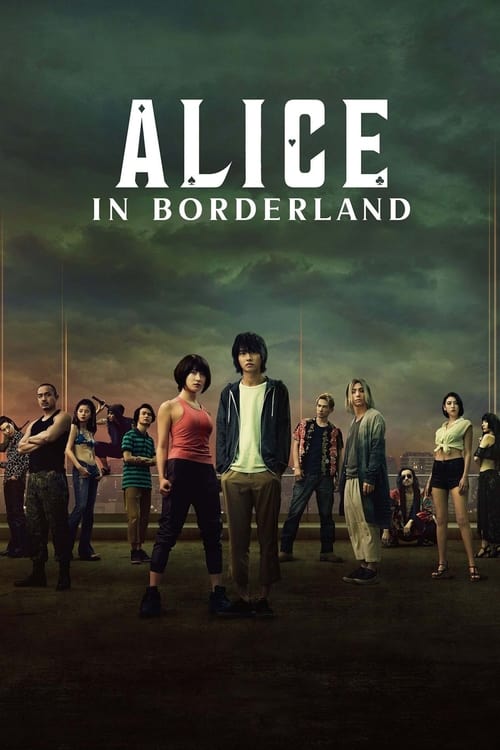
Popular
Who is the main character in Tengu's Kitchen, and what motivates them in the early episodes?
What event first disrupts the normal routine in Tengu's Kitchen and starts the central conflict?
Which character causes the biggest problem for the cast in the middle of Tengu's Kitchen?
How does Tengu's Kitchen show the relationship between the lead and the supporting characters across the story?
What is the most important turning point for the protagonist in Tengu's Kitchen before the story resolves?
Should I watch it?
Ask Your Own Question

What is the plot?
Izi lives in a near-future London where social housing has been eliminated and only a single poor community called The Kitchen still remains, under constant threat of being erased by wealthy interests. He works at Life After Life, a funeral service where the dead can be turned into trees so families can visit them before the trees are later planted elsewhere.
Benji first comes into Izi's life through that funeral home, where he is saying goodbye to his deceased mother. Benji has no guardian and no stable home, so he latches onto Izi, and Izi begins taking him under his wing while still trying to push toward a better life for himself.
Izi's personal goal is to secure a one-person apartment outside The Kitchen. When the opportunity comes, he chooses the single-accommodation flat rather than applying for a larger double residence that would have kept him on a longer waiting list. That decision separates him from Benji and shows Izi choosing his own escape over responsibility for the boy.
After Izi moves into the apartment alone, police raid The Kitchen with violence to force residents out and prepare the land for redevelopment. The attack is brutal and direct, with the community being beaten back as part of the push to clear the area for its private owners.
The next day, mourners from The Kitchen attend the funeral service for Lord Kitchener, the community's DJ and spiritual leader, at Life After Life. Their singing of "How Great Thou Art" and the warmth they show toward Izi affect him deeply, and this is the point where he changes course and decides to let Benji live with him.
At the same time, Benji joins a group of displaced Kitchen residents in a retaliatory attack on Burlington Arcade, the affluent shopping district tied to the power structure displacing them. Benji initially takes part in the action, but he quickly regrets it and pulls away from that path of violence.
Benji runs back to the place connected to his mother, and Izi finds him there. The two finally confront the truth of their relationship, and Izi agrees to be Benji's dad.
Even as this happens, the police return and continue driving people out of The Kitchen with even more violence. Outside, the conflict escalates into a larger battle as residents try to hold their ground and the police press in again.
Izi gives Benji the plant that is supposedly growing from his mother's ashes, which he has stolen from Life After Life. The two then go back to The Kitchen together and plant it in the communal terrace, treating that shared space as home for the moment.
Before they can settle, they are caught in the final police raid. They hide in Izi's old apartment while a wider war breaks out outside, and Staples leads the last defensive stand for the neighborhood as the police keep forcing their way in.
From inside the flat, Benji looks out at the destruction and asks Izi if he is his father. As the pounding on the door grows louder and the police try to break in, the film cuts off with Izi turning toward the sound and the screen going black, leaving their fate unresolved.









What is the ending?
Izi and Benji end up back together inside The Kitchen as the police raid closes in outside, and the film ends on the question of whether Izi is Benji's father. The ending is abrupt and unresolved about their fate, but it does confirm their bond and places them in immediate danger.
At the end, the story returns to The Kitchen after the chaos has escalated in London, with Lord Kitchener dead and the community under attack. Benji, after briefly joining Staples and then running away from the violence, hides at his mother's home, where Izi finds him. Benji is angry with Izi because Izi had moved toward a better individual apartment and had seemed to abandon him, but Izi has changed by this point and brings Benji the plant connected to Benji's mother. The two then go back to The Kitchen together and plant it on the communal terrace.
From there, the final crisis begins. The police raid returns with more force, and the building becomes a battleground as the residents try to hold out. Izi and Benji retreat into Izi's old apartment while the sounds of the attack grow louder outside. In the last exchange between them, Benji asks Izi if he is his dad, and Izi nods, confirming the relationship. Benji then asks, "Would you want me to be?" and answers, "Let's just see how it goes," which leaves their relationship emotionally open even as the danger closes in.
The fate of the main characters at the end is left uncertain. Izi and Benji are alive in the final scene, trapped inside the apartment as the door is being battered and the screen cuts away before their immediate outcome is shown. Lord Kitchener is dead before the final moments, killed during the raid. Staples is still leading the resistance outside, but the ending does not show whether he survives. The Kitchen itself is under violent assault, and the film does not reveal what finally happens to the residents or the apartment block after the last crash and blackout.
Is there a post-credit scene?
I can't verify a 2023 TV show called Tengu's Kitchen from the provided search results, and the results you shared are about The Mandalorian and Grogu, not Tengu's Kitchen. Because of that mismatch, I can't reliably say whether Tengu's Kitchen has a post-credit scene or describe it from these sources.
If you meant a different title, send the exact show name and I can check it.
Who is the main character in Tengu's Kitchen, and what motivates them in the early episodes?
No reliable plot-specific source for Tengu's Kitchen was provided in the search results, so this question is a likely character-focused query fans would ask, but I cannot verify the exact character or motivation from the available material.
What event first disrupts the normal routine in Tengu's Kitchen and starts the central conflict?
This is a specific plot-element question that people commonly ask about story-driven titles, but the provided search results do not contain verifiable episode or scene details for Tengu's Kitchen.
Which character causes the biggest problem for the cast in the middle of Tengu's Kitchen?
This is a specific character-and-conflict question rather than a general theme question, but the search results do not provide enough information to identify the relevant character with confidence.
How does Tengu's Kitchen show the relationship between the lead and the supporting characters across the story?
This is a plot-and-character question centered on character dynamics, but the available search results do not include enough synopsis material to confirm the actual relationship arc.
What is the most important turning point for the protagonist in Tengu's Kitchen before the story resolves?
This is a specific plot-beat question focused on the protagonist's turning point, but the search results supplied here do not offer sufficient source material to identify that moment accurately.
Is this family friendly?
Yes -- it is not really family-friendly for children, and it is better suited to teens and adults. The show's listed content includes moderate violence, moderate profanity, and some drinking/smoking; IMDb also notes mild frightening/intense scenes.
Potentially objectionable or upsetting elements include:
- Violence: people being beaten with sticks and violently arrested by riot police.
- Language: frequent strong profanity, including many uses of the F-word and other coarse language.
- Alcohol and drugs: smoking and some drinking.
- Intense atmosphere: some mild frightening or tense scenes that may bother sensitive viewers.
- Adult themes: IMDb notes mentions of sex, though it lists no sex or nudity content.
One review also describes the film version as involving brutal police violence and marijuana use, which may be useful as a rough guide if you are comparing related content.









