


Popular
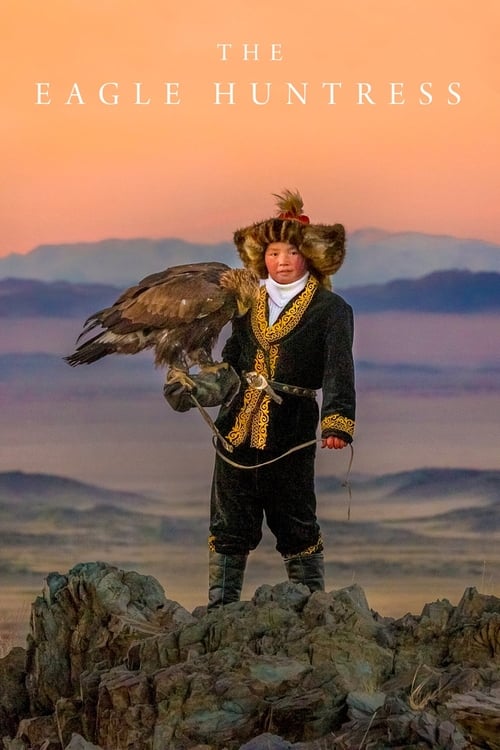
Who is Aisholpan and what motivates her to become an eagle huntress?
What challenges does Aisholpan face in her journey to become an eagle huntress?
How does Aisholpan's relationship with her father influence her journey?
What role does the eagle play in Aisholpan's journey and personal growth?
What is the significance of the eagle hunting competition in the story?
Should I watch it?
Ask Your Own Question

What is the plot?
Sorry, we aren't able to watch and write up a full detailed plot yet. Check back in a few days.
More Movies Like This
Browse All Movies →



What is the ending?
In the ending of "The Eagle Huntress," Aisholpan successfully captures and trains her eagle, proving her skills as a hunter. She competes in the Golden Eagle Festival, where she faces challenges but ultimately wins the competition. Her victory symbolizes a breakthrough for women in a traditionally male-dominated field. The film concludes with Aisholpan's father, Nurgaiv, expressing pride in her accomplishments, and the family celebrates her achievement, highlighting the bond between them and the cultural significance of her journey.
As the film approaches its climax, we find Aisholpan preparing for the Golden Eagle Festival, a prestigious event that showcases the skills of eagle hunters from across Mongolia. The scene is set against the breathtaking backdrop of the Altai Mountains, where the air is crisp and the landscape is dotted with snow-capped peaks. Aisholpan, now a determined young woman, has trained rigorously with her eagle, whom she has named Buluu. Her father, Nurgaiv, stands by her side, offering guidance and support, while also grappling with the societal expectations placed upon them.
The day of the festival arrives, and the atmosphere is electric with excitement. Competitors gather, showcasing their eagles and their hunting prowess. Aisholpan, dressed in traditional attire, radiates a mix of nerves and determination. As she steps into the arena, the crowd's eyes are upon her, and she feels the weight of her family's legacy and the challenge of breaking gender norms. The festival is a vibrant display of culture, with men and women alike participating, but Aisholpan's presence is particularly significant as she represents a new generation of female hunters.
As the competition unfolds, Aisholpan faces various challenges, including the skepticism of some male competitors and the pressure to perform. Each event tests her skills and her bond with Buluu. The tension builds as she navigates through the trials, showcasing her deep understanding of her eagle and her ability to communicate with it. The bond they share is palpable, and it becomes clear that Aisholpan's dedication and hard work have paid off.
In a pivotal moment, Aisholpan and Buluu perform a stunning display of hunting prowess, capturing the attention of the judges and the audience. The scene is filled with breathtaking visuals as the eagle soars through the sky, demonstrating its strength and agility. Aisholpan's heart races with a mix of fear and exhilaration as she watches her eagle in action, embodying the culmination of her efforts.
As the festival reaches its conclusion, the judges deliberate, and the tension in the air is thick. Aisholpan stands with her family, her father's pride evident in his eyes. When the results are announced, the crowd erupts in cheers as Aisholpan is declared the winner. The moment is a triumph not only for her but also for women everywhere, as she has shattered the barriers that have historically limited their roles in this ancient tradition.
In the aftermath of her victory, Aisholpan is embraced by her family, particularly her father, who expresses his pride in her accomplishments. The emotional weight of the moment is palpable as they celebrate together, reinforcing the bond between them. Aisholpan's victory is not just a personal achievement; it symbolizes a shift in cultural perceptions, showcasing the potential for women to excel in fields traditionally dominated by men.
As the film concludes, Aisholpan stands tall, her eagle perched proudly on her arm, embodying the spirit of resilience and determination. The final scenes capture the beauty of the Altai Mountains, a reminder of the journey she has undertaken and the legacy she is forging for future generations. The film closes on a hopeful note, emphasizing the importance of following one's dreams and breaking free from societal constraints, leaving the audience inspired by Aisholpan's story.
Is there a post-credit scene?
The Eagle Huntress does not have a post-credit scene. The film concludes with a powerful and uplifting ending that encapsulates Aisholpan's journey and achievements as a young eagle huntress. After successfully capturing and training her eagle, she participates in the Golden Eagle Festival, where she showcases her skills and determination. The film ends on a note of empowerment, celebrating her accomplishments and the breaking of gender barriers in her culture. There are no additional scenes or content after the credits.
Who is Aisholpan and what motivates her to become an eagle huntress?
Aisholpan is a 13-year-old girl from Mongolia who aspires to become an eagle huntress, a role traditionally held by men in her culture. Her motivation stems from a deep connection to her family's heritage and a desire to prove that women can excel in this challenging and male-dominated field. Aisholpan's determination is fueled by her love for the majestic golden eagle and her wish to honor her father, who supports her ambitions.
What challenges does Aisholpan face in her journey to become an eagle huntress?
Throughout her journey, Aisholpan faces numerous challenges, including skepticism from the male-dominated community that doubts her abilities as a young girl. She also encounters the physical challenges of training with the eagle, learning the techniques of hunting, and enduring harsh weather conditions. Additionally, she must navigate the emotional hurdles of proving herself to her peers and overcoming the cultural expectations placed upon her.
How does Aisholpan's relationship with her father influence her journey?
Aisholpan's relationship with her father, Nurgaiv, is pivotal to her journey. He is a supportive figure who encourages her ambitions and teaches her the skills necessary for eagle hunting. His belief in her abilities instills confidence in Aisholpan, and their bond deepens as they work together. This relationship highlights the theme of familial support and the breaking of gender norms, as Nurgaiv stands against traditional expectations to champion his daughter's dreams.
What role does the eagle play in Aisholpan's journey and personal growth?
The eagle, named Bolat, is not just a hunting companion but also a symbol of Aisholpan's growth and independence. As she trains with Bolat, she learns the importance of trust, patience, and respect for nature. Their bond evolves from mere training to a deep partnership, reflecting Aisholpan's own journey of self-discovery and empowerment. The eagle represents her aspirations and the challenges she must overcome to achieve her goals.
What is the significance of the eagle hunting competition in the story?
The eagle hunting competition serves as a climactic moment in Aisholpan's journey, representing her ultimate test of skill and determination. It is a traditional event that showcases the prowess of eagle hunters, and Aisholpan's participation challenges societal norms. The competition not only tests her abilities but also symbolizes her fight for recognition and respect in a male-dominated field, ultimately leading to her triumph and the breaking of gender barriers.
Is this family friendly?
"The Eagle Huntress" is generally considered family-friendly, as it is a documentary that focuses on themes of empowerment, tradition, and the bond between a young girl and her eagle. However, there are a few aspects that might be considered potentially objectionable or upsetting for children or sensitive viewers:
-
Cultural Context: The film depicts the traditional practice of eagle hunting, which involves capturing and training eagles. Some viewers may find the process of capturing the eagle unsettling, although it is presented in a respectful manner.
-
Animal Welfare: There are scenes that show the relationship between the eagle and the hunters, which may raise concerns about animal treatment for some viewers, despite the film's emphasis on the respect and care given to the birds.
-
Gender Roles: The film addresses traditional gender roles in a nomadic culture, which may lead to discussions about sexism and the challenges faced by the protagonist, Aisholpan, as she strives to break these barriers.
-
Emotional Challenges: Aisholpan faces various challenges and moments of self-doubt throughout her journey, which may evoke feelings of empathy or sadness in sensitive viewers.
Overall, while the film is uplifting and inspiring, these elements may require some context or discussion for younger audiences.









