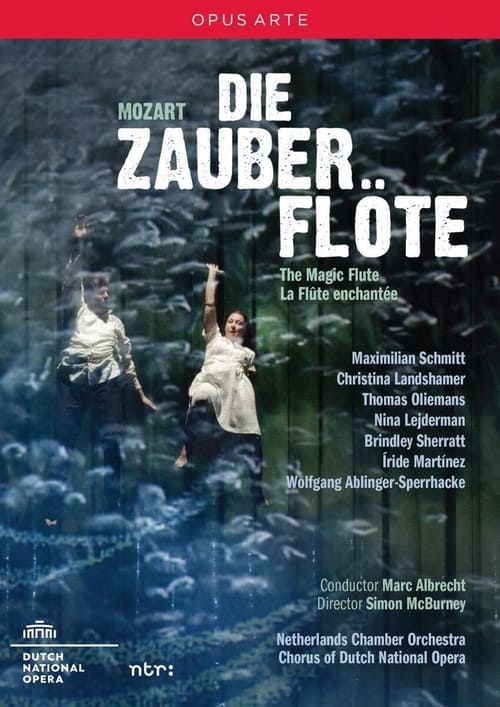




Popular
Should I watch it?
Ask Your Own Question

What is the plot?
Sorry, we aren't able to watch and write up a full detailed plot yet. Check back in a few days.
More Movies Like This
Browse All Movies →







What is the ending?
In the ending of "Mozart: The Magic Flute," Tamino and Pamina successfully pass the trials set by Sarastro, proving their love and commitment to each other. They are ultimately united, and the power of love triumphs over darkness. The film concludes with a celebration of their victory, as they are welcomed into Sarastro's realm, symbolizing enlightenment and harmony.
As the final act unfolds, the scene opens with Tamino and Pamina standing before the grand temple of Sarastro, their hearts filled with determination. They have faced numerous challenges, but the trials of fire and water await them. The atmosphere is charged with tension as they prepare to confront their fears and prove their worthiness.
The first trial, the trial of fire, begins. Tamino and Pamina hold hands tightly, their eyes locked in mutual support. As they step into the flames, the heat envelops them, but they remain steadfast, driven by their love. The flames flicker and dance around them, but they emerge unscathed, their bond stronger than ever. This moment is pivotal, showcasing their courage and the purity of their intentions.
Next comes the trial of water. The scene shifts to a vast, turbulent body of water, symbolizing the emotional depths they must navigate. Tamino and Pamina wade into the water, the waves crashing around them. They struggle against the current, but their resolve does not waver. They call out to each other, their voices echoing through the chaos, reinforcing their connection. As they reach the center of the water, they find calm, and together they rise above the surface, victorious once more.
With both trials completed, the atmosphere shifts to one of celebration. Sarastro, who has been watching their journey, steps forward to greet them. His presence is commanding yet benevolent, embodying wisdom and guidance. He acknowledges their bravery and love, welcoming them into his realm. The temple is filled with light, symbolizing enlightenment and the triumph of good over evil.
As the final moments of the film approach, the characters gather in a grand hall, where a celebration ensues. The music swells, and the joyous atmosphere reflects the harmony that has been achieved. Tamino and Pamina stand together, their faces radiant with happiness. They are no longer just individuals; they are united as partners, ready to face the world together.
Papageno, the comedic bird-catcher, also finds his happiness in this conclusion. After a series of misadventures and moments of despair, he is reunited with his beloved Papagena. Their reunion is filled with laughter and joy, emphasizing the theme of love's triumph. The two share a heartfelt moment, celebrating their connection amidst the festivities.
As the film draws to a close, the characters reflect on their journeys. Tamino and Pamina, now symbols of love and enlightenment, look forward to a future filled with hope. Sarastro, satisfied with the outcome, stands as a guardian of wisdom, ensuring that the light of knowledge continues to shine. The final scene captures the essence of unity and the power of love, leaving the audience with a sense of fulfillment and joy.
In summary, the ending of "Mozart: The Magic Flute" encapsulates the triumph of love and the importance of facing challenges together. Each character finds their resolution, with Tamino and Pamina united in love, and Papageno discovering his own happiness. The film concludes on a note of celebration, highlighting the themes of enlightenment and harmony that resonate throughout the story.
Is there a post-credit scene?
The movie "Mozart: The Magic Flute," produced in 2015, does not feature a post-credit scene. The film concludes with the resolution of its central narrative, focusing on the themes of love, enlightenment, and the triumph of good over evil, as depicted in Mozart's opera. The ending encapsulates the emotional journeys of the characters, particularly Tamino and Pamina, as they overcome trials and embrace their destinies. The film wraps up without any additional scenes or content after the credits, leaving the audience with the final reflections on the story and its musical legacy.
What is the significance of the character Tamino in the story?
Tamino is the protagonist of 'The Magic Flute,' representing the journey of self-discovery and enlightenment. He is initially portrayed as a young prince who is thrust into a quest to rescue Pamina, the daughter of the Queen of the Night. His character evolves from a naive hero to a more mature individual who learns the values of wisdom and love throughout his journey.
How does Pamina's character develop throughout the film?
Pamina begins as a damsel in distress, captured by the high priest Sarastro. However, as the story unfolds, she reveals her strength and resilience. Her emotional turmoil is palpable as she grapples with her loyalty to her mother, the Queen of the Night, and her love for Tamino. Pamina's character arc showcases her transformation from vulnerability to empowerment, ultimately choosing love and light over darkness.
What role does the Queen of the Night play in the plot?
The Queen of the Night is a pivotal antagonist in the story. She initially appears as a powerful figure who commands Tamino to rescue her daughter, Pamina. However, her true nature is revealed as she becomes increasingly manipulative and vengeful, demanding that Pamina kill Sarastro. Her famous aria, 'Der Hölle Rache,' highlights her fierce determination and emotional instability, showcasing her as a complex character driven by a desire for power and control.
What is the relationship between Tamino and Papageno?
Tamino and Papageno share a deep bond that evolves throughout the film. Papageno, a comedic bird-catcher, serves as Tamino's companion and comic relief. Their friendship is characterized by loyalty and support, with Papageno often providing Tamino with encouragement and humor during their trials. Papageno's contrasting carefree nature highlights Tamino's serious quest, yet their camaraderie ultimately enriches the narrative, emphasizing themes of friendship and the importance of companionship.
How does the theme of enlightenment manifest in Sarastro's character?
Sarastro embodies the ideals of wisdom and enlightenment in 'The Magic Flute.' As the high priest, he represents the pursuit of knowledge and virtue, guiding Tamino and Pamina through trials that test their character. His calm demeanor and philosophical outlook contrast sharply with the Queen of the Night's emotional volatility. Sarastro's motivations are rooted in a desire to lead others towards enlightenment, showcasing his role as a mentor and protector in the narrative.
Is this family friendly?
"Mozart: The Magic Flute," produced in 2015, is generally considered family-friendly, as it is based on the classic opera by Wolfgang Amadeus Mozart, which is often performed for audiences of all ages. However, there are a few aspects that might be potentially objectionable or upsetting for children or sensitive viewers:
-
Dark Themes: The story includes themes of conflict, trials, and the struggle between good and evil, which may be intense for younger viewers.
-
Symbolism of Death: There are moments that symbolize death and loss, particularly in the context of the trials faced by the characters, which could be unsettling.
-
Emotional Turmoil: Characters experience significant emotional distress, including fear, confusion, and longing, which may resonate deeply and evoke strong feelings.
-
Fantasy Elements: The presence of fantastical creatures and magical elements might be frightening for some children, depending on their sensitivity to such imagery.
-
Romantic Tension: There are romantic subplots that may include moments of longing and separation, which could be confusing for younger audiences.
Overall, while the film is designed to be accessible to families, these elements may require parental guidance for younger viewers or those who are particularly sensitive.