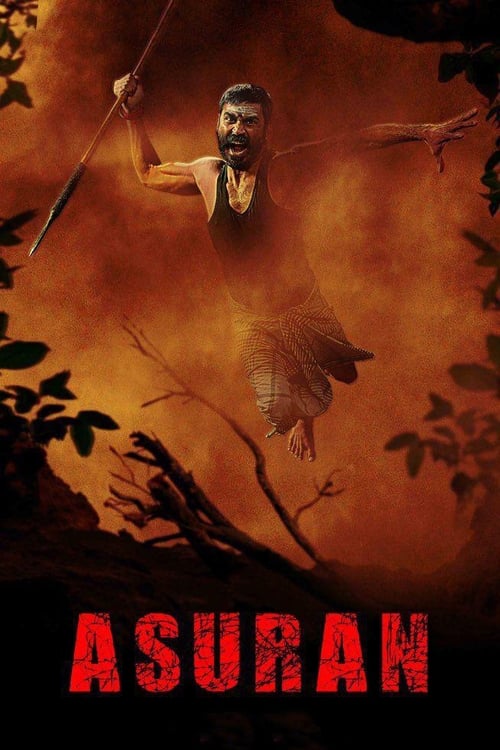






















Popular
What motivates the character of Sivasamy to take drastic actions against the landowners?
How does the relationship between Sivasamy and his son, Velmurugan, evolve throughout the film?
What role does the character of Pachaiyappan play in the story?
How does the film depict the theme of caste discrimination through the character of Sivasamy?
What is the significance of the climax where Sivasamy confronts Pachaiyappan?
Should I watch it?
Ask Your Own Question

What is the plot?
Sorry, we aren't able to watch and write up a full detailed plot yet. Check back in a few days.









What is the ending?
In the ending of "Asuran," the protagonist, Sivasamy, confronts the powerful landowner, who has been oppressing his family and community. After a violent confrontation, Sivasamy avenges his son's death, but he ultimately decides to leave his village to protect his family from further retaliation. The film concludes with Sivasamy and his family embarking on a new journey, symbolizing hope and resilience despite the struggles they faced.
As the climax of "Asuran" unfolds, the tension reaches a boiling point. Sivasamy, portrayed by Dhanush, is filled with a mix of rage and sorrow after the tragic death of his son, who was brutally killed by the landowner's men. The scene is set in the dense, rural landscape of Tamil Nadu, where the sun casts a harsh light on the blood-soaked ground, a stark reminder of the violence that has erupted.
In a pivotal moment, Sivasamy gathers his remaining family members, including his wife, and they prepare for the inevitable confrontation. The air is thick with a sense of foreboding as they make their way to the landowner's estate. Sivasamy's face is a mask of determination, but his eyes betray the pain of loss and the weight of responsibility he carries for his family.
As they arrive, the landowner, who has been a symbol of oppression throughout the film, stands surrounded by his men, exuding arrogance and entitlement. The confrontation is charged with emotion; Sivasamy's voice trembles with anger as he confronts the landowner, demanding justice for his son. The landowner, dismissive and cruel, underestimates Sivasamy's resolve, leading to a brutal fight that ensues.
The violence is raw and visceral, with Sivasamy fighting not just for revenge but for the dignity of his family and community. Each blow he delivers is fueled by the memories of his son, and the audience can feel the weight of his grief transforming into a fierce determination. The fight culminates in a moment of catharsis as Sivasamy finally overpowers the landowner, delivering a fatal blow that signifies the end of his tyranny.
However, the victory is bittersweet. As Sivasamy stands over the fallen landowner, the reality of his actions sinks in. He knows that this act of vengeance will not go unpunished, and the repercussions will inevitably fall on his family. The scene shifts to Sivasamy's family, who watch in a mix of horror and relief, understanding that their lives will never be the same.
In the aftermath, Sivasamy makes a heart-wrenching decision. He gathers his family, including his wife and remaining children, and they prepare to leave their home. The landscape around them, once filled with memories of joy and sorrow, now feels like a prison. As they walk away, the camera captures the somber expressions on their faces, reflecting the heavy burden of their loss and the uncertain future ahead.
The final scenes depict Sivasamy and his family embarking on a new journey, leaving behind the village that has been both their home and a site of tragedy. The sun sets in the background, casting a golden hue over the horizon, symbolizing a glimmer of hope amidst the darkness. Sivasamy's resolve to protect his family shines through, even as they face an uncertain future.
In the end, Sivasamy's fate is one of resilience; he may have lost his son and his home, but he remains determined to safeguard his family from further harm. His wife, who has stood by him through the turmoil, embodies strength and support, while their children represent the hope for a better tomorrow. The film closes on a note of ambiguity, leaving the audience to ponder the ongoing struggle against oppression and the sacrifices made for the sake of family and dignity.
Is there a post-credit scene?
The movie "Asuran," released in 2019, does not have a post-credit scene. The film concludes its narrative without any additional scenes after the credits roll. The story wraps up with a powerful emotional climax, focusing on the themes of caste discrimination, family, and revenge, leaving the audience with a strong impression of the characters' journeys and the societal issues addressed throughout the film.
What motivates the character of Sivasamy to take drastic actions against the landowners?
Sivasamy, played by Dhanush, is driven by a deep sense of justice and the need to protect his family and their land. The oppressive actions of the landowners, particularly the brutal attack on his son, ignite a fierce determination in him to fight back against the systemic injustice faced by his community. His internal conflict between his peaceful nature and the need for violent retribution showcases his emotional turmoil.
How does the relationship between Sivasamy and his son, Velmurugan, evolve throughout the film?
Initially, Sivasamy is protective and nurturing towards Velmurugan, instilling in him the values of hard work and humility. However, as the conflict escalates, their relationship is tested. Velmurugan's desire to stand up against the oppressors mirrors Sivasamy's own struggles, leading to moments of tension and understanding. The climax of their relationship is marked by Velmurugan's transformation from a passive character to one who actively seeks justice, reflecting Sivasamy's influence and the harsh realities they face.
What role does the character of Pachaiyappan play in the story?
Pachaiyappan, portrayed by Prakash Raj, serves as a pivotal antagonist in the film. He embodies the oppressive landowning class, representing the systemic exploitation of the lower caste. His ruthless actions, including the violent attack on Sivasamy's family, catalyze the conflict and highlight the stark class divide. Pachaiyappan's character is driven by greed and a desire to maintain power, making him a formidable foe for Sivasamy.
How does the film depict the theme of caste discrimination through the character of Sivasamy?
Sivasamy's character is a representation of the struggles faced by the oppressed lower caste in society. His experiences, from the loss of his land to the violence inflicted upon his family, illustrate the harsh realities of caste discrimination. The film portrays his journey from a humble farmer to a man forced to confront the brutalities of the caste system, showcasing his resilience and the emotional toll of fighting against deeply entrenched societal norms.
What is the significance of the climax where Sivasamy confronts Pachaiyappan?
The climax of the film is a powerful confrontation between Sivasamy and Pachaiyappan, symbolizing the struggle between the oppressed and the oppressor. This moment is charged with emotion, as Sivasamy channels his pain and anger into a fight for justice. The confrontation is not just physical; it represents Sivasamy's reclaiming of his dignity and the fight against systemic injustice. The intensity of this scene encapsulates the film's core message about resistance and the quest for equality.
Is this family friendly?
"Asuran," produced in 2019, is a film that deals with heavy themes and contains several elements that may not be suitable for children or sensitive viewers. Here are some potentially objectionable or upsetting aspects:
-
Violence: The film features intense scenes of violence, including physical confrontations and brutal attacks that can be graphic and disturbing.
-
Death: There are significant moments involving the death of characters, which can evoke strong emotional responses and may be upsetting for younger audiences.
-
Social Injustice: The narrative addresses themes of caste discrimination and social inequality, which may be difficult for children to understand and process.
-
Emotional Turmoil: Characters experience deep emotional pain, loss, and trauma, which can be heavy and distressing.
-
Family Conflict: The film portrays intense family dynamics and conflicts that may be unsettling, particularly in how they affect the characters' relationships.
These elements contribute to the film's mature themes and emotional weight, making it more suitable for adult audiences.