
























Popular
What role does the antagonist play in the story, and how does he impact the main characters?
How does the relationship between the team members evolve throughout the film?
What motivates the main characters to engage in the raid?
What are the key challenges the team faces during the raid?
How does the film portray the emotional toll of the raid on the characters?
Should I watch it?
Ask Your Own Question

What is the plot?
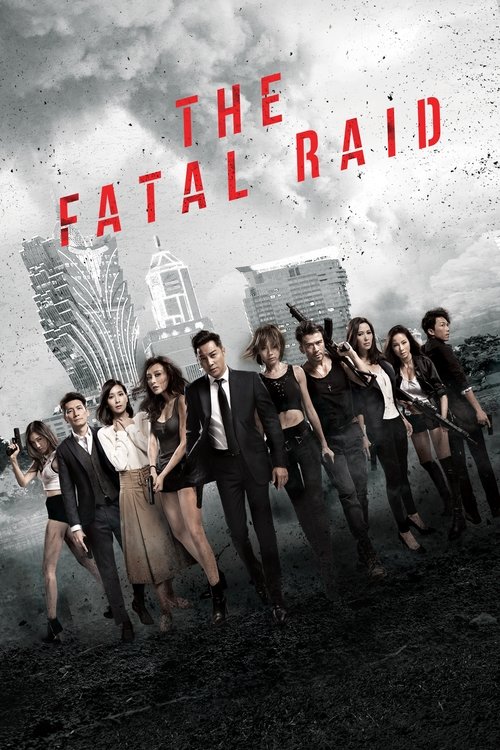
The film opens twenty years in the past, in Macau, with a secret police operation that already feels doomed the moment it begins. Inspector Tam, Madam Fong, Hard Gor, Shirley, and a unit of commandos are chasing a dangerous gang of smugglers or outlaws across the border, and the mission is staged like a covert strike that is never meant to be officially remembered. The air is tense, the men move hard and fast through the shadows, and the whole raid has the brittle urgency of something that can collapse at any second. Then it does. Gunfire erupts, the operation tears apart, and the night becomes a chaotic slaughter of police and criminals in a prolonged firefight.
In the confusion, the tragedy takes its deepest personal shape for Madam Fong. According to one account, amid the barrage she accidentally puts a bullet into the head of her colleague Hei, also identified as Hard Gor or Blacky/Blackie, and that moment becomes the emotional wound that defines her for the next twenty years. Shirley dies in the firefight, along with a number of commandos, and at least one innocent bystander is also killed in the crossfire. The original operation is so disastrous that it is effectively erased from police history, deleted from records, and never formally acknowledged, leaving the dead without proper accountability and the survivors with nothing but guilt and nightmares. The opening is not just a failed raid; it is the burial of a crime scene, a betrayal, and a memory the institution wants to pretend never happened.
Twenty years later, Inspector Tam and Madam Fong are still living inside that night. Tam has buried his anger under professionalism, while Fong carries the sharper, more visible burden of trauma, as if the bullet she fired never stopped ringing in her ears. The present-day story begins when they are pulled back to Macau for a new escort assignment: they must protect the female Deputy Commissioner of the Hong Kong Police Force during an official mission that is meant to be routine and symbolic, tied to public security and the image of order. The city has changed, the police have changed, and yet the route they travel feels like the same road back into the grave.
The escort detail brings together a new generation of officers, including Alma, Zi Han, Sheila, and Tong Yu/Yu Yu, depending on the romanization used by different sources. These women are introduced as capable, disciplined, and ready to work under pressure, but the film quickly makes clear that professionalism will not be enough. Almost immediately, the mission is attacked by three young drug-addicts, gangsters, or anarchist-style troublemakers, and the situation begins to spiral beyond the limits of a normal security operation. At first, the attack looks like a direct threat from reckless criminals terrorizing Macau, but the film keeps widening the trap around them. The officers manage to locate the attackers, yet somehow they become captives themselves, as if the real purpose was never simply to ambush the convoy but to herd the police into a killing ground.
From there the story starts snapping its hidden wires into place. The younger attackers are not the entire threat; they are merely a small part of a larger conspiracy, and the officers slowly realize they have walked straight into a setup designed long before that day. The mission, which was supposed to be an escort, becomes a hunt, then a siege, then a resurrection of the old crime. The plot starts circling back toward the original massacre in Macau, and the emotional pressure mounts because the surviving veterans begin to understand that someone has not only remembered the past, but has weaponized it.
The first major shock is the return of Hei. For twenty years, Tam and Fong have lived with the assumption that he died in the original raid, or at least disappeared into the wreckage of that night. Now he reappears, alive, and his presence detonates the entire psychological foundation of the story. The fact that he survives is itself a revelation, but even more destabilizing is the question of what he has become and what he has been doing all these years. What had seemed like a closed wound is suddenly open again, and the film turns its attention from simple survival to the unfinished business of revenge, guilt, and betrayal.
As the escort mission unravels, the officers are forced deeper into a controlled battleground, with the action shifting toward a warehouse hideout where the attackers have been operating. The warehouse functions like the film's pressure chamber: walls close in, weapons come out, and the police are trapped between the surface story of a security assignment and the buried truth of the old raid. Here the film's tension becomes explicit. This is not random violence. It is revenge, or at least revenge-shaped manipulation, and every new burst of gunfire is tied to the memory of the previous massacre.
The emotional core of the film is the relationship between Tam and Fong. They are not just survivors; they are carriers of the original disaster. Tam's demeanor suggests a man who has spent twenty years trying to stay functional by not looking too closely at what he lost. Fong, by contrast, is visibly haunted by the image of Hei falling from her own bullet, whether the exact circumstances were accidental, chaotic, or misunderstood. Their dynamic becomes more painful as the truth emerges that the past was never truly past. The old case was suppressed, the dead were ignored, and the survivors were never allowed to heal. The mission to Macau is therefore more than a security assignment; it is a forced reckoning with institutional denial.
The film's central revelation lands when it becomes clear that Hei is behind the whole trap. One source goes further and says that he is not acting alone, implying a hidden partner or co-conspirator whose identity adds another layer to the conspiracy. This means the present-day ambush is not merely the return of a presumed-dead man but the execution of a larger design connected to the erased tragedy from twenty years earlier. The survivors are being dragged back into the same geography, but now the terrain is psychological as much as physical. Every hallway, vehicle, and container in Macau seems to echo with the old raid's bloodshed.
The confrontation around the warehouse escalates into a series of violent exchanges. The three young attackers are dealt with as the broader plot unfolds, but they never feel like the real center of danger. Instead, they are the visible layer of a much deadlier structure: a trap that has been waiting for the old officers ever since the original mission was buried. The female officers, now forced to operate under impossible conditions, fight with determination, but the film keeps reminding the audience that bravery alone will not resolve a twenty-year-old lie. The tension builds because the story is no longer asking whether the police can survive the ambush; it is asking what it means to survive a history that has never been admitted.
The climax is described across sources as a bloody battle, a bloodbath, an explosive final confrontation, and a massacre. Gunfire erupts between police, gangsters, militants, and the returning figure from the original raid, and the film pushes the violence into a full-circle reckoning where the old and new crimes collapse into one another. The result is not a neat tactical victory but a destructive emotional release. The past finally stands in front of the survivors in flesh and blood, forcing them to confront the person they believed dead and the consequences of what happened when the police operation was erased from the record.
What the available sources make clear is that the ending is not interested in comfort. The trap is exposed, the truth about Hei's survival is undeniable, and the question of who really engineered everything hangs over the final stretch like smoke. The original raid's secrecy, the deaths of Shirley, the commandos, and the civilian, and Madam Fong's accidental shooting of Hei all converge into one violent reckoning. The present-day officers are left facing a situation in which the past has returned not as a memory but as an armed enemy.
The final scene completes that cycle of violence in the only way this kind of story can: through more gunfire, more blood, and the painful confirmation that no one ever escaped the trauma, only delayed it. The surviving officers are forced to endure the consequences of an operation that was never officially real, a tragedy that was deleted from history but never from their bodies or minds. Hei's return makes that hidden history impossible to ignore. Whether he is acting alone or with a partner, his presence transforms the old guilt into present danger, and the film ends with the survivors standing in the wreckage of both missions, having finally been dragged face to face with the truth they spent twenty years trying to outrun.

What is the ending?
In the ending of "The Fatal Raid," the main characters face a climactic confrontation that leads to significant sacrifices and resolutions. The film concludes with a tense standoff, resulting in the deaths of key characters and a bittersweet victory for the survivors.
As the final act unfolds, the scene opens in a dimly lit warehouse, where the remaining members of the police unit, led by the determined and resilient officer, are preparing for a final showdown against the drug cartel. The atmosphere is thick with tension, and the stakes are higher than ever. The officer, fueled by a mix of vengeance and duty, steels herself for the confrontation, knowing that the lives of her team and the safety of the community hang in the balance.
The first major moment occurs when the team breaches the cartel's stronghold. The sound of gunfire erupts, echoing through the warehouse as the officers engage in a fierce battle with the cartel members. The camera captures the chaos, with bullets flying and the officers taking cover behind crates. The emotional weight of the scene is palpable, as each character grapples with their fear and determination. The officer's face reflects a steely resolve, but also the burden of loss, as she remembers fallen comrades.
As the fight intensifies, one of the officers, who has been struggling with his own demons throughout the film, makes a heroic but tragic decision. He sacrifices himself to save his partner, pushing her out of harm's way just as a hail of bullets rains down. The moment is heart-wrenching, and the officer's sacrifice serves as a poignant reminder of the cost of their mission. The surviving officer is left devastated, her grief palpable as she watches her friend fall.
The climax reaches its peak when the officer confronts the cartel leader in a final showdown. The tension is electric as they exchange words, revealing the personal stakes involved. The officer's motivations are laid bare; she is not just fighting for justice but also for the memory of her fallen friends. The confrontation escalates into a brutal fight, showcasing the officer's skill and determination. In a moment of desperation, she manages to overpower the cartel leader, delivering a fatal blow that signifies her triumph but also the heavy toll it has taken on her spirit.
As the dust settles, the surviving officers regroup, their faces a mix of relief and sorrow. They have succeeded in dismantling the cartel, but the victory feels hollow in light of their losses. The camera lingers on the officer, who stands amidst the wreckage, her expression a blend of triumph and grief. She knows that while they have won the battle, the scars of their experiences will linger.
In the final moments, the surviving officer walks away from the scene, her silhouette framed against the backdrop of the warehouse. The weight of her journey is evident in her posture; she carries the memories of her fallen comrades with her, a reminder of the sacrifices made in the line of duty. The film closes on this somber note, leaving the audience to reflect on the complexities of heroism, loss, and the enduring impact of violence on those who serve.
Is there a post-credit scene?
In "The Fatal Raid," there is no post-credit scene. The film concludes its narrative without any additional scenes after the credits roll. The story wraps up with a focus on the emotional and physical toll of the events that transpired, leaving the audience with a sense of closure regarding the characters' journeys and the resolution of the central conflict. The absence of a post-credit scene emphasizes the gravity of the film's themes and the finality of the characters' fates.
What role does the antagonist play in the story, and how does he impact the main characters?
The antagonist, a ruthless drug lord, serves as the primary obstacle for the main characters. His cunning and brutality create a palpable sense of danger, as he is willing to do anything to protect his empire. His actions not only threaten the lives of the officers but also force them to confront their own moral boundaries, pushing them to make difficult decisions that test their resolve.
How does the relationship between the team members evolve throughout the film?
Initially, the team members exhibit a strong camaraderie, built on trust and shared experiences. However, as the raid progresses and tensions rise, cracks begin to show. Personal conflicts and differing opinions on how to handle the situation lead to moments of distrust and betrayal, ultimately testing their loyalty to one another and their mission.
What motivates the main characters to engage in the raid?
The main characters, a group of elite police officers, are driven by a strong sense of duty and justice. They are determined to take down a powerful drug syndicate that has been terrorizing their community. Personal stakes also play a role, as some officers have lost loved ones to the violence associated with the drug trade, fueling their desire for revenge and closure.
What are the key challenges the team faces during the raid?
During the raid, the team encounters several significant challenges, including heavily armed gang members who are prepared for a fight. They also face unexpected obstacles such as booby traps and the chaotic environment of the drug den, which complicates their mission. Additionally, internal conflicts and the pressure of the situation lead to critical mistakes that jeopardize their safety.
How does the film portray the emotional toll of the raid on the characters?
The film vividly depicts the emotional toll of the raid through intense character moments. As the team faces life-and-death situations, they experience fear, guilt, and trauma. Flashbacks and personal reflections reveal their backstories and the weight of their choices, showcasing how the violence and chaos of the raid affect their mental states and relationships with one another.
Is this family friendly?
"The Fatal Raid," produced in 2019, is not considered family-friendly due to its intense themes and graphic content. The film features several potentially objectionable aspects, including:
-
Violence: The movie contains numerous scenes of gunfights and hand-to-hand combat, showcasing bloodshed and injuries that may be distressing for younger viewers.
-
Death: Characters face life-threatening situations, and there are moments of significant loss that could be emotionally upsetting.
-
Strong Language: The dialogue includes profanity and harsh language, which may not be suitable for children.
-
Mature Themes: The film explores themes of betrayal, revenge, and moral ambiguity, which may be complex and unsettling for sensitive audiences.
-
Emotional Turmoil: Characters experience intense emotional struggles, including fear, anger, and grief, which could be overwhelming for some viewers.
Overall, the film's content is geared towards an adult audience and may not be appropriate for children or those who are sensitive to violence and emotional distress.







