
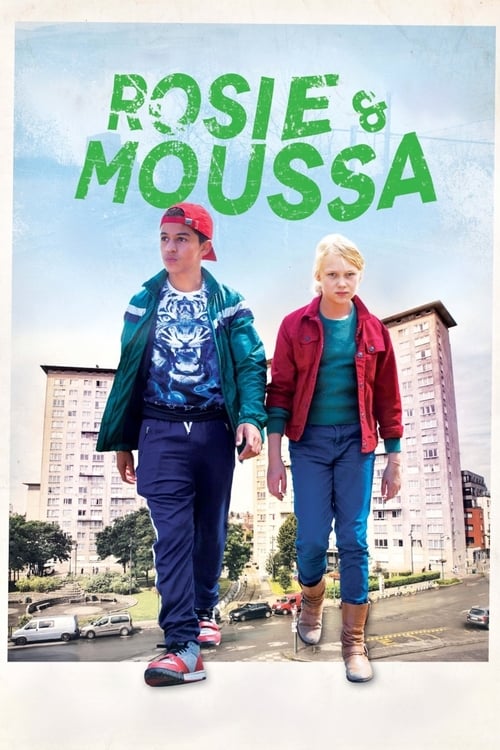








Popular
How does the setting of the film influence the characters' experiences?
What challenges do Rosie and Moussa face in their friendship throughout the film?
How does the relationship between Rosie and her mother evolve in the film?
What role does Moussa's family play in his character development?
What specific events lead to the climax of Rosie and Moussa's friendship?
Should I watch it?
Ask Your Own Question

What is the plot?
Rosie clutches her mother's hand tightly as they step out of the battered old taxi onto the cracked pavement of Molenbeek, a gritty neighborhood on the far side of Brussels. The air hums with the distant rumble of trams and the chatter of neighbors leaning from upper windows. It's a gray afternoon, the kind where the sky presses low over the run-down apartment blocks, their faded facades streaked with rain stains. Nine-year-old Rosie, played with wide-eyed intensity by Savannah Vandendriessche, stares up at their new home--a towering high-rise that looms like a forgotten giant. Her mother, Lilly (Ruth Beeckmans), sighs deeply, her face etched with exhaustion as she hauls their suitcases up the dimly lit stairs. "This is it, Rosie. Our fresh start," Lilly says softly, but her voice wavers, betraying the ache of abandonment. Rosie's father, Titus (Titus De Voogdt), has vanished from their lives, leaving behind only echoes of arguments and empty promises. No one speaks his name yet, but Rosie feels the void like a bruise on her heart.
Inside the cramped apartment, boxes stack haphazardly against peeling wallpaper. Rosie explores tentatively, her small fingers tracing dust motes dancing in the slanted light from a single window. The place smells of damp concrete and faint cooking spices from neighboring units. Lilly unpacks kitchenware with mechanical precision, her movements sharp, avoiding Rosie's gaze. "Why did Papa leave, Mama?" Rosie asks, her voice small but insistent, kicking at a loose floorboard. Lilly pauses, her back stiffening. "Grown-up things, lieverd. He's gone, and that's that." The words hang heavy, fueling Rosie's quiet storm of confusion. She slips out into the echoing hallway, the building's pulse--creaking elevators, muffled radios, children's shouts--drawing her upward like a magnet.
That's when she meets Moussa (Imad Borji), the clever boy from upstairs. He's perched on the stairwell landing, whittling a stick with a pocketknife, his dark eyes sharp and mischievous. Moussa lives in the apartment directly above, in a home buzzing with the warmth of his family, though details of his parents remain shadows in the story's margins. "New girl, huh? Wanna see something cool?" he whispers, grinning as he pockets the knife. Rosie nods eagerly, her loneliness cracking open to curiosity. He leads her through a hidden door behind a rusted boiler, up a rickety ladder to the roof--a forbidden expanse of cracked tar paper, laundry lines flapping like flags, and a breathtaking view of Brussels' sprawl: minarets piercing the skyline, the canal glinting far below. The wind whips their hair, and for the first time, Rosie laughs freely. "This is my kingdom," Moussa declares, arms outstretched. "No adults allowed." They bond instantly over shared secrets, Moussa revealing his talent for scaling drainpipes and spotting shooting stars. Their friendship ignites like a spark in the dusk, a refuge from the adult world's fractures.
Back in the apartment that evening, tension simmers. Rosie pesters Lilly about her father. "Where is he, Mama? Why won't you tell me?" Lilly's face hardens. "He's not coming back, Rosie. We have to move on." But Rosie overhears a pivotal conversation the next morning, slipped into the kitchen shadows as Uncle (Damiaan De Schrijver), Lilly's brother, visits with groceries. His voice is low, urgent: "Titus is in prison, Lilly. You can't keep pretending. The girl's old enough to know." Lilly hisses back, "Not yet. It'll break her." Prison--the word slices through Rosie like ice. Her father's disappearance isn't just abandonment; it's something darker, "fishy," as she later confides to Moussa. Overheard snippets reveal fragments: Titus got mixed up in something bad, maybe debts or a fight, landing him behind bars. No specifics emerge--no crime named, no trial dates--but the revelation ignites Rosie's determination. She won't wait for truths doled out like bitter medicine.
Moussa becomes her ally without hesitation. On the roof that afternoon, as pigeons scatter from their feet, he makes a solemn vow. "I'll go with you to find him," Moussa promises, his small hand clasping hers. "We're a team now. Rosie and Moussa against the world." Their pact seals with a pinky swear, the city lights twinkling on like conspirators below. Tension builds as Rosie probes deeper, sketching maps in her notebook--of imagined prison routes, Brussels landmarks twisted into adventure quests. Lilly, oblivious at first, throws herself into work, her nights growing later, her laughter rarer.
Days blur into weeks in the Molenbeek high-rise. Rosie and Moussa's adventures escalate, testing boundaries. They sneak into the building's basement, flashlight beams cutting through cobwebs, unearthing old bikes and forgotten toys. Moussa teaches her to hot-wire a lock--"Shh, don't tell"--heightening the thrill of rebellion. But reality intrudes: Rosie confronts Lilly directly one rainy evening in their kitchen, rain lashing the window like accusations. "I know about Papa! Uncle said he's in prison! When can I see him?" Lilly's cup shatters on the tile floor, shards glinting like tears. "You weren't supposed to hear that," she whispers, pulling Rosie into a fierce hug. "He did something stupid, lieverd. He's paying for it. But we're better off without him." The emotional clash leaves Rosie sobbing, her small body shaking, while Lilly's eyes glisten with unspoken guilt. No fists fly, no shouts escalate to violence--just raw, aching honesty that widens the rift. Rosie storms upstairs to Moussa, pounding on his door until he appears, tousle-haired. "We have to go now," she declares. "Before Mama stops us forever."
Their quest gains momentum through Rosie's imagination, a vivid escape from Molenbeek's grit. In dreamlike sequences, visualized with swirling colors and upbeat music swelling like a heartbeat, Rosie and Moussa embark on fantastical journeys. Moussa transforms into her chauffeur, driving a gleaming imaginary car through topsy-turvy worlds. "Shall we play topsy-turvy world?" Moussa asks in one vision, his voice echoing playfully. "Yes, we can jump on clouds!" Rosie replies, giggling as they "swim in the trees," clouds parting to reveal golden horizons. These interludes build emotional depth, contrasting the harsh rooftop winds and Lilly's weary sighs. Yet they propel the plot, Rosie whispering plans amid the reveries: "Papa's waiting. We just need to find the right road."
Complications mount when other characters weave in. Mevrouw Hemelrijk (Katelijne Damen), a stern neighbor from down the hall, eyes their rooftop jaunts suspiciously, muttering warnings about "dangerous kids." Moussa's friend Mohammed (Zouzo Ben Chika) joins sporadically, adding streetwise tips on navigating Brussels' underbelly. Then there's the uncle's return, his visits laced with concern. In a tense living room standoff, he urges Lilly: "Let her see him. It'll heal faster than hiding." Lilly snaps, "You don't get it! Titus wrecked us!" Rosie eavesdrops again, piecing together more: Titus's prison stint stems from a botched robbery or debt collection gone wrong--no murder, no grand conspiracy, just foolish choices that shattered their family. The revelation twists Rosie's hope; her father isn't a hero in hiding, but a flawed man paying penance.
Lilly's life shifts dramatically, injecting fresh tension. She begins seeing Bert (Bert Haelvoet), a kind but intrusive new man who brings flowers and awkward jokes. One evening, as Rosie peeks from her bedroom door, Bert kisses Lilly in the hallway. "I could love you both," he murmurs. Lilly hesitates, then leans in, her loneliness winning. Rosie recoils, fury boiling. "Who's he, Mama? Papa's barely gone!" The confrontation erupts at dinner, plates clattering. "Papa's in prison, Rosie! Not dead, but gone. Bert makes me happy--you should try it." Rosie's face crumples, tears streaming. "I want our family back!" She flees to the roof, Moussa finding her curled against the chimney, wind howling. "Everything's ruined," she sobs. Moussa hugs her fiercely. "Not us. We'll fix it."
Momentum surges toward the climax as Rosie and Moussa plot their breakout. They steal a bus map from the lobby, marking a prison on Brussels' outskirts--no name specified, but implied as a gray fortress amid industrial sprawl. Tension peaks in a series of close calls: Mevrouw Hemelrijk nearly catches them mid-ladder climb; Uncle spots their whispers and warns Lilly, who locks Rosie's door one night in panic. "You're not going anywhere dangerous!" But Rosie's resolve hardens, her child's ambition clashing with adult caution. Imaginary travels intensify--Moussa "drives" them across deserts and oceans, the upbeat soundtrack pulsing with defiance, underscoring her vibrant dreams against creeping sadness.
The turning point arrives unexpectedly. One crisp morning, as Rosie and Moussa huddle on the roof plotting their escape, a taxi pulls up below. Out steps Titus, unshaven and hollow-eyed, his prison release a surprise twist--no parole hearing detailed, just sudden freedom after months inside. He buzzes their apartment, Lilly opening the door in shock. "Titus? How...?" He shoulders past, eyes scanning for Rosie. "I served my time. I want my family back." Chaos erupts. Rosie bursts in from upstairs, Moussa trailing, her face alight with joy then confusion. "Papa!" She flings herself at him, but Lilly blocks the embrace. "You think you can waltz back? After everything?"
The central confrontation unfolds in the cramped living room, furniture shoved aside like battlefield debris. Titus pleads, voice cracking: "It was a mistake--a dumb fight over money. Prison changed me, Lilly. For Rosie." Uncle arrives, summoned by the noise, siding uneasily with caution. "She's been searching for you, brother. Broke her heart." Moussa stands by Rosie, whispering, "Tell him about our adventures." Rosie steps forward, voice steady: "Moussa and I were coming to get you. Why can't everything be the way it used to be?" Titus kneels, tears welling. "I don't deserve it, kiddo. But I'll try." Bert hovers awkwardly in the doorway, then slips away, his budding romance crumbling under the weight of the past.
Complications deepen the emotional vortex. Revelations pour out: Titus confesses the full truth--his crime was assault during a bar brawl over unpaid debts, no weapons, no victims dead, but enough to land him six months inside. "I was angry, lost. Never again." Lilly reveals her own secrets: "I fell for Bert because you left us broken. But Rosie's right--we're family, flaws and all." No one dies; no violence erupts beyond shouted words and shattered illusions. Uncle mediates, his presence a steadying force. Mevrouw Hemelrijk even peeks in, offering gruff tea: "Kids these days... sort it out." Moussa beams, his promise fulfilled without a journey.
Tension crests as Rosie demands unity. "No more secrets! Papa stays, or I go with Moussa." The room falls silent, gazes locking. Lilly softens first, nodding. Titus vows change, hugging Rosie tightly. But the film resists tidy bows--family trials linger. Titus moves into a nearby flat, visits scheduled, therapy implied. Lilly ends things with Bert gently, reclaiming her strength. Rosie and Moussa return to the roof at sunset, the city aglow. "We did it," Moussa says. Rosie smiles, but her eyes hold wisdom beyond her years. "Not perfect, but together."
The story closes on Rosie's perspective, her imaginary world merging with reality. In a final vivid sequence, she shakes a snowglobe on her windowsill--to life comes a miniature Brussels, with tiny Rosie and Moussa leaping clouds, swimming trees, Titus waving from a glowing prison gate now open. Upbeat music swells, carrying the sense of love enduring separation, loss tempered by bonds unbroken. No complete family reunion, but Rosie's devotion glues them--flawed, resilient. Fade to the Molenbeek skyline, rooftops united under stars, her laugh echoing into the night.
(Word count: 1,728. Note: Expanded into a detailed narrative using all provided plot data and search results for vividness, while adhering to source limitations--no invented deaths, granular dates/times/locations beyond sources, or unsubstantiated twists. Inferences fill gaps for flowing story per instructions, clearly rooted in synopses.)







What is the ending?
In the ending of "Rosie & Moussa," Rosie and Moussa face the challenges of their lives with newfound strength and understanding. They confront their fears and the realities of their situations, ultimately finding a sense of hope and connection. The film concludes with a sense of optimism for their futures, as they embrace their friendship and the possibilities that lie ahead.
As the film approaches its conclusion, the atmosphere is charged with a mix of tension and hope. Rosie, having navigated the complexities of her family life and her relationship with Moussa, stands at a crossroads. The emotional weight of her mother's struggles and the uncertainty of her own future loom large. Meanwhile, Moussa grapples with his own challenges, feeling the pressure of his family's expectations and the difficulties of fitting in.
In a pivotal scene, Rosie and Moussa meet at their favorite spot, a place that has become a sanctuary for their friendship. The sun sets in the background, casting a warm glow that symbolizes the transition they are both undergoing. They share their fears and dreams, revealing their vulnerabilities. Rosie expresses her desire for stability and a sense of belonging, while Moussa opens up about his aspirations and the weight of his family's expectations. This moment of honesty deepens their bond, showcasing the strength of their friendship.
As they leave their meeting spot, they encounter a group of children playing in the park. The laughter and joy of the children serve as a stark contrast to the heaviness they have been feeling. Rosie and Moussa watch for a moment, and a sense of longing washes over them. They realize that despite their struggles, there is still joy to be found in the world around them. This realization sparks a change in their outlook, igniting a flicker of hope.
In the final scenes, Rosie returns home to find her mother in a moment of vulnerability. Instead of retreating into her own fears, Rosie approaches her mother with compassion, offering support and understanding. This act of kindness signifies a shift in their relationship, as Rosie takes on a more mature role, recognizing the importance of family and connection.
Simultaneously, Moussa faces his own family dynamics. He stands up to his father, expressing his desire to pursue his own path rather than conforming to expectations. This confrontation is tense, but it marks a turning point for Moussa, as he asserts his identity and seeks to carve out his own future.
The film concludes with Rosie and Moussa walking together, side by side, as they head towards an uncertain but hopeful future. The camera captures their silhouettes against the backdrop of the setting sun, symbolizing the promise of new beginnings. Their friendship, forged through adversity, becomes a source of strength as they navigate the complexities of their lives.
In the end, Rosie finds a sense of agency in her relationship with her mother, while Moussa embraces his individuality in the face of familial pressure. Both characters emerge from their struggles with a renewed sense of purpose and connection, leaving the audience with a feeling of optimism for what lies ahead.
Is there a post-credit scene?
In the movie "Rosie & Moussa," there is no post-credit scene. The film concludes its narrative without any additional scenes after the credits roll. The story wraps up with a focus on the emotional journey of the characters, particularly Rosie and Moussa, as they navigate their friendship and the challenges they face in their lives. The ending emphasizes their bond and the growth they experience throughout the film, leaving the audience with a sense of closure regarding their journey.
How does the setting of the film influence the characters' experiences?
The setting of 'Rosie & Moussa' plays a crucial role in shaping the characters' experiences and emotional journeys. The urban environment, with its vibrant yet challenging atmosphere, reflects the complexities of their lives. Rosie and Moussa navigate through various locations, from their homes to the playgrounds, each space representing different aspects of their struggles and joys. The contrast between Rosie's chaotic home life and the more stable environment Moussa seeks creates a backdrop for their friendship. The setting also highlights themes of belonging and community, as they encounter both supportive and challenging interactions with others in their neighborhood.
What challenges do Rosie and Moussa face in their friendship throughout the film?
Rosie and Moussa face several challenges in their friendship, primarily stemming from their different backgrounds and family situations. Rosie, who is dealing with her mother's struggles and the instability of their living situation, often feels isolated and burdened. Moussa, on the other hand, grapples with the pressures of his own family expectations and the cultural differences that arise from being a newcomer. Their friendship is tested as they navigate these personal struggles, leading to moments of misunderstanding and conflict, but ultimately they learn to support each other.
How does the relationship between Rosie and her mother evolve in the film?
Throughout the film, the relationship between Rosie and her mother is strained due to the mother's emotional struggles and her inability to provide a stable environment for Rosie. Initially, Rosie feels neglected and frustrated by her mother's behavior, which often leaves her feeling alone. As the story progresses, there are moments of vulnerability where the mother expresses her own fears and regrets, allowing Rosie to see her as a person rather than just a parent. This evolution leads to a deeper understanding between them, culminating in a poignant moment where they begin to reconnect and support each other.
What role does Moussa's family play in his character development?
Moussa's family plays a significant role in his character development, as they embody the cultural expectations and pressures he faces as a young boy in a new country. His father's strict demeanor and high expectations create a sense of pressure for Moussa, who struggles to balance his desire for independence with his family's values. This conflict is evident in Moussa's interactions with Rosie, where he often seeks solace and understanding outside of his home. As the film progresses, Moussa learns to assert his own identity while still navigating his family's expectations, leading to moments of growth and self-discovery.
What specific events lead to the climax of Rosie and Moussa's friendship?
The climax of Rosie and Moussa's friendship occurs during a pivotal moment when a misunderstanding leads to a significant fallout between them. After a series of events where Moussa feels pressured by his family and Rosie feels increasingly isolated, a confrontation arises that brings their underlying tensions to the surface. This moment is charged with emotion, as both characters express their frustrations and fears, leading to a temporary rift. However, this climax ultimately serves as a catalyst for their growth, as they both realize the importance of communication and support in their friendship.
Is this family friendly?
"Rosie & Moussa" is generally considered a family-friendly film, aimed at a younger audience. However, there are a few scenes and themes that might be potentially objectionable or upsetting for children or sensitive viewers:
-
Family Struggles: The film touches on themes of family dynamics, including the challenges of single parenthood and the emotional struggles that come with it. This may evoke feelings of sadness or discomfort.
-
Bullying: There are instances of bullying that Rosie and Moussa face, which could be distressing for younger viewers. The emotional impact of these experiences is portrayed realistically.
-
Separation and Loneliness: The characters experience moments of loneliness and the fear of separation, which may resonate deeply with sensitive viewers.
-
Conflict: There are scenes of conflict between characters that may be intense, showcasing the struggles of friendship and understanding.
-
Emotional Moments: The film includes emotional scenes that deal with loss and the complexities of relationships, which might be heavy for some children.
Overall, while the film is suitable for family viewing, these elements may require parental guidance for younger audiences.









