




Popular
What motivates Ariodante to confront the challenges he faces in the story?
How does Ginevra's character evolve throughout the opera?
What role does Polinesso play in the conflict of the story?
How does the character of King of Scotland influence the events in the opera?
What is the significance of the duel between Ariodante and Polinesso?
Should I watch it?
Ask Your Own Question

What is the plot?
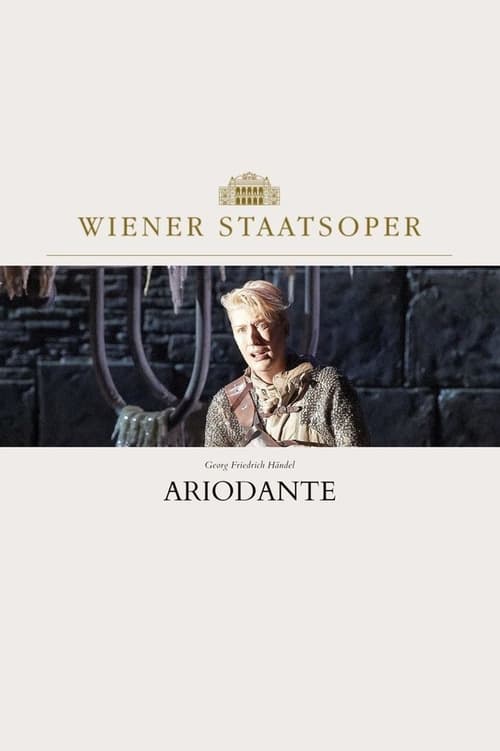
The Vienna State Opera's 2018 Ariodante follows the classic Handel story of love, deception, humiliation, attempted suicide, and final vindication, set at the Scottish royal court where Princess Ginevra is already promised to Ariodante with the king's blessing and the ambitious Duke of Albany, Polinesso, is determined to ruin them both. In this production, the action unfolds as a tense court intrigue directed by David McVicar, with William Christie conducting, and the atmosphere is one of elegance slowly being poisoned by jealousy and manipulation.
At the Scottish court, everything initially appears to move toward a glorious wedding. Ginevra, the king's daughter, is in love with Ariodante, the king's favored knight, and the match has the king's approval; Ariodante is not merely a suitor but the man expected to become Ginevra's husband and secure the royal future. Yet the court is already unsettled by the arrival of Polinesso, who is outwardly charming but inwardly predatory, a man whose eyes are on both Ginevra and power itself. He is rejected by Ginevra, and that refusal instantly turns him from a rejected admirer into a calculated enemy.
The opening scenes make the emotional structure clear: Ariodante and Ginevra are sincerely devoted to one another, while everyone else around them becomes either an accomplice or a threat. Ginevra's private world is especially important because it becomes the stage for the central deception. She is accompanied by Dalinda, her lady-in-waiting, who is in love with Polinesso and is vulnerable to his manipulation. Lurcanio, Ariodante's brother, is also present in the orbit of the court, and he loves Dalinda, though she does not return his affection. From the beginning, this gives the story a dangerous asymmetry: the faithful lovers are under siege, while the emotionally rejected characters become the raw material for intrigue.
Polinesso quickly realizes that he does not need to overpower Ariodante directly; he only needs to destroy trust. He targets Dalinda, exploiting her feelings for him with smooth promises and suggestive attention. In the Vienna staging, the menace is sharpened visually by the fact that Polinesso and Ariodante can appear almost cordially linked at first, making the later betrayal feel even more brutal. Polinesso's plan is elegant in its cruelty: he persuades Dalinda to dress in Ginevra's clothes and let him enter what appears to be the princess's chamber, creating the false impression that Ginevra is receiving a lover in secret. This is the opera's first great twist, because the audience understands that what appears to be proof of adultery is actually a carefully staged masquerade built from stolen identity and emotional coercion.
That night, as the court still seems suspended between celebration and danger, Ariodante moves through the royal gardens toward Ginevra's chamber and encounters Polinesso. Polinesso pretends surprise and speaks as if he is a friend, but then pushes the lie that Ginevra loves him instead. Hidden nearby, Lurcanio sees part of this treachery, though not the full mechanism behind it. The visual logic of the scene is devastating: Ariodante sees what seems to be his bride's betrayal, and reason collapses under the force of the image. The supposed evidence is not verbal rumor but sight, and sight becomes fatal.
From this point, the story turns dark almost immediately. Ariodante is overwhelmed by heartbreak, humiliation, and rage, and in his despair he chooses death. He throws himself from the cliff or into the sea, in the production's imagery a stark, shocking gesture of self-annihilation. This is the opera's first death-related event, though it is not a true death, because Ariodante survives. The staging often underscores this moment with snow or other bleak visual symbolism, making his suffering feel almost elemental, as if the world itself is freezing around him.
Once Ariodante is believed dead, the political consequences begin to spread through the court. Lurcanio, having witnessed enough to be convinced that Ginevra has behaved shamefully, reports the matter to the king. The king, who had approved the engagement and trusted both the lovers and his own daughter, is forced into public judgment by this apparent scandal. Ginevra is suddenly no longer the beloved princess but a condemned woman, accused of dishonor in the very court where her marriage had seemed inevitable. The production emphasizes how quickly private intimacy becomes public disgrace: a bedroom deception turns into a state crisis.
Ginevra herself remains innocent and bewildered, unable to understand why the world is collapsing around her. She has not committed the crime she is accused of, but the false scene has already done its work, and the court now sees her through the lens Polinesso has fabricated. This is one of the opera's cruelest reversals: the person who is most loyal is the one most violently punished. The king's authority, rather than protecting truth, becomes part of the machinery that validates the lie.
Meanwhile, Ariodante has not actually died. He survives his leap and later reappears, physically and emotionally transformed. His return from apparent death is essential to the opera's structure, because it creates the space for truth to surface. He encounters Dalinda in the forest, where the protected spaces of the court no longer exist and confession can finally happen away from Polinesso's control. The production uses this transition from palace to forest to mark a moral shift: the corrupted social world gives way to a place where facts can be spoken plainly.
Dalinda, now terrified and conscience-stricken, finally reveals the entire conspiracy to Ariodante. This is the major revelation of the opera. She confesses that Polinesso used her love for him to stage the false adultery, dressing her as Ginevra and exploiting her devotion so that Ariodante would see what he was meant to see. Dalinda's confession transforms the earlier "proof" into a lie, and Ginevra's apparent betrayal is exposed as nothing more than theatrical fraud. The emotional force of this scene lies not only in the revelation itself but in Ariodante's realization that his despair was built on a deception so intimate and so complete that it nearly destroyed him.
This confession also repositions Dalinda. She is not the mastermind, but she is not innocent in every sense either; she has allowed herself to be manipulated by desire, and her weakness becomes the instrument of catastrophe. Still, the opera treats her with compassion, because she is fundamentally a witness rather than the architect of the crime. Ariodante, recognizing this, pleads for mercy on her behalf later at court.
The story then rushes toward its final confrontation. Ariodante returns to the king's court, carrying the truth that can now undo the false judgment. The setting itself matters here: the same royal space that once received the lie must now receive the truth, and the reversal has a ceremonial weight. Ariodante explains that Ginevra was innocent, that he survived, and that Polinesso engineered the entire deception. The king's understanding shifts as the full chain of manipulation becomes clear: the accusation was never evidence, only a performance.
But truth alone is not enough to restore honor in this world. Lurcanio, who has been torn between brotherly loyalty, personal feeling, and the demands of public justice, challenges Polinesso to combat. This duel functions as the opera's decisive confrontation, replacing uncertain testimony with blood and steel. It is the final resolution of the tension between appearance and reality: where Polinesso used disguise to lie, Lurcanio uses open combat to force the outcome into the light.
The duel ends with Polinesso's death at Lurcanio's hands. This is the opera's only actual death besides the doomed possibility of Ariodante's suicide, and it is the direct consequence of Polinesso's own scheme. The villain falls not because he is exposed in a courtroom but because the court's world of honor still requires martial proof, and he loses that proof when he is forced to face a righteous opponent. His death closes the conspiracy and removes the source of the tragedy.
With Polinesso dead, the false accusation against Ginevra can no longer stand. The king accepts her innocence, Ariodante's account is confirmed, and the emotional catastrophe begins to unwind. Dalinda is pardoned, because her participation is recognized as the result of manipulation rather than malice. Lurcanio, who has loved Dalinda all along, now at last receives a return of feeling, and the two move toward reconciliation. The opera does not end in bitter irony but in restoration, allowing love to re-form where deception had shattered it.
The final scenes return the audience to the wedding that had been postponed by lies and cruelty. Ginevra and Ariodante are reunited, their bond restored through suffering rather than innocence alone. What had looked like permanent ruin is revealed to have been a temporary darkness, though one that nearly cost both lovers everything. The emotional arc is complete: the court moves from celebration to disgrace to truth and then back to celebration, but now the happiness is hard-won and deeply conscious of what it has survived.
In this 2018 Wiener Staatsoper production, the climax is not simply that the villain loses; it is that the entire social order briefly has to confront how easily it believed a lie. Polinesso's death, Ariodante's survival, Ginevra's vindication, and Dalinda's pardon all converge in the restored marriage and the return of royal harmony. The final image is one of release after prolonged suffocation: the lovers can finally stand together openly, the king's blessing is no longer compromised by deception, and the court regains its balance only after passing through shame, grief, and near annihilation.
The complete story therefore ends with everyone's fate settled: Polinesso is dead, killed by Lurcanio; Ariodante lives after his suicide attempt; Ginevra lives, cleared of false accusations; Dalinda lives and is forgiven; and the marriage between Ariodante and Ginevra can proceed at last. What begins as a promising engagement at the Scottish court becomes a spiral of false appearances, public humiliation, and apparent death, but it closes in truth, reconciliation, and the restoration of rightful love.
More Movies Like This
Browse All Movies →







What is the ending?
In the ending of "Ariodante" at the Wiener Staatsoper, Ariodante, after enduring betrayal and despair, ultimately finds redemption and love. Ginevra, who has been wronged and falsely accused, is revealed to be innocent. The couple is reunited, and their love triumphs over the trials they faced. The opera concludes with a sense of hope and reconciliation.
As the final act unfolds, the atmosphere is charged with tension and emotion. The scene opens in a grand hall, where the characters are gathered, each bearing the weight of their choices. Ariodante, still reeling from the betrayal he believes Ginevra has committed, stands apart, his heart heavy with sorrow. His internal struggle is palpable; he grapples with feelings of love and betrayal, his face a canvas of anguish.
Ginevra enters, her demeanor a mix of defiance and vulnerability. She is determined to clear her name, her eyes shining with a fierce resolve. The audience can sense her desperation as she confronts the accusations that have been hurled at her. She pleads for Ariodante's understanding, her voice trembling yet strong, revealing the depth of her love and the pain of being misunderstood.
As the confrontation escalates, the presence of Polinesso, the antagonist, looms large. He revels in the chaos he has sown, his smugness a stark contrast to the turmoil around him. His manipulations have led to a near-tragic climax, and he attempts to further drive a wedge between Ariodante and Ginevra. The tension reaches a boiling point as Ariodante, torn between love and betrayal, prepares to confront Polinesso.
In a dramatic turn, the truth begins to unravel. Ginevra's innocence is revealed through a series of revelations that expose Polinesso's deceit. The audience witnesses the moment of clarity for Ariodante as he realizes the depth of Ginevra's loyalty and the treachery of Polinesso. His expression shifts from despair to determination, igniting a spark of hope.
The climax reaches its peak as Ariodante confronts Polinesso, leading to a confrontation that is both physical and emotional. The struggle symbolizes the battle between love and betrayal, truth and deception. As the fight ensues, the other characters rally around Ginevra, supporting her in her quest for justice. The atmosphere is electric, filled with the tension of impending resolution.
In the aftermath of the confrontation, the truth prevails. Polinesso is exposed and defeated, his plans unraveled. Ginevra stands tall, her dignity restored, and Ariodante, now free from the shackles of doubt, rushes to her side. Their reunion is a moment of catharsis; they embrace, tears of joy mingling with the remnants of their past pain. The audience can feel the weight of their journey lift as they find solace in each other's arms.
As the opera draws to a close, the characters gather to celebrate the triumph of love over adversity. Ariodante and Ginevra, hand in hand, symbolize hope and resilience. Their love story, once marred by betrayal, now shines brightly as a testament to the power of truth and forgiveness. The final scene is filled with joyous music, echoing the themes of redemption and the enduring strength of love, leaving the audience with a sense of closure and optimism for the future of the couple.
Is there a post-credit scene?
The 2018 production of "Ariodante" by the Wiener Staatsoper does not feature a post-credit scene. The opera concludes with a powerful resolution to the story, focusing on themes of love, honor, and redemption. The final moments are filled with emotional intensity as the characters find reconciliation and joy, leaving the audience with a sense of closure. The production emphasizes the operatic experience, culminating in a grand finale that celebrates the triumph of love over adversity, rather than extending the narrative with additional scenes after the curtain falls.
What motivates Ariodante to confront the challenges he faces in the story?
Ariodante is driven by his deep love for Ginevra, which fuels his determination to prove her innocence and restore their honor. His emotional turmoil is palpable as he grapples with jealousy and betrayal, particularly when he believes Ginevra has been unfaithful. This internal conflict propels him to seek the truth, showcasing his loyalty and the depth of his feelings.
How does Ginevra's character evolve throughout the opera?
Ginevra begins as a confident and loving figure, deeply committed to Ariodante. However, as the plot unfolds and she faces accusations of infidelity, her emotional state shifts dramatically. She experiences despair and vulnerability, particularly when she is wrongfully accused and abandoned. Her journey reflects resilience as she ultimately seeks to reclaim her honor and love.
What role does Polinesso play in the conflict of the story?
Polinesso serves as the antagonist, driven by his desire for Ginevra and his jealousy of Ariodante. His manipulative nature is revealed as he orchestrates the deception that leads to Ginevra's disgrace. Polinesso's motivations are rooted in his obsession, and his actions create a web of conflict that challenges the protagonists, ultimately leading to his downfall.
How does the character of King of Scotland influence the events in the opera?
The King of Scotland acts as a figure of authority and judgment, whose decisions significantly impact the fates of the main characters. His initial support for Ginevra turns to doubt when faced with accusations, reflecting the societal pressures of honor and reputation. His eventual recognition of Ginevra's innocence and his role in restoring order highlight the themes of justice and redemption.
What is the significance of the duel between Ariodante and Polinesso?
The duel between Ariodante and Polinesso is a climactic moment that encapsulates the themes of honor and revenge. It represents Ariodante's struggle to reclaim his dignity and protect Ginevra's honor. The intensity of the duel is heightened by Ariodante's emotional state, torn between love and the need for vengeance, making it a pivotal point in the narrative that leads to resolution.
Is this family friendly?
The 2018 production of "Ariodante" by the Wiener Staatsoper is generally considered family-friendly, but it does contain some elements that may be sensitive for children or more sensitive viewers. Here are a few aspects to consider:
-
Themes of Betrayal and Jealousy: The narrative revolves around complex emotional themes, including betrayal and jealousy, which may be difficult for younger audiences to fully grasp.
-
Depictions of Heartbreak: Characters experience deep emotional pain, particularly in scenes of heartbreak and despair, which could be upsetting for some viewers.
-
Dramatic Tension: There are moments of high dramatic tension, including confrontations and misunderstandings that may evoke strong emotions.
-
Costume and Stage Design: While visually stunning, some costumes and stage designs may include darker or more somber elements that could be unsettling for younger viewers.
-
Violence and Conflict: Although not graphic, there are instances of conflict that may involve threats or aggressive behavior, which could be alarming to sensitive audiences.
Overall, while the opera is rich in music and storytelling, parents may want to consider these elements when deciding if it is suitable for their children.








