











Popular
What motivates Ms. Koizumi's passion for ramen?
How does Ms. Koizumi's relationship with her friends evolve during the story?
What role does the ramen shop play in the characters' development?
What are some specific ramen dishes featured in the special, and how do they impact the characters?
How does Ms. Koizumi's character contrast with her friends in terms of their approach to ramen?
Should I watch it?
Ask Your Own Question

What is the plot?
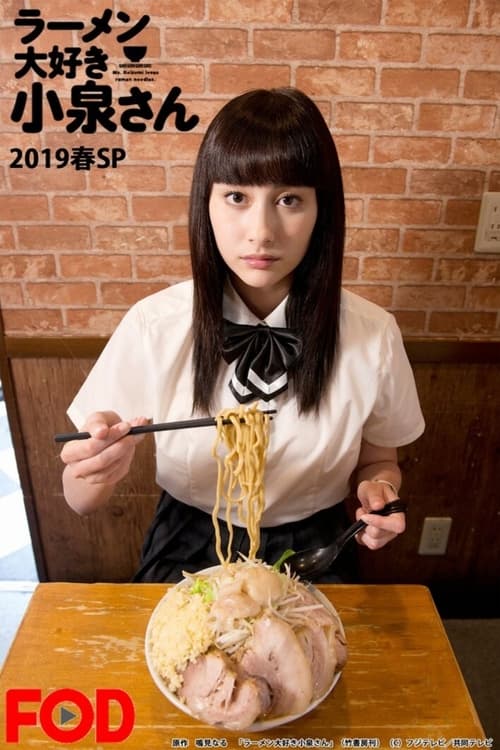
Yuu Osawa's story begins on an ordinary walk home from school, when she spots a ramen shop packed with men standing shoulder to shoulder in line, the kind of place that seems too intense and too adult for a first-year high school girl to wander into alone. Then, through the steam fogging the glass and the bustle of hungry customers, she sees Koizumi-san, the enigmatic transfer student from her class, waiting by herself among the crowd. Yuu is instantly captivated. Koizumi is beautiful in a distant, almost untouchable way, the sort of girl who draws attention without seeming to notice it, and Yuu cannot understand why she would choose to spend her time alone at a ramen shop when most people would be out with friends. The sight is so strange and so compelling that Yuu decides, on the spot, to go inside after her.
That decision sets the tone for everything that follows. Yuu enters the shop with a mixture of curiosity, admiration, and an almost frantic desire to connect. She wants to talk to Koizumi, to become friends, to close the invisible distance between them. Koizumi, however, remains composed and self-contained, giving off the air of someone whose attention is fully elsewhere. Her focus is not on conversation, not on school gossip, not on the awkward social energy of a classmate trying to impress her. Her focus is on ramen. That becomes clear almost immediately once they sit and order.
Yuu, trying to mirror Koizumi and maybe share a bit of her world, orders the same dish Koizumi has chosen. It seems like a harmless way to follow her lead, a way to make a subtle connection. But then the bowl arrives, and Yuu realizes too late that she has ordered a monstrous pork ramen, a huge serving that looks overwhelming beside her. The moment is funny, embarrassing, and telling all at once. Yuu panics, but Koizumi does not react with mockery or even much comment. She simply eats with astonishing speed and elegance, slurping down the ramen in a way that feels both disciplined and ecstatic, as though the meal is not just food but a private ritual. The way she eats is mesmerizing. Yuu watches, stunned, as Koizumi's expression changes in tiny, almost imperceptible ways, the cool mask of the reserved transfer student softening into quiet satisfaction. In that instant, Yuu understands something fundamental: Koizumi is not merely fond of ramen. Koizumi lives for it.
From there, the relationship that defines the special takes shape in the only way it can: through ramen. Yuu keeps trying to get closer to Koizumi, but Koizumi keeps the boundaries of ordinary friendship firmly in place. She is not rude, exactly; she is polite, but that politeness has the sharp finality of a door that never quite opens. Yuu's energy is warm and overflowing, while Koizumi's is cool, contained, and devoted to her own appetite. The emotional friction between them never turns hostile, but it does create a tension that hums beneath every scene. Yuu wants companionship. Koizumi wants ramen. Yuu keeps reaching outward. Koizumi keeps turning inward to the bowl in front of her.
The special's structure follows that imbalance as the two of them move through different ramen shops and ramen experiences. Each new location deepens Yuu's understanding of Koizumi, not because Koizumi reveals herself through confession, but because ramen reveals her instead. Koizumi seeks out different styles with the seriousness of a connoisseur. She is not content with one favorite place or one familiar flavor. She pursues varieties, broths, toppings, and noodle styles with almost obsessive precision, treating ramen shops like landmarks in a private pilgrimage. Every restaurant they visit becomes a small stage on which her true personality emerges. In some places she is cool and restrained until the first bite; in others, the sight of a particularly appealing bowl brings a subtle brightening to her face that no classroom conversation ever manages to produce.
Yuu follows her through all of it. Sometimes she joins willingly, sometimes she trails behind in stubborn fascination, and sometimes she seems swept along by the sheer force of Koizumi's single-mindedness. What keeps her moving is not just attraction in the romantic sense, though that is clearly part of it. It is also wonder. Koizumi is a mystery, and Yuu believes that if she can just keep eating beside her, keep accompanying her from one ramen shop to the next, she will eventually decode the person hidden behind the silence. That hope drives the narrative forward. The plot is simple, but the emotional rhythm becomes addictive: Yuu follows, Koizumi eats, Yuu observes, and slowly the viewer sees the shape of Koizumi's world.
One of the clearest revelations is that Koizumi's quietness is not emptiness. She is not blank or hollow. She is intensely focused. Her reserve in everyday life makes her seem detached, but ramen unlocks a different version of her, one that is deeply responsive, almost tender in its appreciation. Her eyes sharpen. Her posture changes. Her attention narrows entirely to the bowl, and in that narrowed world she becomes vivid. She may say very little, but what she does say, when she speaks at all, tends to be practical and precise, as if every detail about the ramen matters. This is how the special builds its central idea: Koizumi is most herself when she is eating ramen, and Yuu, by chasing after her, slowly learns to see that self.
The school setting keeps the story grounded in everyday life. Koizumi and Yuu are classmates, so every ramen outing hangs over the ordinary social world of classrooms, hallways, and lunch breaks. This makes Yuu's fascination feel even more urgent, because she is not chasing a stranger but someone who sits just a short distance away in class and yet seems worlds apart. Their proximity creates its own kind of tension. Yuu sees Koizumi every day, but she never feels as though she fully reaches her. Koizumi's beauty draws attention from the whole class, but she does not seem to invite friendship, and certainly not on anyone else's terms. That distance is especially painful for Yuu because it feels so close to closeness. She and Koizumi are not separated by geography or by dramatic fate. They are separated by temperament, by appetite, by the fact that one of them wants conversation and the other wants noodles.
The shops themselves become the true landmarks of the story. Each ramen restaurant is less a backdrop than a revelation. The first shop establishes the relationship. Later visits broaden the frame, showing that ramen is not a single thing but a world of styles and techniques. Yuu learns that there are layers of broth, differences in noodles, and ways of eating that Koizumi treats as essential knowledge. The ramen is always described through sensation: steam rising from the bowl, the heft of the noodles, the shine of the broth, the crunch or softness of toppings, the sound of slurping, the heat blooming across the face. The special leans into those sensory details because they are the language Koizumi understands best. She does not narrate her emotions directly, but the food does it for her.
Social tensions continue to ripple in the background. Misa Nakamura and Jun Takahashi remain part of the wider story world, and their presence helps underline how unusual Koizumi is. Misa's jealousy and fascination with Koizumi's beauty creates one axis of interpersonal friction, while Jun's caution and anxious energy add another. Even so, the special keeps its center on Yuu and Koizumi. The real conflict is not between enemies or rivals. It is between intention and indifference, persistence and privacy. Yuu keeps trying to make their bond into a friendship that looks like what most people would expect. Koizumi keeps refusing that shape. Not cruelly. Simply by being herself.
This refusal becomes one of the story's most important quiet twists. Yuu gradually realizes that Koizumi's interest in her is limited, but not nonexistent. Koizumi does not reject Yuu's presence outright. She allows her to accompany her, to sit nearby, to share in the ramen experience. She just does not want to transform that shared experience into an ordinary social relationship. Her affection, such as it is, is expressed through tolerance, through routine, and through the fact that she permits Yuu to witness something private. That is as close as Koizumi comes to intimacy for much of the special. It is frustrating for Yuu, but it is also the first sign that Koizumi's walls are not as absolute as they seem.
The emotional high points come not from speeches but from the contrast between Yuu's expressive reactions and Koizumi's concentrated calm. Yuu often looks like someone on the verge of blurting out her feelings. Her face registers surprise, embarrassment, admiration, and disappointment almost continuously. Koizumi, meanwhile, becomes most expressive when the ramen itself is at its best. She does not transform into an entirely different person, but she does relax into pleasure. In those moments the special makes a simple but effective point: food can reveal character more honestly than conversation can. Yuu, who starts out wanting to know Koizumi through social contact, ends up learning her through observation, repetition, and appetite.
As the story progresses, the ramen outings start to feel almost ceremonial. Koizumi chooses a place, or Yuu follows her to one, and each bowl becomes an event. The story never introduces a grand external danger or a mystery to solve. Instead, it builds momentum through accumulation. One bowl leads to another. One shop leads to the next. Yuu's desire to keep up with Koizumi becomes stronger, not weaker, because every meal shows her another facet of Koizumi's passion. Koizumi is elusive in conversation, but ramen is her language, and Yuu gradually learns to listen.
There are no deaths in the special, no murders, accidents, or fatal confrontations. The emotional stakes are entirely personal. The closest thing to a climax is the recurring moment when Yuu, after yet another ramen experience, reaches the edge of an imagined breakthrough and tries to turn it into a bond. Each time, Koizumi's response brings the story back to itself. She does not become more talkative in the way Yuu hopes, and she does not suddenly confess a hidden affection. Instead, the relationship is redefined by continuity rather than resolution. Koizumi remains mysterious, but the mystery becomes warmer because Yuu is now part of it.
The ending follows that same pattern. Rather than concluding with a dramatic confession or a final breakthrough, the special closes by preserving the central dynamic. Yuu still wants to know Koizumi better. Koizumi still belongs most completely to ramen. Their connection remains incomplete, but it is no longer entirely one-sided. Yuu has moved from simple fascination to a kind of devoted companionship. She has learned that if she wants to stay close to Koizumi, she has to enter the world Koizumi actually inhabits. That world is full of noodles, broth, steam, and the quiet seriousness of eating well.
In the final moments, the emotional resolution is gentle rather than triumphant. Koizumi's bond to ramen is reaffirmed, and Yuu's determination to keep following her remains unbroken. Nothing is "solved" in the conventional sense. Koizumi does not stop being reserved, and Yuu does not stop being eager. But the story ends with the sense that this is enough for now. Yuu has seen what matters most to Koizumi, and Koizumi, in allowing Yuu to witness it again and again, has allowed a real if unspoken connection to form. The special closes not on romance fulfilled or friendship declared, but on the continuing rhythm of pursuit and appetite: Yuu chasing Koizumi, Koizumi chasing ramen, and both of them, in their own ways, moving forward together.








What is the ending?
In the ending of "Ms. Koizumi Loves Ramen Noodles SP," Koizumi and her friends enjoy a ramen-tasting event, where they bond over their shared love for ramen. The film concludes with a sense of camaraderie and satisfaction as they celebrate their friendship and the joy that ramen brings to their lives.
As the final scenes unfold, the atmosphere is filled with excitement and anticipation. The ramen-tasting event is set in a vibrant venue, bustling with people eager to sample various ramen dishes. Koizumi, with her signature enthusiasm, leads her friends through the different stalls, each offering unique flavors and styles of ramen. The camera captures the colorful bowls of steaming noodles, garnished with fresh ingredients, as the friends eagerly taste each one.
Koizumi's friends, including the shy and reserved Koyuki, are initially hesitant but soon find themselves swept up in Koizumi's infectious passion. Koyuki, who has been struggling with her own insecurities, begins to open up, sharing her thoughts and preferences about the ramen they are tasting. This moment of vulnerability strengthens the bond between the friends, showcasing how food can bring people together and foster deeper connections.
As they continue to sample the ramen, the group engages in light-hearted banter, laughter echoing through the venue. Koizumi's joy is palpable, her eyes sparkling with delight as she savors each bowl. The camera lingers on her expressions, highlighting her deep appreciation for the flavors and the experience of sharing it with her friends.
Towards the end of the event, the friends gather for a final taste of a special ramen dish that Koizumi has been eagerly anticipating. The scene is filled with a sense of culmination, as they all take a moment to reflect on their journey together. Each character expresses their gratitude for the experience, and Koyuki, in particular, acknowledges how much she has grown through their shared love of ramen.
The film concludes with a heartwarming scene of the friends sitting together, bowls of ramen in hand, as they toast to their friendship and the joy of ramen. The camera pulls back, capturing the lively atmosphere of the event, and the screen fades to black, leaving the audience with a sense of warmth and fulfillment.
In this ending, Koizumi remains a passionate advocate for ramen, her love for the dish unyielding. Koyuki emerges more confident, having found her voice among her friends. The other characters, too, leave the event with a renewed sense of camaraderie and appreciation for the simple joys in life, encapsulated in the act of sharing a meal together. The film closes on a note of celebration, emphasizing the importance of friendship and the connections forged through shared experiences.
Is there a post-credit scene?
In the movie "Ms. Koizumi Loves Ramen Noodles SP," there is indeed a post-credit scene that adds a delightful touch to the overall narrative. After the main credits roll, the scene opens with Koizumi, the passionate ramen enthusiast, sitting at a ramen shop, savoring a steaming bowl of her favorite noodles. The camera captures her expression of pure bliss as she takes a slurp, her eyes sparkling with joy.
As she enjoys her meal, the scene shifts to her friends, who are gathered nearby, discussing their own ramen experiences. They share light-hearted banter, showcasing their camaraderie and the bond they have formed through their shared love of ramen. The atmosphere is warm and inviting, filled with laughter and the comforting sounds of slurping noodles.
Suddenly, Koizumi looks up from her bowl, a thoughtful expression crossing her face. She then turns to her friends and excitedly suggests they embark on a ramen-tasting journey together, exploring different shops and flavors. Her enthusiasm is infectious, and her friends eagerly agree, their faces lighting up with anticipation.
The scene ends with a wide shot of the group leaving the ramen shop, animatedly discussing their plans, as the camera lingers on Koizumi's satisfied smile. This post-credit moment encapsulates the film's themes of friendship, passion, and the joy of discovering new experiences together, leaving the audience with a warm feeling and a sense of excitement for what lies ahead.
What motivates Ms. Koizumi's passion for ramen?
Ms. Koizumi's passion for ramen is deeply rooted in her love for the dish, which she sees as a source of comfort and joy. Throughout the special, her enthusiasm is palpable as she seeks out the best ramen shops, often sharing her knowledge and experiences with her friends. Her dedication to ramen is not just about the food itself, but also about the connections and memories associated with it.
How does Ms. Koizumi's relationship with her friends evolve during the story?
As the story progresses, Ms. Koizumi's relationship with her friends, particularly her classmate and ramen enthusiast, becomes more profound. Initially, her friends are somewhat bewildered by her intense love for ramen, but as they join her on her culinary adventures, they begin to appreciate the nuances of ramen culture. This shared experience strengthens their bond, showcasing how food can bring people together.
What role does the ramen shop play in the characters' development?
The ramen shop serves as a central hub for character development, acting as a backdrop for key interactions and revelations. Each visit to a new ramen shop allows the characters to explore their tastes and preferences, leading to moments of self-discovery. The shop becomes a place where they can express their individuality and share their thoughts, ultimately helping them grow closer as friends.
What are some specific ramen dishes featured in the special, and how do they impact the characters?
The special features a variety of ramen dishes, each with unique flavors and presentations that reflect the personalities of the characters. For instance, Ms. Koizumi's favorite tonkotsu ramen showcases her bold and adventurous spirit, while her friends' preferences reveal their own tastes and backgrounds. These dishes not only tantalize the senses but also serve as catalysts for discussions about life, dreams, and aspirations.
How does Ms. Koizumi's character contrast with her friends in terms of their approach to ramen?
Ms. Koizumi's approach to ramen is meticulous and passionate, often treating it as an art form, while her friends initially have a more casual attitude towards food. This contrast highlights her depth of knowledge and appreciation for ramen, which inspires her friends to delve deeper into the culinary experience. As they learn from her, they begin to adopt a more serious perspective on ramen, reflecting their growth throughout the special.
Is this family friendly?
"Ms. Koizumi Loves Ramen Noodles SP" is generally considered family-friendly, focusing on the love of ramen and the relationships between characters. However, there are a few aspects that might be considered potentially objectionable or upsetting for children or sensitive viewers:
-
Food Obsession: The film features intense scenes of characters obsessing over ramen, which might be overwhelming for some viewers, especially those who are sensitive to food-related themes.
-
Social Anxiety: Some characters exhibit social anxiety or awkwardness in their interactions, which could resonate with viewers who have similar experiences, potentially evoking discomfort.
-
Mild Humor: There are instances of mild humor that may involve misunderstandings or awkward situations, which could be perceived as uncomfortable by some.
-
Character Struggles: The film touches on personal struggles and the pursuit of passion, which may evoke emotional responses, particularly in scenes where characters confront their feelings or challenges.
Overall, while the film is light-hearted and centered around a love for ramen, these elements may require sensitivity for younger audiences or those who are particularly sensitive to social dynamics.





