




Popular
What motivates the main character to become a warrior?
How does Freydis's relationship with her family influence her journey?
What challenges does Freydis face during her training?
How does Freydis prove herself to the other warriors?
What role do the Viking traditions play in Freydis's development as a character?
Should I watch it?
Ask Your Own Question

What is the plot?
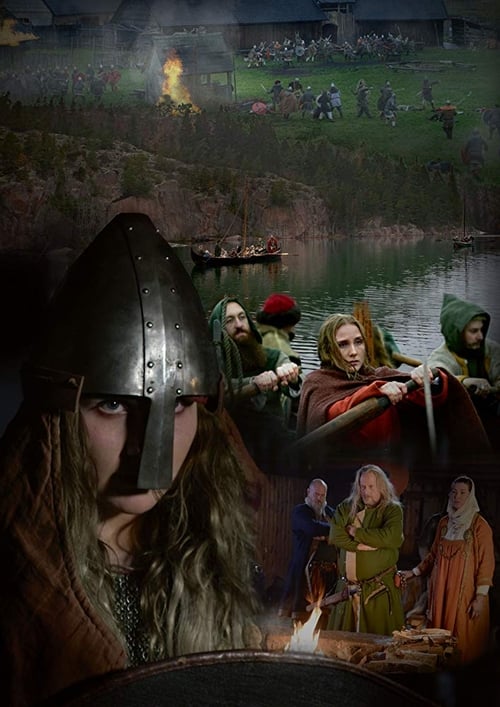
Viking Warrior Women opens not like a conventional drama with a neat cast list and a chain of murders, but as a hybrid of investigation and reenactment, with explorer Ella Al-Shamahi leading the modern story and the past brought to life through a reconstructed warrior woman named Signe. The film's first movement is a challenge to a long-held assumption: for generations, Viking warriors have been imagined as men, yet the burial evidence from Birka, Sweden, and the new scientific analysis of that grave suggest something far more unsettling and revolutionary. As Ella studies the remains and the burial goods, the camera frames the grave as a locked historical argument, one that only science can unlock. The bones, the weapons, and the careful excavation records become the film's true clues, and the tension rises because the answer would overturn not just one biography, but an entire cultural myth.
From that modern inquiry, the film slips into its dramatized past and introduces Signe, an orphaned chief's daughter whose life is shaped by loss and revenge. She is not presented as a passive legend, but as a young woman already marked by grief and discipline, a figure who grows up in a world where violence, status, and survival are inseparable. In the reenactment she appears serious, watchful, and capable, more comfortable with a spear than with softness. She hunts boars with her family and retainers, and the scene is staged as more than a hunt: it is a ritual of competence and inheritance, a way of showing that she belongs in the warrior world she is about to claim. The physicality of these early scenes matters, because the film is steadily building toward the later revelation that the woman in Birka's grave was not a symbolic exception but a real elite fighter with wealth, authority, and martial identity.
Signe's path becomes harsher when the film turns her grief into motive. Her father is dead, and his killer becomes the force around which her story coils. The dramatization makes revenge the engine of her transformation: she is driven away from childhood and into travel, trade, and combat. She moves east into the lands of the Rus Vikings, where she is no longer merely a daughter of a chief but a figure tested by distance, danger, and ambition. Along the way she encounters strangers and enemies, and one of the film's key violent beats comes when she kills a random easterner and takes his bow with the help of her slave girl. The moment is abrupt and cold, not heroic in a romantic sense but decisive, the kind of killing that underlines how the film wants to connect status with blood and mobility. The bow itself becomes a visual shorthand for appropriation and transformation: a seized weapon, a stolen identity, proof that she can survive in the masculine economy of violence.
The story grows more intense as Signe continues eastward and acquires experience through movement and confrontation. She is shown hunting, traveling, fighting, and trading, and each action becomes another stone in the argument that women could occupy military and mercantile roles. The film emphasizes her sternness rather than glamour; she is not smiling, not celebrated in a carefree way, but shaped by necessity and resolve. In the commentary surrounding the film, she is described as "powerful and violent," and that is exactly how the reenactment treats her: as someone whose authority is earned through action rather than bestowed by gender expectations. The landscape around her--forests, roads, river routes, outposts--feels large and unforgiving, and the camera repeatedly returns to her isolation inside that world, making every step toward Birka feel like a return and a reckoning.
The most important turning point arrives when Signe confronts the man responsible for her father's death. The film reportedly stages a duel, and this is the major revenge confrontation in the story. She faces him directly rather than fleeing or bargaining, and the outcome is clear: she gains revenge. The duel is the emotional summit of the reenactment, because it completes the arc that began with orphanhood. Her father's death is not simply mourned; it is answered. The revenge does not release her into peace, however. Instead, it confirms her as the kind of person the rest of the film is trying to rehabilitate into history: a woman who can kill, command, and endure in a society that the documentary insists was far less rigid than later stereotypes suggest.
After the revenge, the narrative turns from violence to wealth and rank. Signe returns to Birka and becomes wealthy and powerful. This return is a crucial structural move: the film does not leave her in foreign territory, but brings her home to the very place where the archaeological evidence lies buried. Birka, Sweden, becomes more than a setting; it becomes the destination where biography and archaeology merge. The film's modern half and reenacted half start to mirror each other more closely now. Ella Al-Shamahi's investigation into the grave is no longer an abstract scientific exercise, because the reenactment has given the bones a face, a will, and a life story. In the dramatized world, Signe is now clearly an elite figure, not merely a fighter but a person with property, trade connections, and enough status to be buried with high-value goods.
One of the film's quietest but most telling scenes comes late in Signe's life, when she is back in Birka and spends time playing hnefatafl. The board game, associated with strategy and status, gives her a pause from violence without erasing the violence that defined her ascent. It is a visual contrast: the warrior who once fought and traveled now sits in relative stillness, thinking in patterns and moves. The scene also works as foreshadowing, because it suggests a mind trained for tactics and command, the same kind of mind the modern scientists and historians are trying to locate in the Birka burial. It is a domestic scene only on the surface; beneath it is the image of a war leader resting inside the architecture of power she helped build.
The film's central revelation lands through the modern investigation rather than through dialogue in the reenactment. The Birka grave, long assumed to contain a male warrior, is shown through osteological and DNA evidence to belong to a woman. That fact is the documentary's climax of argument, and the reenacted Signe story is built to make that conclusion emotionally legible. The film's claim is not just that one woman fought, but that the category of elite Viking warrior could include women, even commanders and strategists. In that sense, the ending is both scientific and dramatic: the past-life narrative ends where the real burial does, in a richly furnished grave tied to Bj581 in Birka. The burial goods and the reconstructed funeral are the final proof offered by the film, a visual translation of the scientific discovery into story.
The last stretch moves into funeral imagery, and here the film's emotional tone becomes solemn and definitive. Signe dies in circumstances that commentary describes as unclear, but the important point is not the mechanism of death so much as the fact of her burial and the meaning attached to it. No grand final battle is shown as the cause; instead, the film closes on the transformation of her into an archaeological subject, a body accompanied by the symbols of rank and warfare. The funeral is the endpoint where everything the audience has seen--hunting, travel, the taking of the bow, the duel, the wealth of Birka, the hnefatafl scene--converges into the grave. The ceremony is not framed as a defeat but as a confirmation. She is laid to rest as a rich merchant and warrior, exactly the kind of person the grave goods imply.
In the modern frame, Ella Al-Shamahi's investigation resolves the historical dispute with the weight of evidence rather than a melodramatic confession. The film does not need a villain to be slain or a secret spoken aloud, because the secret is already in the bones. The old assumption that all Viking warriors were men is shown to be unsustainable, and the documentary presents the Birka warrior as a female leader whose existence forces a rewrite of the Viking story. The broader implication widens further when the film gestures toward other female-associated Viking burial evidence, including the Danish axe example and burial material from Britain that supports women's presence in raiding and martial contexts. Those discoveries do not replace Signe's story; they enlarge it, implying that she is not a one-off miracle but part of a larger, suppressed pattern.
By the final scene, the film has fully fused science and reenactment. Signe's life is now inseparable from the grave at Bj581, and Bj581 is inseparable from the scientific controversy that opens the documentary. The emotional effect of the ending comes from recognition rather than shock: the audience has watched a woman be imagined into history and then confirmed by archaeology. Ella's modern investigation frames the conclusion, and the last images of the burial and the evidence leave the central message hanging in the air--that Viking power, strategy, and violence were not exclusively male domains. The story ends not with a final battle cry but with a grave, a woman's grave, sealed in the earth at Birka, Sweden, and at last acknowledged for what it is.







What is the ending?
In the ending of "Viking Warrior Women," the main characters face a climactic battle that tests their strength and resolve. The film concludes with a sense of empowerment and unity among the women warriors, showcasing their triumph over adversity and the bonds they have forged.
As the final act unfolds, the scene opens with the women warriors preparing for the impending battle. Tension fills the air as they gather their weapons and armor, each woman reflecting on her journey and the sacrifices made. The leader, a fierce and determined warrior, rallies her comrades, instilling a sense of purpose and courage.
The battle begins with a fierce clash between the Viking women and their enemies. The camera captures the chaos of the fight, with swords clashing and shields splintering. Each warrior fights with a blend of ferocity and grace, showcasing their skills honed through years of training. The leader fights valiantly, her face a mask of determination as she pushes forward, rallying her fellow warriors.
As the battle rages on, the emotional stakes rise. One of the younger warriors, who has struggled with self-doubt throughout the film, finds her strength in the heat of combat. She saves a fellow warrior from an enemy attack, solidifying her place among the group. This moment of bravery is pivotal, marking her transformation from a hesitant fighter to a confident warrior.
The tide of the battle begins to turn in favor of the Viking women. They fight not just for survival but for their freedom and the legacy of their ancestors. The leader, embodying the spirit of the Valkyries, inspires her comrades with her unwavering resolve. The camera captures her fierce gaze as she leads the charge, her heart pounding with the weight of their shared history and the hope for a better future.
As the dust settles, the remaining warriors stand victorious, though not without loss. The leader surveys the battlefield, her heart heavy with the sacrifices made. She embraces her comrades, tears of relief and sorrow mingling on their faces. Each woman reflects on the journey they have taken together, the bonds forged in battle, and the strength they have discovered within themselves.
In the final moments, the women gather to honor their fallen comrades, lighting a pyre as a tribute to those who fought bravely. The leader speaks a few heartfelt words, emphasizing the importance of their unity and the legacy they will carry forward. The camera pans out, showing the women standing together, a formidable force against the horizon, ready to face whatever challenges lie ahead.
The film concludes with a sense of hope and empowerment, highlighting the resilience of women warriors and their ability to overcome adversity. Each character has grown through their experiences, emerging stronger and more united than ever. The leader, now a symbol of strength, looks toward the future with determination, embodying the spirit of the Viking warrior women.
Is there a post-credit scene?
The movie "Viking Warrior Women," produced in 2019, does not feature a post-credit scene. The film concludes its narrative without any additional scenes or content after the credits roll. The focus remains on the story of the Viking women warriors and their struggles, leaving the audience with a sense of closure regarding the characters and their journeys.
What motivates the main character to become a warrior?
The main character, a young woman named Freydis, is driven by a desire to prove her worth in a male-dominated society. She feels the pressure of her family's legacy and the expectations placed upon her, which fuels her determination to train as a warrior and fight alongside the men.
How does Freydis's relationship with her family influence her journey?
Freydis's relationship with her family is complex; her father is supportive but traditional, while her mother is more skeptical of her ambitions. This dynamic creates internal conflict for Freydis, as she seeks to honor her family's name while also carving out her own identity as a warrior.
What challenges does Freydis face during her training?
During her training, Freydis faces physical challenges, such as mastering combat techniques and enduring harsh conditions. Emotionally, she grapples with self-doubt and the skepticism of her male peers, who question her abilities and commitment to the warrior lifestyle.
How does Freydis prove herself to the other warriors?
Freydis proves herself by demonstrating exceptional skill in battle during a raid. She saves a fellow warrior from danger, showcasing her bravery and tactical intelligence, which earns her the respect of her peers and solidifies her place among them.
What role do the Viking traditions play in Freydis's development as a character?
Viking traditions play a significant role in Freydis's development, as she navigates the expectations of honor, bravery, and loyalty. These traditions both inspire her and create obstacles, as she must balance her desire to uphold them with her quest for personal autonomy and recognition as a warrior.
Is this family friendly?
"Viking Warrior Women," produced in 2019, is a documentary that explores the lives and roles of women in Viking society, particularly focusing on their warrior status. While the film is educational and informative, there are several aspects that may be considered objectionable or upsetting for children or sensitive viewers:
-
Violence and Warfare: The documentary includes discussions and reenactments of battles, which may feature depictions of violence, weaponry, and the harsh realities of war.
-
Death and Burial Practices: There are segments that address the burial practices of Vikings, including the treatment of the dead, which may be unsettling for younger audiences.
-
Gender Roles and Societal Norms: The film delves into the historical context of gender roles, which may include discussions of oppression or societal expectations that could be challenging for some viewers to process.
-
Graphic Imagery: Some reenactments may include graphic imagery related to injuries or the aftermath of battles, which could be distressing.
-
Emotional Struggles: The documentary touches on the emotional and psychological struggles faced by women in a warrior culture, which may evoke strong feelings.
Overall, while the film aims to celebrate the strength and resilience of Viking women, its content may not be suitable for all children or sensitive viewers due to the themes of violence and historical realities.







