


Popular
What key events are highlighted in the documentary that illustrate the struggles of African Americans during Reconstruction?
How does the film portray the role of African American soldiers during the Civil War and Reconstruction?
What specific challenges did Black politicians face during the Reconstruction period as depicted in the film?
How does the documentary address the impact of the 13th, 14th, and 15th Amendments on African Americans?
What personal stories or testimonies are featured in the film to illustrate the experiences of African Americans during this time?
Should I watch it?
Ask Your Own Question

What is the plot?
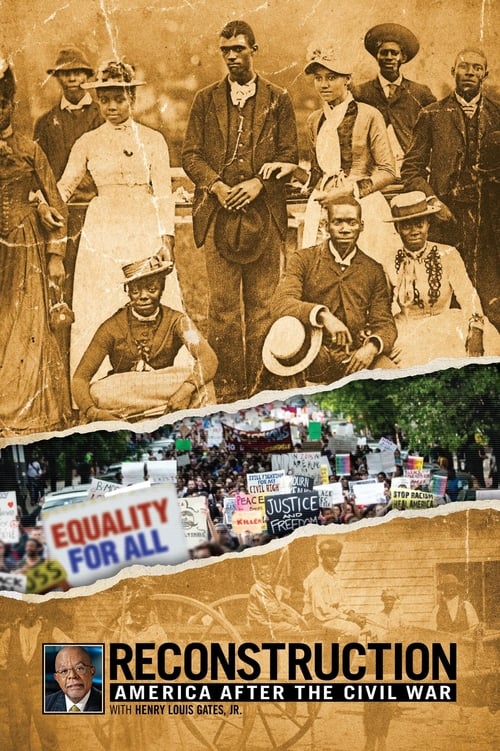
Reconstruction: America After the Civil War opens in 1865, with the Confederacy defeated but the country far from healed, and the camera lingers on the scale of loss, ruin, and possibility as Henry Louis Gates Jr. frames the era as a struggle to rebuild the nation after emancipation. The documentary moves immediately into the first years of freedom, when formerly enslaved Black men and women step out of bondage and begin making claims on the future through labor, family reunification, education, church life, land ownership, and political organizing. Rather than treating emancipation as a finish line, the series presents it as the beginning of a dangerous and uncertain contest over what freedom will actually mean, and the tone is both triumphant and ominous at once.
In these opening sequences, the story emphasizes that the freedpeople are not waiting passively for permission to live as citizens; they are building new lives with startling speed and determination. Families search for one another across ruined Southern landscapes, churches rise as centers of community power, schools open, and Black communities begin to define themselves in public life. The narrative repeatedly returns to the idea of a "brief moment in the sun," the phrase associated with W. E. B. Du Bois, to describe the fragile but real expansion of Black opportunity during Reconstruction. The show makes clear that this is not a side story to the postwar period: it is the heart of it, because the nation is being remade through the efforts of people who had only recently been denied personhood.
From there, the documentary widens its scope to the political sphere, where Reconstruction briefly transforms American democracy. Black men win the right to vote, take seats in Southern state governments, serve on juries, and even enter Congress, and the series presents these gains as revolutionary rather than symbolic. The visual language is one of possibility: men in formal dress in legislative chambers, families gathered around new schools, communities creating institutions that the plantation system had denied them. Yet each scene is shadowed by resistance, because white Southern elites are already working to restore racial hierarchy through labor control, legal maneuvering, and terror.
That conflict hardens around land and labor. In the film's portrayal, white landowners offer sharecropping arrangements to Black laborers, but the contracts are opaque, the terms are abusive, and the promises of independence quickly become traps of debt and dependency. This is one of the documentary's central revelations: freedom exists on paper, but the economic system is engineered to keep Black families tied to white-controlled land and vulnerable to exploitation. The narrative gives these scenes the feel of a slow tightening noose, with the hope of land ownership or economic autonomy collapsing into the reality of contracts that most freedpeople cannot fully read and that they have little power to refuse.
As the years pass, the film shows Reconstruction's promise meeting a coordinated backlash. White supremacist violence, political obstruction, and legal reversals chip away at the gains of the 1860s and early 1870s. The Supreme Court's reversal of rights to equal treatment becomes one of the turning points in the documentary's larger argument: federal protection begins to retreat, and with it the security of Black citizenship. The story does not present this collapse as accidental. Instead, it frames the failure of Reconstruction as the result of organized resistance, from political compromise to courtroom retrenchment to the constant pressure of racial terror. The emotional effect is devastating because the viewer has already seen what Black Americans manage to build under pressure, so every blow lands as a destruction of something real and hard-won.
The 1876 presidential election becomes one of the documentary's decisive historical pivots, and the narrative treats it as a body blow to Reconstruction's future. By this stage, the series shows that federal commitment to Black equality has weakened enough that Southern white supremacist forces can regain power and begin the work later called "Redemption." The documentary's pacing here is deliberate: the momentum that began in 1865 slows, stalls, and then reverses, as the promise of interracial democracy is undermined by compromise and fatigue in the North and escalating repression in the South. The emotional register changes too; what began as a story of emergence becomes a story of narrowing options, shrinking protections, and the hardening of racial boundaries.
The show then moves deeper into the late nineteenth century, where Jim Crow takes shape and the "nadir" of race relations begins to settle over the nation. The documentary stresses that the death here is not a literal one but a civic one: the political life of Reconstruction is being strangled, and the space for Black equality is closing. White Southern Democrats use disenfranchisement, segregation, intimidation, and public character assault to roll back Black achievement. At the same time, the film refuses to reduce the Black experience to victimhood. It shows African Americans continuing to build all-Black communities by 1890, creating businesses, governments, and distinctive cultures that preserve dignity and collective life even under repression. The tension in these scenes comes from the coexistence of creation and siege: everything Black Americans build is immediately threatened, yet it is also resilient enough to survive.
In the final movement of the series, the documentary extends into the early twentieth century and makes its most important broader revelation: the struggle over Reconstruction is also a struggle over memory. The film shows how racist imagery, Confederate mythmaking, and revisionist history work together to overwrite the truth of Black political achievement and to recast white supremacy as tradition. This is one of the project's sharpest arguments. The documentary insists that Reconstruction did not simply fail; it was actively buried, distorted, and shamed out of the national story so that the rise of segregation could appear natural and inevitable. The effect is haunting, because the viewer can see that the battles over schools, voting rights, and representation never really end--they are only reinterpreted by those who win the power to define history.
The closing passages do not give the satisfaction of a single climactic confrontation or a neat resolution, because the series is history rather than fiction, and its ending is a reckoning, not a finale. What remains at the end is the documentary's central emotional paradox: Reconstruction's constitutional promise is broken, but Black resistance, institution-building, artistry, and political memory endure. The final scenes leave the audience with both grief and indictment. Grief, because the nation squanders a transformative chance to build a more democratic future. Indictment, because the documentary makes unmistakably clear that this failure is not inevitable; it is chosen, enforced, and then mythologized. The last impression is of unfinished history. The promise of 1865 is not erased, only deferred, and the film ends by insisting that the meaning of Reconstruction still shapes the American present.








What is the ending?
The ending of "Reconstruction: America After the Civil War" focuses on the aftermath of the Reconstruction era, highlighting the struggles and resilience of African Americans as they navigate the challenges of freedom and civil rights. The film concludes with a reflection on the ongoing impact of this historical period on contemporary society, emphasizing the unfinished work of achieving true equality.
As the film approaches its conclusion, it transitions into a series of poignant scenes that encapsulate the legacy of Reconstruction. The narrative begins with a montage of historical images and footage, illustrating the initial hopes and aspirations of African Americans following the Civil War. These visuals are accompanied by a voiceover that recounts the promises made during Reconstruction, such as the right to vote and access to education.
The next scene shifts to the political landscape of the time, showcasing the efforts of African American leaders who fought for their rights. The film highlights key figures such as Frederick Douglass and Hiram Revels, who became symbols of progress and change. Their determination and courage are palpable as they navigate the complexities of a society still grappling with deep-seated racism and resistance.
As the narrative unfolds, the film delves into the violent backlash against Reconstruction, depicting the rise of white supremacist groups and the implementation of Jim Crow laws. The emotional weight of these scenes is heavy, as they illustrate the harsh realities faced by African Americans who sought to claim their rights. The film captures the fear and despair that permeated communities, yet it also showcases moments of resilience and solidarity among African Americans.
In the final scenes, the film returns to the present day, drawing connections between the historical struggles of the Reconstruction era and contemporary issues of racial inequality. It features interviews with modern activists and scholars who reflect on the ongoing fight for civil rights, emphasizing that the legacy of Reconstruction is still relevant today. The film concludes with a powerful message about the importance of remembering this history and continuing the work towards justice and equality.
Throughout the ending, the fates of the main characters--historical figures and modern activists--are intertwined, illustrating the enduring impact of their struggles. The film leaves viewers with a sense of urgency and hope, urging them to recognize the unfinished business of achieving true equality in America.
Is there a post-credit scene?
The documentary "Reconstruction: America After the Civil War" does not have a post-credit scene. The film concludes with a powerful summary of the themes explored throughout the documentary, reflecting on the legacy of Reconstruction and its impact on American society. It emphasizes the ongoing struggles for civil rights and equality, leaving viewers with a sense of the historical significance and the continuing relevance of the issues discussed. The film ends on a poignant note, encouraging reflection on the past and its implications for the present and future.
What key events are highlighted in the documentary that illustrate the struggles of African Americans during Reconstruction?
The documentary highlights several key events, including the establishment of the Freedmen's Bureau, which aimed to assist formerly enslaved people in transitioning to freedom. It also covers the formation of African American churches and schools, the rise of Black political leaders, and the violent backlash from white supremacist groups like the Ku Klux Klan, which sought to undermine these advancements.
How does the film portray the role of African American soldiers during the Civil War and Reconstruction?
The film portrays African American soldiers as pivotal figures in the fight for freedom and equality. It emphasizes their bravery and contributions during the Civil War, showcasing their enlistment and the challenges they faced. The documentary also discusses how their service helped to reshape perceptions of Black Americans and their rights during the Reconstruction era.
What specific challenges did Black politicians face during the Reconstruction period as depicted in the film?
The film depicts Black politicians facing immense challenges, including systemic racism, violence, and political opposition from white supremacists. It illustrates their struggle to gain political power and enact legislation that would benefit African Americans, often highlighting the threats they received and the eventual loss of political representation as Reconstruction ended.
How does the documentary address the impact of the 13th, 14th, and 15th Amendments on African Americans?
The documentary addresses the impact of these amendments by illustrating how they were intended to secure rights for African Americans, such as abolishing slavery (13th), granting citizenship (14th), and protecting voting rights (15th). However, it also highlights the limitations and the subsequent legal loopholes that allowed for continued discrimination and disenfranchisement.
What personal stories or testimonies are featured in the film to illustrate the experiences of African Americans during this time?
The film features personal stories and testimonies from descendants of African Americans who lived through Reconstruction. These narratives provide emotional depth, sharing experiences of hope, resilience, and the harsh realities of racism and violence. The documentary uses these personal accounts to connect historical events to the ongoing struggles for civil rights.
Is this family friendly?
"Reconstruction: America After the Civil War" is a documentary that explores the complex and often painful history of the Reconstruction era following the Civil War in the United States. While it is an educational film, there are several aspects that may be considered objectionable or upsetting for children or sensitive viewers:
-
Graphic Historical Context: The film discusses the brutal realities of slavery, including the violence and dehumanization that enslaved people faced. This may be distressing for younger audiences.
-
Racial Violence: The documentary addresses the rise of white supremacist groups and the violence they perpetrated against African Americans during and after Reconstruction, which includes depictions of lynching and other forms of racial terror.
-
Emotional Testimonies: The film features personal accounts and historical narratives that convey deep emotional pain, loss, and trauma experienced by African Americans during this period, which may be heavy for sensitive viewers.
-
Discrimination and Injustice: The exploration of systemic racism and the struggles for civil rights can be intense and may provoke strong emotional reactions.
-
Historical Footage and Imagery: The use of historical photographs and footage that depict the harsh realities of the time may be unsettling for some viewers.
Overall, while the film is informative and important for understanding American history, its themes and content may not be suitable for all children or sensitive individuals. Viewer discretion is advised.