














Popular
What are the key characteristics of Hercule Poirot that make him a unique detective?
How does Miss Marple's background influence her detective work?
What are some notable cases that Poirot and Miss Marple have solved?
How do Poirot and Miss Marple differ in their investigative techniques?
What role do secondary characters play in the stories of Poirot and Miss Marple?
Should I watch it?
Ask Your Own Question

What is the plot?
Sorry, we aren't able to watch and write up a full detailed plot yet. Check back in a few days.
More Movies Like This
Browse All Movies →






What is the ending?
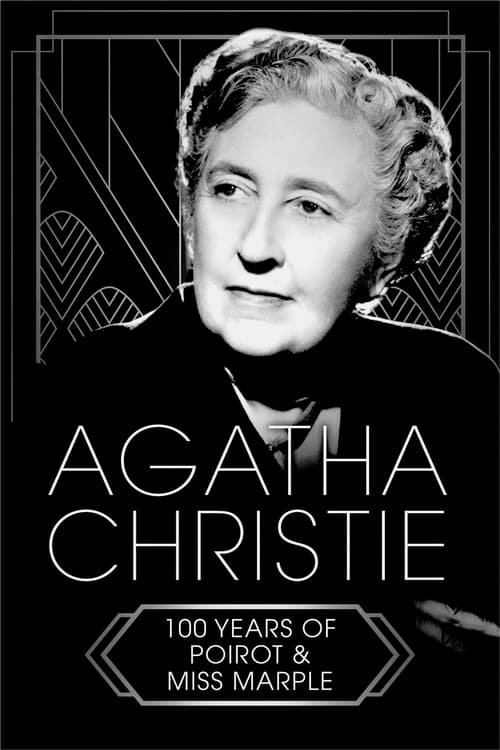
The movie "Agatha Christie: 100 Years of Poirot and Miss Marple" does not have a traditional narrative ending as it is a documentary celebrating the legacy of Agatha Christie's iconic characters, Hercule Poirot and Miss Marple. It features interviews, insights, and reflections on the impact of these characters rather than a plot-driven conclusion.
In a more detailed narrative, the film unfolds as a tribute to Agatha Christie's enduring influence on the mystery genre, showcasing the evolution of her characters over the decades. The documentary is structured around various segments that highlight key aspects of Poirot and Miss Marple's stories, interspersed with commentary from actors, directors, and literary experts.
The film opens with a montage of classic adaptations, introducing Hercule Poirot, the meticulous Belgian detective known for his "little grey cells," and Miss Marple, the astute elderly woman with a knack for solving crimes in her quaint village. As the documentary progresses, it delves into the origins of these characters, exploring Agatha Christie's life and the inspirations behind her writing.
Key scenes include interviews with actors who have portrayed Poirot, such as David Suchet, who reflects on the character's complexity and charm. The film captures Suchet's emotional connection to Poirot, emphasizing the detective's obsessive nature and his quest for justice. Similarly, the segment on Miss Marple features insights from actresses like Joan Hickson and Geraldine McEwan, who discuss the character's wisdom and intuition, portraying her as a figure of quiet strength.
As the documentary continues, it highlights the various adaptations of Christie's works, showcasing the different interpretations of her characters across film, television, and stage. The film emphasizes the timelessness of Poirot and Miss Marple, illustrating how their stories resonate with audiences of all ages.
In the concluding segments, the documentary reflects on the legacy of Agatha Christie, celebrating her as the best-selling novelist of all time. It showcases the continued popularity of her works, with adaptations still being produced and enjoyed by new generations. The film ends on a note of appreciation for Christie's contributions to literature and the mystery genre, leaving viewers with a sense of nostalgia and admiration for her characters.
Ultimately, the documentary does not provide a traditional ending with character fates but rather concludes with a celebration of Agatha Christie's impact, ensuring that the legacies of Hercule Poirot and Miss Marple will endure for years to come.
Is there a post-credit scene?
The movie "Agatha Christie: 100 Years of Poirot and Miss Marple" does not feature a post-credit scene. The film primarily serves as a documentary celebrating the legacy of Agatha Christie's iconic characters, Hercule Poirot and Miss Marple, through interviews, archival footage, and insights into their impact on literature and film. The focus remains on the exploration of Christie's work and the enduring popularity of her characters, rather than including any additional scenes after the credits.
What are the key characteristics of Hercule Poirot that make him a unique detective?
Hercule Poirot is characterized by his meticulous attention to detail, his methodical approach to solving crimes, and his reliance on 'little grey cells' to deduce the truth. His fastidious nature is evident in his grooming and his obsession with order, which often contrasts with the chaos of the murder cases he investigates. Poirot's emotional intelligence allows him to understand human behavior, making him adept at uncovering motives.
How does Miss Marple's background influence her detective work?
Miss Marple's background as a village spinster provides her with a unique perspective on human nature and the intricacies of social relationships. Her keen observations of the people around her in St. Mary Mead allow her to draw parallels between the crimes she encounters and the behaviors she has witnessed throughout her life. This insight into human behavior is crucial in her ability to solve mysteries.
What are some notable cases that Poirot and Miss Marple have solved?
The documentary highlights several notable cases, including 'Murder on the Orient Express' for Poirot, where he solves a complex murder involving multiple suspects, and 'The Murder at the Vicarage' for Miss Marple, where she unravels the mystery of a local murder using her understanding of village dynamics.
How do Poirot and Miss Marple differ in their investigative techniques?
Poirot employs a more analytical and psychological approach, often focusing on the motives and alibis of suspects, while Miss Marple relies on her intuition and knowledge of human nature, often drawing on her experiences in her village to connect the dots. Their contrasting methods highlight the diversity in detective work.
What role do secondary characters play in the stories of Poirot and Miss Marple?
Secondary characters often serve as foils or provide critical information that aids in the resolution of the mysteries. In Poirot's cases, they may represent various societal classes and perspectives, while in Miss Marple's stories, they often reflect the complexities of village life, revealing secrets and motives that are essential to solving the crime.
Is this family friendly?
"Agatha Christie: 100 Years of Poirot and Miss Marple" is a documentary that celebrates the legacy of Agatha Christie and her iconic characters, Hercule Poirot and Miss Marple. As a documentary, it primarily features interviews, discussions, and insights into Christie's work rather than dramatized scenes.
While the film is generally family-friendly, there are a few aspects that might be considered potentially objectionable or upsetting for children or sensitive viewers:
-
Discussion of Murder and Crime: The documentary delves into themes of murder and crime, which are central to Christie's stories. Some discussions may touch on the darker aspects of human nature.
-
Visuals of Crime Scenes: There may be historical images or references to crime scenes from the stories that could be unsettling for younger viewers.
-
Emotional Reflections: Interviews with actors and scholars may include emotional reflections on the impact of crime and loss, which could evoke feelings of sadness or discomfort.
Overall, the film is more focused on celebrating Agatha Christie's literary contributions and the cultural impact of her characters, making it suitable for a wide audience, including families.








