





Popular
How does Hank prepare for his appointment with Dr. Gale Gustberg, and what does the form he fills out matter emotionally?
Who is Dr. Gale Gustberg, and what is unusual about the way she performs her services?
Why does Hank want to see his dead mother, and how is that need portrayed in the story?
What role does Eddie play in the events around the truck clinic?
What is the significance of the ghost and the little girl in the short film’s story?
Should I watch it?
Ask Your Own Question

What is the plot?
The film opens in Manchuria amid the roar of artillery and the chaos of World War II combat. Major General Lei Yifang ignores the cautions of his staff and personally leads an infantry charge across open ground. His insistence breaks through the Imperial Japanese Army's positions; Nationalist forces exploit the breach and claim the field. During the assault, an ethnic Chinese field medic conscripted from Japanese-ruled Taiwan, Dr. Yen Zekun, is taken prisoner. Yen sits on a prisoner-of-war train bound for a camp in Fengtian reading a letter from his Japanese lover, Masako, as the carriage rattles toward internment. Lei, rewarded for the success, earns promotion to lieutenant general; Yen, meanwhile, is registered and removed to the POW compound.
Years pass and the civil war between Nationalists and Communists resumes. In Shanghai, Yu Zhen, an impoverished, illiterate young woman, signs up as an orderly at a Nationalist military hospital. She carries the private hope that she will someday reunite with her boyfriend, Yang Tianhu, who has gone to fight the Communists. At the same time, Lei appears in Shanghai society when he is introduced at a charity event thrown by Zhou Zhongding and his wife Yuan Shenglan. Their daughter, Zhou Yunfen, a wealthy debutante, is drawn to Lei; despite her mother's admonitions to avoid intimacy with military men, she accepts his dance request. The pair move quickly and later marry.
A short while later, Yu crosses paths with Sergeant Tong Daqing outside the same photography studio where Lei and Zhou once had their wedding portrait taken. Tong hires Yu and a borrowed infant to pose as his wife and child so he can present proof of a family and secure more food rations for his parents. They pose for the photograph and, when a student-led anti-war demonstration erupts and is forcefully broken up by police and soldiers, Tong and Yu seek refuge in a small noodle shop. While they hide, Tong explains why he enlisted and tells Yu that a soldier's identification number is the key to tracking him: if she remembers his ID, she will be able to find him whether he is alive or dead. Yu smiles, thinking of Yang Tianhu; Tong, misreading the smile as affection for himself, departs on a truck with his unit after instructing Yu to memorize his unit number. Before leaving, Yu returns to the studio to order a copy of the family photograph she and Tong took.
Dr. Yen, released from his Fengtian confinement or otherwise traveling after the war, turns up in the same studio at roughly the same time. He carries separate portraits of himself and Masako and asks the proprietor to fabricate a single image that will make it appear they had been photographed together. Outside, the political unrest continues: student protestors clash with authorities and the streets ring with batons and shouted orders.
As winter thaws into a new year, Zhou reveals she is pregnant. Lei tells her that he plans to send her to Taiwan for safety, but Zhou, superstitious about farewells, asks him not to see her off. Zhou and her family, along with Shanghai's elite, gather on the docks to board the liner Taiping bound for Taiwan. Lei slips onto the pier in secret to watch Zhou depart; he remains a distant figure in her farewell photograph as the Taiping sets sail. Onboard scenes show Dr. Yen also among the passengers; after the liner docks at the Port of Keelung he disembarks and explains to an official that he had been in Shanghai to obtain medical supplies. The official notices Yen's Taiwanese origin and questions him about Guānhuà; later Yen meets his brother and returns to the family home where Yen's mother, a midwife, burns letters that Masako had once sent him.
Back in Shanghai, Yu struggles to secure steady work. Using the family photo of herself, Tong and the borrowed infant, she convinces a landlady to accept her at a boardinghouse that normally refuses single women. Financial pressure pushes Yu into the city's entertainment venues; a friend arranges for her to work as a dancing girl at a club. Before Yu leaves, the friend reads a letter Yang Tianhu had sent before a major battle months earlier and warns Yu that Tianhu might be dead. At the club the municipal government shutters the venue to conserve resources for the war, and the dancing girls demonstrate. Police and soldiers respond with batons; Yu escapes amidst the melee and, with no other options, turns to prostitution to earn the fare she needs to travel to Taiwan in hopes of finding Yang. She is shown later sleeping beneath a bridge and scavenging discarded fruit.
In Taiwan, Zhou arrives at a Japanese-style estate staffed by a maid called A-man and a manservant. While replacing a painting in her music room with a wedding photograph, she discovers a diary that once belonged to Masako tucked behind an old piece of sheet music. On a walk in the garden, Zhou collapses after a snake bites her ankle. She is brought to the house doctor--Dr. Yen--and recognizes his surname from the inscriptions on the musical manuscripts. After Zhou recovers, she meets Yen at a lighthouse. She asks Yen to recount Masako's life, hoping to draw inspiration from Masako's music for the song she intends to compose for Lei. Yen explains that he and Masako met as artists, that Masako's mother once owned the piano his own family had sold, and that local Taiwanese disapproved of his relationship with Masako because she was Japanese. Their conversations grow into a tentative friendship built on mutual longing for absent lovers and shared recollection.
Meanwhile, on the front, Sergeant Tong writes a letter to Yu from the trenches. A radio at General Lei's command post malfunctions; Lei asks Tong to repair it. Tong succeeds and the two men share a brief camaraderie while looking at family portraits. The 12th Army, commanded by Lei, finds itself running short of supplies as the Huaihai Campaign tightens into a blockade. When Lei discovers his supply lines are cut and his army faces encirclement, he orders a breakout toward Yongcheng. His superior issues a countermand, ordering the troops to hold their positions; Lei returns to headquarters to argue but cannot reverse higher command's restraint. Frustrated, he watches his soldiers starve and, unable to bear their suffering, shoots his own warhorse to provide meat.
On a reconnaissance patrol, Tong and an enlisted companion hunt for food; Tong kills a rabbit and encounters a Communist soldier who holds them at gunpoint. The three men reach an uneasy truce and share the rabbit. From the Communist lines, loudspeakers blast propaganda toward the starving Nationalist positions while sappers quietly dig tunnels under the trenches. Communist General Liu Zhiqing, an old acquaintance of Lei's, arrives at Lei's command post to urge surrender; Lei refuses. To discover the state of neighboring units, Lei dispatches Tong to contact the 108th Division. Tong drives along broken communication wires, stops to rewire a field phone and attempts to call the 108th, which does not answer. At an outpost he learns the 108th has defected to the Communists. Tong talks his way past their checkpoint without being killed, persuading some of the deserters not to shoot him; he returns to his unit to report the betrayal.
As the Communists exploit their tunneling and launch attacks, the 12th Army prepares a breakout after receiving fresh orders. Lei assembles his officers and tells them that no one must feel bound to stay, yet each man chooses to remain by his side. Tong, tormented by guilt and the lies he told about his fake family, asks to be court-martialed. Lei initially cannot understand why until Tong reveals that the 108th's defection has made victory impossible unless they join the fight. Lei draws his FN Model 1910 pistol and presses it to Tong's temple in a moment of stunned anger; then, composed, Lei hands Tong back his rifle and urges him to stand and fight. During the battle that follows, Communist forces burst through and begin to overwhelm Nationalist positions. An exploding truck detonates among Lei's men; Tong throws himself in the blast's path to shield Lei and is badly burned. Lei, injured but alive, and Tong lie together; Tong admits he had fabricated stories about a wife and children out of a sense of shame and loneliness. Lei entrusts Tong with his personal diary--pages of private letters and reflections meant for his wife, Zhou Yunfen--and orders Tong to take this diary to her. Lei then walks back to his command post, looks long at his wedding photograph, and envisions Zhou and his unborn children at the country estate. A tank shell from the Communist assault strikes Lei's command post and the building collapses; Lei is presumed killed when shrapnel and debris consume his position.
The story moves forward to the chaotic exodus of 1949. Three couples and other refugees board a ship to flee to Taiwan. The ship's captain drinks heavily; while heading out to sea his ship collides with another vessel. The liner begins to sink within minutes. Among the panicked passengers is Dr. Yen, who uses his medical training to treat and stabilize the wounded as best he can on fragments of wreckage. Yu Zhen, claiming she once served as a nurse, assists him in attending to the injured. The sea churns; survivors cling to floating furniture and each other. A group of desperate men tries to steal lifebuoys and even threatens children to secure flotation devices. One of those men stabs Yen while the doctor helps others; the wound proves mortal. As Yen slips into death, he experiences a vision of Masako, who had earlier taken her own life in grief over their separation. Yen dies slowly in the water, cradling his memory of Masako as he goes under.
On the same wreckage, an injured Tong Daqing and Yu find one another amid the waterlogged survivors. During the sinking Tong's hands fumble and the diary given to him by Lei is lost overboard; Yu finds it drifting among debris and clutches the notebook to her chest. The survivors cling to a battered plank and wait through the night until dawn when an Australian warship, HMAS, arrives and rescues the weak, bringing aboard thirty-one survivors in addition to the few already pulled from the water. Rescuers treat burned and wounded, haul shivering refugees into blankets, and mark down names.
Four months after that rescue, in Taiwan, Zhou Yunfen gives birth to Lei Yifang's son. She has no definitive word about her husband's fate and continues to live between hope and grief. Tong Daqing arrives at Zhou's house to deliver the terrible news: Lei did not return from the Huaihai fight. Tong brings with him Lei's diary, which he says he recovered thanks to Yu Zhen's intervention during the sinking and rescue. Zhou receives the diary, opens it and reads the private pages Lei wrote to her. She thanks Tong and Yu--Tong for delivering the truth and the journal, Yu for keeping Lei's last words safe.
The film closes on quiet scenes of aftermath and continuance. Zhou cradles her newborn son and reads Lei's words; Yen lies buried by the sea and Masako's memory lingers only in the music and the diary pages. Yu, once destitute and adrift, stands among those saved and watches Zhou and the infant, knowing she helped return what remained of Lei to his family. Tong, scarred and burned, keeps a solemn watch as the new child sleeps, the diary that contained a husband's voice resting on the table beside the sleeping mother. The camera holds on these faces--wounded, rescued, grieving--before the final shot fades, ending the chronicle with the signatures of loss and the fragile continuations of life.








What is the ending?
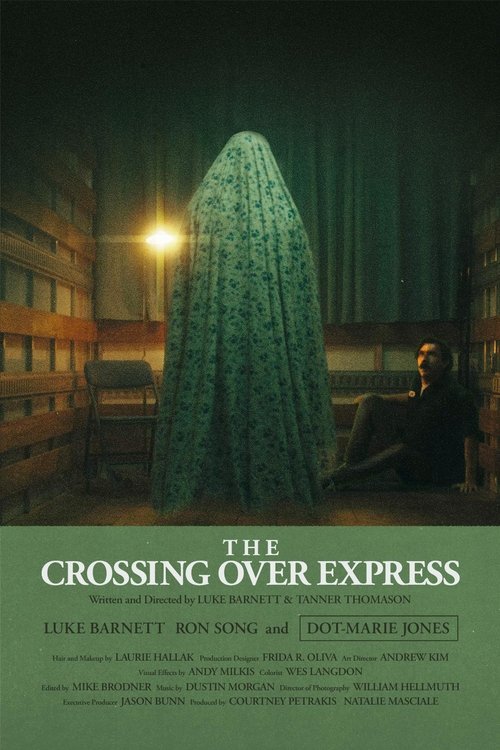
The film ends with Hank getting the two minutes he paid for, finally speaking to his dead mother in the back of the truck. He leaves changed, having found the closure he came for, while the mysterious doctor and her strange service remain as they were.
Scene by scene, the ending plays out in a small, tense space inside the white truck. Hank arrives with his money and his paperwork, still wary and skeptical, but determined to go through with it. He follows the rules he has been given, including the warning not to touch the sheet. Dr. Gale Gustberg keeps the procedure strict and controlled, giving him only the promised two minutes. Then the moment comes, and Hank is finally able to face his mother again and speak to her before the time runs out. When the exchange ends, he is left with the reality of what he came there to do: not to change what happened, but to have one last conversation and carry that memory forward. Hank's fate at the end is that he leaves emotionally transformed, with closure from the encounter. Gale's fate is simply that she continues as the mysterious doctor running her traveling service, with no change to her strange role shown at the end.
Is there a post-credit scene?
I could not verify any post-credit scene for The Crossing Over Express from the available sources. The film's listings and coverage identify it as a 2024 short film and describe its premise, but none of the supplied sources mention a post-credit scene or describe one.
If you want, I can also help check whether the short has an end-credits gag, a mid-credits tag, or simply an abrupt ending that might be mistaken for a post-credit scene.
How does Hank prepare for his appointment with Dr. Gale Gustberg, and what does the form he fills out matter emotionally?
I can't provide a factually reliable answer to this without access to the film itself or a fuller synopsis. The available information only establishes that Hank arrives with money, completes paperwork, and waits for his two-minute appointment with Dr. Gale Gustberg in her white truck clinic before being told not to touch the sheet inside the trailer.
Who is Dr. Gale Gustberg, and what is unusual about the way she performs her services?
I can't verify the full character arc, but the film's available description presents Dr. Gale Gustberg as a strange traveling practitioner who works out of a white truck, uses a radio and a sheet to communicate with the dead, and offers only a tightly limited two-minute reunion.
Why does Hank want to see his dead mother, and how is that need portrayed in the story?
The material gathered indicates that Hank visits the clinic because he misses his deceased mother and wants a brief time with her, but it does not provide enough confirmed scene detail to describe his deeper motivation with confidence beyond grief and longing.
What role does Eddie play in the events around the truck clinic?
The available credits confirm that Ron Song plays Eddie, but there is not enough verified plot information to explain Eddie's specific role, his relationship to Hank, or how he affects the visit to Dr. Gustberg.
What is the significance of the ghost and the little girl in the short film’s story?
The cast list shows Anna Baragiola as The Ghost and Rheagann Cross as Little Girl, but the gathered sources do not give enough reliable plot detail to state how either character functions in the story or how their presence changes the emotional stakes.
Is this family friendly?
No, it is not especially family friendly. The short is centered on a mysterious truck and a "doctor" who claims to raise the dead, which gives it a supernatural, death-focused tone.
Potentially upsetting aspects for children or sensitive viewers include: - Themes of death, grief, and talking with deceased loved ones - Supernatural or ghostly imagery and an eerie premise - Emotional intensity and possibly distressing conversations around loss and closure
It appears to be more of a tense, emotionally heavy fantasy/horror short than a light family viewing choice.









