














Popular
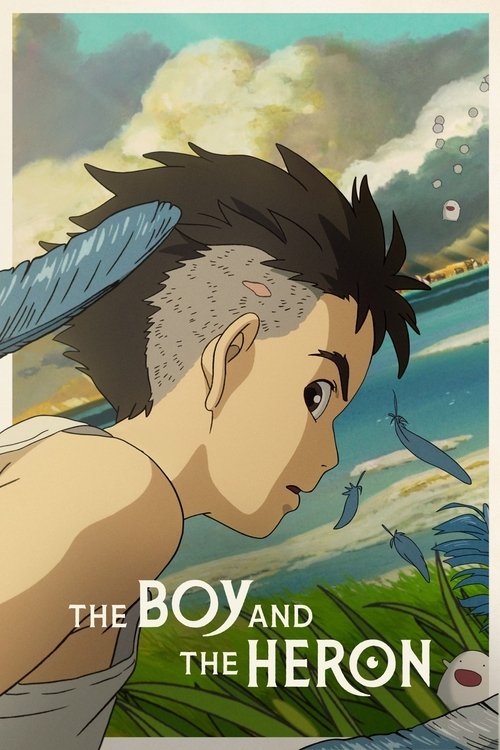
Who is Himi in The Boy and the Heron, and how is she connected to Mahito and his mother?
What exactly is the Grey Heron/Birdman, and why does he keep pestering and manipulating Mahito?
Who is Mahito’s granduncle, the wizard in the tower, and what does he want Mahito to do with the block world?
What is going on with Natsuko’s disappearance into the forest and tower, and why does she react so violently to Mahito once he finds her?
Why does Mahito deliberately injure his own head with a rock, and how does that self‑inflicted wound matter later in the story?
Should I watch it?
Ask Your Own Question

What is the plot?
Sirens wail over Tokyo in 1943 as air-raid alarms shred the sky. A boy, Mahito Maki, bolts from his home and races through streets thick with smoke toward the hospital, calling for his mother, Hisako. Flames swallow the building; hospital staff and patients evacuate amid screams. Hisako does not emerge. The fire consumes her, and Mahito collapses beside the wreckage, shouting her name.
After the funeral, Mahito and his father Shoichi leave the city. Shoichi, who operates an arsenal, marries Natsuko, Hisako's younger sister, and the small family relocates to Natsuko's rural estate. Natsuko is carrying Shoichi's child. At the large countryside manor, seven elderly maids serve the household. Mahito keeps to himself, haunted by memories of his mother and the blaze that took her life. While exploring the grounds he spots a lone gray heron circling the estate. The bird's slow flight and indifferent gaze draw his attention to a stone tower on the property, a tall, weathered structure that Natsuko explains her estranged granduncle constructed before she was born. She mentions that he vanished years ago after obsessing over other worlds and building tunnels beneath the tower.
Mahito begins attending a nearby school but quickly becomes the target of classmates' cruelty. After a violent confrontation he deliberately strikes his own head with a rock, carving a jagged scar on his forehead; he tells others he slipped, but his father sees the mark and, embarrassed and furious, pays the school to remove Mahito from class. During recovery in the estate, Mahito discovers a slim volume his mother left him, a book titled How Do You Live? He reads passages aloud, clutching the pages like a relic of the woman he lost. Sleep brings nightmares of Hisako trapped in flames, the fire's heat and her screams returning nightly.
One morning the grey heron appears and speaks to him in a voice that scolds and teases. It hints that it can lead him to his mother. Mahito chases after it through the garden, through thickets and ponds, and the bird lures him toward the tower. Near the base of the tower a sudden ring of frogs appears around Mahito's legs, their croaks like a warning. The seven maids rush out from the house and, with practiced hands, fire a single whistling arrow into the pond; the distortion scatters the frogs and startles the heron. The maids announce Natsuko has gone missing; Mahito watches Natsuko walking slowly toward the tower, her face pale and distant. The maids' leader bows to Mahito and one of them volunteers to accompany him; together, they follow the bird's direction to the tower.
Inside the tower the heron conjures an image of Hisako -- a shimmering, watery likeness that smiles and reaches out. Mahito steps forward and presses his hands to the illusion; it liquefies at his touch and slips through his fingers. Furious at the trickery, Mahito fashions an arrow and plucks a feather from the heron; when he launches the arrow it pierces the bird's beak. The injury causes the heron's beak to split open and a rotund, bald, humanlike figure to tumble out from within. The creature, flightless and pudgy, speaks in an authoritative tone; a voice near the eaves orders that this bird-man must guide Mahito. The floor heaves; Mahito and the maid crumble through a trapdoor and descend into a damp, otherworldly space.
Mahito surfaces on an unfamiliar island strewn with vast stones and ocean wind. Before he can gather his bearings a flock of pelicans, enormous and territorial, topples down from the sky and tries to peck him into submission. A woman on a small skiff drives the birds off with a long pole and curses him for opening a gateway to a graveyard in the waves. She calls herself Kiriko and behaves like a seasoned fisher. She loads Mahito onto her boat, scolds him for his imprudence, and rows him across roiling channels to her ramshackle house perched on stilts. As they travel she explains that this place connects to many other places and that spirits roam freely here.
Kiriko cares for small, round, pale creatures called Warawara that resemble steamed dumplings; she feeds them and watches them rise in clusters toward the world above. She keeps tiny carved dolls that look like the seven maids who tend Natsuko's house. Mahito recognizes her as the elderly maid who accompanied him into the tower. That night, as Warawara gather to ascend, pelicans swoop down and try to snatch them. A girl with quick movements and hair like emberlight appears and hurls a sheet of flame that sends the birds screaming away. She extinguishes her fire with a breath and tends the rescued Warawara. When Mahito approaches one of the wounded pelicans later, the bird's leader lies dying from burns and punctures. He rasps that the pelicans have fed on Warawara not out of malice but because they arrived in this barren place and had no other food; they devour the spirits to survive. The leader exhales his last breath and dies there on Kiriko's shore.
The grey heron reappears and shares a silent final meal with Mahito before the boy helps plug a hole in its cracked beak, fixing the injury he inflicted earlier; this repair frees the bird to assume its natural avian form and to fly properly again. Mahito and the heron separate from Kiriko. As he continues, the boy stumbles into the territory of oversized parakeets that profess to be guides to his lost mother. The birds surround him and begin to peck and shove, revealing their intention to eat him. The fiery girl, who calls herself Himi, bursts into the parakeet flock, beating them back with controlled jets of flame. She explains that she is Natsuko's sister, young and fierce in this realm, and that the tower's creator--Granduncle, a wizened man obsessed with other dimensions--built doors that connect worlds. Himi offers to lead Mahito to a door that might return him home, but he refuses, saying he will not abandon searching for Natsuko.
Himi and Mahito press on toward a circular chamber with a ring of doors. As they move, the flock of parakeets returns with reinforcements. The birds pursue them over stone and through bramble. Shoichi and the maids appear at a doorway beyond the tower in the real world, calling for Mahito and Natsuko; they're panicked, their faces wet with worry. Mahito sees their concern through the portal but still stays in the other realm. A violent scuffle breaks out between the parakeets and Himi; Mahito loses consciousness in the mêlée.
In the interlude of unconsciousness a maid narrates to Shoichi and the household that the tower stands atop a meteorite that struck the estate before Hisako vanished for a year and then inexplicably reappeared. In Mahito's dream he meets an old, white-haired man who calls himself Granduncle. The man holds a precarious stack of toy-like stones that represent this world's structure. He tells Mahito that he wants him to take up guardianship because Mahito's bloodline is pure and his heart free of malice; the elder hopes the boy will build a realm without cruelty. Mahito notices, as Granduncle stacks the stones, that some blocks radiate a dark, malevolent energy. The old man insists Mahito can shape a kinder world; Mahito, looking at his own forehead scar, admits that he is not free of malice. He declines the offer and recognizes his scar as proof that he carries harm within him.
When Mahito awakens he finds himself bound and held captive by the parakeets. The bird-man--the creature revealed from the heron's beak--moves silently through the parakeets' compound and knocks several sentries unconscious, allowing Mahito to break free. The heron, now able to fly fully, returns and together they rush through battered corridors to where Natsuko is kept. Mahito bursts into a dimly lit room and finds Natsuko in a chamber that resembles a birthing ward. As he steps forward to embrace her, strips of paper and bands of binding lift from the air and wrap around both of them. The paper constricts and pushes them back as if guarding an altar. Natsuko's face is hard and she spits that she hates him; her voice slices like glass. Mahito grabs her hand and tells her, plainly and with desperate certainty, that she will be his mother. Hearing him, Natsuko's expression shifts; the anger cracks and leaves a softness that returns a flicker of recognition. The bands fall away.
Mahito and the heron move to liberate Himi from the parakeets' stronghold. There they discover the parakeet monarchy is colluding with Granduncle. The Parakeet King claims that he preserves balance and order by aligning with the old man's designs, and he presents himself as a steward of the realm. Himi emerges limp in a cell; Mahito cuts her bindings and she coughs and wipes ash from her cheeks. Granduncle steps into the chamber carrying spare stones from his tower-block stack. He claims that he has collected replacements cleansed of malice so Mahito can construct a new, gentle world. He petitions again for Mahito to accept the mantle of custodian.
Mahito refuses. He says that the world's imperfection includes those he loves and that he cannot abandon his friends to preside over a contrived paradise. He touches the scar on his forehead and says he understands his own capacity for harm; he will not take Granduncle's offer because acceptance would mean erasing the people who matter to him. Enraged by this defiance, the Parakeet King seizes the remaining tower blocks and decides to seize control by force. He begins to stack them in a show of power, but the pile grows unstable. The king's arrogance and rough hands topple the tower of stones. The structure shudders, collapses, and then the entire engineered world begins to disintegrate. Cracks race through the ground; oceanic swell pours in and floods plazas; doors to other places vanish in eddies of black wind.
As the world falls apart Granduncle tries to speak to his descendants; his voice rings with regret and farewell as he steps backward into the widening void caused by the collapsing blocks. He recedes, reaches for Mahito and Natsuko, and then the space clamps shut. Granduncle disappears into the void and is lost within the unravelling fabric of the world. Himi watches him go and bends her head in lament. She weeps for the man who made the world, and her tears mix with the rising tide.
The characters flee. Mahito grabs Natsuko's hand; the heron flutters above and calls for speed. Kiriko returns, transformed from the youthful fisherman into the elderly maid Mahito met earlier. She gives Mahito a small charm she has carried for years; the charm, once in his hand, reverts in appearance and confirms her identity. Himi tells Mahito that she cannot come with him; she pulls from her sleeve a small talisman and kisses him. She reveals that she is actually Hisako in a younger form, a version of the mother he mourned, able to live here before the events that will make her the woman he remembers. She tells him she must return to her own course and that she will become the mother who will later die in the fire. Mahito protests, trying to keep her, but Himi says he cannot change time; she smiles in the way he remembers and steps toward the door that will take her away. Kiriko leads Himi to the threshold and together they slip through.
Mahito, Natsuko, the heron, Kiriko, and a flock of parakeets sprint for a doorway while the tower collapses in a storm of falling blocks and waves. The Parakeet King watches as his attempt to seize control destroys the world he sought to command. He remains within the disintegration and his fate is left among the falling stones; whether he dies in the collapse or escapes with the flock is unclear as the film cuts the scene to the fleeing characters. The ground tilts; wind screams and stone shatters like glass. Mahito, clutching Natsuko, jumps through a door as the tower's silhouette splinters behind them. The world implodes with a roar.
They land back at the estate's grounds in the real world as if pulled through an opening in the air. Shoichi rushes forward and embraces his wife and son; his eyes slick. Natsuko cradles a newborn child against her breast; the maids gather round, shock and relief mixing on their faces. Kiriko, returned to her elderly form, stands beside them and lays a hand on Mahito's shoulder. The heron perches nearby. In a low, almost gentle voice the bird tells Mahito that he will forget this other place in time. It says farewell and sweeps up into the sky. Mahito watches it go, the last tendril of that strange world disappearing into the clear country air.
Two years pass. The war ends and life shifts forward. Mahito, now older and steadier, boards a train back to Tokyo with Shoichi, Natsuko, and a small baby boy, his new brother. They step down onto a platform that hums with the cautious normality of postwar city life. Mahito's face remains lined by his scar and by memories that, the heron warned, will fade. As the family walks together into the city, Mahito clutches the small charm that Kiriko gave him; he looks back once at the skyline, then continues forward beside his father and mother, and the film closes on their figures moving into a rebuilt future.
More Movies Like This
Browse All Movies →


What is the ending?
At the end of The Boy and the Heron, Mahito refuses his granduncle's offer to inherit and maintain the crumbling magical world inside the tower, saying he carries malice in his heart and will return to the real world instead. The Parakeet King tries to take control and fails, the tower world collapses, and Mahito escapes with Natsuko, Kiriko, and the Grey Heron while Himi returns to her own time to live out her life and eventually become his mother; back in reality the tower falls, the parakeets become ordinary birds, and in an epilogue years later Mahito lives peacefully with his family as they prepare to move back to Tokyo, with the magical adventure fading from memory.
Now, in more detail, step by step:
Inside the tower's highest chamber, Mahito stands before his granduncle, the old wizard who created the isolated world inside the tower. Around them floats the precarious stack of stone-like blocks that embodies this constructed reality, the blocks subtly glowing and shifting as if they are both toys and the foundation of existence. The wizard, thin and frail, explains that he has grown too old to maintain this world, that the balance of the blocks is failing, and that only a descendant with the same blood--someone like Mahito--can keep it from falling apart. He has gathered a new set of blocks, ones he says are free from malice, and he asks Mahito to take his place and build a better world with them.
Mahito studies the blocks and senses the weight of what he is being offered. He remembers the moment earlier in his life when, after being bullied, he deliberately struck his own head with a rock and left a scar there, the act born of anger and confusion. He touches that scar as he answers the wizard. Calmly but firmly, he tells his granduncle that he cannot accept. He says he, too, carries malice, that he is not pure enough to be the caretaker of an entire world, and that what he wants is not godlike power but to go back to the real world with Natsuko and with the people who love him. Hearing this, the wizard, weary and resigned, listens without rage; he accepts that Mahito will not inherit the world.
Nearby, Himi is present, the young woman of fire who has been guiding Mahito through portions of this realm. The Parakeet King also approaches this chamber, intent on influencing the wizard's decision. The Parakeet King, large and imposing, robes fluttering, is desperate to secure control and keep this realm alive under his rule. When Mahito refuses the succession, the Parakeet King seizes the chance. He lunges forward and grabs the new, supposedly pure blocks, determined to build the world himself. He begins stacking them, trying to arrange them into a new, stable pillar. However, his impatience and underlying malice make his hands clumsy. The tower of blocks wobbles as he shoves pieces into place, ignoring balance in favor of speed and his own vision of power. The structure becomes unstable, tilts, and then collapses completely. The fall is both literal and metaphysical: as the blocks tumble, the magical world inside the tower begins to break apart.
The collapse unfolds around Mahito and the others. The chamber shudders; cracks spider across floors and walls. Outside, the sky of this realm tears open, seams of light and darkness splitting. The world starts to flood and crumble; entire sections of landscape break off and fall into swirling void or rising water. The Parakeet King's own realm--his citadel, his cities--begins to disintegrate. The parakeet citizens, once proud, violent, and organized, suddenly panic amid the destruction. They flee in flocks, trying to reach any exit that might lead back to the natural world.
Mahito does not stay to watch the end. He knows there are others he must bring back. Together with Himi and the Grey Heron--now revealed as the Birdman within the heron shell--he rushes down from the collapsing heights. Around them, stone breaks, corridors fragment, and pieces of architecture fall away. They navigate this chaos to reunite with Natsuko and young Kiriko, who are elsewhere in the realm.
As the catastrophe accelerates, Mahito reaches Natsuko. She had been held within the parakeets' domain, hidden away, separated from him by misunderstandings and the strange rules of this world. Now, amid the cracking earth and trembling sky, Mahito, Natsuko, Himi, and Kiriko converge. The four humans, guided and harried by the Grey Heron/Birdman, race together toward the doors that lead back to Earth. They move through passages that are literally disintegrating behind them, pursued by collapsing structures and the distant chaos of fleeing parakeets.
Along this desperate escape, Mahito learns, fully and clearly, that Himi is his mother from a younger time, living in this otherworld before the factory fire that he knows will one day kill her. He warns her about her fate. He tells her that in her future there will be a fire, that she will die in it. Himi listens to him, absorbing this knowledge of her own destiny. She does not react with hysteria or despair. Instead, she shows a calm acceptance. She tells Mahito that she is not afraid of the future she must return to. She chooses to go back to her own time, to live her life as it is meant to unfold, rather than use this collapsing world as an escape from her eventual death.
As they near the boundary between realms, the group splits because of this necessity. Mahito, Natsuko, and Kiriko continue toward the door that leads to the present-day estate, while Himi turns toward the door that will return her to her rightful point in time. Mahito and Himi have a parting moment: he, the son who has met his mother in her youth; she, the young woman stepping back into her life, knowing both the joy she will have and the ending that awaits her. They separate, each going toward their own world. Himi's fate is to return, grow older, have Mahito, and eventually die in the factory fire he already remembers.
With Himi gone, Mahito pushes on with Natsuko and Kiriko, the Grey Heron leading and urging them forward. The realm's destruction intensifies--floodwaters rise, structures collapse entirely, and the air itself feels unstable. The parakeet army attempts to escape through whatever openings they can find, chaotic and no longer a threatening force, just frightened creatures. The Parakeet King survives long enough to make it back to the threshold between worlds; when he and his followers pass through into reality, they shed their monstrous aspect and become ordinary parakeets, losing the power and aggression they held inside the tower world.
Mahito, Natsuko, Kiriko, and the Grey Heron finally burst through the door back into the real world, emerging at Natsuko's estate. They cross the boundary just ahead of the final collapse. Behind them, the tower that served as the physical gateway between worlds in the countryside stands for a moment longer in its real-world form. Then it, too, gives way. The tower crumbles and falls, severing the path to the realm that has just been destroyed. The alternate reality ceases to exist as a place anyone can enter again.
Back in reality, the Grey Heron takes an additional step. He ensures that Mahito will not retain a clear, complete memory of everything that transpired in the magical world. The details, the faces, the structure of the adventure begin to soften and recede. For Mahito and the others, the tower and what lay inside it become a kind of half-remembered dream, its edges fading with time.
Kiriko, the older version who had been transformed in the realm, is restored to her human self when Mahito returns her wooden doll to her; she resumes life as an elderly woman in the real world. Natsuko, Mahito's pregnant stepmother, is safely back with him at the estate, out of danger and unified with him after all they have been through. Mahito's father, Shoichi, remains in the real world, having only glimpsed Mahito briefly when Mahito stepped back through the door earlier, unaware of the full journey his son has made.
Time passes.
In an epilogue set about two years later, the war has ended. Mahito has grown a bit older. His father has married Natsuko, and their new child--Mahito's younger half-sibling--now stands with them. The family is together outside the country estate, preparing to move back to Tokyo, where Shoichi's factory and their former life await. The tower, once looming nearby as a mysterious ruin, is gone; its physical collapse has erased the visible trace of the passage to the other world.
Mahito stands with his family, no longer the isolated, grief-stricken boy he was at the beginning. He is surrounded by his father, Natsuko, and his baby sibling, on the verge of returning to the city. The magical journey that shaped him is no longer at the front of his mind; its specifics have faded, but its effects remain in his demeanor and choices. The parakeets that once menaced him and others exist now only as normal birds in the sky.
As the film ends, Mahito's fate is to go forward into ordinary life with his family in Tokyo. Natsuko's fate is to continue as his stepmother and the mother of his younger sibling, alive and present. Shoichi's fate is to resume his work and life in peacetime with his family reunited. Kiriko's fate is to live out her days as an elderly woman in the real world, no longer a warrior in a fantastical realm. Himi's fate is already set in another time: she will become his mother, live her life, and eventually die in the fire he knows about. The Grey Heron, having guided Mahito and helped him escape, withdraws from his life, his role fulfilled, leaving Mahito to live on without the constant presence of magic. The granduncle's fate is left ambiguous: he is last seen remaining in the collapsing world he created; he may have perished with it, or he may somehow exist beyond its fall, but he does not return to the real world with the others.
Is there a post-credit scene?
There is no post‑credits scene in The Boy and the Heron.
After the story ends and the credits finish, nothing else plays -- no extra animation, no teaser, no additional narrative moment. Multiple sources that track end‑credit "stingers" confirm that there are no extras during or after the credits at all, so once the credits roll to completion, the film is truly over.
Who is Himi in The Boy and the Heron, and how is she connected to Mahito and his mother?
Himi is the fire-wielding girl Mahito meets in the alternate world inside the tower, initially introduced as a mysterious ally who rescues him from the man‑eating parakeets and guides him through the realm of many doors. Over time it is revealed that she is actually a younger version of Hisako, Mahito's birth mother, displaced in time: the film ties this to an earlier remark from the old maids that Hisako once vanished for a year, implying that this "lost year" is when she lived as Himi in the tower's world. Mahito gradually senses a deep familiarity and warmth around her, but only near the end--after they escape the collapsing world and return to the corridor of doors--is it made explicit that Himi is Hisako, meaning he has been traveling alongside his own mother as a girl. This makes their bittersweet farewell more painful: Mahito, knowing the fire that will one day kill her, tries to warn her about her fate, but she calmly accepts her path and steps back through her door to return to her own time, choosing the life that will eventually lead to Mahito's birth rather than staying in the tower world or following him into the future.
What exactly is the Grey Heron/Birdman, and why does he keep pestering and manipulating Mahito?
The grey heron first appears as a strange, taunting bird that stalks Mahito around the estate, speaking in a raspy human voice and luring him toward the sealed tower by claiming his mother is still alive. When Mahito finally confronts and shoots an arrow into the heron's beak, the beak splits open like armor to reveal a squat, human‑sized creature inside--a comical but unsettling being called the Birdman, who has been piloting the heron body like a shell. Birdman is an emissary and servant of Mahito's great‑uncle, the wizard who governs the crumbling world within the tower. The great‑uncle sends him specifically to draw Mahito in, because only someone of their bloodline can inherit stewardship of that world. That is why the heron lies, bargains, and bullies Mahito: he wants to fulfill his master's orders by bringing the boy through the doors and keeping him alive long enough to stand before the old wizard. Yet Birdman is not simply malicious; he is cowardly, self‑interested, and prone to switching sides. After Mahito wounds him and forces him to drop the heron disguise, Birdman becomes more of a reluctant companion and guide, alternately threatening, pleading with, and helping Mahito and Kiriko as they traverse the underworld. By the time the tower world collapses, he has become emotionally attached to Mahito, risking himself to help the boy and Himi escape, which complicates his earlier role as a manipulative lure.
Who is Mahito’s granduncle, the wizard in the tower, and what does he want Mahito to do with the block world?
Mahito's granduncle is the long‑missing architect who originally built the strange tower on Natsuko's family estate and later withdrew completely from the ordinary world, becoming the reclusive wizard who rules the dimension inside it. In the inner realm he appears as a frail, white‑robed old man surrounded by floating stone blocks that represent the different layers and worlds he has constructed. Using these blocks, he has maintained a delicate cosmic order for years, but the structure is growing unstable: shards infused with "malice" have begun to corrupt the stack, and his strength is failing. Because this world is bound to his bloodline, he summons Mahito through Birdman with the intention of passing on his role as custodian. When Mahito reaches him, the granduncle offers him a new set of pure, untainted blocks and calmly asks the boy to replace the corrupted stones and build a better, more just world than he did. Mahito, however, studies the blocks and insists that he himself carries malice--symbolized by the self‑inflicted scar on his head--and that he cannot honestly claim to create a perfectly pure world. He refuses the inheritance, choosing instead to return to his imperfect reality and the people waiting there. The granduncle, disappointed but lucid, accepts Mahito's decision and does not force him, which leaves the tower world vulnerable. This rejection indirectly allows the Parakeet King to seize the blocks and try, disastrously, to claim the world for himself, precipitating the final collapse of the granduncle's creation.
What is going on with Natsuko’s disappearance into the forest and tower, and why does she react so violently to Mahito once he finds her?
After the move to the countryside and the tense start to their new life together, Natsuko becomes increasingly exhausted and emotionally strained by her pregnancy and by Mahito's coldness toward her. One day Mahito catches a glimpse of her walking unsteadily into the woods toward the forbidden tower; soon after, the household discovers she has vanished, prompting Mahito and the older Kiriko to follow the trail and get pulled into the tower's world. Inside this realm, time and identity are fluid, and Natsuko has been drawn deeper in, almost like a sleepwalker, her mind influenced by the forces swirling around the granduncle's collapsing order. When Mahito and a younger version of Kiriko finally locate her amid the tower's distortions, Natsuko is in a fevered, half‑enchanted state: her body is still pregnant, but her emotions are twisted up by fear, physical pain, and the unresolved guilt and grief in the family. In that unstable condition, the encounter with Mahito is overwhelming. Instead of embracing him, she lashes out, shouting that she hates him--a raw eruption of resentment and confusion that likely reflects her terror about the pregnancy, the burden of stepping into her dead sister's place, and her sense that Mahito rejects her as a mother. The tower amplifies and externalizes these dark feelings, making the outburst harsher than it would be in the normal world. That scene wounds Mahito deeply, but once they return home and the influence of the tower recedes, Natsuko's demeanor is very different: she is calmer, more grounded, and able to slowly rebuild a real relationship with him, suggesting that the cruelty he heard inside the tower was a distorted, magically heightened expression of her turmoil rather than her true, enduring feelings.
Why does Mahito deliberately injure his own head with a rock, and how does that self‑inflicted wound matter later in the story?
Mahito's self‑injury occurs after his first miserable day at the new school, where classmates bully and fight him as an outsider from Tokyo who arrived by car with a factory‑owner father. Humiliated, enraged, and unable to express his grief over his mother's death or his resentment about his father's quick remarriage, he walks home covered in mud, then abruptly picks up a rock and smashes it into the side of his own head. On the surface, he can pass this off as an accident, but emotionally it is a furious act of self‑punishment and control: he channels all the pain he cannot direct at others back onto his own body, marking himself with a wound he chose. The gash becomes a permanent scar on his temple, a physical reminder of his inner malice, anger, and self‑destructive impulses. Much later, in the tower's heart, when the granduncle offers Mahito the pure, flawless blocks to rebuild the world, Mahito touches his scar and tells the old man he carries malice inside him. This is not false modesty but a genuine recognition that he is capable of violence--against others and against himself--and that any world he creates would bear that imperfection. The scar thus functions as a moral and psychological anchor for the film: it links the ordinary act of a hurt boy harming himself with the cosmic decision to reject the role of godlike creator. Instead of accepting a sanitized, supposedly pure world, Mahito chooses to return to his flawed reality, acknowledging his scar as part of who he is while resolving to live with and for the people who love him rather than trying to erase his darkness by becoming a distant, all‑powerful guardian.
Is this family friendly?
It is generally not a young‑children's movie; it's rated PG‑13 for violent content, some bloody images, intense themes of death and grief, and occasional smoking, and is better suited to older kids/teens and adults.
Potentially upsetting or objectionable elements (described without plot spoilers):
- Death of a parent and ongoing, very present themes of grief, loss, and war, including a somber emotional tone that can feel heavy or depressing for sensitive viewers.
- Several scenes of fantasy violence, including creatures attacking or threatening humans, and a group of large birds that are openly intent on killing and eating people (played a bit absurd but still disturbing).
- Brief but notable self‑harm behavior by a child, involving intentionally hitting himself with a rock hard enough to draw visible blood.
- Some bloody or wounded animals/creatures, including an injured bird asking to be put out of its misery and spitting blood.
- Moments of school bullying and fighting, with punching, pushing, and visible minor injury.
- A scene in which a large sea creature is cut open for food, with internal detail that some may find gross or upsetting.
- Occasional coarse or rude language (mild insults like "turd") and depictions of smoking by adults.
For many children under about 11–12, the combination of grief, surreal imagery, and intermittent bloody/creature moments may be intense or confusing, even though nothing is graphic by adult standards.








