









Popular
What are the key events that lead to Charles de Gaulle's rise to power during the war?
How does the relationship between Charles de Gaulle and his wife, Yvonne, evolve throughout the series?
What role does General Weygand play in de Gaulle's story?
How does the series depict the challenges de Gaulle faces from both allies and enemies?
What significant events shape de Gaulle's views on leadership and governance?
Should I watch it?
Ask Your Own Question

What is the plot?
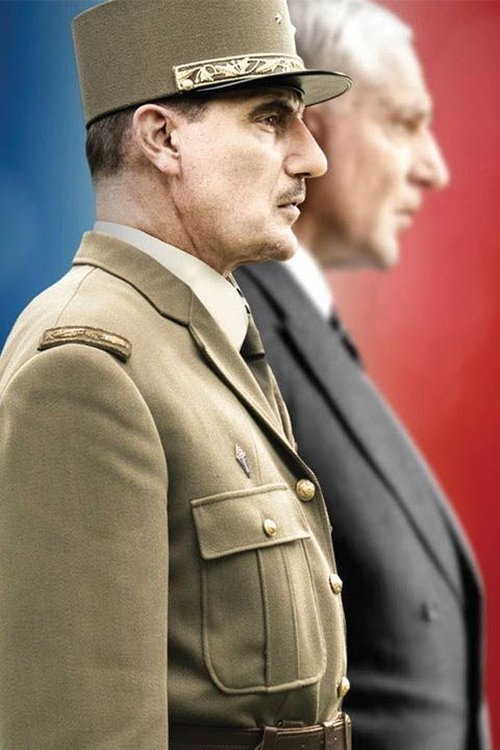
In the opening scenes of "De Gaulle, l'éclat et le secret," we are introduced to Charles de Gaulle, a towering figure in French history, as he navigates the political landscape of France during World War II. The narrative begins in 1940, shortly after the fall of France to Nazi Germany. De Gaulle, portrayed as a determined and principled leader, is in London, where he is rallying support for the Free French Forces. His internal struggle is palpable; he feels the weight of his country's defeat and the urgency to inspire hope among the French people.
As de Gaulle makes his case to the British government, he faces skepticism from Winston Churchill and other British officials. They question his ability to lead a resistance movement, given the dire circumstances. De Gaulle's resolve is tested, but he passionately argues for the need to continue fighting against the Nazis, emphasizing the importance of French sovereignty and dignity. This pivotal moment sets the stage for his role as a symbol of resistance.
The narrative shifts to de Gaulle's family life, where we see his wife, Yvonne, and their children. The emotional toll of war is evident as Yvonne expresses her fears for their safety and the uncertainty of their future. De Gaulle's commitment to his country often puts a strain on his family life, highlighting the personal sacrifices he must make as a leader. This duality of his character--devoted family man and relentless patriot--creates a rich emotional backdrop.
As the story progresses, de Gaulle begins to establish a network of supporters among the French expatriates in London. He meets with key figures, including General Henri Giraud, who has differing views on how to approach the resistance. Tensions arise as de Gaulle insists on maintaining a unified command under his leadership, while Giraud advocates for a more collaborative approach with the Allies. This conflict illustrates the challenges de Gaulle faces in uniting the fragmented French resistance.
In a critical scene, de Gaulle delivers a powerful radio address to the French people, urging them to resist the occupation. His words resonate deeply, igniting a sense of hope and determination among those listening. The emotional weight of this moment is underscored by the reactions of ordinary citizens, who are inspired to take action. This broadcast solidifies de Gaulle's position as the voice of the Free French and marks a turning point in his leadership.
The plot thickens as de Gaulle navigates the complexities of international diplomacy. He travels to the United States to meet with President Franklin D. Roosevelt, seeking support for his cause. The meeting is fraught with tension, as Roosevelt is wary of de Gaulle's ambitions and the potential for a divided French leadership. De Gaulle's unwavering confidence and strategic thinking come to the forefront as he attempts to persuade Roosevelt of the necessity of recognizing the Free French Forces.
Back in France, the resistance movement begins to gain momentum. We see various groups organizing sabotage operations against the Nazis, showcasing the bravery and determination of the French people. De Gaulle's influence is felt as these acts of defiance are inspired by his leadership. The emotional stakes rise as the narrative highlights the personal risks taken by these resistance fighters, many of whom face dire consequences for their actions.
As the war progresses, de Gaulle faces increasing pressure from both the Allies and his own supporters. He grapples with the moral complexities of collaboration versus resistance, particularly as some factions within the French government advocate for negotiating with the Nazis. De Gaulle's steadfast commitment to fighting for a free France drives him to make difficult decisions, often alienating potential allies in the process.
In a climactic sequence, de Gaulle learns of the Allied invasion of Normandy, which he views as a crucial opportunity for the Free French Forces to assert their role in the liberation of France. He mobilizes his supporters and coordinates with Allied leaders to ensure that the French are recognized as key players in the operation. The tension builds as de Gaulle prepares to return to France, determined to lead his countrymen in the fight for liberation.
The final scenes depict de Gaulle's triumphant return to Paris after its liberation. The emotional weight of this moment is palpable as he is greeted by jubilant crowds, symbolizing the restoration of French pride and sovereignty. De Gaulle's internal journey culminates in this moment of victory, where he reflects on the sacrifices made and the challenges ahead. His leadership is solidified as he takes his place as a central figure in post-war France, embodying the resilience and spirit of the nation.






What is the ending?
In the ending of "De Gaulle, l'éclat et le secret," Charles de Gaulle faces the culmination of his political struggles and personal sacrifices. The series concludes with de Gaulle's determination to lead France through a tumultuous period, emphasizing his resilience and commitment to the nation despite the challenges he faces.
As the final scenes unfold, we see de Gaulle grappling with the weight of leadership. He reflects on the sacrifices made by his family, particularly the emotional toll on his wife, Yvonne, and the impact of his decisions on their lives. The series closes with a sense of hope for the future of France, as de Gaulle remains steadfast in his vision for the country, even as he acknowledges the personal costs of his ambition.
Expanding on the ending in a chronological and narrative fashion:
The final episodes of "De Gaulle, l'éclat et le secret" build towards a tense climax, where Charles de Gaulle is confronted with the realities of his leadership. The atmosphere is thick with uncertainty as France grapples with political unrest and social upheaval. De Gaulle, portrayed with a mix of stoicism and vulnerability, is seen pacing in his office, the weight of the nation resting heavily on his shoulders.
In a pivotal scene, de Gaulle meets with his closest advisors, discussing the growing dissent among the populace. The camera captures the furrowed brows and tense expressions of his team, reflecting the gravity of the situation. De Gaulle's voice is steady, yet there is an underlying tension as he articulates his vision for a united France. His determination is palpable, but so is the fear of failure that looms over him.
Transitioning to his home life, the series delves into the emotional strain on Yvonne de Gaulle. In a quiet moment, she confronts Charles about the sacrifices their family has made. The scene is intimate, filled with unspoken words and lingering glances. Yvonne's eyes reveal her deep concern for their children and the toll that Charles's ambitions have taken on their family life. De Gaulle, though resolute, shows a flicker of vulnerability, acknowledging the pain his choices have caused.
As the political situation escalates, de Gaulle is faced with a critical decision that could alter the course of French history. In a dramatic sequence, he addresses the nation, his voice echoing through the airwaves. The scene is charged with emotion, as citizens gather around radios and televisions, hanging on his every word. De Gaulle's speech is a call to unity, urging the French people to stand together in the face of adversity. The camera captures the diverse reactions of the public--some hopeful, others skeptical--illustrating the divided sentiments within the country.
In the closing moments, the series juxtaposes de Gaulle's public persona with his private struggles. As he returns home after a long day, he finds solace in the presence of Yvonne. They share a quiet moment, a rare glimpse of tenderness amidst the chaos. The weight of their shared sacrifices hangs in the air, yet there is a flicker of hope as they hold hands, symbolizing their unwavering support for one another.
The series concludes with de Gaulle standing alone on a balcony, overlooking the streets of Paris. The city is alive with activity, a testament to the resilience of the French people. De Gaulle's expression is one of determination, a man committed to his vision for France, despite the personal costs. The final shot lingers on his silhouette against the backdrop of the city, encapsulating the essence of his character--a leader forged in the fires of conflict, yet driven by an unwavering love for his country.
In this ending, Charles de Gaulle emerges as a complex figure, embodying both the burdens of leadership and the hope for a brighter future. Yvonne's quiet strength and the sacrifices of their family serve as a poignant reminder of the personal stakes involved in political ambition. The fate of de Gaulle is one of continued struggle, but also of resilience, as he remains steadfast in his commitment to lead France through its darkest hours.
Is there a post-credit scene?
In "De Gaulle, l'éclat et le secret," season 1, there is no post-credit scene. The series focuses on the life and political career of Charles de Gaulle, exploring his leadership during pivotal moments in French history, particularly during World War II and the establishment of the Fifth Republic. The episodes conclude with a strong emphasis on the historical context and the emotional weight of de Gaulle's decisions, leaving viewers with a sense of closure rather than additional scenes or teasers. The narrative is tightly woven around de Gaulle's character, his struggles, and the impact of his actions on France and its people.
What are the key events that lead to Charles de Gaulle's rise to power during the war?
The series intricately details the events leading to Charles de Gaulle's rise, focusing on his leadership during the early days of World War II. It showcases his strategic decisions, his defiance against the Vichy regime, and his efforts to rally the Free French Forces. The emotional turmoil he faces, balancing his ambition with the dire circumstances of France, is vividly portrayed.
How does the relationship between Charles de Gaulle and his wife, Yvonne, evolve throughout the series?
Yvonne de Gaulle's character is depicted as a strong yet supportive figure in Charles's life. The series explores their relationship through moments of tension and tenderness, particularly during the war when Yvonne grapples with the fear of losing her husband and the burden of their family's safety. Their interactions reveal deep emotional connections and the strain of public life on their marriage.
What role does General Weygand play in de Gaulle's story?
General Weygand is portrayed as a complex character who initially supports de Gaulle but later becomes a rival. The series highlights their ideological clashes, particularly regarding military strategy and the future of France. Weygand's internal conflict and eventual opposition to de Gaulle add layers to the narrative, showcasing the political tensions of the time.
How does the series depict the challenges de Gaulle faces from both allies and enemies?
The narrative illustrates the multifaceted challenges de Gaulle encounters, including skepticism from British leaders and betrayal from French collaborators. His determination to assert French sovereignty is palpable, as he navigates the treacherous waters of international diplomacy, often feeling isolated yet resolute in his vision for France.
What significant events shape de Gaulle's views on leadership and governance?
Key events such as the fall of France, the establishment of the Vichy regime, and his subsequent broadcasts to the French people shape de Gaulle's understanding of leadership. The series captures his evolving philosophy, emphasizing the importance of national unity and resilience, as he grapples with the weight of his responsibilities and the expectations placed upon him.
Is this family friendly?
"De Gaulle, l'éclat et le secret" is a historical drama that delves into the life of Charles de Gaulle during a tumultuous period in French history. While the show is rich in historical context and character development, it does contain elements that may not be suitable for younger audiences or sensitive viewers.
-
War and Conflict: The series portrays the backdrop of World War II, including scenes of military conflict, which may be intense or distressing for children. There are depictions of battles and the impact of war on civilians.
-
Political Intrigue: The show explores themes of political maneuvering and betrayal, which may be complex and potentially confusing for younger viewers. The emotional weight of these scenes can be heavy.
-
Emotional Strain: Characters experience significant emotional turmoil, including fear, loss, and anxiety about the future. These themes may resonate deeply and could be upsetting for sensitive individuals.
-
Family Struggles: The personal life of de Gaulle is depicted with moments of tension and conflict within his family, which may include discussions of loss and the pressures of leadership.
-
Historical Realism: The portrayal of historical events includes the harsh realities of life during wartime, which may include references to suffering and sacrifice.
Overall, while the series is a compelling historical narrative, its themes and content may require parental discretion for younger viewers or those who are particularly sensitive to such topics.








