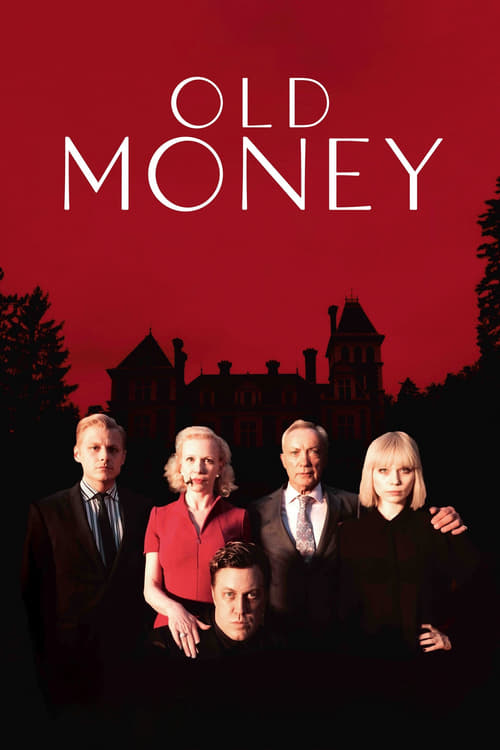























Popular
What motivates the main character, Charlotte, to pursue a relationship with the wealthy heir, Henry?
How does the character of Charlotte's father influence her decisions throughout the series?
What role does the character of Beatrice play in Charlotte's life and her journey into high society?
How does the theme of family legacy manifest in the character of Henry and his relationship with his parents?
What pivotal moment leads to a turning point in Charlotte's understanding of wealth and its implications?
Should I watch it?
Ask Your Own Question

What is the plot?
"Old Money" begins with the introduction of the protagonist, a young woman named Charlotte, who comes from a wealthy family with a long lineage of affluence. The story opens with Charlotte attending a lavish party hosted by her parents, where the opulence of their lifestyle is on full display. The camera pans over the extravagant decorations, the elegantly dressed guests, and the air of entitlement that permeates the event. Charlotte feels a sense of detachment from the festivities, hinting at her internal conflict regarding her family's wealth and the expectations that come with it.
As the party progresses, Charlotte's parents engage in conversations about maintaining their social status and the importance of marrying into the right family. This pressure weighs heavily on Charlotte, who is more interested in pursuing her own passions than adhering to the traditional expectations of her social class. She finds solace in her art, often retreating to her studio to paint, where she expresses her true self away from the constraints of her family's legacy.
One evening, while attending an art exhibit, Charlotte meets a charming and ambitious young man named Jack, who comes from a modest background. Their connection is immediate, and they share a deep conversation about art and life, which ignites a spark in Charlotte. Jack's authenticity and lack of pretense draw her in, contrasting sharply with the superficiality of her social circle. As they continue to see each other, Charlotte begins to question her values and the life she has been expected to lead.
As their relationship develops, Charlotte faces increasing scrutiny from her family and friends. Her parents disapprove of Jack, viewing him as an unsuitable match due to his lack of wealth and status. They pressure Charlotte to end the relationship, emphasizing the importance of marrying someone who can elevate their family's standing. This creates a rift between Charlotte and her parents, as she grapples with her desire for independence and her loyalty to her family.
In a pivotal scene, Charlotte attends a family gathering where her parents announce her engagement to a wealthy suitor, a man named Edward, who embodies the traditional values of their social class. The announcement is met with applause from the guests, but Charlotte feels trapped and suffocated by the expectations placed upon her. In a moment of defiance, she publicly rejects the engagement, declaring her love for Jack. The room falls silent, and her parents are visibly furious, leading to a heated confrontation that exposes the deep-seated tensions within the family.
Following her rejection of the engagement, Charlotte decides to leave her family's estate and move in with Jack. This decision marks a significant turning point in her life, as she embraces a more authentic existence away from the trappings of wealth. The couple faces challenges as they navigate their new life together, including financial struggles and societal judgment. However, their bond strengthens as they support each other through these difficulties.
As Charlotte immerses herself in her art, she begins to gain recognition in the local art community. Her work reflects her journey of self-discovery and the emotional turmoil she has experienced. Jack, meanwhile, pursues his own ambitions, working hard to establish a career that aligns with his values. Their relationship flourishes as they inspire each other to pursue their dreams, but the shadow of Charlotte's family looms over them.
In a climactic moment, Charlotte's parents confront her about her choices, demanding that she return to the family fold and abandon her relationship with Jack. They threaten to cut her off financially, attempting to manipulate her into submission. Charlotte stands her ground, asserting her right to choose her own path. This confrontation serves as a cathartic release for Charlotte, as she finally asserts her independence and rejects the suffocating expectations of her upbringing.
The story reaches its resolution as Charlotte and Jack find a way to balance their love with their individual aspirations. They establish a modest but fulfilling life together, marked by creativity and authenticity. Charlotte's art gains traction, and she holds her first solo exhibition, showcasing her journey and the evolution of her identity. The final scenes depict the couple celebrating their achievements, surrounded by friends who appreciate them for who they are rather than their social status.
In the closing moments, Charlotte reflects on her journey, acknowledging the sacrifices she made to pursue her true self. The film ends on a hopeful note, emphasizing the importance of love, authenticity, and the courage to break free from the constraints of old money.








What is the ending?
In the ending of "Old Money," the main characters confront their pasts and the legacies of their families. The story culminates in a series of revelations and decisions that shape their futures, leading to a sense of closure for some and unresolved tensions for others.
As the final scenes unfold, we see the characters grappling with their identities and the weight of their family histories. The protagonist, struggling with the expectations placed upon him, makes a pivotal choice that reflects his desire for authenticity over societal approval. Meanwhile, other characters face the consequences of their actions, leading to a mix of reconciliations and estrangements.
The final act of "Old Money" begins with a tense family gathering at the ancestral estate, a grand but fading symbol of their family's wealth and status. The atmosphere is thick with unspoken words and lingering resentments. The camera pans across the opulent yet decaying surroundings, capturing the contrast between the family's former glory and their current struggles.
As the characters arrive, we see the protagonist, James, standing apart from the others, his expression a mix of determination and uncertainty. He has spent much of the series wrestling with the expectations of his family, particularly his father, who embodies the old money mentality. James's internal conflict is palpable; he yearns to break free from the constraints of his lineage while still feeling the pull of familial loyalty.
The scene shifts to the dining room, where the family gathers for a lavish dinner. The table is adorned with fine china and crystal, a stark reminder of their wealth. Conversations are stilted, filled with polite laughter that barely masks the underlying tension. James's father, a stern man with a commanding presence, makes a toast that emphasizes the importance of family legacy. His words hang heavy in the air, and James's discomfort is evident as he listens, feeling suffocated by the expectations.
In a moment of courage, James stands up, interrupting the toast. He expresses his desire to forge his own path, rejecting the notion that he must adhere to the family's traditional values. His voice trembles with emotion as he speaks, revealing the depth of his struggle. The room falls silent, and the shock on his family's faces is palpable. His mother, who has always been caught between her husband's expectations and her son's aspirations, looks torn, her eyes glistening with unshed tears.
The tension escalates as James's father responds with anger, dismissing his son's feelings as youthful rebellion. The confrontation reaches a boiling point, and James, feeling cornered, storms out of the room. The camera follows him as he steps outside into the cool night air, the moonlight casting a soft glow on his troubled face. He takes a moment to breathe, the weight of his decision settling in.
Meanwhile, inside, the family dynamics shift. James's mother attempts to mediate, urging her husband to understand their son's perspective. This moment reveals her internal struggle, caught between her loyalty to her husband and her love for her son. The tension in the room is thick, and the other family members exchange glances, unsure of how to react.
As the night progresses, we see James seeking solace in a nearby park, where he reflects on his choices. The camera captures his solitude, the rustling leaves echoing his inner turmoil. He realizes that breaking free from his family's expectations is not just about rejecting their values but about embracing his own identity.
The final scenes bring the family back together, albeit in a different context. They gather for a final meeting, where James's father, after much contemplation, acknowledges his son's bravery. This moment of vulnerability marks a turning point for the patriarch, who begins to understand the importance of allowing his son to define his own legacy.
In the closing moments, we see James and his father share a tentative but meaningful embrace, symbolizing a fragile reconciliation. The camera pulls back, revealing the family standing together, united yet changed. Each character has faced their own demons, and while not all conflicts are resolved, there is a sense of hope for the future.
As the credits roll, the audience is left with a poignant reminder of the complexities of family, legacy, and the courage it takes to forge one's own path amidst the weight of tradition. The fates of the main characters are intertwined, each having taken steps toward understanding and acceptance, even if the journey is far from over.
Is there a post-credit scene?
In the TV show "Old Money," produced in 2015, there is indeed a post-credit scene that adds an intriguing layer to the narrative.
As the credits roll, the screen fades back in to a dimly lit room filled with antique furniture and family portraits. The camera slowly pans across the room, revealing a large, ornate mirror that reflects the shadows of the characters who have been central to the story.
In this scene, we see the character of Eleanor, a matriarch with a strong sense of tradition and family legacy, sitting alone in front of the mirror. Her expression is contemplative, a mix of nostalgia and concern. She gently touches the frame of the mirror, as if seeking comfort from the past. The atmosphere is thick with unspoken words and unresolved tensions, hinting at the weight of family expectations and the burden of maintaining their old money status.
Suddenly, the door creaks open, and her grandson, Henry, enters the room. He looks conflicted, torn between the allure of modernity and the expectations of his family's legacy. Eleanor turns to him, her eyes softening, and they share a moment of understanding.
Henry takes a deep breath, revealing his desire to forge his own path, one that diverges from the traditional values that have defined their family for generations. Eleanor, sensing his struggle, offers a faint smile, suggesting a glimmer of acceptance.
The scene closes with a lingering shot of the mirror, reflecting both their faces, symbolizing the clash between the past and the future. The screen fades to black, leaving viewers with a sense of hope and uncertainty about the family's future, and the choices that lie ahead for Henry. This post-credit scene encapsulates the show's themes of legacy, identity, and the evolving nature of family dynamics.
What motivates the main character, Charlotte, to pursue a relationship with the wealthy heir, Henry?
Charlotte is initially drawn to Henry's charm and the allure of his affluent lifestyle, which contrasts sharply with her own modest upbringing. As she navigates the complexities of their relationship, her motivations evolve; she grapples with her desire for acceptance in high society while also confronting her own values and the implications of marrying into wealth.
How does the character of Charlotte's father influence her decisions throughout the series?
Charlotte's father serves as a moral compass for her, instilling in her the importance of integrity and hard work. His disapproval of her relationship with Henry creates internal conflict for Charlotte, as she must balance her love for Henry with her father's expectations and the values he has taught her.
What role does the character of Beatrice play in Charlotte's life and her journey into high society?
Beatrice acts as both a mentor and a rival to Charlotte. She introduces Charlotte to the intricacies of high society, offering guidance on etiquette and social norms. However, Beatrice's own insecurities and jealousy lead to tension, forcing Charlotte to navigate the complexities of friendship and competition as she seeks her place among the elite.
How does the theme of family legacy manifest in the character of Henry and his relationship with his parents?
Henry is deeply affected by the expectations placed upon him by his wealthy family. His struggle to assert his own identity while living up to his family's legacy creates a rift between him and his parents, particularly his mother, who embodies the traditional values of old money. This tension drives Henry's actions and decisions, particularly in his relationship with Charlotte.
What pivotal moment leads to a turning point in Charlotte's understanding of wealth and its implications?
A pivotal moment occurs during a lavish charity gala where Charlotte witnesses the superficiality and moral ambiguity of the elite. As she observes the interactions among the wealthy, she begins to question the authenticity of her relationships and the true cost of the lifestyle she is pursuing. This moment catalyzes her internal struggle and forces her to reevaluate her priorities and the meaning of true wealth.
Is this family friendly?
"Old Money," produced in 2015, is a drama that explores themes of wealth, family dynamics, and societal expectations. While it does not contain overtly graphic content, there are several aspects that may be considered objectionable or upsetting for children or sensitive viewers.
-
Family Conflict: The show features intense family disputes and emotional confrontations that may be distressing for younger viewers. The characters often grapple with deep-seated issues related to inheritance and legacy, leading to heated arguments.
-
Themes of Loss: There are moments that deal with loss and grief, particularly related to family members and the impact of wealth on relationships. These themes can evoke strong emotions and may be difficult for sensitive viewers.
-
Social Commentary: The series critiques social class and the pressures of maintaining a wealthy lifestyle, which may include scenes depicting elitism or the struggles of those who feel out of place in high society.
-
Substance Use: There are instances of characters engaging in drinking or discussing substance use, which may not be suitable for younger audiences.
-
Romantic Relationships: The show includes complex romantic relationships that may involve emotional turmoil, infidelity, or manipulation, which could be confusing or upsetting for younger viewers.
Overall, while "Old Money" is not explicitly inappropriate, its themes and emotional depth may require parental guidance for younger audiences.