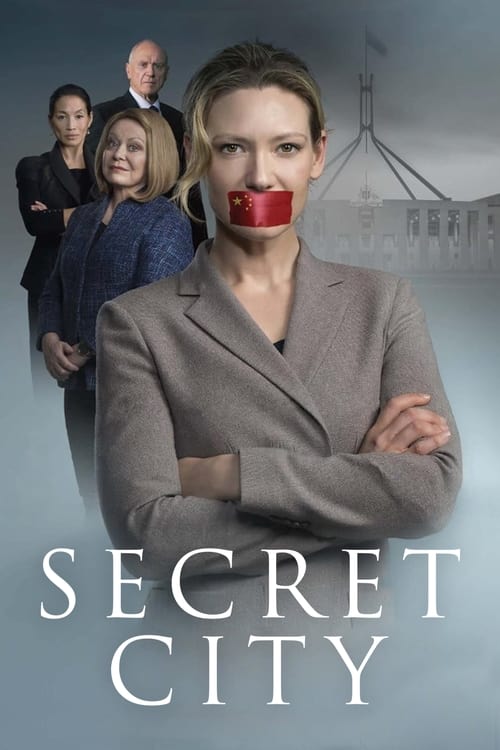















Popular
What motivates Harriet Dunkley to investigate the conspiracy in Secret City?
How does Harriet's relationship with her colleague, the journalist, evolve throughout the series?
What role does the character of the Chinese diplomat play in the unfolding events?
What are the consequences of Harriet's investigation on her personal life?
How does the theme of betrayal manifest through the character of Harriet's mentor?
Should I watch it?
Ask Your Own Question

What is the plot?
In the opening scenes of "Secret City," we are introduced to journalist Harriet Dunkley, who is investigating a series of mysterious events surrounding the Australian government. The story begins with Harriet attending a protest against the government's handling of a controversial military deal with China. The atmosphere is tense, and Harriet captures the chaos on her camera, showcasing her commitment to uncovering the truth. As she navigates through the crowd, she overhears snippets of conversations that hint at deeper political machinations.
Harriet's investigation leads her to a meeting with her friend and political insider, who provides her with information about a potential cover-up involving the military deal. This friend expresses concern for Harriet's safety, warning her that she is getting too close to something dangerous. Despite the warning, Harriet's determination to expose the truth only intensifies. She begins to dig deeper, interviewing various sources and gathering evidence that suggests a conspiracy at play.
As Harriet continues her investigation, she discovers a connection between the military deal and a recent murder of a Chinese national in Australia. This revelation sends her on a frantic search for answers, leading her to a clandestine meeting with a whistleblower who claims to have crucial information. The meeting takes place in a dimly lit alley, where the whistleblower reveals that the murder was not random but part of a larger scheme involving espionage and political manipulation.
Meanwhile, the Australian government is portrayed as increasingly paranoid, with officials monitoring Harriet's movements. The tension escalates when Harriet receives a threatening message, warning her to stop her investigation. Undeterred, she presses on, using her journalistic skills to connect the dots between the murder, the military deal, and the government's actions. Her relentless pursuit of the truth puts her at odds with powerful figures, including a high-ranking government official who is determined to silence her.
As Harriet uncovers more evidence, she finds herself in a dangerous game of cat and mouse. She is followed and surveilled, leading to a harrowing scene where she narrowly escapes an attempt on her life. This close call heightens her sense of urgency, and she realizes that she must go public with her findings before it's too late. She reaches out to her editor, who is initially skeptical but eventually agrees to publish her story, believing in the importance of the truth.
In a pivotal moment, Harriet confronts the government official she suspects is behind the conspiracy. This confrontation takes place in a high-stakes meeting where tensions run high. Harriet challenges the official with her evidence, but instead of backing down, the official attempts to discredit her, painting her as a reckless journalist. The scene is charged with emotion as Harriet fights to maintain her credibility and integrity in the face of intimidation.
As the story unfolds, Harriet's personal life also comes into play. Her relationship with her partner becomes strained due to the dangers of her investigation. They have a heated argument where Harriet expresses her frustration at feeling unsupported, while her partner fears for her safety. This emotional conflict adds depth to Harriet's character, showcasing her internal struggle between her professional ambitions and personal relationships.
The climax of the series occurs when Harriet finally pieces together the full extent of the conspiracy. She discovers that the military deal is a front for a larger operation involving illegal arms sales and international espionage. In a dramatic sequence, she gathers her evidence and prepares to go public, but not before facing one last confrontation with the government officials who will stop at nothing to protect their interests.
In the final act, Harriet's story is published, causing a media frenzy. The fallout is immediate, with public outcry and political ramifications. However, the victory is bittersweet as Harriet realizes the extent of the danger she has put herself in. The series concludes with Harriet reflecting on the cost of her pursuit of truth, leaving viewers with a sense of unresolved tension as the implications of her revelations continue to unfold in the political landscape.






What is the ending?
In the ending of "Secret City," the tension culminates as journalist Harriet Dunkley uncovers a conspiracy involving the Australian government and foreign powers. After a series of dangerous encounters, she confronts the truth behind the assassination of a Chinese diplomat. The series concludes with Harriet's determination to expose the truth, despite the personal risks involved, while other characters face their own fates, including betrayal and loss.
As the final episodes of "Secret City" unfold, the atmosphere is thick with tension and urgency. Harriet Dunkley, a tenacious journalist, finds herself at the center of a web of political intrigue. The stakes have never been higher as she races against time to uncover the truth behind the assassination of a Chinese diplomat, which has far-reaching implications for Australia's relationship with China.
Scene 1: The Confrontation The scene opens in a dimly lit warehouse where Harriet meets with her source, a whistleblower who has critical information about the conspiracy. The air is heavy with anticipation as she listens intently, her heart pounding. The whistleblower reveals that the assassination was orchestrated by elements within the government, aiming to manipulate public sentiment against China. Harriet's eyes widen with realization; she understands the gravity of what she has uncovered. The tension escalates when they hear footsteps approaching, forcing Harriet to flee, her mind racing with the implications of the information she now possesses.
Scene 2: The Betrayal Back at her office, Harriet is met by her editor, who has been pressured by government officials to suppress the story. The betrayal stings as she realizes that even those she trusted are willing to compromise their integrity for political safety. The emotional turmoil is palpable; she feels isolated and determined. Harriet's resolve strengthens as she decides that she cannot let the truth be buried. She begins to gather evidence, her determination igniting a fire within her.
Scene 3: The Showdown In a climactic sequence, Harriet confronts the key players involved in the conspiracy. The setting shifts to a high-stakes meeting in a government building, where she boldly presents her findings. The tension in the room is electric, with powerful figures attempting to discredit her. Harriet stands her ground, her voice steady despite the threats and intimidation. The camera captures her fierce determination, showcasing her as a symbol of journalistic integrity in a corrupt system.
Scene 4: The Aftermath As the dust settles, the fallout from Harriet's revelations begins to unfold. The government is forced to respond to the public outcry, and the conspiracy is exposed. However, the victory is bittersweet. Harriet receives a call from her friend and ally, who informs her that the whistleblower has gone missing, a stark reminder of the dangers that come with seeking the truth. The emotional weight of this loss hangs heavily on her, but she knows she must continue her fight.
Scene 5: The Resolution In the final moments, Harriet stands on a balcony overlooking the city, the sun setting in the background. She reflects on the cost of her pursuit of truth--her relationships strained, her safety compromised. Yet, there is a sense of hope as she resolves to keep fighting for justice. The camera lingers on her face, capturing a mix of determination and vulnerability. The series closes with Harriet's voiceover, emphasizing the importance of truth in a world rife with deception.
As the credits roll, the fates of the main characters are revealed: Harriet remains steadfast in her commitment to journalism, while others, like her editor, face the consequences of their choices. The series leaves viewers with a poignant reminder of the sacrifices made in the pursuit of truth and the ongoing battle against corruption.
Is there a post-credit scene?
The TV show "Secret City," produced in 2016, does not feature a post-credit scene. The series concludes its narrative without any additional scenes after the credits roll. The final episode wraps up the intense political thriller plot, focusing on the resolution of the main character's journey and the overarching conspiracy that has unfolded throughout the series. The absence of a post-credit scene allows the audience to reflect on the complex themes of power, betrayal, and the consequences of political machinations that have been explored throughout the show.
What motivates Harriet Dunkley to investigate the conspiracy in Secret City?
Harriet Dunkley, a political journalist, is driven by her relentless pursuit of truth and justice. Her motivation intensifies when she uncovers a web of corruption and deceit involving high-ranking officials and foreign powers. The personal stakes rise as she becomes embroiled in a dangerous conspiracy that threatens her life and the safety of those around her.
How does Harriet's relationship with her colleague, the journalist, evolve throughout the series?
Harriet's relationship with her colleague, the journalist, begins as a professional partnership rooted in shared goals. However, as they delve deeper into the conspiracy, their bond is tested by secrets, mistrust, and the moral complexities of their investigation. The tension escalates as they face external threats, leading to moments of vulnerability and reliance on each other, ultimately revealing deeper emotional connections.
What role does the character of the Chinese diplomat play in the unfolding events?
The Chinese diplomat serves as a pivotal figure in the conspiracy, representing the geopolitical tensions between Australia and China. His actions and motivations are shrouded in mystery, as he navigates the political landscape with calculated precision. His interactions with Harriet and other characters reveal layers of intrigue, as he becomes both an antagonist and a potential ally, complicating the narrative and heightening the stakes.
What are the consequences of Harriet's investigation on her personal life?
Harriet's investigation takes a significant toll on her personal life, straining her relationships with friends and family. As she becomes increasingly consumed by her quest for truth, she faces isolation and danger, leading to moments of doubt and fear. The emotional weight of her choices weighs heavily on her, as she grapples with the impact of her work on her loved ones and her own sense of safety.
How does the theme of betrayal manifest through the character of Harriet's mentor?
Harriet's mentor initially appears as a guiding figure, offering support and wisdom. However, as the plot unfolds, his true motivations are revealed, showcasing a betrayal that deeply affects Harriet. This betrayal not only challenges her trust in those around her but also forces her to confront the harsh realities of the world she is navigating, amplifying her sense of isolation and determination to uncover the truth.
Is this family friendly?
"Secret City," produced in 2016, is a political thriller that delves into themes of espionage, government corruption, and personal sacrifice. While it offers a gripping narrative, it contains several elements that may not be suitable for children or sensitive viewers.
-
Violence: The series includes scenes of physical confrontations, threats, and some bloodshed, which may be distressing for younger audiences.
-
Mature Themes: The show explores complex political issues, including terrorism, espionage, and the moral ambiguities of government actions, which may be difficult for children to understand.
-
Language: There are instances of strong language throughout the series, which may not be appropriate for younger viewers.
-
Emotional Intensity: Characters experience significant emotional turmoil, including betrayal, loss, and moral dilemmas, which could be upsetting for sensitive viewers.
-
Death and Loss: The narrative involves the death of characters and the impact of these losses on their loved ones, which can be heavy and emotional.
Overall, "Secret City" is more suited for mature audiences due to its intense themes and content.