

















Popular
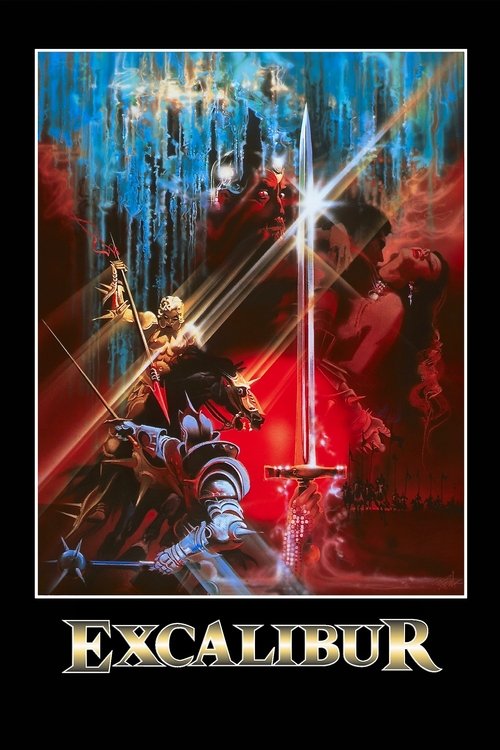
What is the significance of the sword Excalibur in the story?
How does Arthur's relationship with Guinevere develop throughout the film?
What role does Merlin play in Arthur's journey?
What is the significance of the Round Table in the film?
How does the character of Morgana influence the events of the story?
Should I watch it?
Ask Your Own Question

What is the plot?
Sorry, we aren't able to watch and write up a full detailed plot yet. Check back in a few days.
More Movies Like This
Browse All Movies →
What is the ending?
In the ending of "Excalibur," King Arthur faces the consequences of betrayal and the disintegration of his kingdom. After a fierce battle, Arthur is mortally wounded. He entrusts the sword Excalibur to a young boy, symbolizing hope for the future. As Arthur dies, he is taken to Avalon, leaving behind a legacy of chivalry and the ideals of knighthood.
As the film concludes, the story suggests that the ideals of Arthur's reign may be reborn, as the boy who receives Excalibur represents the possibility of a new beginning.
The ending of "Excalibur" unfolds with a series of poignant and dramatic scenes that encapsulate the tragic fate of King Arthur and the ideals he fought to uphold.
The first scene begins with the aftermath of the battle between Arthur's forces and those of his traitorous son, Mordred. The battlefield is littered with the remnants of conflict, and the air is thick with the weight of loss. Arthur, now weary and aged beyond his years, stands amidst the chaos, his heart heavy with the betrayal of his own blood. The once-glorious kingdom of Camelot is crumbling, and the ideals of chivalry that Arthur championed seem to be slipping away.
In a moment of deep emotional turmoil, Arthur confronts Mordred, who embodies the darkness that has infiltrated his reign. The two engage in a fierce duel, a clash not just of swords but of ideals. Arthur fights valiantly, but the toll of betrayal weighs heavily on him. As the battle rages, Arthur is ultimately mortally wounded by Mordred, who revels in the destruction of his father's legacy.
As Arthur falls to the ground, the camera captures the anguish on his face, a mixture of sorrow for his fallen kingdom and the realization of his own mortality. In his final moments, he reflects on the dreams he had for Camelot and the unity he sought to create among his knights. The once-bright vision of a united kingdom now lies in ruins, and Arthur's heart is filled with regret.
In a moment of clarity, Arthur calls for Excalibur, the legendary sword that symbolizes his right to rule and the ideals of justice and honor. With great effort, he raises the sword and, in a symbolic gesture, he entrusts it to a young boy who has witnessed the fall of Camelot. This act signifies a passing of the torch, a hope that the ideals of Arthur's reign may one day be revived. The boy, wide-eyed and innocent, represents the future, a chance for redemption and the possibility of a new beginning.
As Arthur's life slips away, he is taken to Avalon, a mystical realm that represents both an end and a new beginning. The ethereal beauty of Avalon contrasts sharply with the grim reality of the battlefield, suggesting that while Arthur's physical presence may be gone, his spirit and ideals will endure. The scene is filled with a haunting beauty, as Arthur is carried away, surrounded by a soft glow, symbolizing his ascension to a higher plane.
The film concludes with a poignant reminder of the cyclical nature of history. The boy who now holds Excalibur stands as a beacon of hope, suggesting that the values of honor, bravery, and unity may one day be reborn. The final images linger on the boy, the sword gleaming in the light, as the screen fades to black, leaving the audience with a sense of both loss and the promise of renewal.
In summary, the fates of the main characters are sealed in this tragic conclusion: Arthur, the noble king, succumbs to betrayal and is taken to Avalon; Mordred, the embodiment of treachery, meets his end in the chaos of battle; and the young boy, now the bearer of Excalibur, symbolizes the hope for a future where the ideals of Camelot may rise again. The film closes on this note of potential, encapsulating the enduring legacy of King Arthur and the timeless struggle between light and darkness.
Is there a post-credit scene?
The movie "Excalibur," produced in 1981, does not have a post-credit scene. The film concludes with the final moments of King Arthur's journey, emphasizing themes of legacy and the cyclical nature of history. After the climactic battle and the tragic fate of Arthur, the film ends on a poignant note, leaving viewers with a sense of closure regarding the Arthurian legend without any additional scenes after the credits. The focus remains on the story's resolution and the enduring impact of Excalibur, rather than any further developments or hints at sequels.
What is the significance of the sword Excalibur in the story?
Excalibur is not just a weapon; it symbolizes the rightful sovereignty of King Arthur. When Arthur pulls the sword from the stone, it signifies his destiny to unite Britain and become its king. The sword also represents divine authority and the connection between the ruler and the land, as it is imbued with magical properties that grant Arthur the strength and legitimacy to lead.
How does Arthur's relationship with Guinevere develop throughout the film?
Arthur's relationship with Guinevere begins with a sense of idealistic love, as he is captivated by her beauty and grace. However, their bond becomes complicated when she falls in love with Lancelot, Arthur's closest friend. This love triangle creates emotional turmoil for Arthur, who feels betrayed yet remains deeply in love with Guinevere. The tension culminates in heartbreak and conflict, ultimately leading to the disintegration of Arthur's kingdom.
What role does Merlin play in Arthur's journey?
Merlin serves as a mentor and guide to Arthur, providing wisdom and magical assistance throughout his journey. He orchestrates key events, such as the sword in the stone and Arthur's ascension to the throne. However, Merlin's character is also marked by a sense of foreboding, as he understands the tragic fate that awaits Arthur and the kingdom. His internal struggle between guiding Arthur and allowing him to learn from his own mistakes adds depth to their relationship.
What is the significance of the Round Table in the film?
The Round Table symbolizes equality and unity among Arthur's knights. It represents Arthur's vision of a just and fair kingdom where all knights are equal, regardless of their birth or status. The table becomes a central gathering place for the knights, fostering camaraderie and loyalty. However, it also foreshadows the eventual discord among the knights, particularly with the love affair between Lancelot and Guinevere, which ultimately leads to the downfall of Camelot.
How does the character of Morgana influence the events of the story?
Morgana, Arthur's half-sister, is a powerful sorceress whose motivations are driven by jealousy and a desire for power. Her manipulation and dark magic create significant obstacles for Arthur and his knights. Morgana's actions, including her attempts to seduce Arthur and her rivalry with Merlin, highlight the themes of betrayal and the struggle between good and evil. Her character embodies the darker aspects of magic and the consequences of ambition, ultimately contributing to the tragic fate of Camelot.
Is this family friendly?
"Excalibur," produced in 1981, is a visually striking and thematically rich retelling of the Arthurian legend. However, it contains several elements that may not be suitable for children or sensitive viewers.
-
Violence and Battle Scenes: The film features numerous battle sequences, including sword fights and large-scale conflicts, which can be intense and graphic. Blood and injury are depicted, contributing to a dark atmosphere.
-
Death and Betrayal: Themes of betrayal, loss, and death are prevalent throughout the story. Characters face tragic fates, and the emotional weight of these moments can be heavy.
-
Sexual Content: There are scenes that involve nudity and sexual situations, particularly in the context of relationships and power dynamics, which may be inappropriate for younger audiences.
-
Dark Themes: The film explores themes of power, corruption, and the fallibility of heroes, which can be complex and unsettling for children. The moral ambiguity of certain characters may also be confusing.
-
Supernatural Elements: The presence of magic, witches, and mystical creatures can be frightening for some viewers, especially younger children.
Overall, while "Excalibur" is a visually captivating film with a rich narrative, its mature themes and content may not be suitable for all audiences, particularly children or those sensitive to violence and darker subject matter.








