


























Popular
What motivates the main character, Detective Park Kwang-ho, in his investigation throughout the season?
How does the relationship between Detective Park Kwang-ho and his partner, Detective Kim Seon-jae, evolve during the season?
What role does the tunnel itself play in the story, and how does it affect the characters?
What are the key turning points in the investigation that lead to significant revelations about the killer?
How does the character of the killer develop throughout the season, and what insights are revealed about their motivations?
Should I watch it?
Ask Your Own Question

What is the plot?
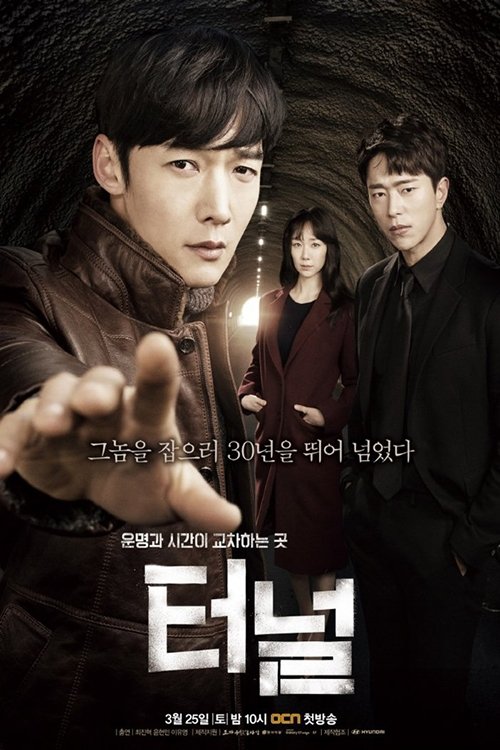
In the first episode of "Tunnel," we are introduced to the main character, Detective Park Kwang-ho, who is a dedicated and somewhat obsessive investigator in the South Korean police force. The story begins with him working on a case involving a series of mysterious disappearances. The atmosphere is tense as he navigates through the dark and gritty underbelly of the city, showcasing his determination to solve the case despite the pressure from his superiors.
As Kwang-ho delves deeper into the investigation, he discovers a connection between the disappearances and a long-abandoned tunnel. This tunnel, which has a haunting history, becomes a focal point for the investigation. The scene shifts to the tunnel itself, where Kwang-ho and his team conduct a search. The air is thick with suspense as they explore the damp, dark corridors, illuminated only by their flashlights. They find remnants of past lives, which heightens the sense of dread.
During the investigation, Kwang-ho encounters a series of flashbacks that reveal his troubled past, including his strained relationship with his family. These moments provide insight into his character, showcasing his emotional struggles and the weight of his responsibilities. His internal conflict is palpable as he grapples with the ghosts of his past while trying to focus on the case at hand.
As the plot progresses, Kwang-ho receives a call about a new lead. He rushes to the scene, where a body has been discovered in the tunnel. The discovery is gruesome, and the emotional toll on Kwang-ho is evident as he processes the reality of the situation. The victim's identity is revealed to be linked to the earlier disappearances, intensifying the urgency of the investigation.
The narrative takes a dramatic turn when Kwang-ho learns that the killer may be someone from his past. This revelation sends him into a spiral of doubt and fear, as he realizes that the case is more personal than he initially thought. The tension escalates as he races against time to uncover the truth, leading to a series of confrontations with suspects who may hold the key to solving the case.
In a pivotal scene, Kwang-ho confronts a key suspect in a high-stakes interrogation. The atmosphere is charged with tension as he pushes for answers, revealing his desperation to find justice for the victims. The suspect's evasive answers only deepen Kwang-ho's frustration, and the emotional stakes rise as he struggles to maintain control over the situation.
As the investigation unfolds, Kwang-ho's partner, a rookie detective named Kim Seon-jae, becomes increasingly involved. Seon-jae's youthful enthusiasm contrasts with Kwang-ho's seasoned cynicism, creating a dynamic partnership. Together, they uncover clues that lead them to a hidden network of individuals connected to the disappearances, revealing a larger conspiracy at play.
The climax of the episode occurs when Kwang-ho and Seon-jae discover a secret hideout linked to the killer. The scene is fraught with danger as they navigate through the dark, claustrophobic space, their hearts racing with anticipation. They find evidence that suggests the killer has been operating for years, evading capture through cunning tactics.
In the final moments of the episode, Kwang-ho faces a moral dilemma when he has the opportunity to confront the killer directly. The confrontation is intense, filled with raw emotion as Kwang-ho grapples with his desire for revenge versus his duty as a police officer. The episode ends on a cliffhanger, leaving viewers on the edge of their seats as Kwang-ho makes a critical decision that will impact the course of the investigation and his own life.







What is the ending?
In the ending of "Tunnel," season 1, the main characters, Detective Park Kwang-ho and his partner, Kim Seon-jae, confront the serial killer who has been terrorizing their city. The climax unfolds in a tense showdown, leading to a resolution that leaves the characters grappling with the emotional aftermath of their experiences. The season concludes with a sense of unresolved tension, hinting at the ongoing impact of the events on their lives.
As the final episodes unfold, the narrative begins with Detective Park Kwang-ho, who has been deeply affected by the series of murders linked to the tunnel. His determination to catch the killer intensifies, fueled by the personal stakes involved. The investigation leads him and his partner, Kim Seon-jae, to a series of chilling discoveries that reveal the killer's modus operandi and psychological profile.
In a pivotal scene, Kwang-ho receives a crucial tip that leads them to a hidden location where the killer has been operating. The atmosphere is thick with suspense as they navigate the dark, claustrophobic space, their flashlights cutting through the shadows. Kwang-ho's heart races, driven by a mix of fear and resolve. He is haunted by the faces of the victims, which fuels his urgency to bring justice.
As they close in on the killer, the tension escalates. The confrontation is fraught with danger, and Kwang-ho's protective instincts kick in as he realizes the threat not only to himself but also to Seon-jae. The killer, a figure shrouded in darkness, embodies the chaos and fear that has gripped the community. The scene is visceral, with the sounds of their footsteps echoing in the tunnel, heightening the sense of impending doom.
In a climactic moment, Kwang-ho faces the killer directly. The emotional stakes are palpable as he grapples with his own fears and the weight of his responsibility. The struggle is not just physical but deeply psychological, as Kwang-ho confronts the darkness within himself and the world around him. The fight is brutal, and the raw emotions of anger, desperation, and a longing for closure collide.
Ultimately, Kwang-ho manages to subdue the killer, but not without significant cost. The aftermath of the confrontation leaves him shaken, grappling with the moral complexities of justice and vengeance. Seon-jae, who has been a steadfast partner throughout the investigation, stands by him, but the toll of their experiences is evident in her eyes. The bond they share is tested, and the weight of their shared trauma lingers in the air.
As the season draws to a close, the characters are left to reflect on the impact of their journey. Kwang-ho, though victorious in capturing the killer, is haunted by the lives lost and the darkness that remains in the world. Seon-jae, too, is left with scars that will not easily heal. The final scenes depict them walking away from the tunnel, a symbol of the journey they have endured, but the uncertainty of their futures looms large.
The season ends on a note of ambiguity, suggesting that while the immediate threat has been neutralized, the emotional and psychological ramifications of their experiences will continue to shape their lives. The unresolved tension serves as a reminder of the complexities of human nature and the enduring impact of trauma, leaving viewers with a lingering sense of unease and contemplation about the characters' fates.
Is there a post-credit scene?
In the first season of "Tunnel," there is no post-credit scene. The episodes conclude without any additional scenes or teasers after the credits roll. The focus remains on the unfolding narrative and character development throughout the episodes, with each ending leading directly into the next part of the story. The series maintains a tight structure, emphasizing the tension and drama of the plot without the inclusion of post-credit content.
What motivates the main character, Detective Park Kwang-ho, in his investigation throughout the season?
Detective Park Kwang-ho is driven by a deep sense of duty and justice, stemming from his desire to protect the innocent and solve the mystery surrounding the tunnel murders. His emotional state fluctuates between determination and frustration as he faces numerous obstacles, including bureaucratic challenges and the psychological toll of the gruesome crimes.
How does the relationship between Detective Park Kwang-ho and his partner, Detective Kim Seon-jae, evolve during the season?
Initially, Detective Park Kwang-ho and Detective Kim Seon-jae have a professional but somewhat strained relationship, as they come from different backgrounds and have contrasting approaches to their work. As they face the challenges of the case together, their bond deepens, leading to mutual respect and understanding, especially as they confront personal demons and the emotional weight of the investigation.
What role does the tunnel itself play in the story, and how does it affect the characters?
The tunnel serves as a central symbol in the narrative, representing both a physical and psychological barrier. It is the site of the murders, creating a haunting atmosphere that affects the characters' mental states. As they delve deeper into the investigation, the tunnel becomes a metaphor for their own struggles, fears, and the darkness they must confront to uncover the truth.
What are the key turning points in the investigation that lead to significant revelations about the killer?
Key turning points include the discovery of the first victim's body in the tunnel, which sets off a chain reaction of events. Another pivotal moment occurs when Detective Park uncovers a connection between the victims, leading to a breakthrough in understanding the killer's motives. Each revelation heightens the tension and urgency of the investigation, pushing the detectives closer to the truth.
How does the character of the killer develop throughout the season, and what insights are revealed about their motivations?
The killer is portrayed as a complex character whose motivations are gradually unveiled through flashbacks and psychological profiling. As the season progresses, it becomes clear that their actions are driven by a traumatic past and a distorted sense of justice. This development adds layers to the narrative, as the detectives grapple with the moral implications of their pursuit.
Is this family friendly?
"Tunnel," season 1, produced in 2017, contains several elements that may not be suitable for children or sensitive viewers. Here are some potentially objectionable or upsetting aspects:
-
Violence and Crime: The series revolves around a murder investigation, featuring scenes of crime, including graphic depictions of violence and dead bodies. The portrayal of crime scenes can be intense and disturbing.
-
Mature Themes: The show explores dark themes such as betrayal, loss, and the psychological impact of crime on individuals and families. These themes may be heavy for younger audiences.
-
Emotional Distress: Characters experience significant emotional turmoil, including grief, fear, and anxiety, which may be upsetting for sensitive viewers.
-
Language: There may be instances of strong language or adult dialogue that could be inappropriate for younger audiences.
-
Tension and Suspense: The series builds a tense atmosphere that may be frightening for children, with suspenseful moments that could lead to anxiety.
Overall, while "Tunnel" offers a gripping narrative, its content may not be suitable for all viewers, particularly younger children or those who are sensitive to violence and emotional distress.









