



















Popular
What motivates President James Marshall to confront the hijackers on Air Force One?
How does the character of Ivan Korshunov, the lead hijacker, develop throughout the film?
What tactics does President Marshall use to outsmart the hijackers?
What role does the Vice President play in the plot of Air Force One?
How does the film depict the relationship between President Marshall and his family during the crisis?
Should I watch it?
Ask Your Own Question

What is the plot?
Night shrouds the Kazakh steppe.
Searchlights sweep the grounds of a sprawling presidential compound, an austere palace ringed by high walls, armored vehicles, and guard towers. Inside, General Ivan Radek, the hard-eyed dictator of a rogue neo‑Soviet regime, barks orders as his loyalists scramble. His regime has kept nuclear weapons and threatened war; he has turned Kazakhstan into a bloody fortress, and tonight he believes he is under attack--but not yet defeated.
From the darkness beyond the walls, shapes move with practiced silence. American special forces and Russian Spetsnaz advance together, a joint commando team in full gear. They cut fences, slip under wire, and then, at a shouted command in Russian, all hell breaks loose. Automatic weapons roar. Muzzles spit fire in the night. Unnamed Kazakh guards crumple under precise bursts from silenced rifles; others fire wildly from balconies and sandbagged positions, only to be cut down by disciplined return fire.
Explosions rip open courtyard doors. A truck engine revs, surges forward, and then detonates, blowing a gap through a secondary gate. The commandos pour through, tossing flash‑bang grenades that turn the world into white light and ringing noise. Some of them fall--hit by random, desperate shots from Radek's men--but the assault never stops. Stairwells fill with smoke and tracers. Soldiers rush each other around blind corners, and Radek's bodyguards die one by one in abrupt, chaotic clashes, unnamed but brutally dispatched in the flickering neon of muzzle flashes.
Inside the main building, Radek tries to run. He is a heavy man with cold, intelligent eyes, clad in a dictator's tailored uniform. He pushes past aides, shoves open doors, and sprints down marbled corridors as bullets chip stone around him. An explosion somewhere nearby knocks him against a wall. He staggers, furious, trying to retain the dignity of a head of state while his empire collapses around him.
The commandos find him at a side stairway, struggling with a locked door. Russian and American soldiers converge, guns raised, shouts layered in both languages. Radek freezes, hands half raised. A Russian officer yells at him to get on his knees. For a moment he seems to consider reaching for a weapon, but the sight of fifteen rifles leveled at his chest ends that thought. He slowly sinks to his knees. A black bag is yanked over his head, his hands wrenched behind him. General Ivan Radek, the butcher of Kazakhstan, is taken alive.
Outside, as helicopters thump in to extract the teams, bodies of unnamed guards, soldiers, and a few commandos lie scattered in the harsh floodlights. The joint force drags their prisoner toward a waiting aircraft, the night wind whipping his coat. This silent, brutal victory will ripple through the world.
Three weeks later, Moscow glows under crystal chandeliers.
In a grand Kremlin banquet hall, crystal glasses chime and classical music drifts over a gathering of Russian elites and foreign dignitaries. At the head table sits President James Marshall, President of the United States, his bearing more soldier than politician. His wife, First Lady Grace Marshall, composed and intelligent, sits beside him, her eyes attentive even when she smiles for the cameras. Their teenage daughter, Alice Marshall, looks distinctly less enthralled, fidgeting and picking at her food, at one point glancing at a notebook as though she'd rather be doing homework than playing the First Daughter.
The Russian President finishes his remarks and announces the American guest of honor. Applause rises as James Marshall stands.
He walks to the podium, the room falling quiet. For a moment he gazes at the assembled faces--Russian ministers, U.S. advisors, press, military brass--then begins, his voice controlled but edged with conviction. He praises the joint operation that captured Radek, calling it "the opening salvo in a new war against tyranny." He talks of the atrocities Radek committed, of mass graves and nuclear blackmail. The room nods solemnly.
Then his tone hardens. Marshall invokes the failures of "containment," criticizes the old calculus of tolerating dictators for the sake of stability. He declares that the United States will adopt a zero‑tolerance policy toward terrorism and human rights abuses. "We will not negotiate with terrorists," he says clearly, his words echoing across the marble and gilt. He vows that when innocent lives are at stake, America will act--not with words, but with force.
At their table Grace watches him with a mixture of pride and unease, aware that such a stance paints a target on his back. Alice, hearing phrases she's heard in speeches before, half listens, half lets her mind wander. Cameras flash, capturing the moment that will soon play on every network: the American president promising the world he will never bargain with terror.
Around the room, members of his traveling party are also introduced or quietly observed. National Security Advisor Jack Doherty, courteous and sharp, chats with Russian counterparts, unaware that his name will soon be associated with the first execution on live video. White House Chief of Staff Lloyd Shepherd, efficient and slightly harried, checks his watch, already thinking about the logistics of the return flight. Somewhere across the ocean, Vice President Kathryn Bennett, back in Washington, is watching the speech on television, taking in her president's words from a continent away.
The dinner winds down. Handshakes, last toasts, official photographs. Then motorcades slice through the Moscow night toward the airport, where a gleaming blue‑and‑white Boeing 747 waits under floodlights: Air Force One.
On the tarmac, reporters and camera crews jostle. Among them stand six so‑called Russian journalists, cleared to accompany the presidential entourage home. They carry cameras, equipment cases, and the quiet intensity of men with a secret. At their center moves Egor Korshunov, his pale eyes cold, his movements precise, his press credentials perfectly in order.
The President's motorcade arrives. James Marshall emerges to flashes and shouted questions, Grace and Alice close behind. They climb the stairs into the aircraft, the familiar sanctum that is both flying fortress and home. Staff file in: Jack Doherty, Lloyd Shepherd, military advisors, press corps. Secret Service agents fan out, among them Agent Gibbs, a reassuringly bland presence whose loyalty seems unquestionable--until later.
The journalists follow, guided by staff into the press area of the main deck. Bags pass through security. One equipment case gets an extra glance, but Agent Gibbs' calm nod smooths any concerns. The door closes. Air Force One taxis and thunders into the sky, leaving Moscow behind.
Inside, the atmosphere relaxes. Jackets come off, ties loosen. On the main passenger deck, staff chat, some watching news coverage of the Moscow speech. In a private area, James Marshall joins Grace and Alice, letting the weight of the diplomatic trip slip a little. He teases his daughter about her boredom at the banquet; she teases him back about speeches that "go on forever." For a moment, they are simply a family on a long flight home.
Up front, in the cockpit, the pilot and co‑pilot confer with controllers. The flight plan is set: a route toward Germany, with an emergency option to land at Ramstein Air Base if necessary. Outside, the night is calm.
On the main deck, though, something shifts.
The six "journalists" cluster near their gear. With subtle glances, they move to a storage area where weapons are secretly stowed. Here, the first true betrayal unfolds. Secret Service Agent Gibbs, who moments before appeared as another guardian of the President, uses his access codes and keys to help the men open a secured weapons locker. Assault rifles, pistols, and ammunition emerge from what should have been a shield, not a threat.
Korshunov checks a rifle, chambers a round. He nods once. Within seconds, the press area erupts in violence.
Automatic gunfire tears through the cramped compartment. Unnamed Secret Service agents and Air Force security personnel, caught in the open or reaching for sidearms, are cut down instantly. One throws himself in front of a staffer and dies in a spray of blood. Another manages to fire a few rounds, hitting a terrorist in the shoulder, but is riddled with bullets and collapses. Gibbs ducks strategically, out of the terrorists' line of fire, preserving his own life through treachery.
On monitors in the Situation Room back in Washington, routine flight data scrolls by. No one there yet imagines the chaos unfolding inside the plane.
The alarm flashes through Air Force One. Shouts, gunshots, then the clipped, urgent orders of the Secret Service. President Marshall is in his private area when the first shots sound. Agents burst in, weapons drawn.
"Sir, we have to move," one insists.
"What's happening?" Marshall demands, but he already knows: his worst professional nightmare is here, in the sky.
"Unidentified hostiles on board," the agent replies. "We're getting you to the pod."
They hustle him through service corridors toward the lower deck, toward the fictional but very real‑seeming presidential escape pod hidden behind a control panel. Grace and Alice are separated from him in the scramble, swept toward safer rooms by other agents. The sound of gunfire echoes down the narrow halls. Somewhere behind them, staff scream.
Marshal resists. "I'm not leaving my family," he snaps.
"Mr. President, we don't have time," the lead agent insists, almost bodily pushing him toward the pod. "That's an order--from me."
It is a bitter inversion of command. With no time to argue, Marshall allows himself to be shoved into the cramped capsule. His eyes blaze with anger and fear. The heavy door swings shut, sealing him in darkness.
Above, the hijacking rolls forward.
Korshunov's men sweep the main deck, killing more unnamed security and military personnel who try to form a line of defense. An Air Force crewman lunges from behind a corner with a pistol; two bursts from an AK‑style rifle fling him backward into a wall. A guard tries to pull a wounded man to cover; both are gunned down. The terrorists move with ruthless efficiency, driving survivors into the central conference room, the de facto command center on board.
Meanwhile, in the cockpit, the flight crew hears the chaos and tries to act. The captain orders an emergency diversion to Ramstein Air Base. He radios ahead, reporting a possible security breach, requesting permission to land. But before they can descend, heavy boots crash against the cockpit door. The reinforced barrier buckles under sustained assault. A final shot blows the lock; the door slams open.
Armed terrorists surge in. The captain reaches for a switch; the co‑pilot instinctively throws his hands up. Korshunov's man fires point‑blank. The captain dies in his seat, blood splattering instruments. The co‑pilot is shot a moment later, slumping sideways over the controls. The cockpit fills with smoke and the metallic smell of blood.
A terrorist pilot--loyal to Radek--slides into the captain's seat, shoving the corpse aside. He cancels the descent, reprograms the flight path, and banks Air Force One away from Germany and back toward Kazakhstan. In the shadows, Agent Gibbs stands like a ghost, betraying everything he sworn to defend.
In the lower deck, hydraulic locks release. With a explosive jolt, the presidential escape pod ejects from the belly of the plane and tumbles away into the night, its parachutes blooming. On monitors in command centers thousands of miles away, the pod is tracked descending over German territory. Everyone assumes President James Marshall is inside.
But the pod is empty.
At the last possible second, before the launch, Marshall made a choice. Somewhere between the urgency of his agents and the pressure of the moment, he twisted, pushed, and refused to climb fully in. The pod went without him. He remains on Air Force One, thrown by the blast into the shadows among baggage and machinery. Bruised, furious, very much alive, he drags himself behind crates and stares at the metal around him. The belly of the giant aircraft stretches in dim, humming corridors: storage bins, fuel lines, blinking electronic panels.
He is alone, cut off from his family and staff, but he is not powerless.
Upstairs, Korshunov consolidates control.
He orders all survivors--staff, press, advisors--herded into the main conference room. Grace Marshall and Alice are seized and dragged from their temporary shelter. A Secret Service agent tries to shield Grace, is shot in the chest, and falls dead at her feet. Alice is yanked away, struggling, shouting "Mom!" as rifles prod her down the aisle.
Once the hostages are assembled, Korshunov strides into the room. His voice is low but carries menace.
"Ladies and gentlemen," he says, "welcome to the revolution."
He introduces himself and his men as loyalists of General Ivan Radek. His demand is simple and stark: the United States must arrange Radek's immediate release from the Russian prison where he now sits. Until they do, he will execute one hostage every thirty minutes.
In the secure White House Situation Room in Washington, the atmosphere shifts from routine monitoring to crisis. Vice President Kathryn Bennett sits at the long table, surrounded by the Attorney General, military commanders, and national security staff. A screen flickers to life with a live feed from Air Force One. There is Egor Korshunov, standing among frightened hostages.
"Madam Vice President," he says with icy politeness. "I suggest you listen carefully."
They listen as he states his demands. Radek must be freed. The Americans and Russians must guarantee safe transport. For every thirty minutes of delay, one person will die. To prove his seriousness, he says, he will kill someone now.
He moves among the hostages, scanning faces. Jack Doherty, National Security Advisor, sits ramrod straight, trying not to show fear. Korshunov stops in front of him.
"You," he says simply.
Jack swallows. "You don't have to do this," he says, voice steady but tight.
Korshunov smiles thinly. "Yes, I do."
Jack glances at the camera feed, as though aware the entire U.S. leadership is watching. Then the terrorist raises his pistol. In front of the hostages and the live feed to Washington, Egor Korshunov shoots Jack Doherty in the head. Jack's body jerks and collapses to the floor, a dark stain spreading on the carpet.
Gasps, cries, someone retches. In the Situation Room, a stunned silence follows, broken only by the Attorney General whispering, "Jesus…"
The countdown has begun. The first named death belongs to Jack Doherty, executed by Egor Korshunov.
Back in the lower deck, James Marshall moves through the dim passageways like a soldier in enemy territory. Old instincts surface; he is a Vietnam veteran and a Medal of Honor recipient, though the world knows this more as a biographical note than a living reality. Now, those skills awaken.
He rummages through storage, finds a sidearm near a fallen guard, checks the magazine with practiced hands. He listens to muffled footsteps above, senses where the terrorists might be. Using maintenance ladders and service hatches, he moves between the bowels of the aircraft and the upper deck, staying out of sight, mapping the intruders' positions.
His first confrontation comes in a narrow service corridor.
An armed terrorist descends a metal ladder alone, perhaps sent to secure the lower deck. He calls out to his comrades in Russian, gets no reply, and steps forward cautiously. Marshall waits behind a crate. As the man passes, Marshall lunges, slamming him against the wall. They struggle in the cramped space, grunting, fists hammering. The terrorist tries to bring his rifle to bear, but Marshall jams the barrel aside and drives an elbow into his throat. They crash to the floor, sliding on metal. With a final, desperate move, Marshall wrenches the man's head back and slams it into the edge of a step. The terrorist goes limp. Whether his neck breaks or his skull fractures, he is dead, one more unnamed terrorist killed by President Marshall himself.
Marshall strips him of ammunition and a radio. Sweating, breathing hard, he wipes blood from his hands. His face is grim. He has just taken a life again, not as commander‑in‑chief issuing orders, but with his own hands.
Using the radio, he listens in on the terrorists' chatter. He learns their numbers--fewer than a dozen--and their leader's name: Egor Korshunov. He learns that Grace and Alice are alive, that the hostages are contained in the conference room. He also discovers that the cockpit is under hijacker control and that the plane, escorted by U.S. F‑15s, is heading not to safety but toward Kazakhstan.
In Washington, Vice President Bennett grapples with the legal and political dimensions of the crisis. The Attorney General quietly raises the 25th Amendment, explaining that if the President is "incapacitated," she can sign a declaration with a cabinet majority to become Acting President. At this point, everyone believes the presidential escape pod carried Marshall away. The pod, however, has been found on the ground--empty. That discovery, relayed by military intelligence, hits the Situation Room like an electric shock.
"Empty?" Bennett repeats.
"He never left the plane," someone says.
The revelation that the President has secretly remained on board Air Force One changes everything. Now, Bennett must act with the knowledge that any decision she makes could condemn or save her living president.
On the plane, Korshunov also learns this unsettling truth. His men intercept the report that the pod was empty. His expression darkens. The President--this man who preached zero tolerance--is hiding somewhere in his plane, killing his soldiers. It is not the scenario he expected.
He responds by tightening the screws.
He has Grace and Alice brought separately from the hostages. Grace is forced to watch Jack's body being dragged away. Korshunov circles her in the conference room, taunting her with her husband's speech. "Your husband said he does not negotiate with terrorists," he says. "Was that a lie?" His ideology spills out in bitter, venomous lines. He accuses America of hypocrisy, of "taking 100,000 lives to save a nickel on the price of a gallon of gas." He claims Radek is a patriot, a hero of the people, while the United States is the real murderer.
Grace holds his gaze. "You're a monster," she tells him quietly.
He smiles. "Then what does that make your husband, when he lets you die for his principles?"
Alice, in another compartment, is interrogated and frightened. Korshunov uses her youth as a lever, threatening harm that he doesn't even have to describe to be terrifying.
Marshall hears some of this over intercepted communications. Each threat to Grace and Alice twists the screw inside him further, testing his resolve not to negotiate.
His resistance continues. In the cargo hold, he locates critical control panels and begins to sabotage. He dumps fuel selectively, forcing the plane to alter altitude and course, hoping to draw the terrorists toward him and away from the hostages. More cat‑and‑mouse confrontations follow. In one, he ambushes two terrorists sent to investigate the fuel anomaly, killing them in a close‑quarters gunfight that leaves their bodies sprawled among luggage crates--more unnamed terrorists felled by the President's trained marksmanship and desperation.
At another point, accompanied by Major Norman Caldwell, an Air Force officer who has linked up with him, Marshall activates system controls from the lower deck, adjusting the plane's performance. Caldwell, impressed but wary, follows the President's lead; together they are a small, mobile strike team inside the very aircraft terrorists thought they owned.
Back in Washington, tension builds around Radek's fate. The Russians hold him in a secure prison. Scenes shift to that facility: concrete walls, armed guards, watchtowers. General Radek, in a stark cell, watches with cold interest as his jailers receive frantic calls. The President of the United States is being blackmailed to release him. Outside, a helicopter warms its rotors, a visible promise of freedom if the Americans cave.
Under unrelenting pressure from Korshunov, and with Grace and Alice under his direct control, Marshall is forced into a terrible corner. The terrorists bring Grace and Alice to the front, make Marshall talk to them over the plane's internal phone and to the Vice President over the secure link. Korshunov sets the stage so that Marshall can hear his family's fear.
"Dad?" Alice's voice trembles.
"I'm here, sweetheart," Marshall answers, his own voice thick. He is still hiding, still fighting, but at this moment he is also simply a father listening to his child's terror.
Korshunov cuts in. "You will order Radek's release. Or your wife and daughter die. It's very simple, Mr. President."
James Marshall has built his presidency on the promise not to negotiate with terrorists. Now, in real time, he must decide whether to uphold that doctrine and sacrifice his family, or break it and potentially unleash Radek's brutality back onto the world.
He breaks. Not completely, but enough.
He signals to Bennett and the Russians that they must proceed with Radek's release. "Do it," he says hoarsely, knowing full well that half the world will see this as a betrayal of his own word. Bennett, torn, passes along the authorization. At the Russian prison, wardens unlock Radek's cell. Guards escort him out. He straightens, a caged tiger stepping toward freedom.
This decision exposes the painful gap between Marshall's public persona and private humanity. His "zero tolerance" has just acquired its first exception.
Yet Marshall has not given up the fight. Even as Radek begins his journey toward the tarmac, Marshall devises another plan, one that uses the aircraft itself as his ally.
He requests that Air Force One be brought down to an altitude of 15,000 feet under the pretext of mid‑air refueling. The terrorists agree because, technically, the plane needs fuel and the KC‑10 tanker arranged by the U.S. Air Force is approaching. Korshunov thinks he still holds the upper hand: he has the President's family, the hostages, and the threat of Radek's release unfolding. He does not realize that Marshall is converting this refueling operation into a mass escape.
The KC‑10 comes alongside, a hulking tanker connecting to Air Force One via a refueling boom. Fuel begins to flow between the aircraft. Inside the bowels of Air Force One, Marshall and Major Caldwell prepare parachutes. At this altitude, a jump is survivable; at cruising ceiling it would be suicide.
He coordinates with friendly crew and select hostages, moving them in small groups down to the cargo hold and toward the rear loading ramp. The roar of the wind increases as the ramp door inches open, revealing the night sky and the lights of the tanker keeping pace. Faces are pale, eyes wide, but when Marshall orders them to jump, they obey. Staffers, military personnel, some press--one by one, they clip on parachutes and launch themselves into the darkness, tumbling away to safety, trusting the cords to open.
Most of the hostages get out this way, their figures dwindling to specks against the clouds, their survival implied by the fact that no chutes malfunction on screen. These people--unnamed by the film but visually present--survive because the President refuses to flee alone.
The deception does not last. Korshunov and his remaining men realize that their hostages are vanishing. They rush toward the cargo hold and burst in, catching President Marshall, Lloyd Shepherd, Major Caldwell, and Agent Gibbs, who has accompanied them, in the act of shepherding more people toward the ramp.
Guns snap up. The temporary balance of power vanishes.
At that moment, turbulence hits. The refueling operation, the weight shift from jumping hostages, and possible evasive maneuvers combine to strain the connection between Air Force One and the KC‑10. Metal groans. The boom tears free. Fuel begins pouring uncontrollably from the severed hose, atomizing into a mist in the turbulent air. A spark--perhaps from colliding metal--ignites the plume. The KC‑10 tanker explodes in a massive fireball, obliterating its crew in an instant.
The tanker's unnamed crew members die with no time to react, consumed by their own fuel. Air Force One shudders violently, nearly ripped apart by the blast, but survives, its exterior scorched and its structure further weakened. The refueling plan has saved many hostages but cost the lives of multiple American airmen and destroyed a vital aircraft.
Korshunov is enraged by the deception. He tightens his grip further on the remaining hostages, especially the First Family. He drags Grace and Alice into the Presidential quarters, making the intimate family spaces--bedroom, office--into hostage cages. He forces the President to listen as he threatens his daughter directly, pressing a gun against Alice's head, making Grace watch.
"You will complete Radek's release," he hisses. "Or I will tear your family apart in front of you."
Meanwhile, in the Russian prison, Radek's journey continues. Guards escort him across the yard toward a waiting helicopter. Helicopter blades spin up, kicking dust and debris. Radek can smell freedom. He walks faster, the swagger of the dictator returning with each step.
But outside, the situation has changed again.
Despite the refueling disaster, despite the remaining terrorists aboard, James Marshall eventually manages--with the help of Major Caldwell and loyal crew--to turn the tables inside the plane. In a series of intense confrontations, he and Caldwell kill more unnamed terrorists in corridors and compartments, overrunning their positions with gunfire and the use of the plane's own systems. We see brief but deadly exchanges: a terrorist leans around a corner and is shot in the chest; another attempts to ambush Caldwell and is taken down by Marshall's covering fire. The ranks of Korshunov's men thin until only a few, including Korshunov himself, remain.
In one crucial encounter, Marshall reaches the cockpit. He and Caldwell overpower the terrorist pilot in a messy struggle that ends with the man slumped dead away from the controls--another anonymous loyalist to Radek killed by the President's side. For the first time since the takeover, an American sits in the captain's seat. Marshall grips the yoke, his face taut with focus. The plane is damaged, systems flicker, but he now has some control over their destiny.
He calls out over the radio, identifying himself. In the White House, in NATO command centers, and over the escorting F‑15s, jaws drop. The President is alive, on the radio personally piloting his own hijacked aircraft. With this same call, he also announces that the hijackers are being neutralized and demands that the release of Radek be halted.
The order streaks through secure channels to Moscow. On the prison yard, as Radek strides toward the helicopter, his guards suddenly raise their weapons. The American President has rescinded the release. The Russians have no reason to let their tyrant walk out now.
Radek, seeing their guns come up, breaks into a run, trying to sprint the last yards to the helicopter. He shouts an order to loyalists who are not there. The guards open fire. Bullets slam into him; he staggers, jerks, and falls to the ground, dying in the shadow of the helicopter that was to carry him back to power. General Ivan Radek dies on Russian soil, killed by his own country's guards on orders that cascade from James Marshall's reclaimed authority.
Back on Air Force One, the battle narrows to its final, most personal confrontation.
Korshunov, enraged by Radek's death and the President's defiance, locks himself into the presidential suite with Grace and Alice. He forces Marshall, via intercom and physical proximity, into a primal showdown. In a tense sequence, Marshall manages to get into the suite and confronts him face‑to‑face. The room is small, full of family photos, children's drawings, a crib of personal life--the perfect ironic stage for a fight to the death.
Grace and Alice are held at gunpoint as Korshunov rants, spitting his ideology and fury. He blames Marshall for Radek's death, for his own lost cause. The confrontation explodes into violence when Marshall seizes a moment to strike. He slams into Korshunov, knocking the gun aside. The two men crash through furniture, grappling in brutal hand‑to‑hand combat. Grace and Alice scream, pinned back but trying to help when they can.
The fight spills into a corridor and down toward the rear loading ramp. The door there has been used for parachute jumps and now stands as a yawning opening to the sky. Turbulence rattles the aircraft. Marshall and Korshunov, locked together, slam into bulkheads, crack ribs, draw blood. Marshall's age and bureaucratic lifestyle seem at odds with the savage strength he displays, but his war‑honed instincts and furious determination give him an edge.
At one point Korshunov gets a hand on a pistol and fires; the shot misses Marshall but shatters a control panel. Alice grabs a loose cable and swings it toward her father; he uses it to leverage himself, twisting behind Korshunov. The terrorist stumbles toward the open ramp, barely catching himself on a protruding handle. Wind howls around them as the earth spins far below.
Marshall stands over him, exhausted, bloodied. Korshunov hangs on for his life, one hand gripping the handle, the other clawing for purchase. For a moment, their eyes lock: the American president and the Radek loyalist, two men who have turned ideology into action. Korshunov's face flickers from fury to fear.
James Marshall makes his choice.
He grips Korshunov, snarls the line that will echo in cinema for decades--"Get off my plane"--and wrenches the terrorist's fingers free. Egor Korshunov, leader of the hijackers, plunges out of the open ramp into the sky, his body tumbling away toward the distant sea. His death is caused directly and decisively by President James Marshall.
With Korshunov gone, the internal terrorist threat is effectively ended. The remaining few loyalists have been killed in earlier skirmishes or are quickly mopped up by Marshall, Caldwell, and surviving security personnel. Grace and Alice are freed, clinging to James in a desperate, tearful embrace amid the wreckage of their airborne home.
For a brief, fragile moment, it looks as if the worst is over.
But the world is not finished with them. Bennett receives an update in the Situation Room: six Kazakh MiG‑29 fighters piloted by Radek loyalists have taken off, heading to intercept Air Force One in Kazakh airspace. She orders nearby U.S. F‑15s to protect the President's plane, but the numbers and the distance are uncertain. She urgently warns Marshall over the radio.
In the sky, the next phase of danger appears as green and red dots on radar and as dark shapes on the horizon. The MiG‑29s close in, their pilots eager to avenge Radek and prevent the President from reaching safety. F‑15 Eagles slide into escort positions, bristling with missiles.
The dogfight that follows turns the already damaged Air Force One into the center of a deadly storm.
The MiGs lock onto the big 747. Missile warnings shriek in the cockpit. Marshall, still at the controls, follows the shouted instructions of an Air Force officer and the plane's own automated emergency systems. He dives, climbs, banks as hard as the lumbering aircraft can tolerate. The F‑15s engage, firing missiles that streak out in white lines, slamming into some of the attacking fighters. At least a couple of the MiG pilots die in blossoms of flame, their aircraft shredded and consumed, their bodies never seen but certainly lost.
Yet not all threats are neutralized. One missile gets through, striking near Air Force One's tail. The explosion rips through the structure. Warning lights erupt on the console. Systems fail in cascades. Air pressure drops, alarms blare, and the plane begins to lose altitude uncontrollably. Air Force One is now a wounded giant, barely staying in the air.
With internal hijackers dead and external attackers only partially repelled, the final challenge is simple but enormous: get the President, his family, and remaining survivors off this dying plane before it falls from the sky.
The U.S. military responds with one last desperate measure. An Air Force Pararescue MC‑130 Hercules--a special operations transport--races in, flying to intercept the stricken 747. As it draws alongside, at a precarious distance, pararescue commandos rig a zip‑line transfer system between the two aircraft.
On Air Force One, the rear loading ramp opens again, revealing the dark shape of the Hercules pacing them like a guardian angel. A heavy cable is fired or extended between the troop bay of the MC‑130 and the ramp of the 747. It snaps taut, forming a lifeline above the churning void.
Time is short. The structural damage is severe; the plane will not hold together much longer. The pararescue team moves fast, strapping harnesses onto survivors and sending them hand‑over‑hand along the line, sometimes assisting with winches, from Air Force One to the Hercules. The wind tears at clothes, threatens to fling people into the abyss, but the commandos guide them like cargo and like children.
Lloyd Shepherd crosses, clinging to the line, his face a study in terror and relief. Major Caldwell follows, his military training making the crossing more controlled. Grace and Alice are clipped into harnesses and sent across together or in quick succession, hands reaching for the arms of rescuers on the Hercules side. They tumble into the cargo bay of the MC‑130, where medics and crew grab them, strap them down, and reassure them: "You're okay, you're safe now."
A few remaining staff make the perilous journey. The count of living souls aboard Air Force One dwindles.
Back in Washington, the debate over the 25th Amendment reaches its climax. The Attorney General has already gathered the signatures of a majority of cabinet members on a formal declaration that the President is unable to discharge his duties. All that remains is for Vice President Bennett to sign. Papers lie in front of her; pens are ready. With Air Force One dying, the incentive to formalize the transfer of power is strong.
But updates from the MC‑130 change the calculus. Reports come in: the President is alive, the President is being transferred. The call sign of the Hercules will soon change. Bennett stares at the documents, at the screens showing the rescue in progress, and then makes her choice.
She takes the declaration and tears it in half, shredding the legal instrument that would have deposed James Marshall and made her Acting President. Loyalty, in this moment, outweighs procedural correctness. She will not claim power while her President is still fighting for his life.
On Air Force One, only a few figures remain: President James Marshall and Secret Service Agent Gibbs among them.
Gibbs has maintained the façade of loyal agent throughout the chaos--cowering among hostages, offering help here and there--but his earlier actions in arming the terrorists and unlocking the weapons cache already mark him as the mole. The audience knows; the characters largely do not. Now, in this last act, his betrayal will be exposed beyond doubt.
He stands beside the President at the rear ramp, ostensibly coordinating the final transfers. The zip‑line cable hums with tension, the MC‑130 buffeted by the same turbulence that rattles Air Force One. Marshall is strapped into a harness, ready to cross. The line between life and death has become literal.
Gibbs moves to the release mechanism that controls the tether joining the two aircraft. His face is blank, his intentions lethal. His plan is simple: detach the line while the President is still physically tied to Air Force One, ensuring that when the giant plane finally breaks apart and plunges into the sea, James Marshall will go with it.
At the last second, as Marshall begins his transfer, something about Gibbs' motion, his timing, or perhaps the glint in his eyes gives him away. The President senses the danger. He scrambles, fumbling with his harness, trying to get onto the Hercules side of the line. Gibbs pulls or releases the tether prematurely. The cable jerks violently. For a terrifying instant, Marshall hangs between planes, the earth yawning below, metal shrieking around him.
He fights like a man who has survived too much to die now. With a desperate surge, he swings his weight, reaches for the helping hands of pararescue commandos leaning out of the Hercules. They grab his arms, haul him in, unclipping his harness just as the tension changes and the line slacks away from Air Force One.
Gibbs is not so lucky. In orchestrating the betrayal, he has remained on the wrong side of the line. When the tether disconnects, he is still on the doomed 747. Alone among the major named characters, he becomes the final inhabitant of Air Force One. He rushes toward the ramp, perhaps realizing too late the consequence of his treachery, but there is nowhere to go and no way off.
Air Force One, now empty except for the treacherous Secret Service Agent Gibbs, falls.
The great aircraft, symbol of American power, descends toward the dark waters below. Flames lick from damaged engines. Metal peels back from the stress. Inside, Gibbs can do nothing. The cockpit is wrecked, systems are failing, and the ground rises fast. In a final wide shot, the plane slams into the ocean--identified in sources as the Caspian Sea or nearby waters--and explodes in a vast plume of water and fire. Gibbs dies instantly, killed by the very crash he tried to use to murder his President.
With that impact, the hijacking of Air Force One ends. Every terrorist is dead: unnamed soldiers in the early raid, multiple hijackers killed by Marshall and his allies, Egor Korshunov cast from the ramp by the President, and MiG‑29 pilots shot down in mid‑air by U.S. F‑15s. Their cause dies with them. General Ivan Radek is dead, shot by Russian guards on his aborted walk to freedom. Jack Doherty lies executed on the plane. The KC‑10 tanker crew has perished in their mid‑air explosion. Agent Gibbs, the traitor, has gone to the bottom of the sea with the shattered remains of Air Force One.
Onboard the MC‑130 Hercules, there is only survival.
In the noisy cargo bay, paramedics tend to bruises and cuts. Grace and Alice sit close to James Marshall, gripping his arms as though they might vanish if they let go. Their clothes are torn, faces streaked with tears and grime. Marshall, still in his rumpled suit, looks exhausted beyond measure--physically battered and emotionally drained--but alive.
A crewman steps up to the cockpit, relays a message to the pilots. Over the radio, controllers ask for identification.
The pilot replies with new words: "Liberty 24. We have the President on board."
The call sign Air Force One has technically transferred with the presence of the President--from the depths of the Caspian to the belly of this MC‑130. But the film emphasizes the new designation, "Liberty 24," as if to underscore rebirth after destruction. This aircraft is now the vessel of the President and the symbol of American continuity.
In the White House Situation Room, relief washes through the assembled leaders. Bennett hears the confirmation that the President is safe. Her torn 25th Amendment declaration lies in the trash, its threat to Marshall's authority rendered moot and unnecessary. Tears glisten in her eyes--not of grief, but of profound release. She has walked a political tightrope and kept faith with her President.
The camera returns to the Hercules, where James Marshall holds his wife and daughter close. No stirring speech is needed. The visuals do the work: a family reunited after facing death together; a President who lived his policy, then broke it, then redeemed it through action; a nation's symbol burning in the sea while its leader flies on in a battered military transport.
Outside, the MC‑130 Hercules flies steadily into the night, away from hostile skies, toward safe airspace and waiting bases. The noise of its engines is constant, reassuring. Inside, the survivors sit amid cargo nets and metal walls, eyes closed, hands clasped, some praying, some simply breathing in the clean, non‑recycled air of survival.
The story ends there: with the First Family alive, the terrorist threat extinguished, Radek dead, the traitor Gibbs destroyed, and the President of the United States--James Marshall--rescued mid‑air and carried home by a plain, unglamorous aircraft newly known as Liberty 24.


What is the ending?
In the ending of "Air Force One," President James Marshall confronts the hijackers on his plane, ultimately defeating them and saving his family and the hostages. He manages to land the plane safely, and the terrorists are apprehended. The film concludes with Marshall reaffirming his commitment to justice and freedom.
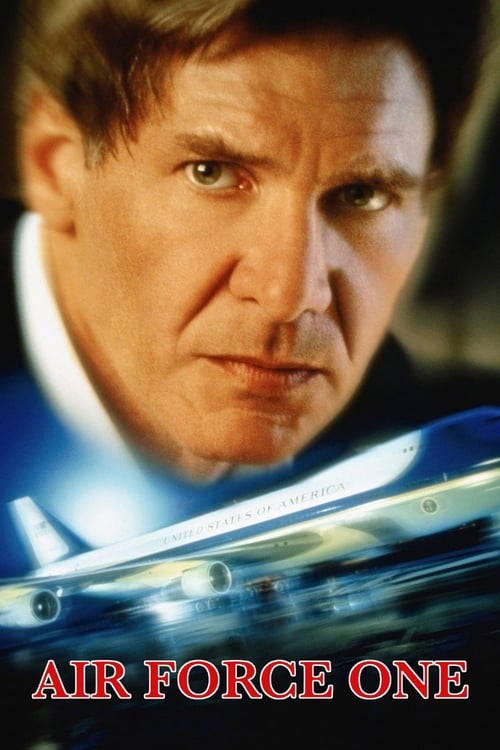
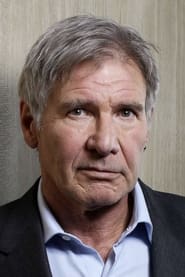
As the climax of "Air Force One" unfolds, the tension aboard the presidential aircraft reaches its peak. President James Marshall, portrayed by Harrison Ford, has already demonstrated his resolve and courage throughout the hijacking ordeal. The scene is set in the dimly lit cabin of Air Force One, where the remaining hostages, including his wife, Grace Marshall, and their daughter, are held captive by the ruthless terrorist leader, Ivan Korshunov, played by Gary Oldman.
In a pivotal moment, Marshall, having evaded the terrorists, stealthily navigates through the narrow aisles of the plane. His heart pounds with a mix of fear and determination as he recalls the stakes: not only his own life but the lives of his family and the hostages. The atmosphere is thick with suspense, and the sound of his footsteps echoes ominously against the backdrop of the plane's hum.
As he approaches the cockpit, Marshall's internal conflict is palpable. He is not just a president; he is a father and a husband, driven by the instinct to protect his loved ones. The camera captures his steely resolve as he prepares to confront the terrorists. In a sudden burst of action, he engages in a fierce struggle with one of the hijackers, showcasing his physical prowess and tactical skills honed from his military background.
The fight spills into the cockpit, where the pilot and co-pilot are still under threat. Marshall's quick thinking allows him to gain the upper hand, and he manages to incapacitate the hijacker. The cockpit is filled with chaos, alarms blaring as the plane begins to lose altitude. Marshall, now in control, must act swiftly to stabilize the aircraft. He communicates with the military, who are tracking the plane's descent, and they provide him with guidance on how to regain control.
Meanwhile, the remaining terrorists are still a threat. Marshall's determination to save his family drives him to confront Korshunov directly. In a tense showdown, Marshall faces Korshunov, who is holding Grace at gunpoint. The emotional stakes are at their highest as Marshall pleads for his family's safety. The scene is charged with tension, the camera focusing on the fear in Grace's eyes and the unwavering resolve in Marshall's.
In a moment of bravery, Marshall manages to disarm Korshunov, leading to a dramatic confrontation that culminates in a struggle for the gun. The fight is intense, showcasing Marshall's desperation and courage. Ultimately, he prevails, and Korshunov is subdued, his threat neutralized.
With the terrorists defeated, Marshall quickly checks on his family, ensuring they are unharmed. The relief is palpable as he embraces Grace and their daughter, the emotional weight of the ordeal lifting momentarily. The plane, now under control, is guided back to safety, and the military prepares for a landing.
As Air Force One touches down, the scene shifts to the ground, where a crowd of military personnel and media await the president's arrival. Marshall steps off the plane, visibly shaken but resolute. He addresses the nation, reaffirming his commitment to justice and the values he stands for. The camera captures the pride in his eyes, a man who has faced unimaginable danger and emerged victorious.
In the final moments, the fate of the main characters is revealed. Marshall's family is safe, and the terrorists are apprehended, their threat extinguished. The film closes with a sense of hope and resilience, highlighting the strength of leadership in the face of adversity. Marshall's journey is one of courage, sacrifice, and the unwavering belief in the principles of freedom and justice.
Is there a post-credit scene?
The movie "Air Force One," produced in 1997, does not have a post-credit scene. The film concludes with President James Marshall, played by Harrison Ford, successfully rescuing the hostages and defeating the terrorists led by Ivan Korshunov, portrayed by Gary Oldman. The final moments show Marshall reuniting with his family, emphasizing the themes of heroism and sacrifice. The credits roll without any additional scenes or content following them.
What motivates President James Marshall to confront the hijackers on Air Force One?
President James Marshall, played by Harrison Ford, is driven by a deep sense of responsibility for the safety of his family and the passengers aboard Air Force One. His emotional state shifts from a confident leader to a desperate father and husband when he realizes that his wife, Grace, and their daughter are in grave danger. This personal connection fuels his determination to take action against the hijackers.
How does the character of Ivan Korshunov, the lead hijacker, develop throughout the film?
Ivan Korshunov, portrayed by Gary Oldman, is initially presented as a ruthless and cunning antagonist, determined to achieve his political goals through the hijacking. As the film progresses, his character reveals layers of desperation and conviction, particularly when he confronts President Marshall. Korshunov's motivations stem from a desire for revenge against the United States, which he believes has wronged his homeland, adding complexity to his villainous role.
What tactics does President Marshall use to outsmart the hijackers?
President Marshall employs a combination of strategic thinking and physical courage to outsmart the hijackers. He uses his knowledge of the aircraft's systems to create diversions, such as triggering the emergency oxygen masks to confuse the hijackers. Additionally, he engages in psychological warfare, leveraging his position as the President to manipulate the hijackers' expectations and ultimately regain control of the situation.
What role does the Vice President play in the plot of Air Force One?
The Vice President, played by Glenn Close, is depicted as a strong and capable leader who is left to manage the crisis from the ground while President Marshall is on Air Force One. Her character is motivated by a desire to protect the President and the nation, and she faces political challenges as she navigates the situation, including dealing with the media and military decisions. Her determination to support Marshall adds tension to the narrative.
How does the film depict the relationship between President Marshall and his family during the crisis?
The relationship between President Marshall and his family is central to the emotional stakes of the film. As the hijacking unfolds, Marshall's concern for his wife, Grace, and their daughter becomes palpable. Flashbacks and moments of dialogue reveal their close bond, highlighting his role as a protector. The tension escalates as he must balance his duties as a leader with his instinct to safeguard his loved ones, creating a poignant emotional conflict throughout the film.
Is this family friendly?
"Air Force One," produced in 1997, is an action-thriller film that contains several elements that may not be suitable for children or sensitive viewers. Here are some potentially objectionable or upsetting aspects:
-
Violence: The film features intense action sequences, including gunfire, hand-to-hand combat, and explosions. There are scenes where characters are shot or injured, which may be distressing.
-
Hostage Situations: The plot revolves around a hijacking of the President's plane, leading to tense hostage situations that can create a sense of fear and anxiety.
-
Death: Several characters face life-threatening situations, and there are moments that depict the death of key characters, which could be upsetting.
-
Terrorism Themes: The film deals with themes of terrorism and political conflict, which may be unsettling for younger audiences.
-
Strong Language: There are instances of strong language and intense dialogue that may not be appropriate for children.
-
Emotional Stress: The characters experience high levels of stress and fear, particularly the President and his family, which may evoke strong emotional reactions.
Overall, while "Air Force One" is an action-packed thriller, its themes and content may not be suitable for all viewers, especially younger children or those sensitive to violence and intense situations.








