


Popular
What motivates Dr. Frankenstein to create a mate for the Monster?
How does the Monster react to the Bride when he first sees her?
What role does Dr. Pretorius play in the creation of the Bride?
What happens to the Bride at the end of the film?
How does the Monster's character evolve throughout the film?
Should I watch it?
Ask Your Own Question

What is the plot?
On a stormy night in 1816, the Villa Diodati by Lake Geneva is alive with flickering candlelight and the restless spirits of creativity. Mary Shelley, her husband Percy Bysshe Shelley, and their friend Lord Byron gather around a fire, the wind howling outside. Mary, portrayed by Elsa Lanchester, recounts the tale of Frankenstein to her companions, picking up where the story left off. She narrates, "It was on a dreary night of November that I beheld the accomplishment of my toils," her voice trembling with the weight of the events she describes. Percy and Byron urge her to continue, sensing the story's unfinished nature.
The scene shifts abruptly to the ruins of a burning windmill, the flames casting eerie shadows against the night sky. Baron Henry Frankenstein, played by Colin Clive, lies unconscious amid the wreckage, presumed dead by all who find him. His loyal servant Hans, portrayed by E.E. Clive, pulls him from the debris, desperate to save his master. Nearby, Elizabeth, Henry's devoted fiancée (Valerie Hobson), waits anxiously at the family castle, her face pale with fear and grief. When Henry finally stirs, Elizabeth's relief is palpable, though she warns him, "I foresee death… I fear it."
Meanwhile, the Monster, played with wounded dignity by Boris Karloff, emerges from the shadows of the forest, battered but alive. His lumbering figure startles a young shepherdess who falls into a pool. The Monster's instinctive compassion leads him to rescue her, but her terrified screams summon hunters who shoot him in the arm. The Monster's agonized roar echoes through the woods as a mob forms, intent on capturing him. They succeed, chaining him in a dark dungeon beneath the village, but the Monster's immense strength soon frees him. He escapes into the wilderness, a tragic figure hunted and misunderstood.
In a crypt far from the village, the eccentric and sinister Dr. Septimus Pretorius (Ernest Thesiger) and his assistants exhume the body of a young woman. Pretorius, calm and methodical, unpacks a lunch as if awaiting a guest. When the Monster arrives, Pretorius greets him with unsettling hospitality, offering food, wine, and a cigar. He reveals his grand plan: to create a mate for the Monster, a companion who will end the creature's loneliness. Pretorius's obsession with defying nature's laws is chilling, and he soon sets his sights on Baron Frankenstein to enlist his reluctant help.
Back at Frankenstein's castle, Henry, now convalescing, is torn between his horror at his past experiments and a lingering scientific curiosity. Elizabeth tends to him with tender care, but her dread grows as the Monster's presence looms ever closer. When Pretorius arrives, he confronts Henry with cold determination, declaring, "We shall probe the secrets of life and death and reach a goal undreamed of by science." Henry resists, but Pretorius's threats become personal when Elizabeth is kidnapped, forcing Henry's hand.
Henry returns to his ancestral laboratory in the watchtower, a place of cold stone and humming electrical apparatus. There, alongside Pretorius and two hired assistants, Karl and Ludwig, he begins the grim work of creating the Bride. The laboratory is filled with surgical tools, coils, and the eerie glow of electrical sparks. Karl, a ruthless murderer, kills a young woman to supply a stronger heart for the Bride, an act that horrifies even the Monster when he learns of it. In a fierce confrontation on the rooftop, the Monster's fury culminates as he hurls Karl from the tower to his death, the man's scream swallowed by the night.
Meanwhile, the Monster's journey through the woods brings him to the humble cottage of a blind hermit (O.P. Heggie), who teaches him to speak and reason. The Monster's voice, mangled yet expressive, utters his first words of understanding and loneliness. He says, "Friend?"--a simple plea for connection that echoes through the hermit's quiet home. This tender relationship reveals the Monster's capacity for empathy and humanity, deepening the tragedy of his existence.
As the Bride's body is completed and prepared for reanimation, tension mounts. The laboratory is alive with crackling electricity and the anticipation of unnatural birth. When the Bride awakens, her eyes wide with terror, she immediately recoils from the Monster, screaming in horror. The Monster's outstretched hand and hopeful whisper, "Friend?" are met with a scream of rejection. The Bride's refusal shatters the fragile hope for companionship and understanding.
In the chaos that follows, the Monster's sorrow turns to resolve. He gently urges Henry and Elizabeth to flee, whispering, "Go! You live! Go!" To Pretorius and the Bride, he declares, "You stay. We belong dead." With a tear glistening on his cheek, the Monster pulls a lever that unleashes a cataclysmic explosion, destroying the watchtower laboratory. Flames and debris consume Pretorius, the Bride, and the Monster himself, burying them beneath the rubble.
Henry and Elizabeth escape into the night, their future uncertain but alive. The final image lingers on the smoldering ruins, a stark reminder of the dangers of unchecked ambition and the tragic cost of seeking to play God. Back at the Villa Diodati, Mary Shelley concludes her story, her voice echoing the themes of creation, destruction, and the eternal quest for identity that haunt her tale.
This is the full, unflinching story of Bride of Frankenstein--a narrative of love, loss, and the monstrous consequences of human hubris, told through vivid scenes of terror, compassion, and ultimate sacrifice.








What is the ending?
In the ending of "Bride of Frankenstein," the Monster confronts Dr. Frankenstein and demands a mate. After a failed attempt to create a female creature, the Monster becomes enraged and destroys the laboratory. In the final confrontation, the Monster ultimately kills Dr. Frankenstein's bride, leading to a tragic conclusion where the Monster, feeling rejected and alone, chooses to destroy himself by setting fire to the laboratory.
As the film approaches its climax, we find ourselves in Dr. Henry Frankenstein's laboratory, where he has been coerced into creating a female companion for the Monster. The atmosphere is tense, filled with the crackling energy of lightning and the ominous shadows cast by the flickering torches. Dr. Frankenstein, played by Colin Clive, is visibly conflicted, torn between his scientific ambition and the moral implications of his work. He is haunted by the chaos his first creation has wrought, yet he feels a sense of obligation to fulfill the Monster's demand for companionship.
The scene shifts to the Monster, portrayed by Boris Karloff, who is desperate for acceptance and love. His emotional turmoil is palpable as he longs for a connection that has eluded him since his creation. The Monster's face, a mask of anguish and hope, reflects his internal struggle as he waits for the outcome of Frankenstein's experiment.
As the laboratory is prepared for the creation of the Bride, the tension escalates. Dr. Frankenstein's assistant, Fritz, is sent to gather the necessary materials, and the atmosphere grows increasingly foreboding. The audience can sense the impending doom as the storm outside rages, mirroring the chaos within the laboratory.
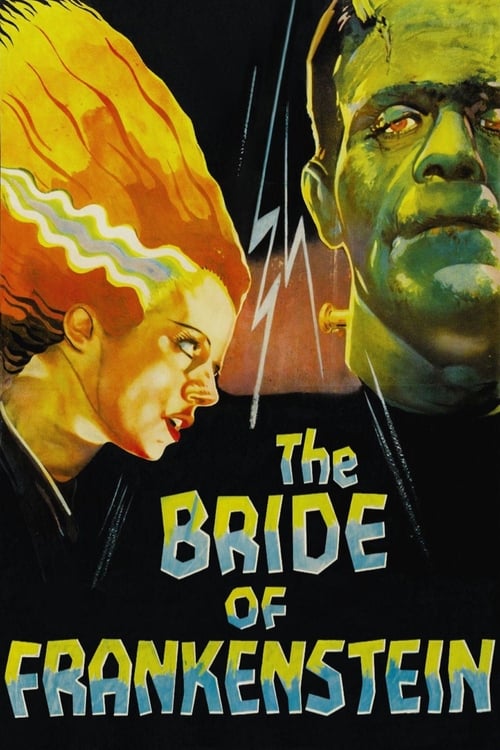
When the moment of creation arrives, the Bride, played by Elsa Lanchester, is brought to life. The scene is electrifying, with bolts of lightning illuminating her striking features. However, her initial reaction is one of horror and confusion. She shrieks upon seeing the Monster, who approaches her with a mix of hope and trepidation. The Monster, yearning for love, reaches out to her, but she recoils in fear, unable to accept him. This rejection sends the Monster into a spiral of despair and rage.
In a fit of fury, the Monster destroys the laboratory, symbolizing the destruction of his dreams and the futility of his quest for companionship. The chaos culminates in a dramatic confrontation between the Monster and Dr. Frankenstein. The Monster, feeling betrayed and abandoned, lashes out, leading to a tragic series of events.
As the laboratory burns, Dr. Frankenstein's bride is caught in the chaos. The Monster, realizing that he has lost everything, makes a heart-wrenching decision. In a moment of profound sorrow, he chooses to end his own suffering. He confronts the flames, declaring his intent to perish alongside the dreams that have been shattered. The film closes with the haunting image of the Monster disappearing into the fire, leaving behind a world that has rejected him.
In the end, Dr. Frankenstein is left to grapple with the consequences of his actions, burdened by guilt and loss. The fate of the Bride is sealed as she is consumed by the flames, a tragic victim of the Monster's despair. The film concludes with a poignant reminder of the dangers of playing God and the profound loneliness that can arise from rejection and isolation.
Is there a post-credit scene?
The movie "Bride of Frankenstein," produced in 1935, does not have a post-credit scene. The film concludes with a dramatic and poignant ending that encapsulates the themes of loneliness and the quest for companionship. After the climactic confrontation in the laboratory, the final moments focus on the Monster's despair and longing for connection, culminating in a powerful scene that leaves the audience with a lasting emotional impact. The film ends with the Monster's tragic acceptance of his fate, and there are no additional scenes or credits that follow.
What motivates Dr. Frankenstein to create a mate for the Monster?
Dr. Frankenstein is initially horrified by the Monster he has created, but he is also driven by a mix of guilt and a desire to prove his scientific prowess. When the Monster confronts him, expressing his loneliness and desire for companionship, Frankenstein feels compelled to create a female counterpart, hoping to appease the Monster and perhaps redeem himself for his previous actions.
How does the Monster react to the Bride when he first sees her?
When the Monster first sees the Bride, he is filled with a mix of hope and fear. He reaches out to her, expecting a connection, but when she screams in terror at his appearance, his expression shifts to one of profound sadness and rejection. This moment encapsulates his deep longing for acceptance and companionship, which is ultimately thwarted.
What role does Dr. Pretorius play in the creation of the Bride?
Dr. Pretorius serves as a catalyst for Dr. Frankenstein's actions. He is a sinister figure who has his own ambitions for creating life. Pretorius manipulates Frankenstein into collaborating with him to create the Bride, showcasing his own twisted fascination with life and death. His presence adds a layer of moral ambiguity and temptation, pushing Frankenstein further down a dark path.
What happens to the Bride at the end of the film?
At the climax of the film, after the Bride rejects the Monster, she is ultimately destroyed along with the laboratory in which she was created. The Monster, devastated by her rejection and the chaos that ensues, declares, 'We belong dead,' before the laboratory explodes, symbolizing the tragic end of both their lives and the futility of Frankenstein's ambitions.
How does the Monster's character evolve throughout the film?
The Monster's character evolves from a misunderstood creature seeking companionship to a tragic figure overwhelmed by despair and rejection. Initially, he exhibits childlike innocence and a desire for love, but as he faces constant rejection from humanity, his emotional state darkens, leading to violent outbursts. His journey reflects a deepening sense of isolation and tragedy, culminating in his heartbreaking reaction to the Bride.
Is this family friendly?
"Bride of Frankenstein" (1935) is a classic horror film that contains several elements that may be considered objectionable or upsetting for children or sensitive viewers. Here are some aspects to consider:
-
Violence and Death: The film includes scenes of violence, such as the Monster's confrontations with humans, which can be intense and frightening. There are also depictions of death, including a character being shot and others meeting grim fates.
-
Monstrous Imagery: The visual design of the Monster and the Bride can be unsettling. The Monster's appearance is grotesque, and the Bride's creation scene is particularly dramatic and may evoke fear.
-
Themes of Isolation and Rejection: The Monster experiences profound loneliness and rejection, which can be emotionally heavy. His struggles for acceptance and companionship may resonate deeply, potentially leading to feelings of sadness.
-
Mad Scientist Tropes: The character of Dr. Frankenstein embodies the "mad scientist" archetype, engaging in morally questionable experiments that can be disturbing, particularly the act of creating life.
-
Supernatural Elements: The film includes supernatural themes and elements that may be frightening for younger viewers, such as the resurrection of the dead and the manipulation of life and death.
-
Intense Emotional Moments: The film explores complex emotions, including despair, anger, and longing, which may be difficult for younger audiences to fully understand or process.
Overall, while "Bride of Frankenstein" is a landmark in horror cinema, its themes and imagery may not be suitable for all viewers, particularly children or those sensitive to horror elements.