





Popular
How does the setting influence the characters' actions and decisions?
What significant events lead to the climax of the series?
What motivates the main character, Anja, throughout the series?
How does the relationship between Anja and her mother evolve over the course of the series?
What role does the mysterious figure, Viktor, play in Anja's journey?
Should I watch it?
Ask Your Own Question

What is the plot?
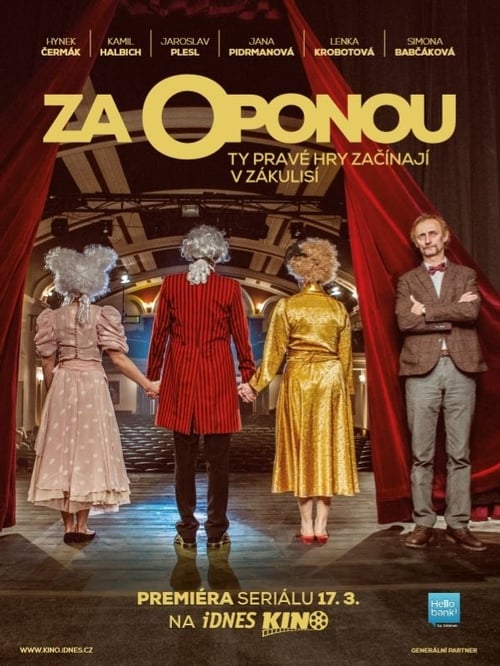
In the opening scene of "Za oponou," we are introduced to the main character, a young woman named Maja, who works as a stage manager in a small theater. The atmosphere is bustling as the crew prepares for the opening night of a new play. Maja is seen meticulously organizing props and coordinating with the actors, showcasing her dedication and passion for theater. However, there is an underlying tension as she receives a call from her estranged father, which she chooses to ignore, hinting at unresolved family issues.
As the play begins, the audience is captivated by the performance, but Maja's focus is interrupted when she notices a strange figure lurking backstage. This figure, later revealed to be a former actor named Luka, has a mysterious past with the theater and a complicated relationship with Maja. His presence stirs up old memories and emotions, causing Maja to feel both intrigued and unsettled.
After the performance, Maja confronts Luka, demanding to know why he is back. Luka reveals that he has returned to reclaim his place in the theater, which he believes was unjustly taken from him years ago. Their conversation is charged with tension as Maja grapples with her feelings of anger and sympathy towards Luka. She ultimately decides to give him a chance to prove himself, despite the warnings from her colleagues.
As rehearsals for the next play continue, Maja begins to notice strange occurrences around the theater. Props go missing, and actors report feeling watched. The atmosphere grows increasingly eerie, and Maja's anxiety escalates. She confides in her best friend, Anja, who encourages her to investigate the source of the disturbances. Maja's determination to uncover the truth leads her to explore the theater's dark history, revealing tales of betrayal and tragedy that have haunted the venue for decades.
One night, while searching the theater, Maja discovers a hidden room filled with old costumes and scripts. Among the items, she finds a diary belonging to a former actress who mysteriously disappeared. The diary hints at a love affair gone wrong and a betrayal that led to her demise. Maja becomes obsessed with the story, believing it is connected to the current disturbances. This obsession strains her relationship with Anja, who feels neglected and worries about Maja's mental state.
As Maja delves deeper into the theater's past, she uncovers a web of secrets involving Luka, who is revealed to have a deeper connection to the former actress. Maja confronts Luka again, demanding to know the truth. Luka admits that he was in love with the actress and feels guilty for not being able to save her. This revelation complicates Maja's feelings towards him, as she begins to see him not just as a rival but as a tragic figure.
The tension reaches a climax during a rehearsal when one of the actors collapses on stage, claiming to have seen a ghost. Panic ensues, and Maja is forced to take charge, trying to calm everyone down. In the chaos, she realizes that the disturbances are not just supernatural but are also fueled by the unresolved emotions and conflicts among the cast and crew. Maja decides to hold a meeting to address everyone's fears and frustrations, hoping to bring the team together.
During the meeting, emotions run high as actors share their own experiences and fears related to the theater. Maja encourages them to confront their pasts and work through their issues, leading to a cathartic moment of vulnerability. This collective sharing helps to dispel some of the tension, but it also brings to light deeper issues that need to be resolved.
As the opening night of the new play approaches, Maja feels the weight of the theater's history pressing down on her. She becomes increasingly paranoid, convinced that the spirit of the former actress is haunting her. In a moment of desperation, Maja decides to perform a ritual to appease the spirit, believing it will help the production succeed. She gathers the cast and crew for the ritual, which is filled with emotional intensity as they each confront their fears and regrets.
On the night of the performance, the theater is packed with an eager audience. Maja is a bundle of nerves, but she channels her anxiety into the performance. As the play unfolds, the actors deliver powerful performances, and the atmosphere in the theater shifts from tension to exhilaration. However, just as the climax of the play approaches, the lights flicker, and the strange occurrences return, causing chaos on stage.
In the midst of the turmoil, Maja spots Luka backstage, looking distraught. She rushes to him, and they share a moment of connection, realizing that they both carry the weight of their pasts. Together, they confront the source of the disturbances, which leads them to a hidden trapdoor beneath the stage. They discover the remains of the former actress, finally bringing closure to her tragic story.
The play concludes with a powerful performance that resonates deeply with the audience. Maja and Luka emerge from the experience transformed, having faced their fears and reconciled their pasts. The theater, once a place of haunting memories, becomes a space of healing and renewal. Maja decides to embrace her passion for theater fully, while Luka finds a sense of redemption. The final scene shows Maja and Luka standing together on stage, ready to face whatever comes next, united by their shared journey.








What is the ending?
In the ending of "Za oponou," the main characters confront their personal demons and the consequences of their choices. The story culminates in a dramatic confrontation that leads to revelations about their relationships and aspirations. Each character faces a turning point, leading to a resolution that reflects their growth and the impact of their past decisions.
As the final act unfolds, the tension builds in a dimly lit theater, where the characters gather for a climactic performance. The stage serves as a metaphor for their lives, with the spotlight illuminating their struggles and desires. The protagonist, a once-ambitious actor, grapples with feelings of inadequacy and the fear of failure. His internal conflict is palpable as he prepares to deliver a pivotal monologue that encapsulates his journey.
In a series of flashbacks interspersed with the present, we see the protagonist's rise to fame and the subsequent fall that led him to this moment. The audience witnesses his emotional turmoil as he reflects on lost opportunities and strained relationships with his fellow actors. The tension escalates when a former rival confronts him backstage, leading to a heated exchange that reveals deep-seated resentments and unfulfilled dreams.
As the performance begins, the characters take their places on stage, each embodying their roles with a mix of vulnerability and determination. The protagonist delivers his monologue with raw emotion, capturing the essence of his struggles and aspirations. The audience is drawn into his world, feeling the weight of his regrets and the flicker of hope for redemption.
In the climax, the rival's jealousy boils over, resulting in a dramatic confrontation that threatens to derail the performance. However, the protagonist stands his ground, confronting not only his rival but also his own fears. This moment of bravery serves as a turning point, allowing him to reclaim his identity and purpose.
As the final scene unfolds, the characters come together in a moment of reconciliation. They acknowledge their past mistakes and the impact of their choices on one another. The theater, once a place of competition and rivalry, transforms into a space of healing and understanding. Each character finds a sense of closure, with the protagonist finally embracing his passion for acting without the burden of fear.
The story concludes with the characters stepping out of the theater, ready to face the world anew. The protagonist, now at peace with his journey, looks forward to the future with renewed hope. The rival, having confronted his own insecurities, seeks a path of self-improvement. The supporting characters, each having faced their own challenges, find strength in their connections and the lessons learned.
In the end, "Za oponou" leaves the audience with a sense of resolution, highlighting the importance of self-acceptance, the power of forgiveness, and the enduring bonds of friendship forged through shared experiences. Each character's fate reflects their growth, emphasizing that while the past shapes us, it does not define our future.
Is there a post-credit scene?
In the 2019 TV show "Za oponou," there is indeed a post-credit scene that adds an intriguing layer to the narrative.
As the credits roll, the screen fades to black before transitioning to a dimly lit backstage area of the theater where much of the series takes place. The camera pans slowly, revealing scattered props and costumes, remnants of the performances that have unfolded throughout the season. The atmosphere is thick with a sense of nostalgia and unresolved tension.
Suddenly, a figure steps into the frame, partially obscured by shadows. It's one of the main characters, Anna, who has been grappling with her identity and the pressures of her role in the theater. Her expression is contemplative, a mix of determination and vulnerability. She picks up a discarded script from the floor, flipping through the pages with a sense of longing.
As she reads, her brow furrows, and a flicker of realization crosses her face. The camera zooms in on her eyes, reflecting a newfound resolve. The scene shifts slightly, and we hear a faint sound of applause echoing in the background, suggesting that the audience is still present, waiting for more.
In a moment of clarity, Anna looks directly into the camera, breaking the fourth wall. "This isn't the end," she says softly, her voice filled with both hope and uncertainty. The screen then fades to black again, leaving viewers with a lingering sense of anticipation and the promise of further exploration of her journey.
This post-credit scene encapsulates the themes of self-discovery and the ongoing struggle for authenticity, inviting the audience to reflect on the characters' paths and the stories yet to be told.
How does the setting influence the characters' actions and decisions?
The setting, a small, picturesque town with a dark history, plays a crucial role in shaping the characters' actions. The town's seemingly idyllic facade contrasts sharply with the secrets lurking beneath, influencing Anja's sense of isolation and urgency. The physical environment, from the shadowy woods to the abandoned buildings, mirrors the characters' internal struggles and heightens the tension as they navigate their intertwined fates.
What significant events lead to the climax of the series?
The climax is reached when Anja uncovers a series of shocking revelations about her father's past, including his connections to a secretive organization. This discovery is compounded by a confrontation with Viktor, where loyalties are tested, and Anja must decide whom to trust. The emotional stakes are heightened as she faces the possibility of losing everything she has fought for.
What motivates the main character, Anja, throughout the series?
Anja is driven by a deep desire to uncover the truth about her family's past, particularly the mysterious circumstances surrounding her father's disappearance. This quest for knowledge fuels her determination and often leads her into dangerous situations, as she grapples with her emotions of loss, betrayal, and the need for closure.
How does the relationship between Anja and her mother evolve over the course of the series?
Initially, Anja's relationship with her mother is strained, marked by secrets and unspoken tensions. As Anja delves deeper into her father's past, her mother reveals her own struggles and regrets, leading to moments of vulnerability. This gradual unveiling of their shared pain fosters a deeper understanding and ultimately strengthens their bond, as they learn to support each other.
What role does the mysterious figure, Viktor, play in Anja's journey?
Viktor serves as both a guide and a source of conflict for Anja. His enigmatic nature and hidden motives create tension, as Anja is drawn to him for his knowledge about her father's disappearance. However, his ambiguous intentions lead to moments of doubt and mistrust, forcing Anja to confront her own instincts and the complexities of human relationships.
Is this family friendly?
"Za oponou," produced in 2019, is a drama series that explores complex themes and relationships, which may not be suitable for all audiences, particularly children or sensitive viewers.
-
Emotional Turmoil: The show delves into deep emotional struggles, including themes of betrayal, loss, and familial conflict, which may be distressing for younger viewers.
-
Intense Relationships: There are scenes depicting strained relationships and arguments that can be quite intense, showcasing raw emotions that might be overwhelming.
-
Mature Themes: The narrative touches on adult themes such as infidelity and personal crises, which may not be appropriate for children.
-
Visual and Emotional Tension: Certain scenes may contain visual tension or emotional confrontations that could be unsettling, as characters grapple with their inner demons and external conflicts.
-
Subtle References: There are subtle references to mental health issues and personal struggles that may require a mature understanding to fully grasp.
Overall, while the series offers rich storytelling and character development, its emotional depth and mature themes may not be suitable for younger audiences or those sensitive to such content.