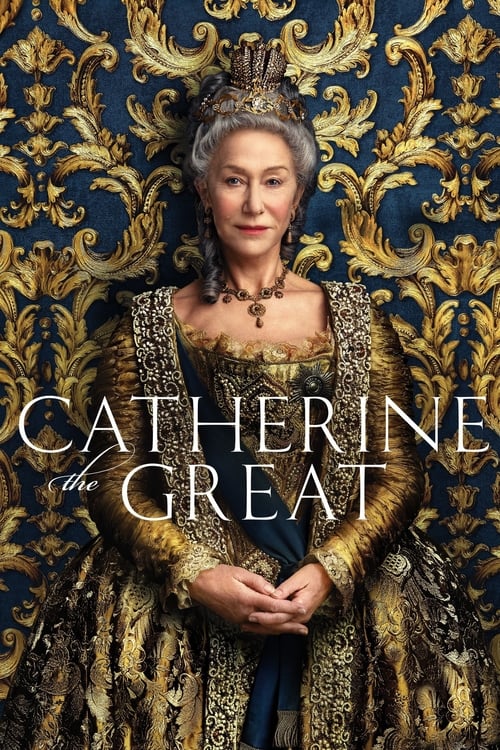




















Popular
What are the key events that lead to Catherine's rise to power?
How does Catherine's relationship with Grigory Potemkin evolve throughout the series?
What role does the character of Peter III play in Catherine's story?
What are the main challenges Catherine faces as she consolidates her power?
How does Catherine's relationship with her son, Paul, impact her reign?
Should I watch it?
Ask Your Own Question

What is the plot?
Catherine the Great, played by Helen Mirren, begins her journey in the Russian court as a young German princess, arriving in Russia to marry the future Emperor, Peter III. The marriage is politically motivated, and Catherine is initially hopeful about her new life. However, she quickly discovers that Peter, portrayed by Jason Clarke, is immature, self-absorbed, and largely uninterested in her. Their relationship is strained from the outset, with Peter's erratic behavior and obsession with military games overshadowing any romantic connection.
As Catherine navigates the complexities of the court, she befriends other influential figures, including the ambitious and cunning Grigory Orlov, who becomes a key ally. Catherine's loneliness and isolation deepen as she realizes that her position is precarious. She begins to educate herself about governance and the needs of the Russian people, developing a vision for a more enlightened rule. Her desire for power grows as she becomes increasingly disillusioned with Peter's incompetence.
The tension escalates when Peter's erratic behavior leads to a public humiliation of Catherine. In a fit of rage, he dismisses her from court, prompting her to seek solace and support from her allies. Grigory Orlov, recognizing Catherine's potential, encourages her to take action against Peter. This marks a turning point for Catherine, as she begins to plot her rise to power. She gathers support from key military leaders and influential nobles who are discontent with Peter's rule.
Catherine's plans come to fruition when she orchestrates a coup against Peter. With the help of the Orlov brothers and other conspirators, she stages a coup d'état. The night of the coup, Catherine is filled with a mix of fear and determination. As the conspirators move through the palace, they confront Peter, who is caught off guard. In a tense confrontation, Peter is ultimately overthrown, and Catherine's forces take control of the palace.
After the coup, Catherine faces the challenge of consolidating her power. She is crowned Empress of Russia, but the transition is fraught with uncertainty. Catherine must navigate the political landscape, dealing with those who supported Peter and those who are wary of her rule. She begins to implement reforms, focusing on education, the arts, and the welfare of her subjects, all while maintaining a delicate balance of power among her supporters.
As Catherine settles into her role as Empress, she grapples with the personal sacrifices that come with her position. Her relationship with Grigory Orlov deepens, but she also faces betrayal from those she once trusted. The emotional toll of her decisions weighs heavily on her, as she realizes that the path to power is often lonely and fraught with moral dilemmas.
Throughout her reign, Catherine continues to face external threats and internal dissent. She must confront rival factions within the court and manage the expectations of the Russian nobility. Her vision for a modern Russia clashes with traditionalists, leading to conflicts that test her resolve. Catherine's determination to be a progressive ruler is met with resistance, forcing her to make difficult choices that impact her legacy.
As the series progresses, Catherine's character evolves. She becomes more adept at navigating the treacherous waters of politics, but her personal life suffers. The emotional distance between her and Grigory grows as they face the consequences of their ambitions. Catherine's relationships with her children also become strained, particularly with her son, Paul, who is caught in the crossfire of her political maneuvers.
The series culminates in a dramatic confrontation with her enemies, both within and outside the court. Catherine's strength and resilience are put to the test as she fights to maintain her power and secure her vision for Russia. The final episodes showcase her triumphs and tribulations, highlighting the complexities of her reign and the sacrifices she made along the way.
In the end, Catherine emerges as a formidable leader, but the cost of her ambition is evident. The series closes with a reflection on her legacy, leaving viewers with a sense of the enduring impact of her reign on Russia and the challenges she faced as a woman in power.








What is the ending?
In the ending of "Catherine the Great," Catherine faces the challenges of her reign and personal relationships, culminating in a poignant moment of reflection on her legacy and the sacrifices she has made. The series concludes with her solidifying her power while grappling with the complexities of love, betrayal, and the burdens of leadership.
As the final episodes unfold, we see Catherine navigating the treacherous waters of court politics. The tension between her and her former lover, Grigory Potemkin, becomes palpable. Their relationship, once filled with passion and mutual respect, is now strained by political ambitions and personal grievances. Potemkin, who has been a steadfast ally, begins to feel sidelined as Catherine's focus shifts towards consolidating her power and ensuring the stability of her reign.
In a pivotal scene, Catherine confronts Potemkin about his growing distance and the changes in their relationship. The emotional weight of their shared history hangs heavily in the air as they discuss their differing visions for Russia. Catherine, embodying the strength of a ruler, expresses her determination to lead the country into a new era, while Potemkin reveals his feelings of betrayal and loss. This confrontation serves as a turning point, highlighting the personal sacrifices that come with leadership.
As the series progresses, Catherine's political maneuvers lead to significant victories, but they come at a cost. The emotional toll of her decisions becomes evident as she reflects on her relationships with those closest to her. The audience witnesses her moments of vulnerability, where the weight of her crown feels heavier than ever. In a particularly poignant scene, she gazes out over the vast expanse of her empire, contemplating the legacy she will leave behind.
The final moments of the series bring a sense of resolution, albeit bittersweet. Catherine stands firm in her role as Empress, having navigated the complexities of love and power. Potemkin, despite his feelings of betrayal, remains a loyal supporter, recognizing the necessity of their roles in the grand scheme of Russia's future. Their relationship, though changed, is marked by a deep understanding of each other's sacrifices.
In the closing scenes, Catherine is seen surrounded by her advisors, ready to face the challenges ahead. The camera lingers on her face, capturing a mix of determination and melancholy. The series ends with a powerful reminder of the duality of her existence as both a ruler and a woman, leaving the audience to ponder the true cost of power and the personal sacrifices made in its pursuit.
In summary, the fates of the main characters are intertwined with the themes of ambition, love, and sacrifice. Catherine emerges as a formidable leader, while Potemkin, though hurt, remains a crucial ally. The series concludes with a sense of both triumph and loss, encapsulating the complexities of their intertwined destinies.
Is there a post-credit scene?
The 2019 miniseries "Catherine the Great" does not feature a post-credit scene. The series concludes with a powerful final episode that encapsulates the complexities of Catherine's reign and her personal struggles. The narrative wraps up her journey as a ruler and a woman, focusing on her legacy and the challenges she faced in maintaining power. The absence of a post-credit scene allows the audience to reflect on the historical significance of her life and the emotional weight of her decisions without any additional content.
What are the key events that lead to Catherine's rise to power?
Catherine's rise to power is marked by several pivotal events. Initially, she is a young German princess, Catherine of Anhalt-Zerbst, who marries the future Emperor Peter III of Russia. The marriage is fraught with difficulties, as Peter is immature and largely uninterested in ruling. Catherine's intelligence and political acumen begin to shine as she navigates the treacherous waters of the Russian court. Her relationship with Peter deteriorates, and she forms alliances with influential nobles. The turning point comes when she orchestrates a coup against Peter, leading to his abdication and her ascension to the throne as Empress of Russia.
How does Catherine's relationship with Grigory Potemkin evolve throughout the series?
Catherine's relationship with Grigory Potemkin begins as a political alliance, but it quickly deepens into a passionate romance. Initially, Potemkin is a military leader who supports Catherine's ambitions. As they work closely together, their bond grows, and they share a mutual respect and admiration. However, their relationship is complicated by the demands of power and the expectations of the court. Catherine struggles with her feelings for Potemkin, torn between her duties as Empress and her desire for personal happiness. Their love story is marked by both tenderness and tension, showcasing the challenges of maintaining a relationship in the face of political intrigue.
What role does the character of Peter III play in Catherine's story?
Peter III serves as a significant catalyst in Catherine's journey to power. His character is portrayed as immature, self-indulgent, and largely disconnected from the responsibilities of leadership. His inability to connect with the Russian people and his controversial policies create discontent among the nobility and the military. This dissatisfaction ultimately provides Catherine with the opportunity to stage her coup. Peter's character also highlights Catherine's transformation; she evolves from a dutiful wife to a formidable ruler, driven by the need to restore stability and legitimacy to the throne. His eventual downfall is a crucial moment that underscores the lengths to which Catherine will go to secure her reign.
What are the main challenges Catherine faces as she consolidates her power?
As Catherine consolidates her power, she faces numerous challenges, including opposition from the nobility, the need to gain the support of the military, and the complexities of governing a vast empire. She must navigate court intrigues and manage rival factions that threaten her rule. Additionally, Catherine grapples with her own insecurities and the expectations placed upon her as a female ruler in a male-dominated society. Her efforts to implement reforms and modernize Russia are met with resistance, and she must balance her progressive ideals with the realities of political maneuvering. These challenges test her resolve and shape her into a more strategic and determined leader.
How does Catherine's relationship with her son, Paul, impact her reign?
Catherine's relationship with her son, Paul, is fraught with tension and emotional complexity. As her only surviving child, Paul represents both a source of pride and a potential threat to her rule. Catherine's desire to mold Paul into a capable leader clashes with his own ambitions and insecurities. Their relationship is strained by Catherine's strict parenting and her determination to keep him from the throne until he is ready. This dynamic creates a rift between them, as Paul feels overshadowed by his mother's power. The emotional turmoil of their relationship adds depth to Catherine's character, revealing her vulnerabilities as a mother and a ruler, and ultimately influences the political landscape of her reign.
Is this family friendly?
"Catherine the Great," produced in 2019, contains several elements that may not be suitable for children or sensitive viewers. Here are some potentially objectionable aspects:
-
Sexual Content: The series includes scenes depicting sexual relationships, including nudity and intimate encounters, which may be inappropriate for younger audiences.
-
Violence and Political Intrigue: There are moments of political betrayal, power struggles, and discussions of war that may be intense or distressing. Some scenes depict the harsh realities of court life and the consequences of political decisions.
-
Death and Betrayal: The show explores themes of betrayal and the impact of death on characters, which can be emotionally heavy and unsettling.
-
Mature Themes: The narrative delves into complex themes such as ambition, manipulation, and the moral ambiguities of power, which may be difficult for younger viewers to fully understand.
-
Historical Context: The portrayal of historical events and figures may include elements that reflect the brutality and harshness of the time, which could be upsetting.
These aspects contribute to a mature tone throughout the series, making it more suitable for adult audiences.