Popular
What motivates Irineu to pursue his ambitions in the industrial world?
How does Irineu's relationship with his family influence his decisions?
What challenges does Irineu face when trying to establish his business?
How does the setting of 19th century Brazil impact the characters' lives?
What role do Irineu's friendships play in his journey?
Should I watch it?
Ask Your Own Question

What is the plot?
In the opening scene of "Mauá: O Primeiro Gigante," we are introduced to the bustling port city of Rio de Janeiro in the mid-19th century. The camera sweeps over the vibrant marketplace, filled with merchants and customers, showcasing the economic activity of the time. Among the crowd, we meet Irineu Evangelista de Souza, a young and ambitious man who is determined to make a name for himself. He is seen observing the trade and the interactions of the merchants, his eyes filled with dreams of wealth and success.
As the scene transitions, we see Irineu at home, where he is confronted by his father, who disapproves of his aspirations. The father, a traditionalist, believes that Irineu should follow a more conventional path. Irineu, however, is resolute and expresses his desire to pursue business ventures, particularly in the burgeoning field of industry. This conflict sets the stage for Irineu's internal struggle between familial expectations and his own ambitions.
The narrative then shifts to a pivotal moment when Irineu learns about the potential of the steam engine and its applications in transportation and industry. He becomes fascinated by the technology and begins to research its possibilities. This discovery ignites a fire within him, and he decides to invest his savings into a venture that would allow him to import steam engines to Brazil. His excitement is palpable as he envisions the future of industry in his homeland.
Irineu's journey takes him to a meeting with influential businessmen and investors. He presents his ideas with passion, but he faces skepticism and doubt from the established figures in the room. They question his experience and the feasibility of his plans. Undeterred, Irineu stands firm, articulating his vision for a modernized Brazil. His determination begins to win over a few key individuals, setting the stage for future alliances.
As the episode progresses, we see Irineu's personal life unfold. He develops a romantic interest in a young woman named Maria, who represents both a source of inspiration and a complication in his life. Their interactions are filled with tenderness, but Maria's family is wary of Irineu's ambitions, fearing that his pursuits may lead to instability. This adds another layer of conflict for Irineu, as he must navigate his personal relationships while chasing his dreams.
The climax of the episode occurs when Irineu finally secures a deal to import steam engines. The moment is filled with tension as he negotiates the terms, and the stakes are high. He successfully convinces the investors of the potential profits, and the deal is sealed with a handshake. This victory is bittersweet, as it comes with the realization that he will need to work tirelessly to fulfill his promises.
In the final scenes, Irineu returns home, where he is met with mixed reactions from his family. His father remains skeptical, while his mother shows a glimmer of support. Irineu's internal conflict is evident as he grapples with the weight of his ambitions and the expectations of his family. The episode closes with Irineu standing on the balcony, looking out over the city, filled with hope and determination for the future, setting the stage for the challenges and triumphs that lie ahead.





What is the ending?
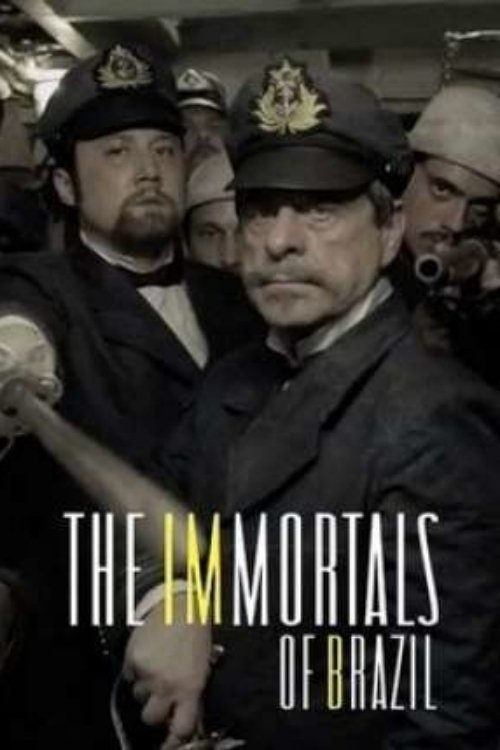
In the ending of "Mauá: O Primeiro Gigante," the episode culminates in a tense confrontation between Mauá and his adversaries, showcasing his determination to overcome the obstacles in his path. The episode closes with Mauá reflecting on his journey and the sacrifices he has made, setting the stage for future challenges.
As the episode unfolds towards its conclusion, we find Mauá standing at the edge of a bustling port, the sounds of ships creaking and the calls of merchants filling the air. He is visibly weary but resolute, his face etched with the lines of hard work and determination. The camera captures the weight of his ambitions as he gazes out at the horizon, contemplating the future of his enterprise and the legacy he wishes to leave behind.
In the next scene, we see a gathering of his rivals, who are plotting against him. Their expressions are filled with malice and envy, revealing their desire to undermine Mauá's success. They discuss strategies to sabotage his efforts, highlighting the fierce competition in the burgeoning industrial landscape of Brazil. The tension is palpable as they exchange heated words, their motivations driven by greed and a fear of Mauá's rising influence.
Back with Mauá, he receives news of the rivals' plans through a trusted ally. This moment is pivotal; it showcases Mauá's vulnerability but also his resilience. He understands the stakes and the lengths to which his enemies will go to see him fail. The internal conflict is evident as he grapples with feelings of isolation and the burden of leadership. Yet, he steels himself, knowing that he must act decisively to protect his vision.
The climax of the episode occurs when Mauá confronts his adversaries in a dramatic showdown. The setting is tense, with the backdrop of the port symbolizing both opportunity and danger. Mauá stands firm, his voice steady as he articulates his vision for progress and innovation. The confrontation is charged with emotion, as Mauá's passion for his work shines through, contrasting sharply with the cold ambition of his rivals.
As the episode draws to a close, Mauá emerges victorious, having thwarted their immediate plans. However, the victory is bittersweet; he is left to ponder the sacrifices he has made and the personal costs of his ambition. The final scene captures him alone, looking out over the water once more, a mixture of hope and uncertainty in his eyes. The camera lingers on his face, emphasizing the weight of his responsibilities and the journey ahead.
In summary, the episode ends with Mauá standing at a crossroads, having faced down his enemies but aware that the battle for his vision is far from over. The fate of each main character is intertwined with Mauá's journey, as they all represent different facets of ambition, rivalry, and the quest for progress in a rapidly changing world.
Is there a post-credit scene?
In "Mauá: O Primeiro Gigante," Season 1, Episode 1, there is no post-credit scene. The episode concludes without any additional content after the credits roll, focusing instead on wrapping up the narrative established throughout the episode. The story centers on the early life and ambitions of Irineu Evangelista de Souza, who would later become known as Mauá, setting the stage for his future endeavors and the challenges he faces in the burgeoning industrial landscape of Brazil. The episode emphasizes his determination, vision, and the socio-economic context of the time, leaving viewers with a sense of anticipation for the developments to come in subsequent episodes.
What motivates Irineu to pursue his ambitions in the industrial world?
Irineu Mauá is driven by a deep desire to innovate and modernize Brazil's economy. His ambition is fueled by a vision of progress and a longing to elevate his country to compete on a global scale. This internal motivation is compounded by his personal experiences and the challenges he faces in a society that is resistant to change.
How does Irineu's relationship with his family influence his decisions?
Irineu's relationship with his family, particularly with his father, is complex and deeply influential. His father's traditional views often clash with Irineu's progressive ideas, creating tension. This familial conflict drives Irineu to prove himself, both to his father and to society, as he seeks to carve out a new path for himself and his country.
What challenges does Irineu face when trying to establish his business?
Irineu encounters numerous obstacles in establishing his business, including financial difficulties, bureaucratic red tape, and skepticism from potential investors. These challenges are compounded by societal resistance to industrialization, as many people are wary of the changes it brings. Irineu's determination to overcome these hurdles showcases his resilience and commitment to his vision.
How does the setting of 19th century Brazil impact the characters' lives?
The setting of 19th century Brazil, marked by its socio-economic struggles and the transition from agrarian to industrial society, profoundly impacts the characters' lives. The stark contrasts between wealth and poverty, as well as the emerging class dynamics, shape their motivations and interactions. Irineu's journey is a reflection of the broader societal changes occurring during this tumultuous period.
What role do Irineu's friendships play in his journey?
Irineu's friendships are crucial to his journey, providing him with support, advice, and sometimes, the necessary connections to advance his business endeavors. These relationships highlight the importance of collaboration and loyalty in a rapidly changing world, as they help Irineu navigate the complexities of his ambitions and the challenges he faces.
Is this family friendly?
"Mauá: O Primeiro Gigante," season 1, episode 1, presents a historical narrative that may contain themes and scenes that could be sensitive for children or those who are particularly sensitive.
-
Historical Context of Struggle: The episode delves into the challenges faced by the protagonist, Mauá, in a rapidly changing society, which may include depictions of economic hardship and social inequality.
-
Conflict and Tension: There are moments of conflict that may evoke feelings of tension or distress, particularly as characters navigate their ambitions against societal obstacles.
-
Emotional Struggles: Characters experience a range of emotions, including frustration, disappointment, and determination, which may resonate deeply with viewers but could also be intense for younger audiences.
-
Societal Issues: The show touches on themes of class struggle and the impact of industrialization, which may introduce complex ideas that require a mature understanding.
While the series aims to educate and inspire through the story of Mauá's contributions to Brazil's industrialization, these elements may not be suitable for all children or sensitive viewers.