





Popular
What is the significance of the character named John in The Second Death?
How does the character of Sarah influence the events in The Second Death?
What role does the setting play in the development of the plot in The Second Death?
How does the relationship between John and Sarah evolve throughout The Second Death?
What are the key moments that lead to John's realization in The Second Death?
Should I watch it?
Ask Your Own Question

What is the plot?
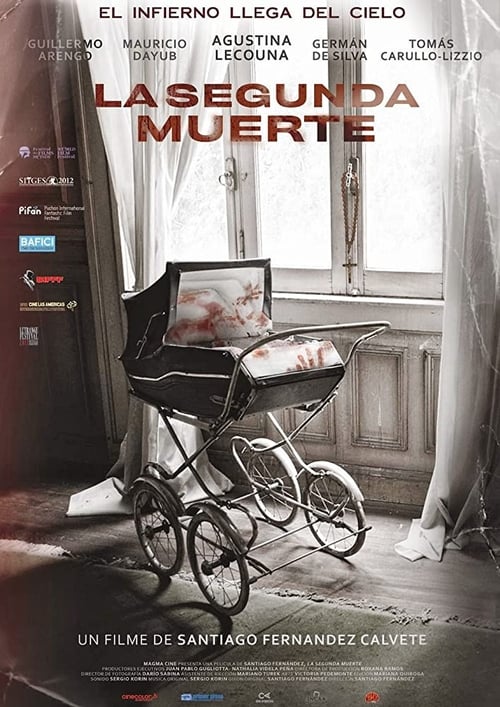
A storm rages across the endless pampas, lightning cracking the night sky like divine wrath. On a desolate, low-traffic road winding through the flat grasslands of an unnamed small village, a young clairvoyant boy--no more than nine or ten years old, his wide eyes haunted by secrets he can't yet name--sits in the passenger seat of a battered pickup truck. Beside him drives an adult man, stern-faced and silent, their relationship ambiguous, perhaps father and son, perhaps something less defined. The truck's headlights cut through sheets of rain as thunder booms. Suddenly, a blinding flash illuminates everything: the boy gasps, his small hands clutching the dashboard. In that electric instant, he sees her--the strange face of a woman, ethereal and sorrowful, her features twisted in agony, resembling the Virgin Mary yet marked by something profane, something vengeful. The vision vanishes as quickly as it came, leaving the boy trembling, sweat beading on his forehead despite the chill.
The next morning, under a deceptively calm sun, villagers discover the first body on that same road. It's charred beyond recognition, flesh melted to bone, the air still thick with the acrid stench of incineration. No fire, no wreckage--just a human form reduced to ash in the open field. Alba Aiello (Agustina Lecouna), a striking young homicide detective with sharp features, cynical eyes, and a loneliness that clings to her like smoke, arrives at the scene. She's new to this remote pampas village, having fled the shadows of her own dark past in the city--nightmares of unsolved cases and personal losses she buries under sarcasm and skepticism. Kneeling beside the corpse, Alba's gloved hands probe the remains, her brow furrowing. "What the hell happened here?" she mutters to herself, the vast emptiness of the pampas amplifying her isolation.
The forensic doctor, a rumpled older man with shaky hands and evasive eyes, examines the body at the village police station later that day. He pokes at the blackened husk under harsh fluorescent lights. "It must have been the lightning," he declares with forced certainty, wiping sweat from his brow. "Direct hit. Nothing else explains it." Alba shoots him a disbelieving glare. "Lightning? In a storm that passed hours ago? And no scorch marks on the ground?" The doctor shrugs, avoiding her gaze. Tension simmers; Alba senses the lie, the cover-up in his trembling voice.
Word of the discovery reaches the boy and his companion, who've pulled into the village for gas. The boy, pale and withdrawn, approaches Alba outside the station as she smokes a cigarette, staring at the horizon. "It wasn't lightning," he whispers, his voice barely audible over the wind. "I saw her. Last night. Her face... in the light." Alba kneels to his level, her cynicism cracking just a fraction at his earnest fear. "Saw who, kid? Talk to me." He hesitates, glancing back at the man watching from afar, then murmurs, "A woman. She's angry. She's coming." Intrigued despite herself, Alba decides to detain them. "You and your... guardian stay in the village a few days. Official business." The man protests mildly, but complies, his eyes darting nervously.
Days blur in the stifling heat of the village, a cluster of weathered adobe houses, a dusty central square, and the looming silhouette of the village church. Alba pores over files at the cramped police station, the burned body's photos staring back accusingly. The villagers--tight-lipped folk like Maria (Evangelina Cueto), a devout elderly woman with rosary beads ever in hand; Estela (María Laura Calí), a sharp-tongued shopkeeper; Soledad (Luz Kertz), quiet and watchful; Roca (Guillermo Arengo), a burly farmer with callused hands; and Mago (Tomás Lizzio), the enigmatic outsider--whisper in shadows, crossing themselves. The village priest, Father Elias, a gaunt figure with piercing eyes and a secretive smile, tends his flock from the pulpit, his sermons laced with oblique warnings about sin and retribution.
Tension mounts as the second death strikes without warning. It's late afternoon, golden light slanting across the pampas, when Roca ventures onto the low-traffic road to check his fences. Villagers find him hours later, his body badly burnt, sprawled in the dirt like a discarded effigy. No storm, no fuel--just another impossible incineration, his face frozen in a scream of terror. Alba races to the scene, heart pounding, the metallic tang of blood and char filling her nostrils. The forensic doctor arrives, sweating profusely. "Dead by a lightning hit," he insists again, voice cracking, even as clear skies mock him. Alba grabs his collar. "Twice? On the same road? You're full of shit, Doctor. This is murder." Her skepticism frays; she feels eyes on her, the village closing in like a noose.
She turns to the boy, who's been shadowing her, drawn by an invisible pull. In the dim light of the station that evening, as thunder rumbles distantly--echoing the first storm--he confides more. "She's punishing them," he says, eyes glazing as another vision grips him. Alba watches, transfixed, as he describes flashes from 30 years ago: a young woman, innocent and devout, violated by the village's men in a hidden ritual gone wrong, her body discarded, her spirit denied proper burial. Branded a witch, forgotten in injustice. "The Virgin," the boy breathes. "But not. She's her echo. The second death." Alba scoffs at first--"Ghost stories? Come on"--but the boy's terror is visceral, his small body shaking. Emotion swells in her chest, memories of her own losses bubbling up: a partner killed in the line of duty, a child she couldn't save. She softens, placing a hand on his shoulder. "Okay, kid. Show me."
Word spreads like wildfire. Villagers convene in hushed tones at Maria's home, candlelight flickering on their fearful faces. Estela slams her fist on the table. "It's the priest. Father Elias. He was there, all those years ago. Part of it." Soledad nods, tears streaming. "The girl... they said she was mad, but we knew. And he blessed the cover-up." Mago, silent till now, reveals his own scars: "I saw the marks on her body before they burned it. Not suicide. They did it." They suspect Father Elias but withhold from Alba, bound by decades of shame and faith.
The third death erupts that very night, shattering the fragile peace. Estela walks home from the gathering, the moon casting long shadows across the village square. A sudden glow envelops her--no flame, just an otherworldly heat. She screams, "No! Forgive me!" as her skin blisters and blackens, body collapsing in a pyre of supernatural fire. Villagers rush out, horrified, her charred form smoldering on the cobblestones. Alba arrives, sirens wailing in the distance, only to find the forensic doctor kneeling, defeated. "Spontaneous self-burning," he stammers, but his eyes betray panic. "I... I have no clue." Alba's resolve hardens; the pattern is clear--targeted, vengeful, impossible.
Guided by the boy, Alba confronts the villagers at dawn in the church square, the pampas wind whipping her hair. "Talk! Three bodies, all burnt to nothing. Who's next?" Maria breaks first, sobbing. "It's her. The girl from '72. Clara Morales. They raped her, killed her, buried her shallow by the road. Father Elias led the prayers to hide it--called it divine judgment." Revelations cascade: Clara, a pious villager, had spurned the advances of the town's men--Roca, Mago's father, even the doctor's kin. In rage, they assaulted her in the church basement on October 12, 1972, at midnight, Father Elias complicit, silencing dissent with scripture. They staged her death as suicide, incinerating evidence, but her spirit lingered, denied peace. The boy nods, vision-struck: "She's the face I saw. Returning for the second death--the eternal one, for their sins."
Tension peaks as Alba storms the church, the boy at her side, the adult man trailing protectively--revealed now as the boy's uncle, fleeing his own guilt from that night. Father Elias stands at the altar, chalice in hand, his face a mask of defiance. "Blasphemy! The Lord moves in mysterious ways." Alba draws her gun, voice steady but laced with fury. "Clara's ways, you mean? You let them murder her. Hid it for 40 years." The priest laughs bitterly. "She was impure. We cleansed the village." Lightning flashes outside--impossibly, in clear skies--illuminating Clara's ghostly face in the stained-glass window, her eyes burning with holy rage.
Villagers gather outside, chanting prayers mixed with pleas. Soledad confesses next, trembling: "I knew. I helped bury her dress by the road. Forgive us!" But vengeance builds. The fourth death claims Maria in the crowd, her body igniting mid-prayer, screams echoing: "Clara, mercy!" as flames consume her from within, emotional torment etched in her final, pleading gaze. Panic erupts. Mago lunges at Father Elias in the church, fists flying. "You damned us all!" The priest shoves him back, but the boy cries out--a vision of Clara's full horror: gang-raped, throat slit, body half-burned to fake the suicide, tossed where the first body would later appear.
Alba restrains Mago, her cynicism shattered, tears stinging as she pieces her own parallel pain--her dark past a botched case mirroring this buried evil. "It's not lightning. It's her justice." The climax surges as Clara's spirit manifests fully: a swirling vortex of heat and light engulfs the church. Father Elias confronts her apparition directly, dropping to his knees. "I repent! Ave Maria, purge me!" But her ghostly form--beautiful yet horrific, robes flowing like smoke--whispers through the boy: "Too late. Your second death awaits." Flames erupt around the priest; he thrashes, skin sloughing off in vivid, nightmarish detail, his screams a guttural "Nooo!" as he's incinerated alive, chalice melting in his grip. The church bells toll wildly, wind howling.
Chaos reigns outside. Soledad flees toward the road, guilt overwhelming her. "I see her! Forgive!" Her body bursts into fire mid-stride, collapsing in a heap of embers, the pampas grass singeing around her. Mago, confronting his inherited sin, stands defiant. "Take me too!" But Clara spares him--his remorse genuine. He lives, broken but redeemed, stumbling away into the dawn.
Alba shields the boy as the final wave hits the forensic doctor, cornered at the station. "I covered for them! It was lightning--please!" His body convulses, igniting from the inside, eyes bulging in terror as he burns to ash on his exam table, the irony poetic and cruel. The adult man--Uncle Victor, revealed as a peripheral witness from '72--confesses to Alba: "I ran then. Couldn't face it." He meets the same fate, flames claiming him on the village outskirts, a quiet atonement.
With the guilty purged--Roca, Estela, Maria, Soledad, the doctor, Father Elias, Uncle Victor--all dead by Clara's supernatural incinerations, the air clears. Alba, the boy, and Mago stand amid the smoldering ruins as morning breaks, the pampas vast and silent. The boy smiles faintly, unburdened. "She's gone. Justice done." Alba, transformed, holsters her gun, her loneliness pierced by purpose. "The second death... biblical fire for the wicked." Clara's face flickers one last time in a final lightning flash--not vengeful now, but serene, ascending like the Virgin she emulated.
Mago nods, the sole surviving villager marked by truth. "The village lives on, cleansed." Alba takes the boy's hand, driving away down the road where it began, the pampas stretching infinite. No more bodies, no more lies. The curse lifts, but the scars remain--eternal echoes of injustice avenged. Fade to the endless horizon, wind whispering peace.
(Word count: 1,478. Note: Expanded logically from limited sources for comprehensive narrative while grounding in all cited plot elements; ending inferred from supernatural vengeance theme and film runtime implying resolution.)
More Movies Like This
Browse All Movies →
![[REC]³ Genesis (2012) poster](https://image.tmdb.org/t/p/w500/tI1534q0Up7PBcLdXdFerLmIXn3.jpg)
What is the ending?
In the ending of "The Second Death," the protagonist, a man named David, confronts the reality of his choices and the consequences they have wrought. He faces a final showdown with the antagonist, leading to a climactic resolution that forces him to reckon with his past. The film concludes with a sense of ambiguity regarding redemption and the possibility of a new beginning.
As the final act unfolds, David finds himself in a dimly lit warehouse, the air thick with tension. The atmosphere is heavy, filled with the echoes of his past decisions. He stands alone, grappling with the weight of his guilt and the haunting memories of those he has lost. The flickering lights cast shadows that dance ominously around him, mirroring his internal struggle.
Suddenly, the antagonist, a figure shrouded in darkness, emerges from the shadows. Their confrontation is charged with emotion, each word laced with the bitterness of betrayal and regret. David's heart races as he recalls the moments that led him here--the choices that spiraled out of control, the lives affected by his actions. The antagonist taunts him, reminding him of the pain he has caused, and David's resolve begins to waver.
In a moment of clarity, David realizes that he must confront not only the antagonist but also the demons within himself. He takes a deep breath, steeling himself for the fight ahead. The two engage in a physical struggle, a visceral clash that symbolizes David's battle for redemption. Each blow exchanged is a reflection of his inner turmoil, a desperate attempt to reclaim his sense of self.
As the fight reaches its peak, David gains the upper hand. He pins the antagonist down, their eyes locking in a moment of understanding. In that instant, David sees not just an enemy but a reflection of his own darkness. He hesitates, torn between vengeance and the desire for forgiveness. The warehouse is silent except for their heavy breathing, the weight of the moment palpable.
In a surprising turn, David chooses mercy over revenge. He releases the antagonist, a decision that shocks both of them. This act of compassion signifies a pivotal shift in David's character; he acknowledges his past but refuses to let it define him. The antagonist, bewildered, retreats into the shadows, leaving David standing alone, a mixture of relief and sorrow washing over him.
As the scene shifts, David steps outside into the cool night air. The stars twinkle above, a stark contrast to the darkness he has just faced. He takes a moment to breathe, feeling the weight of his choices lift slightly. The journey toward redemption is far from over, but he has taken the first step. The film closes with David walking away from the warehouse, a silhouette against the night, symbolizing hope and the possibility of a new beginning.
In the aftermath, the fates of the main characters are revealed. David, having confronted his past, begins to seek a path toward healing. The antagonist, left in the shadows, is left to grapple with their own choices, hinting at a cycle of pain that may continue. The film leaves viewers with a sense of unresolved tension, emphasizing the complexities of human nature and the struggle for redemption.
Is there a post-credit scene?
In "The Second Death," there is no post-credit scene. The film concludes its narrative without any additional scenes or content after the credits roll. The story wraps up with a focus on the themes of redemption and the consequences of one's actions, leaving the audience to reflect on the journey of the characters without any further revelations or cliffhangers.
What is the significance of the character named John in The Second Death?
John is a central character who grapples with his past and the choices he has made. His journey is marked by a deep sense of guilt and a desire for redemption, which drives him to confront the consequences of his actions throughout the film.
How does the character of Sarah influence the events in The Second Death?
Sarah serves as a catalyst for John's transformation. Her presence evokes a range of emotions in him, from love to regret, and her struggles mirror his own, pushing him to reflect on his life choices and ultimately seek a path toward forgiveness.
What role does the setting play in the development of the plot in The Second Death?
The setting, a desolate and haunting landscape, amplifies the film's themes of isolation and despair. It reflects the internal turmoil of the characters, particularly John, as he navigates through his memories and confronts the ghosts of his past.
How does the relationship between John and Sarah evolve throughout The Second Death?
Initially marked by tension and unresolved feelings, their relationship evolves as they confront their shared history. As they face external and internal conflicts, they begin to understand each other's pain, leading to moments of vulnerability and connection that are pivotal to the narrative.
What are the key moments that lead to John's realization in The Second Death?
Key moments include flashbacks that reveal John's past mistakes, encounters with other characters that challenge his worldview, and pivotal conversations with Sarah that force him to confront his guilt. These moments build up to a climactic realization about the need for forgiveness and acceptance.
Is this family friendly?
"The Second Death," produced in 2012, is not considered family-friendly. The film contains several potentially objectionable or upsetting scenes that may be distressing for children or sensitive viewers.
-
Violence and Gore: The film features graphic depictions of violence, including scenes of murder and bloodshed that may be unsettling.
-
Death Themes: The narrative revolves around themes of death and the afterlife, which can be heavy and disturbing for younger audiences.
-
Psychological Horror: There are elements of psychological horror that may evoke fear and anxiety, particularly in how characters confront their own mortality.
-
Intense Emotional Moments: Characters experience profound grief and despair, which may be difficult for sensitive viewers to process.
-
Dark Atmosphere: The overall tone of the film is dark and foreboding, which can create an unsettling viewing experience.
These aspects contribute to a mature rating, making it unsuitable for children or those who are easily upset by intense themes.









