
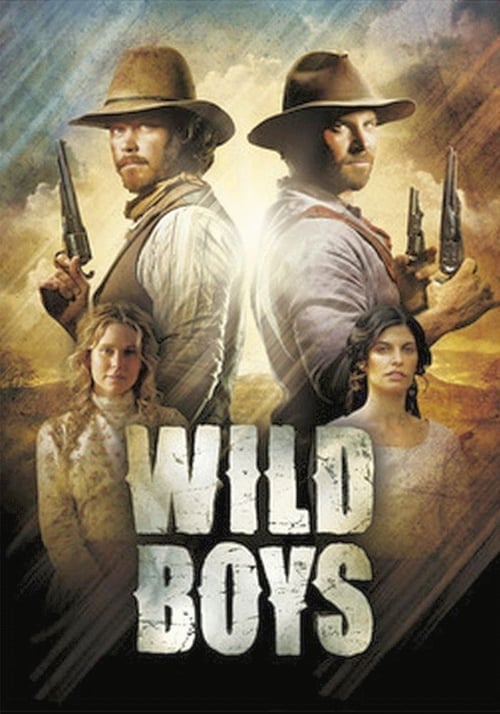












Popular
What are the main motivations of the character Dan, and how do they influence his actions throughout the series?
How does the relationship between Dan and the character of Jack evolve throughout the series?
What role does the character of the Colonel play in the development of the plot and the Wild Boys' adventures?
How do the personal backgrounds of the Wild Boys influence their decisions and relationships with each other?
What are some key turning points in the series that significantly impact the characters' arcs?
Should I watch it?
Ask Your Own Question

What is the plot?
In the year 1860, the story begins in the Australian outback, where three young men, known as the Wild Boys, are introduced. They are Jack, a charismatic leader; his best friend, the rugged and loyal Dan; and the clever and resourceful, but somewhat reckless, Billy. The trio is on the run from the law after being falsely accused of a crime. They are determined to clear their names and seek adventure in the wild.
The Wild Boys find refuge in a remote bushland, where they encounter a group of bushrangers led by the notorious Captain McCulloch. The bushrangers are initially suspicious of the boys but soon realize they can use their skills to their advantage. Jack, eager to prove himself, convinces the bushrangers to let them join their ranks, believing it will help them gain the resources they need to clear their names.
As they integrate into the bushranger gang, the boys face various challenges, including skirmishes with the law and rival gangs. During one such confrontation, they are ambushed by a group of soldiers. A tense standoff ensues, and Jack takes charge, devising a plan to outsmart the soldiers. They manage to escape, but not without injuries, which deepens the bond between the boys and the bushrangers.
The plot thickens when the boys learn that Captain McCulloch has a hidden agenda. He plans to use them as pawns in a larger scheme to rob a wealthy landowner. Jack, feeling conflicted about their involvement in crime, begins to question McCulloch's leadership. Meanwhile, Dan becomes increasingly loyal to McCulloch, believing that this is their only chance for survival and wealth.
As tensions rise within the group, a pivotal moment occurs when the boys overhear McCulloch plotting to betray them. Realizing they are in danger, Jack, Dan, and Billy decide to confront McCulloch. In a heated argument, Jack accuses McCulloch of using them, while Dan defends the bushranger's authority. The confrontation escalates into a physical fight, with Jack ultimately gaining the upper hand and forcing McCulloch to back down.
After the confrontation, the boys decide to leave the bushrangers and go their own way. They set out to find evidence that will clear their names, but their journey is fraught with danger. They encounter hostile settlers and must navigate treacherous terrain. During this time, Billy's recklessness leads to a near-fatal accident, which forces the group to reevaluate their priorities and strengthen their resolve.
As they continue their quest, they stumble upon a small town where they find a sympathetic ally in a local woman named Clara. Clara helps them gather information about the crime they were accused of and provides them with shelter. The boys begin to develop a plan to confront the real criminals behind the accusations, but their presence in the town draws unwanted attention.
The climax of the story occurs when the boys finally confront the true culprits, a corrupt group of officials who framed them. In a tense showdown, they gather evidence and confront the officials in a public setting. The confrontation is fraught with danger, as the officials attempt to silence them. A fierce fight breaks out, with the boys using their wits and skills to outmaneuver their opponents.
In the aftermath of the confrontation, the boys manage to expose the corruption, clearing their names. However, the victory comes at a cost, as they realize that their lives as outlaws have irrevocably changed. They must now decide whether to continue living on the run or to seek a new path. The series concludes with the boys standing at a crossroads, contemplating their future in a world that has been shaped by their choices and adventures.









What is the ending?
In the ending of "Wild Boys," the main characters face the consequences of their actions as they confront their pasts and the choices they have made. The series concludes with a sense of resolution for some, while others are left with lingering uncertainty about their futures.
As the final episode unfolds, the tension escalates. The Wild Boys, led by the charismatic and impulsive character, are embroiled in a conflict that tests their loyalty and resolve. The stakes are high, and the emotional weight of their decisions becomes palpable.
In the first scene, the group gathers in their hideout, a dimly lit space filled with remnants of their adventures. The atmosphere is thick with unspoken words as they reflect on their journey. Each character grapples with their personal demons, revealing their vulnerabilities. The leader, with a mix of bravado and fear, tries to rally the group, but the uncertainty of their situation looms large.
As the plot progresses, the Wild Boys find themselves cornered by their enemies. A confrontation is inevitable, and the tension crackles in the air. The characters prepare for a showdown, each one steeling themselves for what lies ahead. The camera captures their expressions--determination mixed with dread--as they gear up for the fight.
The scene shifts to the confrontation itself, a chaotic and intense sequence filled with action. The Wild Boys engage in a fierce battle, showcasing their skills and camaraderie. The stakes are personal, and the fight is not just for survival but for redemption. Each character's motivations are laid bare as they fight not only for their lives but for the chance to reclaim their honor.
In the climax, one of the characters makes a significant sacrifice, stepping into harm's way to protect the others. This moment is charged with emotion, highlighting the bonds formed through their shared experiences. The sacrifice resonates deeply, leaving the remaining members of the group shaken but resolute.
As the dust settles, the aftermath of the confrontation reveals the fates of the main characters. Some emerge victorious, having found a sense of purpose and direction. They stand together, united by their experiences, ready to face whatever comes next. Others, however, are left to grapple with the consequences of their choices, their futures uncertain.
The series concludes with a poignant scene that encapsulates the journey of the Wild Boys. They gather one last time, reflecting on their past and the lessons learned. The camera pans out, leaving viewers with a sense of closure for some characters while hinting at the ongoing struggles of others. The emotional weight of their journey lingers, a testament to the complexities of friendship, loyalty, and the quest for redemption.
Is there a post-credit scene?
The TV show "Wild Boys," produced in 2011, does not feature a post-credit scene. The series, which follows the adventures of a group of young men in the Australian outback during the 1860s, concludes its episodes without any additional scenes after the credits. Each episode wraps up its storyline, focusing on the characters' relationships, their struggles, and the challenges they face in a rugged and often dangerous environment. The absence of post-credit scenes allows the narrative to maintain its focus on the main plot and character development throughout the series.
What are the main motivations of the character Dan, and how do they influence his actions throughout the series?
Dan, portrayed by Alex O'Loughlin, is driven by a desire for freedom and adventure, often seeking to escape the constraints of his past. His motivations stem from a longing to prove himself and to find a sense of belonging among the Wild Boys. This quest for identity leads him to take risks that often put him at odds with authority, showcasing his rebellious spirit and deep-seated need for acceptance.
How does the relationship between Dan and the character of Jack evolve throughout the series?
Initially, Dan and Jack have a contentious relationship, marked by rivalry and differing ideologies. Dan's impulsive nature clashes with Jack's more calculated approach to their escapades. However, as the series progresses, they begin to understand each other's strengths and weaknesses, leading to a reluctant camaraderie. Their bond deepens through shared experiences, ultimately culminating in a mutual respect that highlights their growth as individuals and as partners in crime.
What role does the character of the Colonel play in the development of the plot and the Wild Boys' adventures?
The Colonel, a stern and authoritative figure, serves as both an antagonist and a catalyst for the Wild Boys' actions. His relentless pursuit of the boys adds tension to the narrative, as he represents the law and order that the Wild Boys constantly rebel against. His presence forces the boys to navigate their escapades with greater cunning and creativity, often leading to high-stakes confrontations that drive the plot forward.
How do the personal backgrounds of the Wild Boys influence their decisions and relationships with each other?
Each Wild Boy carries the weight of their past, which significantly shapes their interactions and choices. For instance, Dan's troubled history fuels his reckless behavior, while another character, Billy, grapples with feelings of inadequacy stemming from his family's expectations. These personal struggles create a complex web of relationships, as the boys often find solace and understanding in each other's shared experiences, leading to moments of vulnerability and camaraderie.
What are some key turning points in the series that significantly impact the characters' arcs?
Several pivotal moments shape the characters' journeys, such as Dan's near-death experience during a heist that forces him to confront his mortality and reassess his priorities. Another turning point occurs when Jack makes a sacrifice for the group, solidifying his role as a leader and protector. These events not only challenge the boys' dynamics but also catalyze personal growth, pushing them to confront their fears and redefine their relationships with one another.
Is this family friendly?
"Wild Boys," produced in 2011, is a drama series set in the Australian outback during the 1860s, focusing on a group of bushrangers. While the show has adventure and camaraderie, it does contain several elements that may be considered objectionable or upsetting for children or sensitive viewers.
-
Violence: The series features scenes of gunfights, brawls, and confrontations with law enforcement, which may include bloodshed and injury.
-
Death: Characters face life-threatening situations, and there are instances of death that are portrayed in a dramatic manner, which could be distressing.
-
Theft and Crime: The main characters are bushrangers, and their lifestyle involves stealing and engaging in criminal activities, which may not be suitable for younger audiences.
-
Mature Themes: The show explores themes of betrayal, loyalty, and survival, which may be complex for younger viewers to fully understand.
-
Emotional Turmoil: Characters experience significant emotional struggles, including loss, guilt, and moral dilemmas, which could be heavy for sensitive viewers.
-
Romantic Relationships: There are romantic subplots that may include tension and conflict, which might not be appropriate for all children.
Overall, while "Wild Boys" offers adventure and excitement, its portrayal of violence, crime, and emotional complexity may not be suitable for a family-friendly viewing experience.