








Popular
What motivates Arthur Banks to pursue a career in trivia?
How does Arthur's relationship with his best friend evolve throughout the series?
What role does the trivia competition play in Arthur's personal growth?
How does Arthur's family background influence his character development?
What challenges does Arthur face in his quest for trivia mastery?
Should I watch it?
Ask Your Own Question

What is the plot?
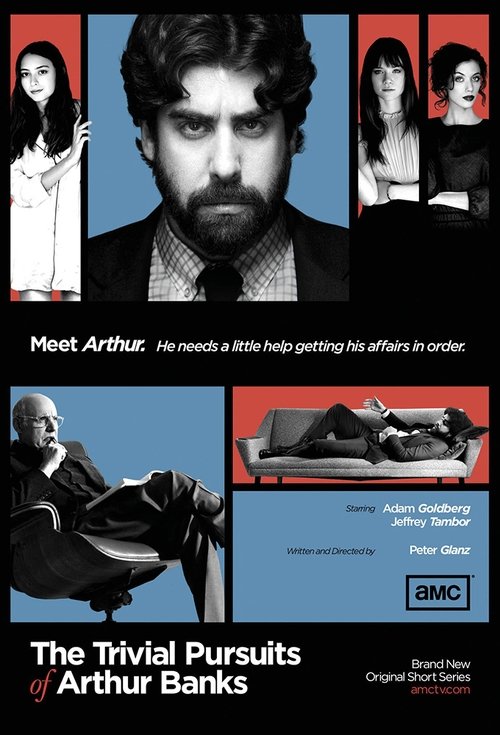
Arthur Banks, a struggling writer in New York City, is introduced as he navigates his mundane life filled with rejections and self-doubt. He is portrayed as a quirky, somewhat neurotic character who often finds himself lost in his thoughts. The story begins with Arthur attending a literary event where he hopes to network and find inspiration. However, he feels out of place among the more successful authors and ends up leaving early, feeling defeated.
Back at his apartment, Arthur receives a call from his best friend, who encourages him to take a break from writing and join him for a weekend getaway. Reluctantly, Arthur agrees, hoping that a change of scenery might spark his creativity. They head to a cabin in the woods, where Arthur initially struggles to relax. His friend tries to engage him in various activities, but Arthur remains preoccupied with his writing aspirations.
During their stay, Arthur encounters a mysterious woman named Claire, who is staying at a nearby cabin. Intrigued by her free-spirited nature, he strikes up a conversation with her. Claire shares her own struggles with creativity and the pressures of societal expectations, which resonates deeply with Arthur. They bond over their shared experiences, and Arthur begins to feel a sense of hope and inspiration.
As the weekend progresses, Arthur and Claire grow closer, sharing personal stories and dreams. Arthur feels a spark of creativity returning, and he starts jotting down ideas for a new story. However, their idyllic time is interrupted when Arthur's friend reveals that he has been secretly dating Claire, leading to tension and jealousy. Arthur feels betrayed and questions his own worth, leading to a confrontation between the three of them.
In the heat of the moment, Arthur decides to leave the cabin and return to the city, feeling disillusioned. Back in New York, he struggles to regain his focus and motivation. He attends a series of unsuccessful meetings with publishers, each rejection weighing heavily on him. Arthur's internal conflict deepens as he grapples with his self-image and the fear of failure.
One night, while wandering the city, Arthur runs into Claire again. They have an emotional conversation where Claire encourages him to embrace his unique voice as a writer. Inspired by her words, Arthur decides to take a leap of faith and write a story that reflects his true self, rather than trying to conform to what he thinks others want.
As he begins to write, Arthur experiences a creative breakthrough. He pours his heart into the story, drawing from his experiences and emotions. The narrative shifts to show Arthur's journey of self-discovery and acceptance, culminating in him finally finishing his manuscript. He feels a sense of accomplishment and relief, realizing that the act of writing is what truly matters to him.
In the final act, Arthur submits his manuscript to a publisher, feeling a mix of anxiety and hope. He attends another literary event, this time with a newfound confidence. As he mingles with other writers, he receives a call from the publisher expressing interest in his work. The story concludes with Arthur standing on the brink of a new chapter in his life, ready to embrace whatever comes next, having learned to value his own voice and creativity.
🔥 Trending TV Shows Now
Browse All TV Shows →








What is the ending?
In the ending of "The Trivial Pursuits of Arthur Banks," Arthur faces the consequences of his choices, leading to a moment of self-realization. He reconciles with his estranged friends and family, ultimately finding a sense of purpose. The series concludes with Arthur embracing a new chapter in his life, leaving behind his trivial pursuits.
As the final episode unfolds, we find Arthur Banks sitting alone in his cluttered apartment, surrounded by remnants of his past. The camera pans over the stacks of trivia books and half-finished projects that symbolize his obsession with trivial knowledge. Arthur's expression is one of deep contemplation, a mix of regret and determination. He reflects on the relationships he has neglected in his pursuit of trivial fame.
Scene 1: Arthur receives a phone call from his childhood friend, who he hasn't spoken to in years. The friend expresses concern over Arthur's isolation and urges him to reconnect with their old group. Arthur hesitates, feeling the weight of his past mistakes, but ultimately agrees to meet.
Scene 2: The reunion takes place at a local bar, where Arthur's friends gather, each bringing their own baggage. The atmosphere is tense as old grievances surface. Arthur feels the pressure of their expectations and the judgment in their eyes. He struggles to articulate his feelings, but the warmth of their camaraderie begins to thaw his defenses.
Scene 3: As the night progresses, Arthur shares his journey, revealing how his obsession with trivia led him to push away those he cared about. His friends listen, some with empathy, others with skepticism. The emotional stakes rise as Arthur confronts his fears of inadequacy and failure. He realizes that his trivial pursuits have cost him meaningful connections.
Scene 4: In a pivotal moment, Arthur apologizes to each friend, acknowledging the pain his actions have caused. The camera captures the raw emotions on their faces--surprise, hurt, and ultimately, forgiveness. This scene is a turning point, showcasing the power of vulnerability and the importance of reconciliation.
Scene 5: The episode culminates in a montage of Arthur reconnecting with his family. He visits his estranged sister, bringing her a small gift that symbolizes their shared childhood. Their reunion is filled with tears and laughter, as they reminisce about happier times. Arthur's sister expresses her pride in him for taking steps to change, reinforcing his newfound resolve.
Scene 6: The final scene shows Arthur standing on a street corner, looking up at the sky with a sense of hope. He smiles, a stark contrast to the lonely figure we saw at the beginning. The camera pulls back, revealing the bustling city around him, symbolizing the opportunities that lie ahead. Arthur has embraced a new chapter, one where he values relationships over trivial pursuits.
In the end, Arthur Banks emerges transformed. He has learned that life is not just about accumulating knowledge but about nurturing connections. His friends and family, once distant, are now part of his journey forward. The series closes on a note of optimism, suggesting that while trivial pursuits may have defined his past, they will not dictate his future.
Is there a post-credit scene?
In "The Trivial Pursuits of Arthur Banks," there is indeed a post-credit scene that adds a humorous twist to the narrative. After the credits roll, the scene opens in a dimly lit bar where Arthur Banks, played by the charming and neurotic actor, is seen nursing a drink. The atmosphere is filled with the low hum of chatter and clinking glasses, creating a sense of intimacy and vulnerability.
Arthur, looking slightly disheveled with his tie loosened and hair tousled, is engaged in a conversation with a mysterious woman sitting across from him. She is intriguing, with an air of confidence that contrasts sharply with Arthur's usual awkwardness. As they talk, Arthur's nervousness is palpable; he fidgets with his drink, glancing around as if expecting someone to interrupt.
The conversation takes a turn when the woman reveals that she is a trivia champion, sparking a flicker of excitement in Arthur's eyes. He leans in, eager to impress her with his own knowledge, but as he begins to rattle off obscure facts, his enthusiasm quickly turns into a comedic disaster. He misremembers key details, mixing up trivia about historical figures and pop culture references, which leads to a series of awkward pauses and the woman's bemused expressions.
Just as Arthur is about to redeem himself with a particularly obscure fact, the scene cuts to black, leaving viewers with a sense of anticipation and laughter. The post-credit scene encapsulates Arthur's ongoing struggle with social interactions and his relentless pursuit of connection, all while maintaining the show's signature blend of humor and heart.
What motivates Arthur Banks to pursue a career in trivia?
Arthur Banks, portrayed as a quirky and passionate trivia enthusiast, is driven by a deep-seated desire to prove his worth and intelligence to those around him. His childhood experiences of being underestimated fuel his ambition to excel in the world of trivia, where he believes he can shine and gain respect.
How does Arthur's relationship with his best friend evolve throughout the series?
Arthur's relationship with his best friend, who often serves as his confidant and comic relief, undergoes significant changes as they navigate the challenges of adulthood. Initially, their bond is strong, but as Arthur becomes more consumed by his trivia pursuits, tensions arise, leading to moments of conflict and eventual reconciliation that highlight the importance of friendship.
What role does the trivia competition play in Arthur's personal growth?
The trivia competition serves as a pivotal moment for Arthur, pushing him out of his comfort zone and forcing him to confront his insecurities. As he prepares for the competition, he learns valuable lessons about teamwork, humility, and the importance of balancing passion with personal relationships, ultimately leading to a more rounded character.
How does Arthur's family background influence his character development?
Arthur's family background, particularly his relationship with his parents, plays a crucial role in shaping his character. Their high expectations and constant comparisons to his more successful siblings instill in him a fear of failure, which drives his obsession with trivia as a means of validation and acceptance.
What challenges does Arthur face in his quest for trivia mastery?
Throughout the series, Arthur faces numerous challenges, including fierce competition from rival trivia enthusiasts, self-doubt, and the pressure to maintain his friendships while pursuing his passion. These obstacles test his resolve and force him to confront the reality of his ambitions, leading to moments of introspection and growth.
Is this family friendly?
"The Trivial Pursuits of Arthur Banks" is a comedy series that explores the life of Arthur Banks, a man navigating the complexities of adulthood, relationships, and personal aspirations. While the show has a humorous tone, it does contain some elements that may not be suitable for all audiences, particularly children or sensitive viewers.
-
Adult Themes: The series frequently delves into themes of existential crisis, personal failure, and the struggles of adulthood, which may be difficult for younger viewers to fully grasp or relate to.
-
Mature Language: There are instances of strong language and adult humor that may not be appropriate for children.
-
Romantic Situations: The show includes various romantic entanglements and relationships that may involve innuendo or discussions about intimacy, which could be uncomfortable for younger audiences.
-
Emotional Turmoil: Characters often experience significant emotional distress, including anxiety and depression, which may resonate deeply with sensitive viewers.
-
Social Commentary: The series includes satirical takes on societal norms and expectations, which might be confusing or upsetting for younger viewers who are not yet familiar with these concepts.
Overall, while "The Trivial Pursuits of Arthur Banks" is primarily a comedy, its exploration of adult life and relationships may not be suitable for children or those who are particularly sensitive to mature themes.