














Popular
What is the origin of The Shadow's powers?
Who is the main antagonist in The Shadow, and what are his motivations?
What is the significance of the character Margo Lane in The Shadow's story?
How does The Shadow's dual identity affect his relationships with others?
What role does the city of New York play in The Shadow's narrative?
Should I watch it?
Ask Your Own Question

What is the plot?
Sorry, we aren't able to watch and write up a full detailed plot yet. Check back in a few days.
What is the ending?
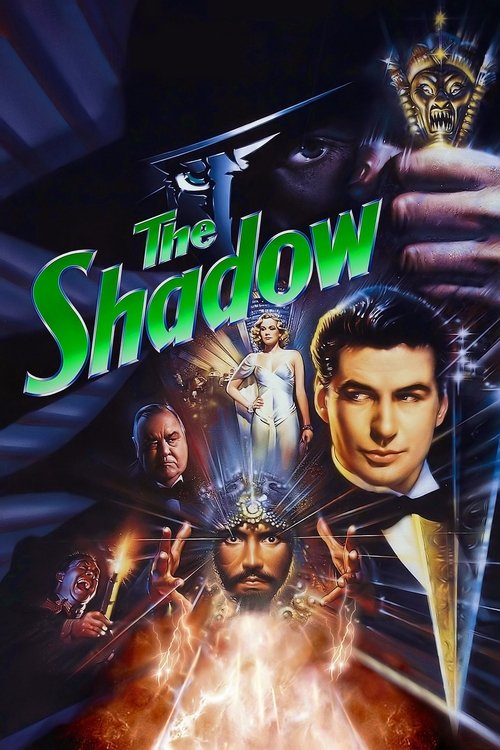
In the ending of "The Shadow," Lamont Cranston, also known as The Shadow, confronts his nemesis, the evil sorcerer Shiwan Khan, in a climactic battle. After a fierce struggle, Cranston manages to defeat Khan, saving the city from destruction. In the aftermath, Cranston embraces his role as a protector, reaffirming his commitment to fighting evil. Margo Lane, his love interest, stands by him, and they share a moment of hope for the future.
As the film concludes, Lamont Cranston, having embraced his identity as The Shadow, looks out over the city, ready to continue his fight against darkness.
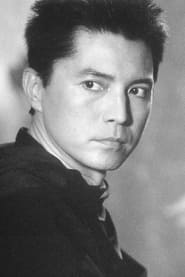
As the final act of "The Shadow" unfolds, the tension escalates in the heart of New York City. The scene opens with Lamont Cranston, portrayed by Alec Baldwin, standing resolutely in his lair, the shadows swirling around him. He is aware that Shiwan Khan, played by John Lone, is preparing to unleash a devastating weapon that could obliterate the city. Cranston's internal struggle is palpable; he grapples with the weight of his responsibilities as The Shadow and the love he feels for Margo Lane, played by Penelope Ann Miller.
The camera shifts to Shiwan Khan, who is in a grand, dimly lit chamber, surrounded by his henchmen. He is confident, exuding a menacing aura as he prepares to activate his doomsday device. The stakes are high, and the city hangs in the balance. Khan's motivations are clear; he seeks to dominate the world, and he believes that fear is the key to his power.
As the scene transitions, Cranston dons his iconic dark cloak and hat, embodying The Shadow. He steps into the night, his face a mask of determination. The atmosphere is thick with suspense as he navigates the city, using his ability to blend into the shadows. His internal monologue reveals his resolve to protect the innocent and stop Khan at all costs.
The confrontation occurs in a dramatic showdown at Khan's lair. The two adversaries face off, and the tension crackles in the air. Cranston uses his wits and skills, employing his mastery of stealth and psychological manipulation to gain the upper hand. The fight is intense, with both characters showcasing their powers. Khan attempts to use his mind control abilities against Cranston, but The Shadow's will is strong. The battle is not just physical; it is a clash of ideologies--fear versus courage.
As the fight reaches its climax, Cranston manages to outsmart Khan, using the very shadows that Khan seeks to control against him. In a moment of desperation, Khan activates his device, but Cranston intervenes just in time. The device is destroyed in a spectacular explosion, symbolizing the triumph of light over darkness. Khan, realizing his defeat, is consumed by the very shadows he sought to command, disappearing into the void.
In the aftermath, the city is safe, but the victory comes at a cost. Cranston stands amidst the ruins, reflecting on the battle. Margo approaches him, her expression a mix of relief and admiration. Their connection deepens as they share a moment of vulnerability, acknowledging the dangers they face together. Cranston's internal conflict resolves as he embraces his identity as The Shadow, a guardian of the city.
The film concludes with Cranston looking out over the skyline, the city illuminated against the night. He understands that his fight against evil is far from over, but he is ready to face whatever challenges lie ahead. Margo stands beside him, symbolizing hope and partnership. The final shot captures Cranston's silhouette against the city lights, a reminder of his commitment to protect the innocent and uphold justice. The fate of each character is sealed; Cranston continues as The Shadow, Margo remains by his side, and Shiwan Khan is lost to the shadows, a testament to the enduring battle between good and evil.
Is there a post-credit scene?
The movie "The Shadow," produced in 1994, does not have a post-credit scene. The film concludes with the resolution of the main plot, where Lamont Cranston, also known as The Shadow, defeats his nemesis, the villainous Shiwan Khan. The story wraps up with a sense of closure, focusing on Cranston's commitment to using his powers for good and his relationship with Margo Lane. After the credits roll, there are no additional scenes or content that extend the narrative or provide further insight into the characters.
What is the origin of The Shadow's powers?
The Shadow, also known as Lamont Cranston, gains his powers through a mystical training in the Himalayas, where he learns to cloud men's minds and become invisible to them. This training is a crucial part of his transformation from a wealthy playboy into a vigilante who fights crime.
Who is the main antagonist in The Shadow, and what are his motivations?
The main antagonist is Shiwan Khan, a warlord with telepathic abilities who seeks to dominate the world. His motivations stem from a desire for power and revenge against those who have wronged him, particularly targeting The Shadow as a formidable opponent.
What is the significance of the character Margo Lane in The Shadow's story?
Margo Lane is a pivotal character who serves as The Shadow's love interest and confidante. She is a strong-willed woman who becomes embroiled in The Shadow's world, and her relationship with Lamont Cranston adds emotional depth to the narrative, showcasing themes of trust and partnership.
How does The Shadow's dual identity affect his relationships with others?
The dual identity of Lamont Cranston as The Shadow creates tension in his relationships, particularly with Margo Lane and his allies. He struggles with the need to keep his true self hidden while also wanting to connect with those he cares about, leading to moments of conflict and emotional turmoil.
What role does the city of New York play in The Shadow's narrative?
New York City serves as a vibrant backdrop for The Shadow's adventures, embodying the chaos and crime that he seeks to combat. The city's dark alleys, opulent mansions, and bustling streets reflect the duality of The Shadow's world, where glamour and danger coexist, enhancing the film's atmosphere.
Is this family friendly?
"The Shadow," produced in 1994, is a superhero film that contains several elements that may not be suitable for younger audiences or sensitive viewers. Here are some potentially objectionable or upsetting aspects:
-
Violence: The film features various scenes of action and combat, including gunfights and physical confrontations. Some of these scenes can be intense and may depict characters in peril.
-
Dark Themes: The storyline involves themes of crime, corruption, and the supernatural. The presence of a villain who uses fear and manipulation can be unsettling for some viewers.
-
Death and Danger: Characters face life-threatening situations, and there are moments that involve the death of characters, which may be distressing.
-
Supernatural Elements: The film includes elements of mysticism and mind control, which might be frightening for younger children or those sensitive to horror themes.
-
Mature Language: There are instances of mild profanity and suggestive dialogue that may not be appropriate for all audiences.
-
Romantic Undertones: The film includes romantic interactions that may be considered mature for younger viewers.
Overall, while "The Shadow" is a superhero film with action and adventure, its darker themes and moments of violence may make it less suitable for children or sensitive individuals.







