












Loading additional questions...
Should I watch it?
Ask Your Own Question

What is the plot?
Holly and her Irish husband Gerry live together in Manhattan, where their relationship combines fierce arguments with a deep, enduring affection. They mark a decade of marriage, but Gerry is diagnosed with a brain tumor. After a period of illness he dies, leaving Holly bereft. Grief isolates her; she withdraws from family gatherings and from friends, refusing invitations and letting her social life evaporate.
On Holly's next birthday a delivery arrives: a cake and, tucked beside it, a cassette tape. When she plays the tape she hears Gerry's voice--calm, familiar, and recorded before his death. It is the first in a series of prerecorded messages he has arranged to reach her after he is gone. Each message ends with the same sign-off, "P.S. I Love You." Holly's mother, Patricia, who never fully approved of Holly's marriage to the Irishman, watches her daughter with unease; Patricia worries that Gerry's planned messages will anchor Holly to the past rather than help her move forward.
Gerry's tapes arrive at intervals and in them he alternates between tenderness and brisk encouragement to rejoin life. He organizes for Holly and two of her closest friends, Denise and Sharon, to travel to the Irish countryside where he grew up. At the small, picturesque cottage he booked for them the three women discover envelopes addressed to each of them left among the bed linens and the tea cups. One note asks Denise to take Holly to Gerry's favorite pub.
They obey. At the pub, Holly tries to listen, and the place is full of locals and the warmth of a shared world she has not inhabited since Gerry's death. A young man named William performs on a small stage; his voice and manner evoke Gerry so strongly that Holly cannot keep her emotions in check. At one point he dedicates a song--"Galway Girl"--and the melody detonates a memory: Gerry had sung that very song when they first met. She becomes overwhelmed, pushes her chair back, and leaves the room before the song ends.
The next day the three women go out on a small boat to fish on the lake. While out on the water the boat's oars are lost--one of them tumbles away and the other slips from the rowlocks--leaving them stranded and bobbing under a wide gray sky. As they drift they exchange news: Sharon tells them she is pregnant and Denise reveals she is planning a wedding. Both announcements should be joyful, but for Holly they reopen raw spaces; she retreats inward, saying little and staring at the horizon. A rain squall begins to threaten and the women wait, shivering on the lake, until a rowing boat appears and its occupant, William, comes alongside and helps bring them ashore. Sharon and Denise, grateful and amused by the coincidence of his arrival, invite William back to the cottage because the weather turns bad.
That evening, as wind and rain drive them into the small house, Holly and William find themselves unable to resist their attraction. They have sex on the cottage's small bed, clumsy and urgent in a way that feels forbidden to Holly. In the quiet after, Holly admits that she plans to visit Gerry's parents nearby; William is startled and then perplexed, because he recognizes Gerry's name and realizes Holly is the widow of an old friend. Holly panics at the idea that she has slept with a man who was close to her late husband. William sits with her, telling her stories about his childhood with Gerry--how they used to roam the fields, the jokes they shared, and the small cruelties of adolescence. His remembrances are candid, sometimes cruelly exact, and they soothe Holly, easing the immediate shock of the discovery.
The following day Holly travels to Gerry's parents' house. They receive her with a mixture of sorrow and generosity; they sit her down and hand her another envelope Gerry had left for her. In his letter he recounts incidents from their life together and reminds her of the details of their first meeting. Reading his handwriting and his recollections both fractures and steadies her.
Back in Manhattan Holly finds, tucked inside a shoe box, one of Gerry's suspender clips lodged against the leather of a shoe she had worn to the funeral. The small piece of metal triggers an idea: she begins to sketch designs for women's shoes, adapting fastenings and trims and imagining new silhouettes. She enrolls in a shoe-design class and applies herself to learning pattern making and the craft of shoemaking. The work demands her attention and her inventiveness, and as weeks pass she opens up to life again; the class and the act of creating pull her out from the shell of grief.
Her friends mark their own turns in life: Sharon prepares for motherhood and Denise for her wedding. Holly supports them in small ways--helping with invitations, attending dress fittings--but she does not let their happiness swallow her. Instead she allows herself the space to be pleased by it while also protecting what remains of her grief. She goes to dinner one night with an old college acquaintance, Daniel, who reveals over wine that he has long been in love with her. Holly listens and tries to be kind, but she does not reciprocate his romantic interest. In a moment of distraction, thinking of Gerry, she calls Daniel by his name at the table and, as if waking, realizes she has said "Gerry." Daniel, wounded by the confession that his friend's heart remains with the dead man, leaves the restaurant without explanation.
Not long after, on a quiet walk through the neighborhood, Patricia approaches Holly and hands her another envelope. It is a letter from Gerry. During this walk Patricia reveals the secret she has kept: she was the person Gerry had asked to deliver his messages. She says that at first she did not think it was appropriate to orchestrate such an intimate campaign of reminders, yet she could not refuse Gerry when he made the request. Patricia admits she delivered each tape and each envelope on schedule, though she withheld the fact from Holly out of a complicated mix of protectiveness and her need to control her daughter's mourning. The revelation stings and comforts Holly at once because it makes Gerry's orchestration tangible and deliberate.
Holly returns home to a voicemail from Daniel. They arrange to meet at Yankee Stadium, a neutral public place, and there she asks him to read the latest letter she has received from Gerry. Daniel opens the envelope and reads aloud. In the letter Gerry instructs Holly not to turn away from new love; he urges her to step forward and warns her against remaining imprisoned by loss. The words are gentle but firm. After Daniel finishes reading they stand close in the cavernous stadium; Holly leans forward and they share a kiss. It is a caring, tentative kiss rather than a blaze of passion, and neither of them feels a spark. They agree to remain friends, to rebuild a companionship not founded on romance but on affection and mutual support.
As months pass Holly's shoemaking course yields prototypes and small successes; she sells a pair of shoes to a local boutique and delivers a sample that gets positive feedback. The work keeps her busy and she begins to laugh in public again. Patricia, watching the transformation, agrees to accompany Holly back to Ireland for a holiday; she accepts an invitation Holly had once refused. They travel to County Clare, where the green fields and stony roads remember Gerry in ways both sharp and softened by distance.
On a narrow lane in Ireland, by chance, Holly and Patricia encounter William and his father. William recognizes Holly immediately; he approaches and speaks with her as if no awkwardness separates them. He tells Holly that he would like to see her again, that the time they spent together meant something to him, and he asks if she will meet him for a walk the next day. Patricia watches this exchange with a reserved pleasure; she sees Holly listening to a living man's request rather than to the voice of a taped memory. Holly agrees--hesitantly, but with an openness she has not displayed in a long time.
The story closes with Holly standing at the edge of a small Irish field where wind pulls at her coat. She looks down a lane where William and his father walk away, then turns back toward the cottage and her mother. The final image is Holly taking another step forward into a life that includes memory and also allows for new encounters. Gerry's death is not erased--he died of a brain tumor after ten years with Holly--but his planned messages, the letters and cassettes mailed and delivered after his funeral, and the practical artifacts he left behind guide her through mourning toward an uncertain but moving future. The last scene shows Holly and Patricia walking back toward the cottage together; William's voice carries faintly from the lane ahead as he calls that he will come by in the morning, and Holly looks toward him, then away, and walks with her mother into the warm light of the house.







What is the ending?
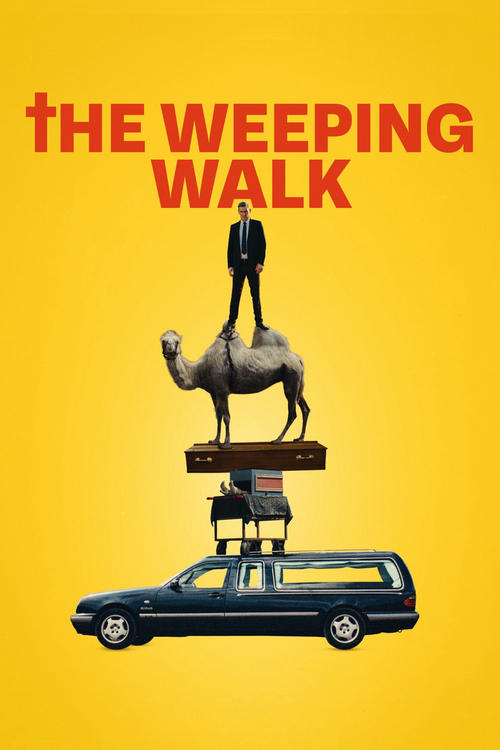
The family finally reaches Wettelen after days of walking behind the hearse, but the village turns out to be a circular dead end with no cemetery, leaving them to bury Christine right there in absurdity, secrets fully exposed, bonds strained yet enduring as they part ways.
Now, let me take you through the ending of The Weeping Walk, scene by scene, as the procession drags on into its final, unraveling moments on this peculiar pilgrimage to honor Christine's mysterious last wish.
The group--Bas, the widowed husband trudging wearily with his quiet resignation; daughters Kaat and Anne, their faces etched with exhaustion and flickering resentment from unearthed family truths; adoptive son Antoine, reemerged and still raw from his past banishment by Bas; wheelchair-bound sister Sherry, maneuvering her chair over uneven paths with petulant determination; the cynical hearse driver Frido, gripping the wheel with world-weary sarcasm; plus stragglers like Christine's childhood friend and the enigmatic unrelated woman--has been walking for days. They've endured overnight stays: first with silent monks in a stark abbey, where the group huddles in cold stone cells, whispers of marital distance between Bas and Christine slipping out over meager meals; then a chaotic night with a rowdy circus troupe, tents flapping wildly as laughter mixes with accusations about Antoine's abrupt departure years ago; and finally a boisterous hotel overrun by a drunken wedding party, where pratfalls abound--guests slipping on spilled champagne, Sherry's chair tipping into a puddle--and bodily mishaps like defecation in underpants become grim symbols of shared vulnerability, drawing reluctant chuckles amid revelations of Christine's wild quirks, like her wheelchair basketball games despite not needing one.
As dawn breaks on the last leg, the hearse creaks forward on a narrowing road, Frido muttering that Wettelen is just ahead, though doubt creases his brow. The landscape flattens into misty fields, the casket visible through the rear window, jostling slightly. Bas walks closest to the hearse, his steps heavy, eyes fixed on it as memories of Christine's affectionate yet distant love surface in fragmented talks--her dancing in underwear after cocktails, her larger-than-life spark that always pulled them into adventure.
They crest a hill, and there it is: Wettelen, a tiny, looping village with houses circling a barren central square, no church or graveyard in sight. Confusion ripples through the group. Frido parks the hearse in the square's dusty center, kills the engine, and steps out, scratching his head. "This is it," he says flatly, but no one knows what to do. Antoine kicks at gravel, frustration boiling over from his "nudged" exile. Kaat and Anne exchange glances, their sibling tensions from hidden parental secrets now laid bare. Sherry wheels forward aggressively, demanding answers about her sister's unspoken life.
Bas opens the hearse's back, the casket gleaming under gray skies. No notary, no locals--just the circle of familiar faces. They decide to bury her there, in the square's packed earth. Frido fetches a shovel from the hearse trunk. The group forms a ragged semicircle. Bas speaks first, voice cracking slightly as he recounts their respectful but affection-starved marriage. Antoine adds terse words about his adoptive bond and painful exit. Kaat and Anne share halting memories of their mother's fun, kind wildness. Sherry mutters complaints but grips the casket edge tightly. The childhood friend nods silently; the mysterious woman observes from the fringe.
They dig--a shallow pit forms under alternating swings of the shovel, dirt flying onto shoes and wheels. Sweat beads despite the chill. The casket lowers with ropes, thudding softly into place. No priest, just handfuls of soil tossed in by each: Bas last, covering it fully, his hands trembling. A brief, awkward silence, broken by Frido's wry quip about dead folks deciding nothing.
The group disperses in the circular square's loop--Bas drives off alone in the now-empty hearse, heading home with quiet acceptance of the journey's pointlessness. Kaat and Anne walk arm-in-arm toward a distant bus stop, their sisterly rift mended through the ordeal. Antoine lingers, then strides away on foot, reconciled yet independent. Sherry powers her wheelchair down a side path, unbowed and petulant as ever. Frido hitches a ride with passing traffic, chuckling to himself. The friend and woman vanish into the village haze, their roles in the secrets absorbed but unresolved. Christine rests in Wettelen's absurd heart, her pilgrimage complete, family forever altered by the walk.
Is there a post-credit scene?
No, there is no post-credits scene in the 2024 movie The Weeping Walk. Viewers can leave the theater immediately after the film ends without missing any additional content.
User query: for the movie titled The Weeping Walk produced in year 2024, What are the 5 most popular questions people ask about this title that deal specifically about specific plot elements or specific characters of the story itself, excluding the following questions x27what is the overall plot?x27 and x27what is the ending?x27 Do not include questions that are general, abstract, or thematic in nature.
- Why did Antoine leave the family before Christine's funeral?
- What is the significance of the town Wettelen (or Acanda) in Christine's will?
- Who is the mysterious woman unrelated to the family that joins the funeral procession?
- What caused the tension between Bas and Christine in their marriage?
- Why does Sherry (or Cherry), Christine's wheelchair-bound sister, behave so petulantly during the journey?








