















Popular
How does Jasper first get involved with the note in Dead Mail?
Who is Trent Whittington, and what is his connection to Joshua Ivey?
Why is Joshua Ivey being kept captive in the basement?
What role do the postal workers Bess and Ann play in the story?
What is the dead letter office’s connection to the kidnapping?
Should I watch it?
Ask Your Own Question

What is the plot?
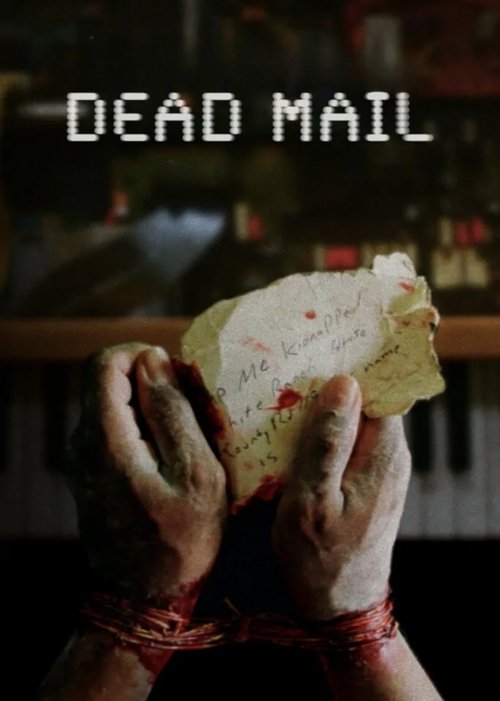
Dead Mail opens in blood and panic on a desolate Midwestern county road in the 1980s, where a bound man later identified as Josh Ivey crawls toward a remote mailbox with only seconds to act. He manages to shove a blood-streaked plea for help into the slot just before his captor closes in, and the moment is so abrupt and desperate that the mailbox itself feels like a final, fragile chance at survival rather than a piece of public infrastructure. The kidnapper drags Josh back out of view, and the film immediately pulls that note into the anonymous machinery of the postal system, where a lost message becomes the one object in the world that might still save him.
At the county post office, the note lands on the desk of the dead-letter operation, where Ann Lankford and Bess Greer sort mail that cannot be delivered and cannot simply be discarded. Their office is cramped, fluorescent, and ruled by procedure, with Brooks acting as the by-the-book supervisor who enforces the rules and deadlines of the workplace. The dead letters desk is a place built on tiny mysteries, but this one is different: the envelope and its contents carry the weight of a human life, and the workers sense immediately that they are handling something far beyond routine postal error. They pass the case to Jasper Lawrence, the branch's resident dead-letter investigator, a quiet, painstaking man with a reputation for solving impossible address problems and a habit of approaching every scrap of mail as if it contains a whole hidden world.
Jasper's investigation begins with ordinary materials and extraordinary patience. He is first shown resolving a separate dead-mail case involving a necklace that has lost its label, and the process establishes the method that will define the rest of the film: he reads the attached letter, extracts the few usable clues, opens an atlas, and calls the National Weather Service for precipitation records that might match the rainstorm described in the correspondence. He works in a cramped, methodical rhythm, leaning over paper, tracing lines across maps, and cross-checking facts with the kind of care that makes the dead-letter desk feel almost like an archaeological site for human absence. His off-site research contact is Renée Ogaard, a covertly helpful computer expert whose methods are "not exactly legal," and Jasper must call him twice because the first time Renée is distracted by an argument with a customer in an eyeglass store, trading insults in another language while Jasper waits on the line for help. That delay matters: the film lets the audience sit in Jasper's patience, in the small irritation of his work, before the larger horror behind the bloodied note begins to take shape.
Once Renée provides the needed information, Jasper tags the item correctly and phones the owner to tell them the heirloom is not lost after all. It is a tiny triumph, but it also reveals Jasper's gift: he can reconstruct a life from fragments, and he believes that even the most hopeless mail deserves the same careful effort as anything else. Yet the film is not really about the necklace. About twenty minutes in, after Jasper's investigation has done its quiet work, the story rewinds and folds backward on itself, shifting away from the post office and into the darker, earlier thread that explains where the bloodied help note came from in the first place.
In that earlier timeline, Trent Whittington appears as a strange, seemingly ordinary middle-aged man whose unease lies just beneath the surface. He befriends Josh Ivey, a skilled audio engineer and keyboard technician who is trying to build a synthesizer capable of producing convincing woodwind sounds. Their connection begins as a technical arrangement, almost modest in its promise: Josh has the expertise, Trent has the interest, and the two men become entangled around the instrument and the possibilities it represents. But the film steadily reveals that Trent's interest is not merely musical. His fascination with Josh deepens into something possessive, then controlling, and then openly menacing, until the project becomes less about collaboration than about ownership.
The tonal shift is crucial. The early scenes suggest a shared creative space, but each new beat makes the relationship feel more trapped, more asymmetrical, more poisoned by Trent's need to keep Josh close. Trent's house becomes the center of the captivity story, and once Josh is under his roof, the dynamic hardens into confinement. Josh is no longer a collaborator but a prisoner, forced to keep working on the synthesizer under conditions that are both psychologically suffocating and physically dangerous. The room where he is held feels airless and overfilled with objects, a domestic space turned into a cage, and the movie uses that claustrophobia to make every subsequent interaction between the two men feel like a tightening noose.
The exact turning point arrives through obsession rather than a single explosive act. Trent's desire to possess Josh, to control the sound of the synthesizer and the person making it, escalates until Josh is effectively trapped in his home. The relationship that started with gear, music, and technical curiosity curdles into coercion, and the film makes clear that Trent will not let Josh go willingly. Josh's desperation grows with every scene, but the true horror is that he is forced to keep participating in the very thing that ties him to his captor. The synthesizer becomes a symbol of both promise and imprisonment: an object of creative possibility that is now inseparable from Trent's domination.
Somewhere in that captivity, Josh finds the brief opening he needs. Bloodied and exhausted, he crawls to the mailbox at the edge of Trent's world and shoves in the plea for help that started the film. The act is small in physical scale and enormous in consequence. Josh is not rescued in that instant; he is recaptured almost immediately, and the scene ends with the terrible irony that the one thing capable of reaching the outside world is a mailbox, not a witness. But the message survives, and the story's whole structure depends on that survival. The postal workers become the first people to truly see Josh's terror, even if they do not yet understand his identity or location.
Back at the post office, the blood-stained note takes on a life of its own. Ann and Bess are the first to process it, and Jasper becomes the person who refuses to let it vanish into bureaucracy. His investigation into the note works like a mirror image of the earlier necklace case, only now the clues are less tidy and the stakes are existential. He studies the letter, mines it for details, and works outward from the text to a likely origin. The film emphasizes how dead-letter work depends on inference: weather, geography, handwriting, postal routes, and human habits all become evidence. Jasper's atlas is not just a prop but a map of possibility, and the National Weather Service call grounds the film in a concrete time-and-place logic that makes the mystery feel solvable if only enough attention is paid.
The investigation then expands beyond official channels. Jasper reaches out to Renée again, knowing that a normal office workflow will not be enough. Renée's computer searches fill in the gaps that paper records cannot, and the film frames their collaboration as both practical and slightly illicit, an act of municipal problem-solving that edges into the wrong side of procedure. That off-book quality matters because Dead Letter work itself is about what slips through regulated systems. The post office is supposed to sort, route, and deliver; Jasper instead has to reconstruct lives from what the system has failed to carry where it should. In that sense, the investigation into Josh becomes an act of rescue from institutional indifference as much as from Trent's violence.
As Jasper and the postal staff piece together the note's origin, Trent begins to loom larger in the narrative. According to the reviews, he eventually appears at Jasper's office, and when he does, it becomes clear that he has a vested interest in the message and will do whatever is necessary to get it back. The visit turns the postal mystery into a confrontation. Trent is no longer just the figure from the backstory; he is present, breathing in the same institutional space as the people trying to uncover him, and his calm, unassuming exterior becomes more frightening because it sits so close to the violence underneath. The office, once a place of quiet procedural labor, now becomes a site of danger, where the wrong question could expose the workers to the man who has been hunting the letter all along.
The tension escalates because the postal employees are not detectives in the conventional sense, yet they are the ones actually doing the work of detection. Jasper, Ann, and Bess continue following the evidence while an official detective, according to one review, fails to properly handle the case and even reaches conclusions that wrongly implicate one of the postal workers. That dynamic sharpens the film's emotional edge: the people who notice the truth are the same people whose judgment is treated as secondary, while the man responsible for the crisis is able to move through the system with unsettling ordinary calm. The workplace becomes a pressure cooker, and every new piece of information raises the question of whether anyone in authority will recognize the danger before Trent acts again.
The story's nonlinear design keeps colliding the two timelines. Each return to the post office recontextualizes what happened in the kidnapping timeline, and each revelation about Trent and Josh sharpens the meaning of the blood-streaked note sitting in postal evidence. Jasper's investigative rigor gives the film its procedural spine, but the emotional core lies in Josh's failed attempt to escape and in the fact that he has to trust strangers at a dead-letter desk to do what his captor will not allow. Ann and Bess, who first seemed like background workers, emerge as active participants in the unraveling of the case, and the final act reportedly gives them a much more prominent role as they help bring the story to its conclusion.
The sources agree that the final section resolves as a murder mystery and circles back to the opening image, bringing the postal investigation and the kidnapping together in one completed shape. What they also agree on is that the ending is strange, tragicomic, and oddly moving, with the workers' persistence becoming the film's emotional payoff. Jasper's dead-letter expertise, once used to reunite a lost heirloom with its owner, becomes the key to understanding a much uglier human loss. The film's central revelation is that the help note is not just a cry from a victim but the first clue in a chain that exposes the full extent of Trent's obsession and Josh's captivity. The note's arrival at the post office is therefore not incidental; it is the mechanism through which the hidden crime enters public view.
Because the available sources do not provide a full scene-by-scene account of every death, they do not support a precise, complete death ledger by name and cause beyond the broader fact that the film becomes a murder mystery and that at least one death is central to the resolution. What they do make clear is that the story's violence is inseparable from Trent's possessive control and from the postal workers' effort to identify the truth before it can be buried again. Josh's fate is the axis on which the narrative turns, and the whole structure of the movie exists because he manages to slip that one bloodied message into the slot before being hauled back into captivity.
By the time the ending arrives, Dead Mail has transformed from a dead-letter procedural into something more unsettling and more mournful: a story about how people leave traces behind, how institutions can accidentally become life-saving, and how persistence can matter as much as authority. The final act, according to the available descriptions, gives Jasper's co-workers unexpected narrative prominence as they help complete the investigation when the assigned detective does not do the job properly. The film closes by paying off the circular structure it has been building all along, returning to the opening act with new meaning and showing that the humble dead-letter desk has, against all expectation, become the place where the truth is finally assembled. The last impression is not just of a solved case but of the strange dignity in finishing someone else's work, a muted triumph born out of paper trails, weather reports, illegal computer searches, and one desperate message that refuses to disappear.


What is the ending?
Short ending:
Jasper and the other postal workers follow the dead letter trail all the way back to Trent, the man holding Josh captive, and the story closes with the kidnapping exposed and the mail mystery solved. The film then adds an epilogue-style credits sequence that plays like fake "where are they now" footage, giving the ending a strange, dry final note.
Expanded ending, scene by scene:
The ending begins after the film has already revealed that Trent is the kidnapper and Josh is the man being held in his house. Trent's connection to the mailed plea for help is no longer hidden, and the postal investigation now moves from a simple dead-letter problem into a direct confrontation with the kidnapping case.
Jasper's part in the story has already wrapped earlier in the film, after he identifies the letter and helps move the investigation forward. From there, the focus shifts to the postal workers and the people around Trent and Josh, with the film circling back through the events that led to the message being sent in the first place.
In the final act, the postal employees keep pushing the case even though the assigned detective does not handle it adequately, and they continue working through the clues tied to the blood-stained note. Their efforts lead them back toward the truth about Trent, Josh, and the kidnapping that started everything.
As the story reaches its end, Trent's control over Josh is broken by the exposure of what he has done. The film presents the ending as a completed mystery: the message is understood, the kidnapping is uncovered, and the loose ends are tied off rather than left hanging.
Josh's fate at the end is that he is no longer the hidden captive at the center of Trent's obsession; the story resolves around the discovery of his situation and the stopping of Trent's hold over him. Jasper's fate is that his dead-letter work has successfully done what it was supposed to do: it helps send the case toward resolution instead of letting the plea disappear into the mail system.
Ann and Bess, the postal workers who keep the dead-letter process moving, end the story as the people who carried the case forward when the formal system failed them. The film treats their role as the final human response to the crisis, with their persistence helping bring the truth to light.
The very end of the film then shifts into a playful epilogue-style credits sequence, described as a fake biographical "where are they now" presentation. That closing material gives the film its last note: after the kidnapping story is resolved, the movie ends with an odd, wry coda rather than with another dramatic event.
Is there a post-credit scene?
Yes. Dead Mail has an epilogue-style credits sequence rather than a traditional extra post-credits scene: the credits continue with a fake "where are they now" / faux-biographical coda that plays like a wink at the story's characters, and at least one reviewer describes it as a "final wink" that resembles the credits of a fake biopic.
What appears in that sequence is not a new plot scene or sequel tease; it is a stylized end-credit montage meant to add a humorous, ironic button to the film's ending. One review specifically notes that the filmmakers may have used AI-generated photos of the "real people" behind the characters during this coda, which made the sequence feel like a faux-documentary flourish rather than an actual narrative continuation.
How does Jasper first get involved with the note in Dead Mail?
Jasper gets pulled into the story when a blood-stained, desperate plea for help arrives at the post office and lands on his desk as a dead letter case. He is the dead-letter investigator responsible for tracing mail that cannot be delivered, so the note becomes his first direct link to the kidnapping mystery.
Who is Trent Whittington, and what is his connection to Joshua Ivey?
Trent Whittington is the strange man tied to the note and the kidnapper holding Joshua Ivey captive. The plot later reveals that Trent becomes Joshua's partner and benefactor before the relationship turns violent, with Trent eventually imprisoning Joshua in his basement so he can keep forcing him to work on the synthesizer project.
Why is Joshua Ivey being kept captive in the basement?
Joshua is being held because he was developing a synthesizer capable of creating realistic woodwind sounds, and Trent wanted control over that work. After Joshua planned to license the technology and move on, Trent's response was to kidnap him and force him to continue working under threat and confinement.
What role do the postal workers Bess and Ann play in the story?
Bess and Ann become important in the final act, when they continue Jasper's investigation after his lead runs out. They sort dead letters, follow the trail of the mysterious ranch house, and actively help uncover what happened to the kidnapped man instead of leaving the case to law enforcement.
What is the dead letter office’s connection to the kidnapping?
The connection is that the victim's handwritten plea is dropped into a mailbox and routed to the dead letter office before the kidnapper can stop it. That mistake is what exposes the kidnapping to postal investigator Jasper and sets the entire investigation in motion.
Is this family friendly?
No, Dead Mail is not family friendly. It is a horror/thriller/crime film with a kidnapping, violence, and a bloody plea-for-help note, and it's described by reviewers as moving into slasher and horror territory.
Potentially upsetting or objectionable elements for children or sensitive viewers include: - Blood and injury: the story begins with a man bound by chains and a blood-stained note. - Abduction / captivity: the film centers on a kidnapped person and a desperate effort to find them. - Threatening violence: a tense pursuit by a man determined to retrieve the letter "by any means necessary" is part of the premise. - Psychological tension and dread: multiple reviews describe it as a chilling, creepy, and nightmare-like thriller with horror elements. - Dark, unsettling atmosphere: it has an eerie, oppressive tone and is explicitly framed as a horror film rather than a light mystery.
If you want, I can also give you a very short "safe for kids?" recommendation by age group without spoilers.








