





















Popular
Who is Adolf Eichmann and what role does he play in the story?
What motivates Peter Malkin to lead the mission to capture Eichmann?
How does the team plan and execute the capture of Eichmann?
What is the significance of the relationship between Malkin and Eichmann during the interrogation?
What challenges does the team face while trying to transport Eichmann to Israel?
Should I watch it?
Ask Your Own Question

What is the plot?
Sorry, we aren't able to watch and write up a full detailed plot yet. Check back in a few days.









What is the ending?
In the ending of "Operation Finale," the team successfully captures Adolf Eichmann in Argentina and brings him to justice. However, the operation is fraught with tension, and the emotional weight of their mission weighs heavily on the characters. The film concludes with Eichmann being taken away, while the team reflects on the impact of their actions and the haunting memories of the Holocaust.
As the climax of "Operation Finale" unfolds, the scene is set in a dimly lit room in Buenos Aires, where the Israeli agents, led by Peter Malkin, are preparing for the final phase of their mission to capture Adolf Eichmann. The tension is palpable as they discuss their plan, knowing that they are not just hunting a man but confronting the ghosts of their pasts. Malkin, played by Oscar Isaac, is particularly affected by the memories of his family lost in the Holocaust, which fuels his determination to bring Eichmann to justice.
The operation begins with the agents surveilling Eichmann's home, where he lives under the alias Ricardo Klement. The agents are anxious, aware that any misstep could lead to disaster. As they observe Eichmann's daily routine, the audience sees the stark contrast between his mundane life and the horrific legacy he left behind. Malkin's internal struggle is evident; he is torn between the need for justice and the emotional toll of confronting the man responsible for so much suffering.
The pivotal moment arrives when the agents decide to execute their plan. They ambush Eichmann as he returns home one evening. The scene is tense and chaotic, with Malkin and his team quickly overpowering Eichmann. The fear and desperation in Eichmann's eyes are palpable as he realizes he is no longer in control. Malkin's face reflects a mix of anger and sorrow as he confronts Eichmann, demanding to know how he could have orchestrated such atrocities.
Once they have captured Eichmann, the agents must transport him to a safe location. The journey is fraught with danger, as they are pursued by local authorities who are unaware of the true nature of their mission. The tension escalates as they navigate the streets of Buenos Aires, with Malkin's resolve strengthening as he recalls the faces of those who suffered under Eichmann's regime.
In a climactic moment, the agents manage to evade capture and secure Eichmann in a safe house. The emotional weight of their mission begins to settle in, and Malkin grapples with the reality of what they have done. He reflects on the moral complexities of their actions, knowing that while they have captured a war criminal, the scars of the past remain.
The film concludes with Eichmann being transported to Israel for trial. As he is led away, the agents stand together, a mix of relief and sorrow etched on their faces. Malkin looks out into the distance, haunted by the memories of his lost family and the weight of the justice they have sought. The final scenes emphasize the lasting impact of the Holocaust on the survivors and the importance of confronting history, even when it is painful.
In the aftermath, Malkin and his team return to Israel, where they are met with a mix of gratitude and somber reflection. The film closes with a powerful reminder of the importance of remembering the past and seeking justice for those who cannot speak for themselves. Each character is left to grapple with their own emotions, but they share a bond forged through their shared mission, knowing they have taken a significant step in confronting the horrors of history.
Is there a post-credit scene?
In the movie "Operation Finale," there is no post-credit scene. The film concludes with the resolution of the main storyline, focusing on the capture of Adolf Eichmann and the subsequent implications of his trial. The ending emphasizes the emotional weight of the characters' experiences and the historical significance of their mission, leaving the audience with a sense of closure regarding the events depicted in the film.
Who is Adolf Eichmann and what role does he play in the story?
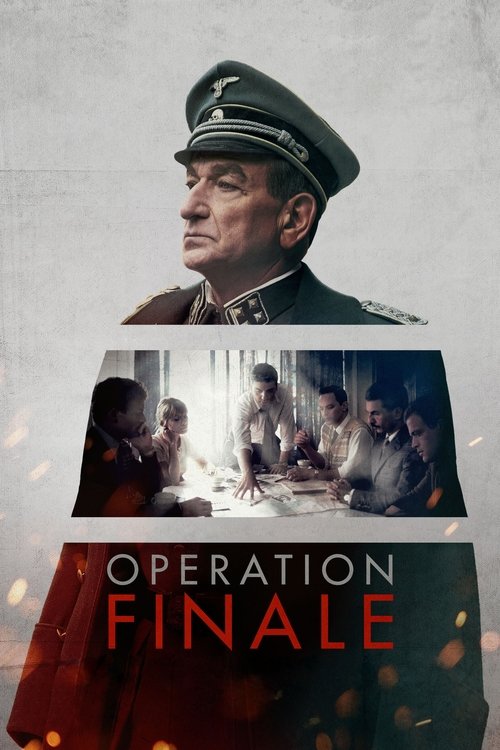
Adolf Eichmann, portrayed by Ben Kingsley, is a key figure in 'Operation Finale.' He was a high-ranking Nazi official responsible for orchestrating the logistics of the Holocaust. The film focuses on his capture by Israeli agents in Argentina, where he lived under a false identity after World War II. Eichmann's character is depicted as both chillingly calm and manipulative, showcasing his attempts to justify his actions during the interrogation.
What motivates Peter Malkin to lead the mission to capture Eichmann?
Peter Malkin, played by Oscar Isaac, is deeply motivated by personal loss and a desire for justice. His family suffered during the Holocaust, and he carries the emotional weight of their deaths. This personal connection drives him to take on the dangerous mission of capturing Eichmann, as he sees it as a way to confront the past and bring a sense of closure to the victims' families.
How does the team plan and execute the capture of Eichmann?
The team, led by Malkin, meticulously plans Eichmann's capture by gathering intelligence on his daily routine. They observe his movements, noting the times he leaves his house and the security measures in place. The operation is tense and fraught with danger, as they must act quickly and decisively to apprehend him without alerting the authorities. The execution of the plan involves a dramatic confrontation where they physically restrain Eichmann and transport him to a safe location.
What is the significance of the relationship between Malkin and Eichmann during the interrogation?
The relationship between Malkin and Eichmann during the interrogation is central to the film's emotional and psychological tension. Malkin attempts to understand Eichmann's mindset, engaging him in conversation to elicit confessions and reveal his true nature. This dynamic showcases Malkin's internal struggle as he grapples with his own anger and the moral implications of confronting a man responsible for immense suffering. Eichmann's calm demeanor and rationalizations further infuriate Malkin, highlighting the clash between victim and perpetrator.
What challenges does the team face while trying to transport Eichmann to Israel?
While transporting Eichmann to Israel, the team faces numerous challenges, including the risk of being discovered by Argentine authorities and the logistical difficulties of moving a high-profile prisoner. Tensions rise as they navigate the streets of Buenos Aires, with the threat of police intervention looming. The emotional strain on the team members is palpable, as they must remain focused and united despite the fear of failure and the potential consequences of their actions.
Is this family friendly?
"Operation Finale," while a historical drama based on real events, contains several elements that may not be suitable for children or sensitive viewers. Here are some potentially objectionable or upsetting aspects:
-
Themes of the Holocaust: The film deals with the aftermath of World War II and the Holocaust, which includes discussions of genocide, persecution, and the impact of these events on survivors and their families.
-
Violence and Threats: There are scenes depicting violence, including threats of physical harm, which may be distressing. The tension in the film often escalates to moments of danger.
-
Emotional Trauma: Characters experience significant emotional pain and trauma related to their pasts, including loss and suffering, which may be heavy for younger audiences to process.
-
Confrontational Dialogues: The film features intense conversations that reveal deep-seated hatred and moral dilemmas, which may be unsettling for some viewers.
-
Mature Themes: The narrative explores complex themes of justice, revenge, and morality, which may require a level of maturity to fully understand and appreciate.
Overall, while the film is a poignant historical account, its serious themes and emotional weight may not be appropriate for all audiences, particularly children.








