







Popular
What motivates Black Adam to return and confront Shazam in the movie?
How does Billy Batson transform into Shazam, and what are the implications of this transformation?
What role does Superman play in the conflict between Shazam and Black Adam?
What is the significance of the Wizard Shazam in the story, and how does he influence the events?
How does the relationship between Billy Batson and his foster family impact his character development?
Should I watch it?
Ask Your Own Question

What is the plot?
Sorry, we aren't able to watch and write up a full detailed plot yet. Check back in a few days.

What is the ending?
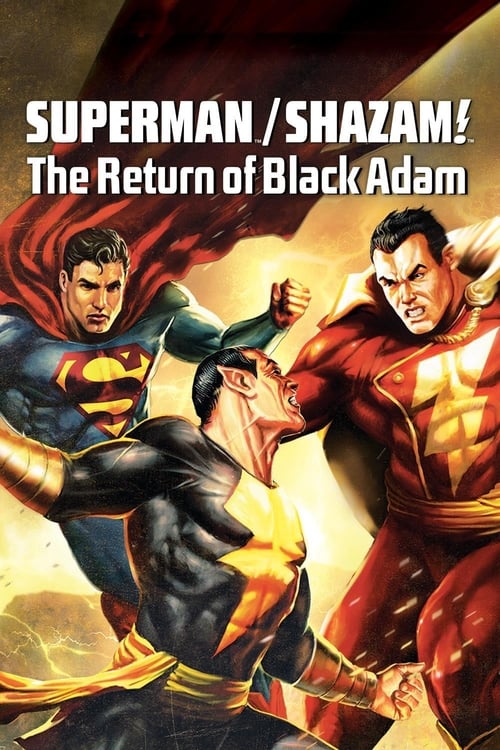
In the ending of "Superman/Shazam!: The Return of Black Adam," Billy Batson, as Shazam, confronts Black Adam in a climactic battle. With the help of Superman, they manage to defeat Black Adam, who is ultimately imprisoned. Billy learns the importance of responsibility and heroism, while Superman reassures him of his potential as a hero.
As the battle concludes, Black Adam is captured and taken away, and Billy embraces his role as Shazam, understanding the weight of his powers. The film ends on a hopeful note, with Billy looking forward to his future as a hero.
As the climax of "Superman/Shazam!: The Return of Black Adam" unfolds, the scene is set in a desolate area where the final confrontation between Shazam and Black Adam takes place. The air is thick with tension, and the ground trembles as the two powerful beings prepare to clash. Billy Batson, transformed into Shazam, stands resolute, his youthful face reflecting both determination and fear. He knows that the fate of the world hangs in the balance, and the weight of his newfound powers presses heavily on his shoulders.
Superman arrives, soaring through the sky with an aura of confidence and strength. He lands beside Shazam, offering a reassuring nod. The camaraderie between the two heroes is palpable; Superman embodies the experience and wisdom that Billy is still learning to grasp. Together, they face Black Adam, who stands defiantly, his eyes burning with rage and ambition. The dark energy surrounding him crackles ominously, a stark contrast to the bright, hopeful light that Shazam and Superman represent.
The battle erupts with a ferocity that shakes the very ground beneath them. Shazam and Superman launch into action, their powers colliding with Black Adam's formidable strength. The visuals are stunning, with bursts of energy illuminating the dark sky as they exchange blows. Billy, still grappling with his identity as a hero, feels the thrill of battle but also the fear of failure. He recalls the lessons he learned about responsibility and the importance of using his powers for good.
As the fight intensifies, Black Adam taunts them, revealing his disdain for their ideals. He believes that power should be wielded without restraint, and his arrogance fuels his attacks. Shazam, however, channels his inner strength, remembering the people he wants to protect. With Superman's guidance, he begins to understand that true heroism is not just about power but about making the right choices.
In a pivotal moment, Shazam finds the courage to stand up to Black Adam. He unleashes a powerful bolt of lightning, a manifestation of his resolve and newfound understanding of his role as a hero. The energy surges through him, and he feels a connection to the magic that grants him his powers. With Superman's support, they combine their strengths, launching a final, devastating attack against Black Adam.
The explosion of energy is blinding, and when the dust settles, Black Adam is defeated, lying on the ground, weakened and vulnerable. The once-mighty villain is captured, his fate sealed as he is taken away by authorities. The scene is heavy with the weight of victory, but also with the understanding of the responsibility that comes with power.
As the dust clears, Billy Batson reverts to his human form, standing beside Superman. The emotional weight of the battle hangs in the air, but there is a sense of relief and triumph. Superman places a reassuring hand on Billy's shoulder, acknowledging his bravery and growth. Billy's face reflects a mix of exhaustion and newfound confidence; he has faced a formidable foe and emerged stronger.
The film concludes with a hopeful tone. Billy, now fully embracing his identity as Shazam, looks toward the future with optimism. He understands that being a hero is a journey filled with challenges, but he is ready to face them. Superman, a mentor and friend, stands beside him, symbolizing the bond they have forged through their shared experiences.
In the end, Billy Batson has not only defeated Black Adam but has also discovered the essence of heroism. He is no longer just a boy with powers; he is Shazam, a hero in his own right, ready to take on whatever challenges lie ahead. The screen fades to black, leaving the audience with a sense of hope and the promise of new adventures to come.
Is there a post-credit scene?
In "Superman/Shazam!: The Return of Black Adam," there is no post-credit scene. The film concludes with the resolution of the main conflict between Shazam, Superman, and Black Adam, focusing on the themes of heroism, friendship, and the responsibilities that come with great power. The story wraps up without any additional scenes or teasers that would typically be found in post-credit sequences. The film ends on a note that emphasizes the bond between Shazam and Superman, leaving the audience with a sense of closure regarding the characters' journeys.
What motivates Black Adam to return and confront Shazam in the movie?
Black Adam's return is driven by his desire for revenge and power. He seeks to reclaim his status and eliminate Shazam, whom he sees as a threat to his ambitions. His anger is fueled by his past experiences and the injustices he faced, leading him to believe that he must assert his dominance over those he perceives as weaker.
How does Billy Batson transform into Shazam, and what are the implications of this transformation?
Billy Batson transforms into Shazam by uttering the magic word 'Shazam.' This transformation grants him incredible powers, including super strength, speed, and the ability to generate lightning. However, it also brings a sense of responsibility and the burden of being a hero, which Billy struggles to fully comprehend as he navigates his dual identity.
What role does Superman play in the conflict between Shazam and Black Adam?
Superman acts as a mentor and ally to Shazam throughout the conflict. He provides guidance and support, helping Billy understand the weight of his powers and the importance of using them wisely. Superman's presence also serves as a counterbalance to Black Adam's malevolence, showcasing the stark contrast between heroism and villainy.
What is the significance of the Wizard Shazam in the story, and how does he influence the events?
The Wizard Shazam is a pivotal character who grants Billy his powers. He represents wisdom and the legacy of magic, emphasizing the importance of choosing a worthy champion. His influence is felt throughout the story as he guides Billy in understanding his abilities and the moral implications of wielding such power, ultimately shaping Billy's journey as a hero.
How does the relationship between Billy Batson and his foster family impact his character development?
Billy's relationship with his foster family is central to his character development. Their support and love provide him with a sense of belonging and stability, which he initially lacks. This connection motivates him to fight for justice and protect those he cares about, highlighting the theme of family and the importance of personal connections in shaping one's identity as a hero.
Is this family friendly?
"Superman/Shazam!: The Return of Black Adam" is generally considered family-friendly, but it does contain some scenes that may be potentially objectionable or upsetting for children or sensitive viewers. Here are a few aspects to consider:
-
Violence: There are several action sequences that involve fighting, with characters using their powers against one another. While not excessively graphic, the intensity of the battles may be alarming to younger viewers.
-
Dark Themes: The film explores themes of power, responsibility, and the consequences of one's actions, particularly through the character of Black Adam, who has a morally ambiguous nature. This may be complex for younger audiences to fully grasp.
-
Character Deaths: There are moments that imply danger and the potential for character deaths, which could be distressing for sensitive viewers.
-
Emotional Conflict: Characters experience moments of fear, anger, and betrayal, which may evoke strong emotions. The internal struggles of Shazam and the darker motivations of Black Adam could be unsettling for some.
-
Supernatural Elements: The film includes magical and supernatural themes, which might be frightening for younger children, especially in the context of Black Adam's powers and his connection to ancient mythology.
Overall, while the film is designed for a younger audience, these elements may warrant parental guidance for children or those who are particularly sensitive to such themes.








