

































Popular
What role does Sir Walter Raleigh play in Elizabeth's life and how does their relationship develop throughout the film?
How does the film depict the conflict between Elizabeth I and Mary, Queen of Scots?
What is the significance of the Spanish Armada in the film, and how does it affect Elizabeth's reign?
How does Elizabeth's character evolve throughout the film, particularly in her approach to love and power?
What are the key moments that illustrate Elizabeth's struggle with her identity as a female ruler in a male-dominated society?
Should I watch it?
Ask Your Own Question

What is the plot?
Sorry, we aren't able to watch and write up a full detailed plot yet. Check back in a few days.






What is the ending?
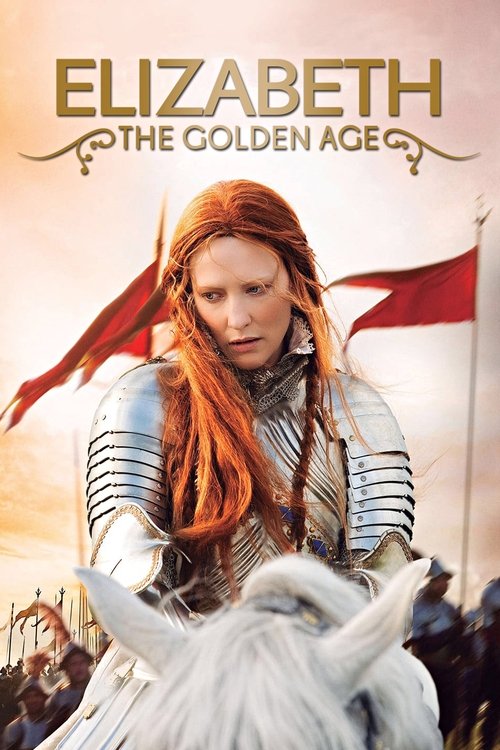
In the ending of "Elizabeth: The Golden Age," Queen Elizabeth I faces the threat of the Spanish Armada while grappling with her feelings for Sir Walter Raleigh. The film concludes with Elizabeth rallying her troops, showcasing her strength as a leader. Ultimately, the Armada is defeated, and Elizabeth solidifies her reign, embracing her role as the "Virgin Queen." Sir Walter Raleigh, having been imprisoned for his secret marriage, is left in a state of uncertainty regarding his future with Elizabeth.
As the film approaches its climax, the tension escalates with the looming threat of the Spanish Armada. The scene opens with a dark, stormy sky over the English Channel, symbolizing the impending conflict. Queen Elizabeth I, portrayed with a mix of determination and vulnerability, stands on the battlements of her castle, gazing out at the horizon. Her advisors surround her, their faces etched with concern as they discuss the imminent invasion. Elizabeth, however, remains resolute, embodying the spirit of her nation.
In a pivotal moment, Elizabeth addresses her troops, clad in her regal armor, her voice steady and commanding. She speaks of honor, duty, and the love she holds for her country, igniting a fire in the hearts of her soldiers. The camera captures the fierce determination in her eyes, reflecting her internal struggle between her personal desires and her responsibilities as a monarch. The soldiers, inspired by her words, rally behind her, ready to defend their queen and their homeland.
Meanwhile, Sir Walter Raleigh, who has been imprisoned due to his secret marriage to Elizabeth Throckmorton, is shown in a dimly lit cell, grappling with his fate. His love for Elizabeth is palpable, yet he understands the political ramifications of their relationship. As the news of the Armada's approach reaches him, he is filled with a sense of urgency, longing to fight for his queen and his country, even as he faces the consequences of his actions.
The scene shifts to the naval battle, where the English fleet, led by Lord Howard, engages the Spanish Armada. The chaos of war unfolds with cannon fire, smoke, and the cries of men. Elizabeth watches from the shore, her heart heavy with the weight of her decisions. The cinematography captures the intensity of the battle, juxtaposing the violence of war with Elizabeth's unwavering resolve.
As the tide of battle turns, the English forces, aided by fierce storms, begin to gain the upper hand. The Spanish ships, once a formidable force, are seen struggling against the elements, their sails torn and their crews in disarray. Elizabeth's expression shifts from anxiety to triumph as she realizes that her people are prevailing against the odds.
In the aftermath of the battle, the scene transitions back to the castle, where Elizabeth stands alone in her chamber, reflecting on the cost of victory. The weight of her crown feels heavier than ever, as she contemplates the sacrifices made for her reign. The camera lingers on her face, capturing the mix of relief and sorrow that defines her as a ruler.
The final moments of the film reveal the fate of the main characters. Sir Walter Raleigh, still imprisoned, is brought before Elizabeth. Their eyes meet, and in that moment, a silent understanding passes between them. Elizabeth, now fully embracing her identity as the "Virgin Queen," chooses her duty over her personal desires. She tells Raleigh that they cannot be together, solidifying her commitment to her role as a monarch. Raleigh, though heartbroken, nods in acceptance, understanding the weight of her decision.
The film concludes with Elizabeth standing alone in her grand hall, adorned in her regal attire, a symbol of strength and resilience. As she gazes into the distance, the camera pulls back, revealing the vastness of her kingdom. The final shot encapsulates her legacy, a queen who has triumphed against adversity, yet remains forever bound by the sacrifices of her crown. The screen fades to black, leaving the audience with a sense of the enduring complexities of power, love, and duty.
Is there a post-credit scene?
The movie "Elizabeth: The Golden Age," produced in 2007, does not have a post-credit scene. The film concludes with a powerful and emotional ending that encapsulates the themes of sacrifice, duty, and the complexities of Elizabeth I's reign. After the climactic battle against the Spanish Armada, the film ends with Elizabeth reflecting on her role as a monarch and the personal sacrifices she has made for her country. The absence of a post-credit scene allows the audience to fully absorb the weight of her decisions and the historical significance of her reign.
What role does Sir Walter Raleigh play in Elizabeth's life and how does their relationship develop throughout the film?
Sir Walter Raleigh, portrayed by Clive Owen, is introduced as a charismatic and adventurous figure who captures Queen Elizabeth I's interest. Their relationship begins with a flirtatious exchange, where Raleigh presents Elizabeth with a gift of tobacco, symbolizing his boldness and charm. As the film progresses, Raleigh becomes a trusted advisor and a romantic interest for Elizabeth, representing both the allure of new worlds and the dangers of political intrigue. Their bond deepens as they share intimate moments, but it is also fraught with tension due to Raleigh's ambitions and the political ramifications of their relationship.
How does the film depict the conflict between Elizabeth I and Mary, Queen of Scots?
The conflict between Elizabeth I and Mary, Queen of Scots, is central to the film's narrative. Mary, portrayed by Samantha Morton, is depicted as a rival claimant to the English throne, which creates a palpable tension. The film illustrates Elizabeth's internal struggle as she grapples with her duty as a monarch and her personal feelings towards Mary. The emotional weight of their relationship is highlighted during their meeting, where Elizabeth expresses both sympathy and the necessity of political action. Ultimately, the film portrays Elizabeth's decision to execute Mary as a tragic but necessary act to secure her reign, showcasing the heavy burden of leadership.
What is the significance of the Spanish Armada in the film, and how does it affect Elizabeth's reign?
The Spanish Armada serves as a pivotal plot element in 'Elizabeth: The Golden Age,' symbolizing the external threats to Elizabeth's rule. The film builds tension as Spain, led by King Philip II, prepares to invade England, viewing Elizabeth as an illegitimate ruler. The depiction of the Armada's approach creates a sense of impending doom, and Elizabeth's resolve is tested. The climax of the film features the naval battle, where Elizabeth's forces, despite being outnumbered, demonstrate courage and ingenuity. The defeat of the Armada is portrayed as a turning point that solidifies Elizabeth's power and enhances her status as a formidable leader.
How does Elizabeth's character evolve throughout the film, particularly in her approach to love and power?
Throughout 'Elizabeth: The Golden Age,' Elizabeth I, played by Cate Blanchett, undergoes significant character development. Initially, she is portrayed as a young queen torn between her desire for love and the demands of her position. Her relationship with Raleigh ignites her romantic aspirations, yet she is acutely aware of the political implications of such a union. As the film progresses, Elizabeth becomes more resolute in her role as a monarch, ultimately choosing to prioritize her duty over personal desires. This evolution is poignantly captured in her declaration that she is married to her country, showcasing her transformation into a powerful and independent ruler.
What are the key moments that illustrate Elizabeth's struggle with her identity as a female ruler in a male-dominated society?
Key moments in the film highlight Elizabeth's struggle with her identity as a female ruler. One significant scene occurs during a council meeting where male advisors question her decisions, challenging her authority. Elizabeth's response is fierce, asserting her right to rule and her capability as a leader. Another poignant moment is when she confronts the societal expectations of marriage and motherhood, ultimately rejecting them in favor of her sovereignty. The film also depicts her isolation, as she navigates the treacherous waters of court politics, often feeling the weight of her gender in a world dominated by men. These moments collectively illustrate her resilience and determination to define her own identity as a queen.
Is this family friendly?
"Elizabeth: The Golden Age" is a historical drama that contains several elements that may not be suitable for children or sensitive viewers. Here are some potentially objectionable or upsetting aspects:
-
Violence and War: The film depicts scenes of naval battles and warfare, including the destruction of ships and the loss of life, which may be intense for younger audiences.
-
Death and Betrayal: There are moments that involve themes of betrayal and the consequences of political intrigue, including the execution of characters, which can be emotionally heavy.
-
Romantic Tension: The film explores complex romantic relationships, including infidelity and unrequited love, which may be confusing or inappropriate for younger viewers.
-
Religious Conflict: The backdrop of religious strife between Catholics and Protestants is a significant theme, and some scenes may depict the tension and violence associated with these conflicts.
-
Emotional Turmoil: Characters experience significant emotional distress, including fear, loneliness, and the burden of leadership, which may be intense for sensitive viewers.
These elements contribute to the film's mature themes and may not be suitable for all audiences, particularly children.