























Popular
What is the significance of the character Thomas Miller in the story?
How does the character of the headmistress, Miss Rocholl, influence the plot?
What role do the students at the school play in the development of the story?
What is the significance of the setting in Germany during the 1930s?
How does the character of the German officer, who interacts with Miller, affect the story's tension?
Should I watch it?
Ask Your Own Question

What is the plot?
Sorry, we aren't able to watch and write up a full detailed plot yet. Check back in a few days.








What is the ending?
In the ending of "Six Minutes to Midnight," the protagonist, Thomas Miller, confronts the truth about the school and its students. He manages to expose the sinister plans of the Nazis, leading to a dramatic confrontation. The film concludes with a sense of unresolved tension, as the characters face the consequences of their actions amidst the backdrop of impending war.
Now, let's delve into the ending in a more detailed narrative fashion.
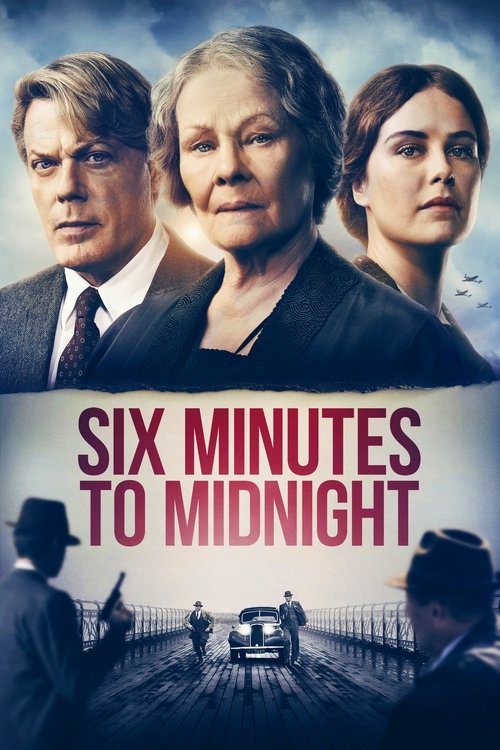
As the climax unfolds, Thomas Miller, portrayed by Eddie Izzard, finds himself in a tense standoff at the boarding school for girls in Bexhill-on-Sea. The atmosphere is thick with anxiety as he races against time to uncover the truth about the students, who are being groomed for a future aligned with Nazi ideology. The clock is ticking, symbolizing the urgency of the situation, with only six minutes left before a significant event that could change everything.
In the dimly lit hallways of the school, Thomas encounters the headmistress, Miss Rocholl, played by Judi Dench. She embodies the conflict between loyalty to her country and the moral implications of her actions. Their conversation is fraught with tension, as Thomas presses her for answers about the true nature of the school and its connection to the Nazi regime. Miss Rocholl's internal struggle is palpable; she is torn between her duty and the realization of the dangerous path they are on.
Meanwhile, the students, who initially appear to be innocent and naive, are revealed to have been indoctrinated with dangerous ideologies. Thomas's interactions with them highlight their conflicting emotions--some are eager to embrace the future laid out for them, while others, like the character of the young girl, are beginning to question the morality of their education. This internal conflict among the students adds depth to the narrative, showcasing the impact of war on the younger generation.
As the climax reaches its peak, Thomas discovers a hidden agenda involving the students and their potential roles in the Nazi regime. He races to gather evidence, knowing that exposing this truth is crucial to preventing a larger catastrophe. The urgency of his mission is underscored by the ticking clock, which serves as a constant reminder of the impending danger.
In a final confrontation, Thomas confronts the Nazi officials who have infiltrated the school. The tension escalates as he fights to protect the students and reveal the truth. The scene is charged with emotion, as Thomas's determination to save the girls becomes a powerful testament to his character. He embodies the struggle against tyranny, risking everything to stand up for what is right.
As the dust settles, the fate of the main characters becomes clear. Thomas, having successfully exposed the sinister plans, faces the consequences of his actions. He is left with a sense of victory, but it is bittersweet, as he knows the war is far from over. Miss Rocholl, having been confronted with the reality of her choices, is left to grapple with her complicity in the system. The students, now aware of the truth, are faced with a daunting future, caught between the ideologies they were taught and the reality of the world around them.
The film concludes with a lingering sense of uncertainty, as the characters are left to navigate the complexities of their choices in a world on the brink of war. The final moments serve as a poignant reminder of the impact of ideology on individual lives, leaving the audience to reflect on the moral dilemmas faced by each character.
Is there a post-credit scene?
The movie "Six Minutes to Midnight," produced in 2020, does not have a post-credit scene. The film concludes its narrative without any additional scenes or content after the credits roll. The story wraps up with a focus on the resolution of the main plot and the fates of the characters involved, leaving no further developments or cliffhangers for the audience to ponder after the film ends.
What is the significance of the character Thomas Miller in the story?
Thomas Miller, played by Eddie Izzard, is a pivotal character who serves as a British teacher at a girls' school in Germany just before World War II. His motivations are deeply tied to his past and his desire to protect the students from the looming threat of the Nazi regime. As the story unfolds, Miller's internal conflict grows as he grapples with his role in a dangerous political landscape, ultimately revealing his commitment to safeguarding the girls, who are the daughters of high-ranking Nazi officials.
How does the character of the headmistress, Miss Rocholl, influence the plot?
Miss Rocholl, portrayed by Judi Dench, is the headmistress of the school and plays a crucial role in the narrative. Her character embodies the tension between loyalty to the Nazi regime and the moral imperative to protect her students. As the story progresses, her decisions and interactions with Miller highlight the complexities of her position, as she navigates the dangers of the political climate while trying to maintain the safety and well-being of the girls under her care.
What role do the students at the school play in the development of the story?
The students at the school, primarily the daughters of Nazi officials, are central to the plot as they represent both innocence and the potential for future conflict. Their interactions with Miller reveal their varying degrees of awareness about the political situation and their own identities. As Miller forms bonds with them, the stakes rise, and the audience witnesses the impact of the impending war on their lives, which adds emotional depth to the narrative.
What is the significance of the setting in Germany during the 1930s?
The setting of Germany in the 1930s is crucial to the story, as it provides a backdrop of rising tension and impending war. The atmosphere is charged with fear and uncertainty, which is reflected in the characters' actions and decisions. The juxtaposition of the seemingly idyllic school environment against the harsh realities of the political climate amplifies the stakes for Miller and the students, creating a sense of urgency and foreboding that drives the plot forward.
How does the character of the German officer, who interacts with Miller, affect the story's tension?
The German officer, played by a character whose presence looms large over the narrative, serves as a constant reminder of the oppressive regime and the dangers that Miller faces. His interactions with Miller are fraught with tension, as they represent the conflict between duty and morality. The officer's suspicions and actions create a palpable sense of danger, pushing Miller to make increasingly desperate choices to protect the girls, thereby heightening the stakes and emotional intensity of the story.
Is this family friendly?
"Six Minutes to Midnight" is a historical drama set in 1939, and while it does not contain explicit content, there are several elements that may be considered objectionable or upsetting for children or sensitive viewers.
-
Themes of War and Tension: The film is set against the backdrop of impending World War II, which may be distressing for younger audiences due to its themes of conflict and the atmosphere of fear and uncertainty.
-
Political Intrigue: The story involves espionage and political manipulation, which may be complex and unsettling for younger viewers to understand.
-
Violence and Threats: There are scenes that depict violence or the threat of violence, including confrontations that may evoke feelings of danger or anxiety.
-
Emotional Turmoil: Characters experience significant emotional distress, including fear, betrayal, and moral dilemmas, which could be intense for sensitive viewers.
-
Historical Context: The film touches on the rise of fascism and the impact of Nazi ideology, which may be disturbing for some audiences, especially younger viewers who may not be familiar with this historical context.
Overall, while the film does not contain graphic violence or explicit content, its themes and emotional weight may not be suitable for all children or sensitive individuals.







