







Popular
What specific challenges did the Apollo 11 crew face during the launch?
How did Neil Armstrong and Buzz Aldrin prepare for the lunar landing?
What were the key moments during the lunar landing sequence?
What role did Michael Collins play during the mission?
How did the crew communicate with Mission Control during the mission?
Should I watch it?
Ask Your Own Question

What is the plot?
Sorry, we aren't able to watch and write up a full detailed plot yet. Check back in a few days.
More Movies Like This
Browse All Movies →









What is the ending?
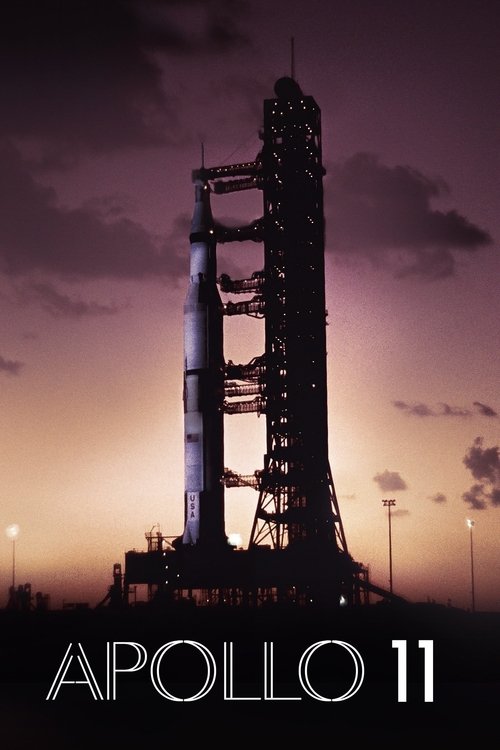
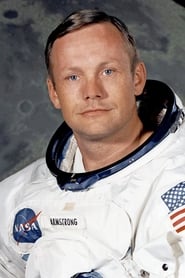
In the ending of the movie "Apollo 11," the astronauts Neil Armstrong, Buzz Aldrin, and Michael Collins successfully complete their historic mission to the Moon. Armstrong and Aldrin land on the lunar surface, where Armstrong takes his famous first step, declaring, "That's one small step for [a] man, one giant leap for mankind." After conducting experiments and collecting samples, they return to the lunar module and reunite with Collins in the command module. The mission concludes with a safe splashdown in the Pacific Ocean, marking a triumphant achievement for NASA and the United States.
As the film progresses toward its conclusion, the tension builds as the lunar module, named Eagle, descends toward the Moon's surface. The scene is filled with the sounds of the spacecraft's systems and the astronauts' voices, showcasing their focus and determination. Neil Armstrong, the mission commander, is calm yet aware of the gravity of the moment. Buzz Aldrin, the lunar module pilot, assists him, both men fully aware that they are about to make history.
The lunar module touches down on July 20, 1969, in the Sea of Tranquility. The moment is electric, filled with anticipation and anxiety. Armstrong's voice crackles through the radio, announcing, "Houston, Tranquility Base here. The Eagle has landed." The control room erupts in cheers, a mix of relief and joy flooding the faces of the mission control team. The film captures the emotional weight of this achievement, showing the dedication and hard work of countless individuals who contributed to the mission.
As Armstrong prepares to exit the lunar module, the camera focuses on his face, revealing a mix of excitement and solemnity. He steps onto the lunar surface, and the iconic moment unfolds as he utters his famous line. The desolate beauty of the Moon surrounds him, and the Earth looms in the background, a distant blue marble. Aldrin joins him shortly after, and together they plant the American flag, a symbol of their achievement and a testament to human exploration.
After spending time conducting experiments and collecting lunar samples, the astronauts return to the lunar module. The emotional weight of their accomplishment is palpable as they prepare to leave the Moon. Meanwhile, Michael Collins orbits above in the command module, waiting for their return. His role, though less visible, is crucial, and the film emphasizes the teamwork and collaboration that made the mission possible.
The lunar module ascends from the Moon, and the reunion with Collins is filled with relief and camaraderie. The three astronauts share a moment of triumph, knowing they have achieved what many thought impossible. The film captures their joy and the bond formed through their shared experience.
As the mission concludes, the spacecraft re-enters Earth's atmosphere, and the tension builds once more. The visuals of the fiery re-entry are striking, showcasing the risks involved in space travel. The astronauts' fate hangs in the balance as they approach the ocean for splashdown.
Finally, the command module splashes down in the Pacific Ocean, and the crew is safely recovered by a Navy ship. The film closes with scenes of the astronauts being welcomed back as heroes, their faces reflecting a mix of exhaustion and elation. The mission is celebrated not just as a victory for NASA but as a monumental achievement for humanity, showcasing the spirit of exploration and the power of teamwork. Each astronaut returns to Earth, forever changed by their journey, having made history together.
Is there a post-credit scene?
The movie "Apollo 11," produced in 2019, does not contain a post-credit scene. The film is a documentary that focuses on the historic Apollo 11 mission, showcasing the journey of astronauts Neil Armstrong, Buzz Aldrin, and Michael Collins as they travel to the Moon and back. It features a wealth of archival footage and audio recordings, immersing viewers in the experience of the mission without any fictional elements or additional scenes after the credits. The film concludes with the successful return of the astronauts, emphasizing the monumental achievement of landing on the Moon and the impact it had on humanity.
What specific challenges did the Apollo 11 crew face during the launch?
The Apollo 11 crew faced several challenges during the launch, including the intense pressure of the countdown, the need for precise timing in the ignition of the Saturn V rocket's engines, and the potential for technical malfunctions. The crew, consisting of Neil Armstrong, Buzz Aldrin, and Michael Collins, had to remain focused and calm as they experienced the powerful thrust of the rocket lifting them into space.
How did Neil Armstrong and Buzz Aldrin prepare for the lunar landing?
Neil Armstrong and Buzz Aldrin prepared for the lunar landing through extensive simulations and training exercises. They practiced landing maneuvers in simulators that replicated the lunar module's controls and the moon's surface conditions. Their emotional state was a mix of excitement and anxiety, knowing that they were about to undertake a historic mission that had never been accomplished before.
What were the key moments during the lunar landing sequence?
During the lunar landing sequence, key moments included the initial descent when Armstrong took manual control of the lunar module to avoid boulders and craters, the tension as they approached the surface with limited fuel, and the final seconds before touchdown when Armstrong's calm voice announced, 'Contact light.' The emotional weight of these moments was palpable, as the crew realized they were about to make history.
What role did Michael Collins play during the mission?
Michael Collins played a crucial role as the command module pilot, remaining in lunar orbit while Armstrong and Aldrin descended to the moon's surface. His emotional state was one of solitude and responsibility, as he monitored the systems and maintained communication with both the lunar module and Mission Control, ensuring the safety of his crewmates.
How did the crew communicate with Mission Control during the mission?
The crew communicated with Mission Control using radio transmissions, which were critical for receiving instructions and updates. The emotional tone of these communications varied from technical discussions to moments of tension, especially during the landing phase when every second counted, and the crew relied on the guidance and support from the ground team.
Is this family friendly?
"Apollo 11" (2019) is a documentary film that chronicles the historic moon landing mission through archival footage and audio recordings. It is generally considered family-friendly, as it focuses on the achievements of NASA and the excitement of space exploration.
However, there are a few aspects that might be potentially objectionable or upsetting for children or sensitive viewers:
-
Tension and Anxiety: The film captures the high-stakes nature of the Apollo 11 mission, including moments of tension during the launch and landing phases. Some viewers may feel anxious during these scenes, especially when the astronauts face challenges.
-
Historical Context: The film includes references to the intense competition of the Space Race and the pressure on NASA, which may be overwhelming for younger viewers who do not fully understand the historical context.
-
Emotional Weight: The film conveys the emotional weight of the mission, including the fears and hopes of the astronauts and their families. Some scenes may evoke feelings of anxiety or sadness, particularly when considering the risks involved in space travel.
Overall, while "Apollo 11" is educational and inspiring, it does contain moments of tension that may require parental guidance for younger audiences.









