

























































Popular
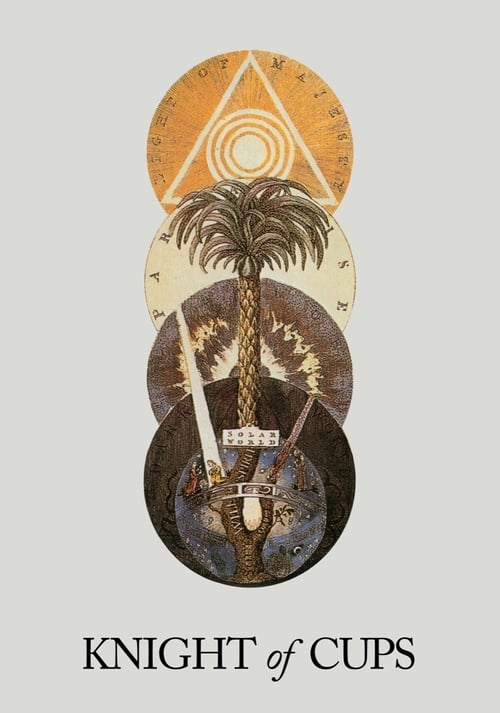
What is the significance of the tarot cards in Knight of Cups?
How does Rick's relationship with his brother affect his character development?
What role do the women in Rick's life play in his journey?
How does the setting of Los Angeles contribute to the film's narrative?
What does Rick's relationship with his father reveal about his character?
Should I watch it?
Ask Your Own Question

What is the plot?
Sorry, we aren't able to watch and write up a full detailed plot yet. Check back in a few days.







What is the ending?
In the ending of "Knight of Cups," Rick, the protagonist, finds himself at a crossroads in his life. After a series of encounters with various women and experiences that reflect his search for meaning, he ultimately confronts his own feelings of emptiness and disconnection. The film concludes with Rick standing on a beach, contemplating his life choices, and he seems to find a moment of clarity and acceptance.
As the film progresses towards its conclusion, Rick, played by Christian Bale, continues his journey through Los Angeles, a city filled with glitz and superficiality. He has been navigating a series of relationships, each one revealing different facets of his emotional state. The film's structure is non-linear, with scenes interspersed that reflect his past, his relationships with his family, and his interactions with various women.
In the final act, Rick visits his brother, who is in a state of despair. This visit is significant as it highlights Rick's own struggles with familial connections and the weight of loss. The conversation is heavy with unspoken words, and Rick's brother's pain resonates with him, prompting a deeper reflection on his own life choices.
Following this, Rick encounters a woman named Elizabeth, who embodies a sense of freedom and spontaneity. Their interaction is charged with a mix of desire and the realization of the fleeting nature of such connections. As they share moments together, Rick is reminded of the emptiness that often follows such encounters, leading him to question the purpose of his pursuits.
The film culminates in a scene where Rick stands on a beach, gazing out at the ocean. The waves crash against the shore, symbolizing the ebb and flow of life. In this moment of solitude, Rick appears to confront his inner turmoil. He reflects on his past relationships, the choices he has made, and the emotional void he has been trying to fill. The imagery of the ocean serves as a metaphor for the vastness of his experiences and the depth of his feelings.
As the film closes, Rick's fate is left somewhat ambiguous. He does not find a definitive answer to his quest for meaning, but there is a sense of acceptance in his demeanor. The final moments suggest that while he may not have resolved all his conflicts, he has gained a clearer understanding of himself and his place in the world.
The other main characters, such as his brother and the various women he encounters, remain in their own states of unresolved conflict. His brother continues to grapple with his despair, while the women represent different aspects of Rick's search for connection, each leaving him with a sense of longing rather than fulfillment.
In summary, the ending of "Knight of Cups" encapsulates Rick's journey of self-discovery, highlighting the complexities of human relationships and the search for meaning in a world filled with distractions and superficiality.
Is there a post-credit scene?
The movie "Knight of Cups," directed by Terrence Malick, does not have a post-credit scene. The film concludes with its final moments, leaving the audience with a sense of introspection and ambiguity, reflective of the themes explored throughout the narrative. The focus remains on the protagonist, Rick, as he navigates his existential journey, relationships, and the search for meaning in a visually poetic manner. The absence of a post-credit scene aligns with the film's contemplative nature, emphasizing the emotional and philosophical questions raised rather than providing additional narrative closure.
What is the significance of the tarot cards in Knight of Cups?
The tarot cards in Knight of Cups serve as a symbolic framework for the protagonist, Rick, played by Christian Bale. Each card represents different aspects of his life and emotional journey, guiding him through his experiences and relationships. The recurring imagery of the tarot reflects Rick's search for meaning and connection in a world filled with superficiality.
How does Rick's relationship with his brother affect his character development?
Rick's relationship with his brother, who is deceased, profoundly impacts his emotional state throughout the film. The loss of his brother creates a sense of guilt and longing within Rick, driving him to seek solace in various relationships and experiences. This unresolved grief manifests in his interactions, highlighting his struggle to find purpose and closure.
What role do the women in Rick's life play in his journey?
The women in Rick's life, including his ex-wife, various lovers, and acquaintances, represent different facets of desire, love, and disillusionment. Each encounter reveals Rick's internal conflicts and his quest for genuine connection. These relationships often leave him feeling more isolated, emphasizing his emotional turmoil and the emptiness he feels despite the fleeting moments of intimacy.
How does the setting of Los Angeles contribute to the film's narrative?
Los Angeles serves as a vibrant yet hollow backdrop for Rick's journey in Knight of Cups. The city's glamorous yet superficial lifestyle mirrors Rick's own struggles with identity and fulfillment. The contrasting landscapes, from opulent parties to desolate beaches, reflect his internal chaos and the search for authenticity amidst the distractions of fame and fortune.
What does Rick's relationship with his father reveal about his character?
Rick's relationship with his father is strained and complex, revealing deep-seated issues of expectation and disappointment. Their interactions often highlight Rick's feelings of inadequacy and the pressure to conform to his father's ideals. This dynamic adds layers to Rick's character, showcasing his struggle for independence and the desire to break free from familial constraints.
Is this family friendly?
"Knight of Cups" is not considered family-friendly due to its mature themes and content. The film explores complex emotional landscapes and relationships, which may be challenging for children or sensitive viewers.
Potentially objectionable or upsetting aspects include:
-
<strong>Sexual Contentstrong>: The film features numerous scenes depicting sexual encounters and nudity, which may be inappropriate for younger audiences.
-
<strong>Substance Usestrong>: There are instances of drug and alcohol use, reflecting a hedonistic lifestyle that may be unsettling for some viewers.
-
<strong>Emotional Turmoilstrong>: The protagonist experiences deep existential crises, feelings of loss, and disconnection, which could be distressing for sensitive viewers.
-
<strong>Themes of Isolation and Despairstrong>: The narrative delves into themes of loneliness and the search for meaning, which may resonate negatively with some audiences.
-
<strong>Violent Imagerystrong>: While not graphic, there are moments that evoke a sense of violence or emotional distress that could be upsetting.
Overall, the film's exploration of adult themes and its abstract narrative style may not be suitable for children or those seeking lighthearted content.









