











Popular
Who is the main character in The Last Emperor and what is his significance?
What role does the Forbidden City play in Pu Yi's life?
How does Pu Yi's relationship with his tutors influence his character development?
What is the significance of Pu Yi's marriage to Wanrong?
How does the film depict the impact of historical events on Pu Yi's life?
Should I watch it?
Ask Your Own Question

What is the plot?
Sorry, we aren't able to watch and write up a full detailed plot yet. Check back in a few days.
More Movies Like This
Browse All Movies →



What is the ending?
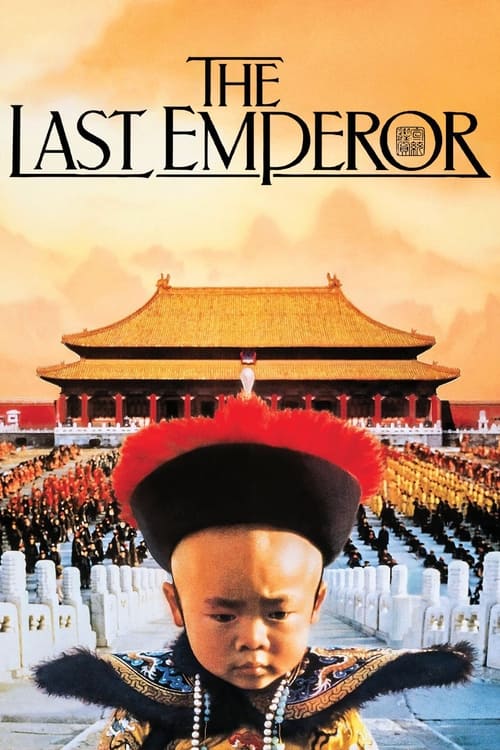
In the ending of "The Last Emperor," Puyi, the last emperor of China, reflects on his life after being released from prison. He finds himself in a new world, having lost his royal status and the power that came with it. The film concludes with Puyi's acceptance of his past and his new identity as a common man.
As the film approaches its conclusion, we see Puyi in a prison cell, where he has been held for his past as a puppet emperor. The scene is somber, with the stark walls of the cell reflecting his isolation. Puyi is released from prison after serving a decade, and he steps into a world that has drastically changed. The streets of Beijing are bustling with life, a stark contrast to the quiet, controlled environment of the Forbidden City where he once lived.
Puyi is now a man without a title, struggling to find his place in a society that no longer recognizes him as a ruler. He is seen walking through the streets, observing the changes around him with a mixture of nostalgia and confusion. The once-mighty emperor is now just another citizen, and this realization weighs heavily on him.
In a poignant scene, Puyi visits the Forbidden City one last time. The grandeur of the palace is still intact, but it feels empty to him. He walks through the halls, recalling memories of his childhood and the weight of the crown he once wore. The echoes of his past resonate in the silence, and he grapples with the loss of his identity.
The film culminates in a moment of acceptance for Puyi. He is shown working as a gardener, tending to the plants with care. This act symbolizes his transition from a life of privilege to one of humility. He has come to terms with his past, understanding that he cannot change what has happened but can only move forward.
The final scenes depict Puyi's interactions with the people around him. He engages with children, sharing smiles and laughter, which signifies his newfound connection to the world outside the walls of the Forbidden City. The film closes with Puyi reflecting on his life, a man who has experienced the heights of power and the depths of despair, now finding peace in his new existence.
As for the fates of the main characters, Puyi ultimately finds a semblance of peace and acceptance in his life as a common man. His former wife, Wanrong, is tragically lost to her struggles with mental health and addiction, ultimately leading to her death. Puyi's former confidant, the loyal servant, is left behind in the past, a reminder of the life Puyi once led. The film leaves viewers with a sense of closure for Puyi, who, despite his tumultuous journey, learns to embrace his new reality.
Is there a post-credit scene?
The Last Emperor, produced in 1987, does not have a post-credit scene. The film concludes with a poignant ending that encapsulates the life of Puyi, the last Emperor of China, as he reflects on his past and the tumultuous changes that have shaped his identity. The final moments focus on his transformation from a figure of imperial power to a common man, emphasizing themes of loss, redemption, and the passage of time. The film ends without any additional scenes or credits that extend the narrative beyond this conclusion.
Who is the main character in The Last Emperor and what is his significance?
The main character in The Last Emperor is Pu Yi, the last Emperor of China. His significance lies in his unique position as a child emperor who ascended to the throne at the age of three, representing the end of the imperial era in China. His life story reflects the tumultuous changes in Chinese society, as he transitions from a powerful ruler to a puppet of foreign powers and ultimately to a common citizen.
What role does the Forbidden City play in Pu Yi's life?
The Forbidden City serves as both a physical and symbolic representation of Pu Yi's isolation and the constraints of his royal life. As a child, he is confined within its walls, surrounded by opulence yet cut off from the outside world. The grandeur of the Forbidden City contrasts sharply with his later experiences, highlighting his loss of power and freedom as he navigates the political upheaval in China.
How does Pu Yi's relationship with his tutors influence his character development?
Pu Yi's relationship with his tutors, particularly with the stern and traditional tutor, is pivotal in shaping his worldview. They instill in him a sense of duty and the weight of his imperial lineage, but also contribute to his feelings of inadequacy and confusion as he struggles to reconcile his identity as a ruler with the realities of a changing China. This dynamic fosters a deep internal conflict within him.
What is the significance of Pu Yi's marriage to Wanrong?
Pu Yi's marriage to Wanrong, also known as the Empress, is significant as it represents both a personal and political alliance. Initially, it is a union steeped in tradition, but as their relationship develops, it becomes strained due to Pu Yi's emotional detachment and the pressures of their royal status. Wanrong's struggles with her own identity and mental health further reflect the broader themes of loss and disillusionment in Pu Yi's life.
How does the film depict the impact of historical events on Pu Yi's life?
The film intricately weaves historical events, such as the fall of the Qing Dynasty, the rise of the Republic, and the Japanese occupation, into Pu Yi's personal narrative. These events profoundly affect his life trajectory, leading to his eventual abdication, his role as a puppet emperor under Japanese rule, and his later imprisonment. The depiction of these events emphasizes the chaos and transformation of China during the early 20th century, mirroring Pu Yi's own loss of identity and power.
Is this family friendly?
"The Last Emperor," directed by Bernardo Bertolucci, is a visually stunning film that tells the story of Puyi, the last Emperor of China. While it is a historical epic, there are several elements that may be considered objectionable or upsetting for children or sensitive viewers:
-
Violence and War: The film depicts scenes of violence, including the chaos of war and the impact of political upheaval, which may be distressing.
-
Death and Loss: There are moments that involve the death of characters and the emotional weight of loss, which can be heavy and poignant.
-
Sexual Content: The film includes scenes of sexual nature and nudity that may not be appropriate for younger audiences.
-
Themes of Oppression: The narrative explores themes of power, betrayal, and the loss of freedom, which can be complex and potentially upsetting for sensitive viewers.
-
Cultural and Historical Context: The film addresses the harsh realities of life during a tumultuous period in Chinese history, including the impact of colonialism and the struggles of the Chinese people.
These elements contribute to the film's mature themes and emotional depth, making it more suitable for older teens and adults rather than a family-friendly viewing experience.









