


















































Popular
What are the key events that led to Margaret Thatcher becoming the Prime Minister of the United Kingdom?
How does the film depict Margaret Thatcher's relationship with her husband, Denis?
What role does Margaret Thatcher's father play in her early life and political ambitions?
How does the film address Margaret Thatcher's handling of the Falklands War?
What is the significance of the scenes depicting Margaret Thatcher's later life and struggles with dementia?
Should I watch it?
Ask Your Own Question

What is the plot?
Sorry, we aren't able to watch and write up a full detailed plot yet. Check back in a few days.




What is the ending?
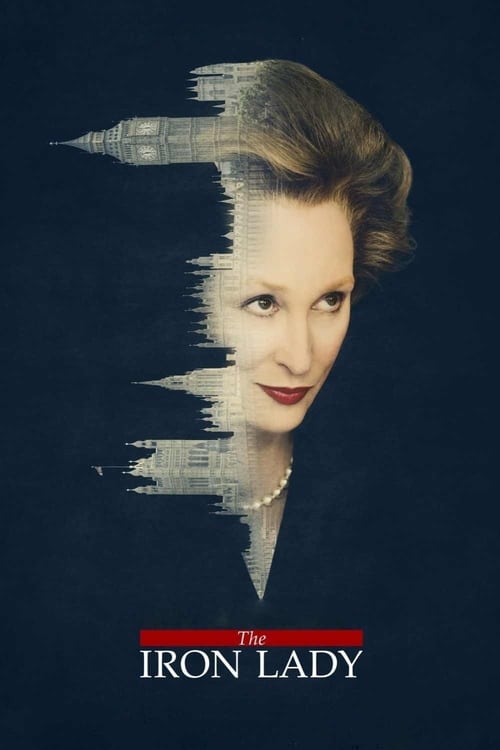
In the ending of "The Iron Lady," Margaret Thatcher, portrayed by Meryl Streep, is seen in her later years, grappling with the effects of dementia. She reflects on her past, particularly her time as Prime Minister, and has visions of her deceased husband, Denis. The film concludes with her accepting her solitude and the memories of her life, leaving a poignant impression of her legacy.
As the film approaches its conclusion, we find ourselves in a quiet, dimly lit room where an elderly Margaret Thatcher sits alone, surrounded by the remnants of her once-vibrant life. The camera captures her frail figure, a stark contrast to the formidable leader she once was. She is lost in thought, her mind drifting between the present and the past, as she struggles with the onset of dementia.
In this poignant moment, she is visited by the ghostly presence of her late husband, Denis, played by Jim Broadbent. He appears to her in a comforting manner, offering reassurance and companionship. Their conversations are tender, filled with warmth and nostalgia, as he encourages her to embrace her memories and the legacy she has left behind. Denis's presence serves as a reminder of the love and support she had throughout her tumultuous political career.
As Margaret reflects on her life, we see flashbacks of her time as Prime Minister, showcasing her rise to power, the challenges she faced, and the decisions that defined her leadership. These memories are interspersed with her current reality, highlighting the stark contrast between her past strength and her present vulnerability. The film captures her internal struggle as she grapples with the weight of her decisions and the impact they had on the nation.
In the final scenes, Margaret is seen walking through her home, touching the objects that hold memories of her life. She pauses at a photograph of her younger self, a moment of recognition and reflection. The film closes with her sitting at a table, looking out the window, as Denis's voice gently encourages her to remember the good times. The screen fades to black, leaving the audience with a sense of both loss and resilience.
The fate of the main characters is intertwined with Margaret's journey. Denis, though deceased, remains a significant presence in her life, symbolizing the enduring bond of love and support. Margaret herself is left to navigate her solitude, facing the reality of her condition while holding onto the memories of her past. The film concludes without a definitive resolution, emphasizing the complexity of her legacy and the personal cost of her political ambitions.
Is there a post-credit scene?
The movie "The Iron Lady," produced in 2011, does not have a post-credit scene. The film concludes with a poignant moment that encapsulates the life and legacy of Margaret Thatcher, portrayed by Meryl Streep. After the main narrative, which interweaves her political career with her personal struggles, the film ends on a reflective note, focusing on Thatcher's later years and her battle with dementia. The absence of a post-credit scene emphasizes the film's somber tone and the weight of Thatcher's historical impact, leaving the audience to contemplate her complex legacy without any additional scenes or commentary.
What are the key events that led to Margaret Thatcher becoming the Prime Minister of the United Kingdom?
The film portrays Margaret Thatcher's rise to power through a series of significant events. It begins with her early political career, highlighting her determination and ambition. Key moments include her election as the leader of the Conservative Party in 1975, her focus on economic reform, and her ability to connect with the public. The film illustrates her challenges, including opposition from within her party and the skepticism of the media, ultimately leading to her becoming the first female Prime Minister in 1979.
How does the film depict Margaret Thatcher's relationship with her husband, Denis?
The film presents a complex and deeply emotional portrayal of Margaret Thatcher's relationship with her husband, Denis. Throughout the narrative, Denis is shown as a supportive partner, often providing encouragement during her political struggles. Their interactions are filled with warmth and humor, showcasing a deep bond. However, as Margaret's political career progresses, the strain of her responsibilities begins to affect their relationship, particularly as Denis's health declines, leading to poignant moments of reflection and sorrow for Margaret.
What role does Margaret Thatcher's father play in her early life and political ambitions?
Margaret Thatcher's father, Alfred Roberts, is depicted as a significant influence in her early life. He is portrayed as a strong, principled man who instilled in her the values of hard work and determination. The film shows flashbacks of her childhood, where her father's political involvement and his role as a grocer shape her understanding of politics and leadership. His encouragement and belief in her capabilities serve as a foundation for her future ambitions, highlighting the impact of her upbringing on her character.
How does the film address Margaret Thatcher's handling of the Falklands War?
The film addresses the Falklands War as a pivotal moment in Margaret Thatcher's premiership. It depicts her decision-making process as she faces the crisis of the Argentine invasion of the Falkland Islands. The tension is palpable as she weighs military options against the potential political fallout. The film illustrates her resolve and determination to reclaim the islands, showcasing her leadership style and the support she receives from her cabinet. The successful outcome of the war is portrayed as a significant boost to her popularity, reinforcing her image as the 'Iron Lady'.
What is the significance of the scenes depicting Margaret Thatcher's later life and struggles with dementia?
The film poignantly portrays Margaret Thatcher's later life, focusing on her struggles with dementia. These scenes are significant as they provide a stark contrast to her earlier, formidable persona. The film captures her moments of confusion and vulnerability, highlighting the emotional toll of her declining health. Through these scenes, the audience witnesses her isolation and the impact of her memories, both cherished and painful. This portrayal adds depth to her character, emphasizing the human side of a woman who was once a powerful political figure.
Is this family friendly?
"The Iron Lady," while a biographical film about Margaret Thatcher, contains several elements that may not be suitable for children or sensitive viewers. Here are some potentially objectionable or upsetting aspects:
-
Death and Grief: The film explores themes of loss, particularly the death of Margaret Thatcher's husband, Denis. Scenes depicting her grief and moments of reflection can be emotionally heavy.
-
Political Conflict: There are depictions of political strife and conflict, including protests and confrontations that may be intense for younger viewers.
-
Mental Health: The film addresses Thatcher's struggles with dementia in her later years, which may be distressing for some viewers, especially those who have experienced similar situations with loved ones.
-
Historical Context: The portrayal of Thatcher's controversial policies and the societal impact of her leadership may include discussions of economic hardship and social unrest, which could be complex and upsetting for younger audiences.
-
Mature Themes: The film touches on themes of power, ambition, and the sacrifices made in pursuit of political success, which may be difficult for children to fully understand.
Overall, while the film is a significant historical portrayal, its emotional depth and mature themes may not be appropriate for all viewers, particularly children.








