



































Popular
What motivates Thomas Edison to pursue the development of electric power?
How does George Westinghouse's approach to electricity differ from Edison's?
What role does Nikola Tesla play in the conflict between Edison and Westinghouse?
How does the rivalry between Edison and Westinghouse escalate throughout the film?
What impact does the 1893 World's Fair have on the competition between Edison and Westinghouse?
Should I watch it?
Ask Your Own Question

What is the plot?
Sorry, we aren't able to watch and write up a full detailed plot yet. Check back in a few days.



What is the ending?
In the ending of "The Current War," Thomas Edison and George Westinghouse reach a resolution in their fierce competition over electrical systems. Edison ultimately loses the battle for dominance in the market, as Westinghouse's alternating current (AC) system becomes the standard for electricity distribution. The film concludes with Edison acknowledging the success of Westinghouse and Nikola Tesla's AC system, while he continues to innovate in other areas. The fate of the characters reflects their struggles and ambitions, with Edison remaining a significant figure in the world of invention, albeit not the victor in this particular conflict.
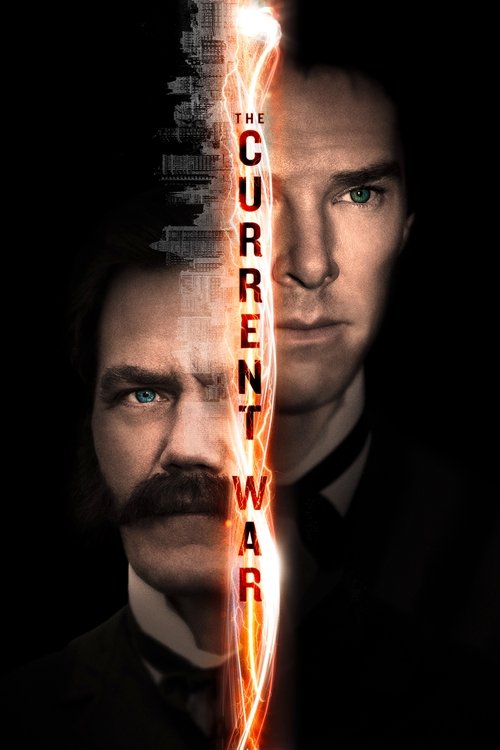
As the film approaches its climax, we find ourselves in the late 1880s, where the tension between Thomas Edison and George Westinghouse has reached a boiling point. The scene opens with Edison, portrayed by Benedict Cumberbatch, in his laboratory, surrounded by the flickering light of his direct current (DC) system. He is determined to prove the superiority of his invention, but the mounting pressure from Westinghouse, played by Michael Shannon, and the growing popularity of alternating current (AC) technology looms over him.
In a pivotal moment, Edison decides to demonstrate the dangers of AC by staging public electrocutions of animals, including a notorious event where he electrocutes an elephant named Topsy. This gruesome display is intended to instill fear in the public about the safety of Westinghouse's system. The scene is dark and unsettling, showcasing Edison's desperation and willingness to go to extreme lengths to protect his legacy.
Meanwhile, Westinghouse is shown working tirelessly to promote his AC system, which is gaining traction due to its efficiency and ability to transmit electricity over long distances. He is depicted as a man of integrity, genuinely believing in the potential of his invention to improve lives. The emotional weight of his struggle is palpable as he faces not only the competition from Edison but also the financial challenges of bringing his vision to fruition.
As the narrative unfolds, we witness the pivotal moment of the 1893 World's Fair in Chicago, where Westinghouse is awarded the contract to power the event using his AC system. The fair becomes a turning point, showcasing the brilliance of AC technology to the public. The scene is vibrant and filled with excitement, as crowds marvel at the illuminated fairgrounds, a stark contrast to Edison's dark tactics.
In the final scenes, Edison is seen grappling with the reality of his defeat. He acknowledges the success of Westinghouse and Tesla's AC system, realizing that the future of electricity lies in their hands. The film closes with Edison continuing to innovate, focusing on new inventions rather than dwelling on his loss. His character, while still brilliant, is left with a sense of bittersweet acceptance.
Westinghouse, on the other hand, emerges as the victor in this battle, having successfully established AC as the standard for electrical power. His triumph is not just a personal victory but a testament to the potential of collaboration and progress in the face of fierce competition.
In summary, the ending of "The Current War" encapsulates the fierce rivalry between Edison and Westinghouse, highlighting their contrasting approaches to innovation and the impact of their inventions on society. Edison remains a significant figure in the world of invention, while Westinghouse and Tesla's AC system paves the way for the future of electricity.
Is there a post-credit scene?
In "The Current War," there is no post-credit scene. The film concludes with a focus on the aftermath of the intense rivalry between Thomas Edison and George Westinghouse, highlighting the impact of their innovations on the future of electricity. The final moments reflect on the legacy of their contributions, emphasizing the shift towards alternating current and the broader implications for society. The film wraps up without any additional scenes or content after the credits.
What motivates Thomas Edison to pursue the development of electric power?
Thomas Edison is driven by a fierce ambition to revolutionize the world with his inventions. His desire for recognition and success fuels his relentless pursuit of electric power, as he believes it will not only change lives but also secure his legacy as a great inventor. Edison's emotional state is often one of determination mixed with frustration, especially when faced with challenges from competitors.
How does George Westinghouse's approach to electricity differ from Edison's?
George Westinghouse advocates for alternating current (AC) as opposed to Edison's direct current (DC). Westinghouse believes that AC is safer and more efficient for long-distance transmission of electricity. His approach is characterized by a collaborative spirit, as he seeks to work with others and innovate rather than simply compete. This difference in philosophy highlights Westinghouse's emotional resilience and commitment to progress.
What role does Nikola Tesla play in the conflict between Edison and Westinghouse?
Nikola Tesla initially works for Edison but becomes disillusioned with Edison's refusal to adopt AC technology. Tesla's character embodies the struggle of a visionary who seeks to push the boundaries of electrical engineering. His internal conflict arises from his desire to innovate and his frustration with Edison's narrow focus. Eventually, Tesla aligns with Westinghouse, providing crucial support in the development of AC power.
How does the rivalry between Edison and Westinghouse escalate throughout the film?
The rivalry escalates as both inventors engage in a public battle to prove the superiority of their electrical systems. Edison employs aggressive tactics, including public demonstrations that showcase the dangers of AC power, while Westinghouse counters with his own demonstrations of AC's safety and efficiency. This escalating conflict is marked by emotional highs and lows, as both men grapple with their ambitions, fears, and the stakes of their inventions.
What impact does the 1893 World's Fair have on the competition between Edison and Westinghouse?
The 1893 World's Fair serves as a pivotal moment in the competition, as it becomes the stage for Westinghouse to showcase the advantages of AC power. The fair symbolizes a turning point, where public perception shifts in favor of Westinghouse's technology. The emotional tension is palpable as both inventors prepare for the event, with Edison feeling the pressure to defend his legacy while Westinghouse sees it as an opportunity to prove his vision.
Is this family friendly?
"The Current War" is a historical drama that explores the intense rivalry between Thomas Edison and George Westinghouse in the late 19th century over the development of electrical systems. While the film is primarily focused on innovation and competition, there are several elements that may be considered objectionable or upsetting for children or sensitive viewers.
-
Death and Injury: The film includes scenes depicting the dangers of electricity, including accidents that result in injury or death. These moments can be intense and may evoke strong emotional reactions.
-
Conflict and Rivalry: The competitive nature of Edison and Westinghouse's relationship leads to moments of tension and conflict. This includes aggressive business tactics and personal attacks that may be unsettling.
-
Moral Ambiguity: Characters engage in morally questionable behavior, including manipulation and deceit, which may be confusing or troubling for younger audiences.
-
Historical Context: The film touches on themes of ambition and the lengths individuals will go to achieve success, which may raise questions about ethics and integrity.
-
Emotional Strain: Characters experience significant emotional turmoil, including stress, betrayal, and loss, which may resonate deeply with sensitive viewers.
Overall, while "The Current War" is not overtly graphic or violent, its themes and certain scenes may not be suitable for all children or sensitive individuals. Viewer discretion is advised.







