






































Popular
What motivates Hercules to take on the task of defeating the Nemean Lion?
How does Hercules' relationship with his companions evolve throughout the film?
What role does the character of King Cotys play in Hercules' journey?
How does Hercules confront his own identity as a demigod throughout the film?
What is the significance of the character of Atalanta in Hercules' story?
Should I watch it?
Ask Your Own Question

What is the plot?
Sorry, we aren't able to watch and write up a full detailed plot yet. Check back in a few days.
More Movies Like This
Browse All Movies →





What is the ending?
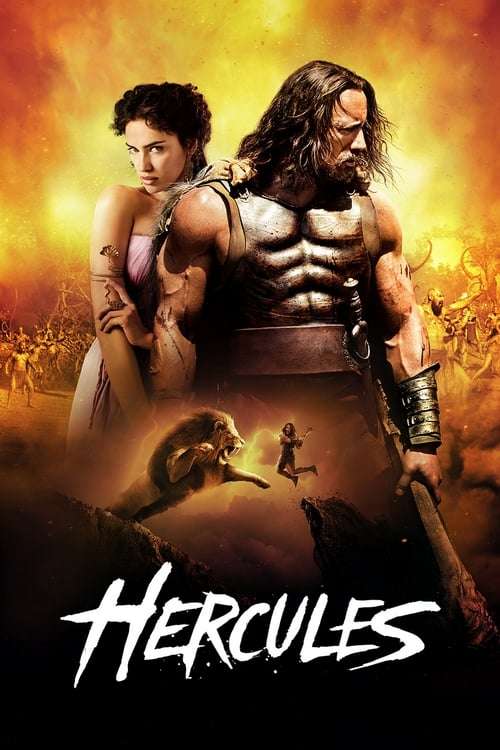
In the ending of the 2014 movie "Hercules," Hercules and his companions confront the tyrant King Cotys and his forces. After a fierce battle, Hercules defeats Cotys, who is ultimately killed. Hercules then decides to leave his life as a mercenary behind and return to a more peaceful existence, while his friend Iolaus chooses to stay and help the people of Thrace. The film concludes with Hercules accepting his identity as a hero, embracing his legacy.
Now, let's delve into the ending in a more detailed narrative fashion:
As the climactic battle unfolds, Hercules and his loyal band of warriors--Atalanta, Iolaus, and the others--prepare to face King Cotys and his army. The tension is palpable as they strategize, knowing that the fate of Thrace hangs in the balance. Hercules, portrayed with a mix of determination and weariness, feels the weight of his past and the expectations of those around him. He is not just fighting for gold; he is fighting for the people who have placed their hope in him.
The scene shifts to the battlefield, where the clash of swords and the cries of warriors fill the air. Hercules, with his immense strength and combat skills, leads the charge, his muscles rippling as he takes down enemy soldiers with precision. The camera captures the chaos of war--the dust, the blood, and the desperation in the eyes of the combatants. Each swing of Hercules' sword is not just a physical act; it is a release of his inner turmoil, a battle against the demons of his past.
As the fight intensifies, Hercules confronts King Cotys, who is a formidable opponent. The two engage in a fierce duel, showcasing their strength and resolve. Cotys, filled with arrogance and a thirst for power, underestimates Hercules, believing him to be just a mercenary. However, Hercules fights not just for victory but for redemption, channeling the pain of his past losses into every strike. The duel is a dance of power, with Hercules ultimately gaining the upper hand.
In a pivotal moment, Hercules disarms Cotys and stands over him, the tension thick in the air. Cotys, realizing his impending doom, pleads for mercy, but Hercules, embodying the hero he has struggled to accept, delivers a final blow. The camera lingers on Hercules' face, capturing a mix of relief and sorrow as he realizes that he has not only defeated a tyrant but also confronted his own inner demons.
With Cotys defeated, the remaining soldiers surrender, and the people of Thrace begin to rally around Hercules and his companions. The atmosphere shifts from one of chaos to hope, as the townsfolk emerge from hiding, their faces filled with gratitude and admiration. Hercules, once a man burdened by his past, now stands as a symbol of hope and strength.
In the aftermath, Hercules reflects on his journey. He has fought not just for gold but for a cause greater than himself. He turns to Iolaus, who has been by his side throughout the battle, and they share a moment of camaraderie. Iolaus, inspired by the victory and the potential for a better future, decides to stay in Thrace to help rebuild the kingdom alongside the people. His choice signifies a commitment to the land and its people, a stark contrast to Hercules' desire to move on.
Hercules, feeling a sense of closure, decides to leave Thrace behind. He walks away from the battlefield, the sun setting in the background, symbolizing the end of one chapter and the beginning of another. As he departs, he embraces his identity as a hero, no longer just a mercenary but a man who has found purpose in his strength and legacy.
The film concludes with Hercules walking into the horizon, a solitary figure against the vast landscape, embodying the journey of self-discovery and acceptance. His fate is one of freedom and the promise of new adventures, while Iolaus remains to nurture the seeds of hope they have planted in Thrace. The final scene encapsulates the essence of heroism--not just in strength, but in the choices one makes for the greater good.
Is there a post-credit scene?
In the 2014 film "Hercules," there is no post-credit scene. The movie concludes with Hercules, played by Dwayne Johnson, having completed his journey and solidified his legacy as a hero. The film wraps up with a sense of closure, focusing on Hercules's acceptance of his identity and the impact he has made on those around him, particularly his companions and the people of Thrace. The absence of a post-credit scene allows the audience to reflect on the themes of heroism, sacrifice, and the nature of true strength as the credits roll.
What motivates Hercules to take on the task of defeating the Nemean Lion?
Hercules is driven by a desire to prove his strength and valor, as well as to gain acceptance and recognition from those around him. He seeks to establish his identity beyond the shadow of his divine heritage.
How does Hercules' relationship with his companions evolve throughout the film?
Hercules initially sees his companions as mere mercenaries, but as they face challenges together, he begins to trust them and view them as a family. This evolution is marked by shared battles and personal sacrifices, deepening their bonds.
What role does the character of King Cotys play in Hercules' journey?
King Cotys serves as both an ally and a manipulator in Hercules' journey. He initially hires Hercules to defeat the Thracians but later reveals his true intentions, showcasing the theme of betrayal and the complexities of power.
How does Hercules confront his own identity as a demigod throughout the film?
Hercules struggles with his identity as a demigod, feeling the weight of expectations and the burden of his past. His journey involves reconciling his human emotions with his divine abilities, ultimately leading him to embrace both aspects of himself.
What is the significance of the character of Atalanta in Hercules' story?
Atalanta represents strength and independence, challenging traditional gender roles. Her fierce loyalty and combat skills not only aid Hercules in battle but also serve as a catalyst for his growth, as he learns to respect and value the contributions of women in his journey.
Is this family friendly?
The 2014 film "Hercules," directed by Brett Ratner and starring Dwayne Johnson, contains several elements that may be considered objectionable or upsetting for children or sensitive viewers. Here are some aspects to be aware of:
-
Violence and Battle Scenes: The film features numerous battle sequences, including intense hand-to-hand combat, sword fighting, and scenes of large-scale warfare. These moments can be graphic, with blood and injuries depicted.
-
Death and Injury: Characters experience significant injuries and death throughout the film. The portrayal of these events can be quite dramatic and may be distressing for younger viewers.
-
Mythological Creatures: The film includes various mythological creatures and monsters, which may be frightening to some children. The visual representation of these beings can be intense.
-
Themes of Betrayal and Deception: The narrative explores themes of betrayal, manipulation, and the darker sides of human nature, which may be complex and unsettling for younger audiences.
-
Emotional Struggles: Hercules grapples with his identity and the weight of his past, leading to moments of deep emotional turmoil. These themes may resonate with older viewers but could be confusing or heavy for children.
-
Mature Themes: The film touches on themes of power, loyalty, and the consequences of war, which may be more suitable for a mature audience.
Overall, while "Hercules" is an action-adventure film with a heroic narrative, it contains elements that may not be suitable for all children, particularly those who are sensitive to violence or complex emotional themes.








