
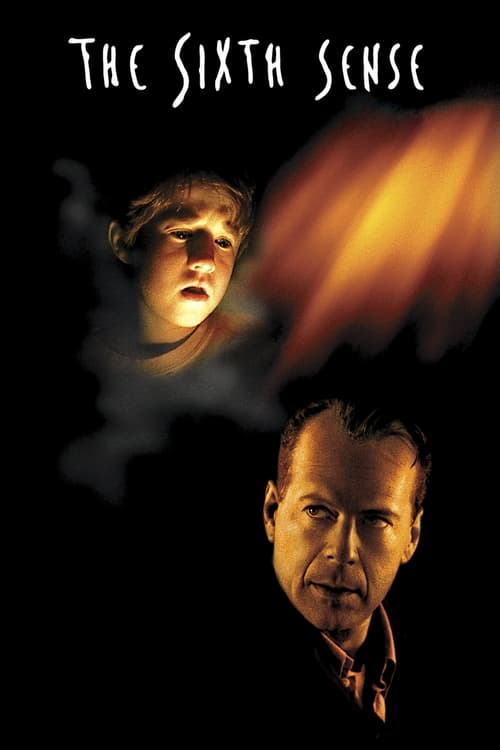
































Popular
What is the significance of the color red in The Sixth Sense?
How does Dr. Malcolm Crowe's character develop throughout the film?
What are the main abilities that Cole Sear possesses?
What role does Cole's mother, Lynn Sear, play in his life and struggles?
How does the relationship between Cole and Dr. Crowe evolve over the course of the film?
Should I watch it?
Ask Your Own Question

What is the plot?
Sorry, we aren't able to watch and write up a full detailed plot yet. Check back in a few days.






What is the ending?
In the ending of The Sixth Sense, Dr. Malcolm Crowe realizes that he is dead and has been a ghost all along. He helps Cole Sear confront his fears and accept his ability to see dead people. The film concludes with Malcolm's acceptance of his fate, and he finds peace as he moves on.
As the climax of The Sixth Sense unfolds, we find Dr. Malcolm Crowe, a child psychologist, deeply invested in helping a young boy named Cole Sear. Cole has been struggling with the terrifying ability to see and communicate with the dead. Throughout their sessions, Malcolm has been trying to guide Cole to understand and cope with his unique gift.
In the final act, Malcolm decides to confront the truth about his own life. He recalls moments from his past, including a poignant scene where he remembers his wife, Anna, and their life together. As he reflects, he begins to piece together the reality of his situation. He realizes that he has not interacted with Anna in a meaningful way for a long time, and he has been unable to affect the world around him.
The pivotal moment occurs when Malcolm visits Cole one last time. Cole, who has been increasingly open about his experiences, reveals to Malcolm that he sees dead people who don't know they're dead. In a moment of clarity, Cole tells Malcolm that he can help these spirits by listening to them and conveying their messages. This revelation is crucial for both characters, as it empowers Cole to embrace his abilities and gives Malcolm a sense of purpose.
As the scene progresses, Malcolm encourages Cole to confront the ghost of a young girl who has been haunting him. Cole bravely faces the spirit and learns that she needs to pass on a message to her mother. This act of courage not only helps Cole but also serves as a turning point for Malcolm. He realizes that he must also confront his own truth.
In a heart-wrenching moment, Malcolm finally understands that he is one of the dead people Cole sees. He recalls the events leading to his death, including a confrontation with a former patient, Vincent, who shot him. This realization hits Malcolm hard, and he comes to terms with the fact that he has been a ghost, unable to move on.
The film reaches its emotional climax as Malcolm, now fully aware of his condition, finds peace. He tells Cole that he will be okay and that he can help others. In a final act of love and support, Malcolm embraces Cole, who is visibly relieved and empowered by the experience.
As Malcolm walks away, he sees a vision of his wife, Anna, and he understands that he must let go. The film closes with Malcolm accepting his fate, allowing him to finally move on to the afterlife. The last shot shows Cole, now more confident and at peace, as he walks away from the encounter, ready to embrace his life and his abilities.
In summary, the fates of the main characters are as follows: Dr. Malcolm Crowe comes to terms with his death and finds peace, allowing him to move on. Cole Sear, empowered by his experiences and the guidance of Malcolm, learns to accept his gift and is ready to face the world with newfound confidence. The emotional journey of both characters culminates in a powerful moment of acceptance and understanding, highlighting the themes of connection, healing, and the importance of facing one's fears.
Is there a post-credit scene?
The Sixth Sense does not have a post-credit scene. The film concludes with a powerful and emotional climax, where Dr. Malcolm Crowe, played by Bruce Willis, realizes the truth about his own existence and his connection to the young boy, Cole Sear, portrayed by Haley Joel Osment. After the final revelations, the credits roll without any additional scenes or content following them. The film's focus remains on the intricate storytelling and character development throughout its runtime, leaving viewers with a lasting impact from the story itself rather than any additional material after the credits.
What is the significance of the color red in The Sixth Sense?
The color red is used throughout the film to signify moments of supernatural activity and the presence of the dead. It appears in various forms, such as the red doorknob, the red balloon, and the red jacket worn by Cole's mother. Each instance of red serves as a visual cue for the audience, indicating that something is not quite right or that a ghost is nearby.
How does Dr. Malcolm Crowe's character develop throughout the film?
Dr. Malcolm Crowe, played by Bruce Willis, begins as a confident child psychologist who is dedicated to helping his young patients. However, after being shot by a former patient, he becomes increasingly introspective and troubled. His interactions with Cole reveal his own unresolved issues, particularly regarding his relationship with his wife. As he helps Cole confront his fears, he also begins to understand his own situation, leading to a profound realization about his own life.
What are the main abilities that Cole Sear possesses?
Cole Sear, portrayed by Haley Joel Osment, possesses the ability to see and communicate with the dead. This gift is both a curse and a burden for him, as he experiences terrifying encounters with spirits who seek his help. His ability isolates him from his peers and causes him immense emotional distress, leading to his struggles with fear and anxiety throughout the film.
What role does Cole's mother, Lynn Sear, play in his life and struggles?
Lynn Sear, played by Toni Collette, is a devoted mother who is deeply concerned about her son Cole's well-being. She struggles to understand his behavior and the fear he experiences, often feeling helpless as she witnesses his emotional turmoil. Her love and support are crucial for Cole, as she ultimately becomes a source of strength for him, encouraging him to confront his fears and embrace his abilities.
How does the relationship between Cole and Dr. Crowe evolve over the course of the film?
The relationship between Cole and Dr. Crowe evolves from one of skepticism and fear to one of trust and understanding. Initially, Cole is reluctant to open up about his abilities, fearing that he will be misunderstood. However, as Dr. Crowe listens and validates Cole's experiences, a bond forms between them. Dr. Crowe becomes a mentor figure, guiding Cole to accept his gift and helping him find a way to cope with the ghosts he encounters.
Is this family friendly?
The Sixth Sense, produced in 1999, is generally not considered family-friendly due to its intense themes and psychological elements. Here are some potentially objectionable or upsetting aspects that might occur for children or sensitive viewers:
-
Ghostly Appearances: The film features several scenes with ghosts, some of whom appear in distressing or frightening ways. Their appearances can be unsettling and may provoke fear.
-
Themes of Death and Grief: The narrative revolves around death, loss, and the emotional struggles associated with these themes. This can be heavy and distressing for younger audiences.
-
Child Distress: The main child character, Cole, experiences significant emotional turmoil, including fear and anxiety about his ability to see dead people. His struggles can be intense and may resonate deeply with sensitive viewers.
-
Violent Imagery: There are moments that depict violence or the aftermath of violent events, which can be graphic and disturbing.
-
Parental Conflict: The film includes scenes of tension and conflict between Cole and his mother, which may be upsetting for children who are sensitive to familial issues.
-
Psychological Tension: The overall atmosphere of the film is suspenseful and can create a sense of dread, which may be overwhelming for younger viewers.
These elements contribute to the film's mature themes and may not be suitable for all audiences, particularly children.








