

















































Popular
Should I watch it?
Ask Your Own Question

What is the plot?
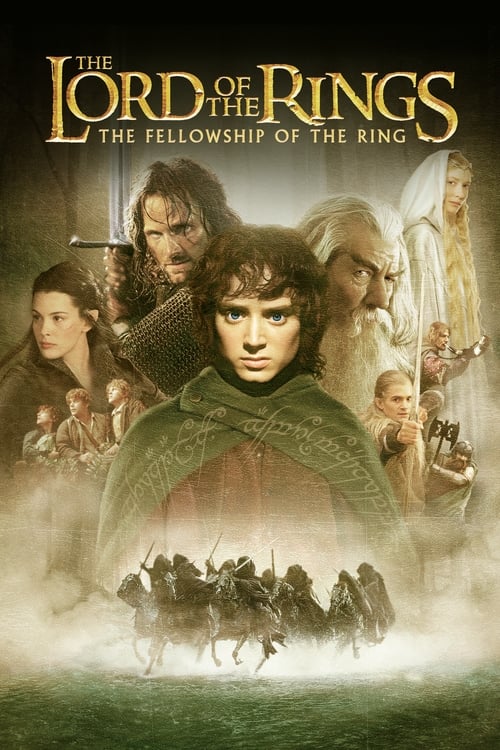
In the ancient Second Age of Middle-earth, the forging of the Rings of Power sets the stage for a dark and epic tale. The Elven smiths craft rings for Elves, Dwarves, and Men, but the Dark Lord Sauron secretly forges the One Ring in the fiery depths of Mount Doom, imbuing it with his own malice and power to dominate all life. This dark artifact corrupts and controls the others, threatening the freedom of Middle-earth. The Last Alliance of Elves and Men rises against Sauron in a great war, culminating in the battle where Isildur, son of Elendil, cuts the One Ring from Sauron's hand, seemingly ending the dark lord's reign. Yet, the Ring's evil endures, lost for centuries until it resurfaces in the quiet Shire.
The story begins in the peaceful Shire, where Bilbo Baggins, a curious and adventurous hobbit, celebrates his 111th birthday. The Shire's rolling green hills and tranquil villages contrast sharply with the looming darkness beyond. Bilbo's party is a joyous occasion, filled with laughter and fireworks, but beneath the festivity lies a secret: Bilbo possesses the One Ring, which he has kept hidden for decades. On this day, he plans to leave the Shire forever, passing the Ring to his young nephew, Frodo Baggins. Frodo, a gentle and unassuming hobbit, inherits more than a simple trinket; he inherits a burden that will change the fate of the world.
Gandalf the Grey, a wise and powerful wizard, arrives to counsel Frodo. His grave warning pierces the calm of the Shire: the Ring is a weapon of terrible evil, sought by the dark forces of Sauron. Gandalf says to Frodo, "So do all who live to see such times. But that is not for them to decide. All we have to decide is what to do with the time that is given to us." This counsel frames Frodo's journey, emphasizing courage in the face of overwhelming darkness.
Frodo's closest friends--Samwise Gamgee, his loyal gardener; Meriadoc Brandybuck (Merry); and Peregrin Took (Pippin)--pledge to accompany him. Together, they prepare to leave their peaceful home, unaware of the peril that awaits. The Ring's power begins to attract dark riders, the Nazgûl, sinister servants of Sauron who relentlessly pursue the Ringbearer.
Their first major encounter with danger comes in Bree, a frontier village where Frodo and his companions meet Aragorn, also known as Strider, a rugged and mysterious ranger. Aragorn reveals himself as the heir of Isildur, destined to reclaim the throne of Gondor. His knowledge and skill prove vital as the group flees the pursuing Nazgûl. Aragorn's presence marks the transition from the Shire's innocence to the wider, perilous world beyond.
The journey leads them to Rivendell, the Elven refuge ruled by Elrond. Here, representatives of Elves, Dwarves, and Men gather for the Council of Elrond, a pivotal moment where the fate of the Ring is debated. Elrond declares that the Ring cannot be used or hidden; it must be destroyed in the fires of Mount Doom where it was forged. This revelation crystallizes the quest's stakes: the survival of Middle-earth depends on this perilous mission.
The Fellowship of the Ring is formed, uniting nine companions: Frodo, Sam, Merry, Pippin, Aragorn, Legolas the elf, Gimli the dwarf, Boromir of Gondor, and Gandalf. Their oath is solemn and heavy, as Elrond warns, "The Ring must be destroyed." Each member brings unique strengths and burdens, their unity a fragile hope against the gathering darkness.
The Fellowship sets out, attempting to cross the treacherous Misty Mountains. A fierce blizzard forces them to seek shelter in the ancient Dwarven city of Khazad-dûm, known as the Mines of Moria. The vast, shadowy halls echo with danger, as orcs and a cave troll ambush them. The tension escalates until they face Durin's Bane--a Balrog, an ancient and fiery demon of shadow and flame.
In a climactic confrontation on the narrow Bridge of Khazad-dûm, Gandalf stands firm against the Balrog. His voice booms, "You cannot pass!" as he breaks the bridge beneath the creature. Yet, the Balrog drags Gandalf down into the abyss. Gandalf's sacrifice allows the others to escape, but the Fellowship is left devastated by the loss of their guide and protector. This moment marks a turning point, as the darkness claims one of their greatest champions.
The surviving members emerge into the serene and mystical realm of Lothlórien, ruled by Lady Galadriel and Lord Celeborn. Galadriel, radiant and ethereal, offers counsel and gifts to the weary Fellowship. To Frodo, she gives a phial containing the light of Eärendil's star, a beacon against darkness. She reveals a haunting vision: if the quest fails, Sauron will enslave all of Middle-earth. She warns, "One of you will try to take the Ring." This prophecy foreshadows the fracture to come.
Renewed but wary, the Fellowship travels down the River Anduin by boat, heading toward the borders of Gondor. Yet, internal tensions rise, especially around Boromir, who struggles with the Ring's seductive power. At Amon Hen, the hill of seeing, Boromir confronts Frodo, attempting to seize the Ring. Frodo resists, declaring his resolve to continue the quest alone, fearing the Ring's corrupting influence on his friends.
Boromir's moment of weakness is quickly followed by redemption. As orcs attack, Boromir valiantly defends Merry and Pippin, fighting off the attackers with fierce determination. He dies from orc arrows, his final words a plea for forgiveness and a warning of the Ring's danger. Merry and Pippin are captured by the orcs, their fate uncertain.
Frodo, unwilling to endanger the Fellowship further, decides to journey to Mordor alone. However, Samwise Gamgee refuses to leave his master's side, declaring, "I'm coming too!" Their bond of friendship and loyalty becomes the heart of the quest's hope as they set off into the unknown.
Meanwhile, Aragorn, Legolas, and Gimli give chase to rescue Merry and Pippin, determined to keep the Fellowship's mission alive despite its fracture.
Throughout the journey, the shadow of Saruman looms large. Once a wise wizard and ally, Saruman betrays the Fellowship, allying with Sauron. He imprisons Gandalf and uses a palantír, a seeing-stone, to communicate with the Dark Lord. Saruman breeds an army of Uruk-hai, fierce orc warriors bred for war, to hunt the Fellowship and claim the Ring for himself.
The film closes on a somber yet determined note. The Fellowship is broken, but the quest to destroy the One Ring continues. Frodo and Sam's solitary journey toward Mount Doom begins, carrying the fragile hope of all Middle-earth. The camera lingers on their small figures moving into the vast wilderness, a poignant reminder of the daunting path ahead.
Thus, the tale of The Lord of the Rings: The Fellowship of the Ring unfolds as a story of courage, sacrifice, and the enduring power of friendship against the encroaching darkness. Every death, every revelation, and every confrontation shapes the destiny of Middle-earth, setting the stage for the epic saga to continue.
More Movies Like This
Browse All Movies →



What is the ending?
At the end of The Lord of the Rings: The Fellowship of the Ring, the Fellowship is fractured after a battle with the Uruk-hai. Boromir dies defending Merry and Pippin, who are captured. Frodo decides to continue the quest to destroy the One Ring alone, but Sam insists on accompanying him. The film concludes with the Fellowship split, setting the stage for the next part of their journey.
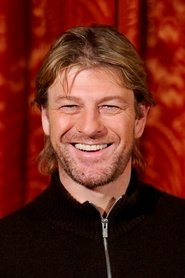
As the film approaches its climax, the Fellowship finds itself in the midst of a fierce battle at Amon Hen. The air is thick with tension as they face a horde of Uruk-hai, led by the menacing Lurtz. Boromir, played by Sean Bean, is overwhelmed by his internal struggle between his desire to protect the Ring and his loyalty to his friends. He valiantly fights off the attackers, showcasing his bravery and desperation.
In a heart-wrenching moment, Boromir attempts to take the Ring from Frodo, believing it to be the key to saving his people. Frodo, terrified and feeling the weight of the Ring's corrupting influence, flees into the woods. Boromir, realizing his mistake, is filled with regret. He fights valiantly to protect Merry and Pippin, who are captured by the Uruk-hai. As he succumbs to his wounds, he confesses his failings to Aragorn, expressing his desire for redemption. His last words are a plea for forgiveness, and Aragorn promises to honor him.
Meanwhile, Frodo, feeling isolated and burdened by the Ring, decides to continue the quest alone. He believes that the burden is his to bear, and he cannot risk the lives of his friends. However, Sam, ever loyal and determined, refuses to let Frodo go alone. He jumps into the water, declaring that he is going with Frodo, showcasing the deep bond of friendship that has developed between them. This moment emphasizes the theme of loyalty and the strength of their companionship.
As the film draws to a close, the camera pans over the broken Fellowship. Aragorn, Legolas, and Gimli are left to mourn Boromir's death, while they also resolve to rescue Merry and Pippin from the clutches of the Uruk-hai. Their determination to fight against the darkness is palpable, highlighting their commitment to each other and their cause.
The final scenes depict Frodo and Sam setting off on their perilous journey toward Mount Doom, the weight of the Ring heavy in their hearts. The film ends with a sense of foreboding and uncertainty, as the Fellowship is now divided, each member facing their own challenges and destinies. The fate of Middle-earth hangs in the balance, setting the stage for the epic continuation of their quest.
Is there a post-credit scene?
The Lord of the Rings: The Fellowship of the Ring, produced in 2001, does not have a post-credit scene. The film concludes with a powerful and emotional ending, focusing on the journey of the Fellowship as they face the challenges ahead. After the credits roll, there are no additional scenes or content that follow. The film wraps up the first part of the epic story, leaving viewers with a sense of anticipation for the continuation of the adventure in the subsequent films.
What is the significance of the One Ring in the story?
The One Ring is the central plot element of 'The Fellowship of the Ring.' Forged by the Dark Lord Sauron, it holds immense power and is capable of controlling the other Rings of Power. Its significance lies in its ability to corrupt and dominate those who possess it, as seen with characters like Frodo, who struggles with the burden of carrying it. The Ring symbolizes temptation and the struggle between good and evil, driving the quest to destroy it in the fires of Mount Doom.
Why does Frodo Baggins leave the Shire?
Frodo Baggins leaves the Shire to protect his home and loved ones from the threat posed by the One Ring. After learning from Gandalf that the Ring is sought by Sauron, Frodo understands that staying in the Shire would put his friends and family in danger. His internal motivation is fueled by a sense of duty and bravery, despite his initial reluctance and fear of the unknown. This decision marks the beginning of his transformation from a simple hobbit into a reluctant hero.
What role does Aragorn play in the Fellowship?
Aragorn, also known as Strider, plays a crucial role as a protector and leader within the Fellowship. Initially introduced as a mysterious ranger, he is revealed to be the heir to the throne of Gondor. His internal conflict revolves around his lineage and the burden of leadership, as he grapples with his destiny while supporting Frodo and the other members of the Fellowship. His bravery, wisdom, and combat skills are vital in guiding the group through perilous situations.
How does Gandalf confront the Balrog in Moria?
In the Mines of Moria, Gandalf confronts the Balrog, a powerful demon of shadow and flame, during the Fellowship's escape. As they cross the Bridge of Khazad-dûm, Gandalf stands firm, declaring, 'You shall not pass!' His internal motivation is to protect the Fellowship at all costs, knowing that the Balrog poses a grave threat. The confrontation is intense, showcasing Gandalf's power and determination, but ultimately leads to his fall into the abyss, sacrificing himself to ensure the others can escape.
What is the relationship between Legolas and Gimli?
Legolas, the elf, and Gimli, the dwarf, initially have a contentious relationship rooted in the historical animosity between their races. However, as the journey progresses, they develop a deep bond of friendship and mutual respect. Their relationship is characterized by moments of rivalry, such as their competition in battle, but it evolves into a strong alliance, symbolizing the theme of unity among different races in the fight against Sauron. This transformation highlights their individual growth and the breaking down of prejudices.
Is this family friendly?
The Lord of the Rings: The Fellowship of the Ring is generally considered suitable for older children and families, but it does contain some scenes that may be upsetting or objectionable for younger viewers or sensitive individuals. Here are some aspects to consider:
-
Violence and Battles: The film features several intense battle scenes, including sword fights and skirmishes with orcs and other creatures. The violence is stylized but can be intense.
-
Dark Creatures: The presence of dark and menacing creatures, such as the Nazgûl (Ringwraiths) and orcs, can be frightening. Their appearances are often accompanied by suspenseful music and tense moments.
-
Death and Loss: Themes of loss and sacrifice are prevalent, with characters facing perilous situations. Some scenes depict the death of characters, which may be emotionally impactful.
-
Scary Imagery: Certain scenes, such as the encounter with the Balrog in the Mines of Moria, include frightening visuals and a sense of impending doom.
-
Emotional Struggles: Characters experience fear, despair, and internal conflict, which may resonate deeply with sensitive viewers.
-
Mature Themes: The overarching themes of power, corruption, and the burden of responsibility may be complex for younger audiences to fully grasp.
Parents may want to consider these elements when deciding if the film is appropriate for their children.









