





























Popular
Should I watch it?
Ask Your Own Question

What is the plot?
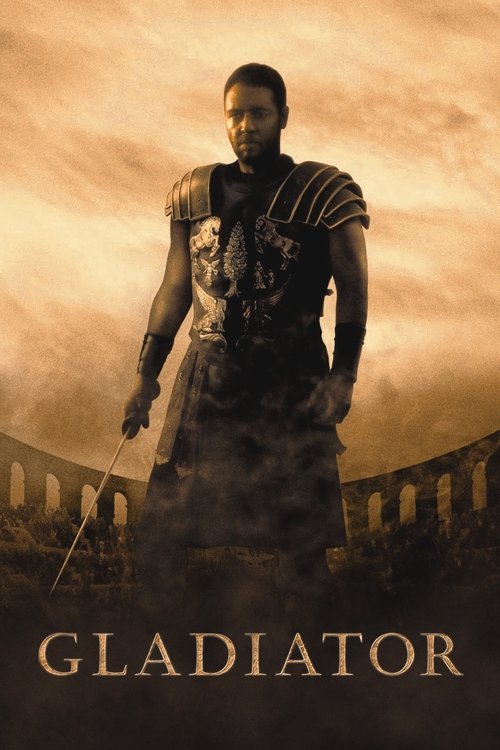
In the frozen forests of Germania in 180 A.D., General Maximus Decimus Meridius commands the Roman legions with unyielding precision, his sword flashing through the mist as he crushes the last Germanic barbarian tribes after twelve grueling years of war. Arrows whistle past, shields clash in thunderous rhythm, and Maximus's men roar in triumph as the enemy falls, their blood staining the snow red. From a hilltop vantage, the weary Emperor Marcus Aurelius watches, his aged eyes alight with admiration for this noble warrior who embodies the virtues of ancient Rome. As the battle fades into exhausted cheers, Marcus pulls Maximus aside in his tent, the air thick with the scent of smoke and sweat. "Maximus," he whispers, gripping the general's armored shoulder, "if I could choose my own successor... it would be you." Marcus reveals his dream: to dismantle the corrupt empire and restore Rome as a republic, with Maximus at its helm to guide the people back to virtue.
This intimate revelation shatters Commodus, Marcus Aurelius's only son, who eavesdrops from the shadows, his pale face twisting in betrayal. Commodus, a man of petulant cruelty and insatiable ambition, has always craved the throne, seeing himself as Rome's divine savior. That night, in the emperor's candlelit chamber, Commodus kneels by his father's bedside, feigning grief over Marcus's worsening health. "Father... please," he sobs, but rage boils beneath. As Marcus breathes his last peaceful words about Rome's future, Commodus presses a pillow over his face, smothering him slowly, methodically, until the emperor's struggles cease. The first major death claims Marcus Aurelius, murdered by his own son Commodus, who fabricates a tale of natural passing to seize power unchallenged.
Dawn breaks over the Roman camp as Commodus, now self-proclaimed emperor, summons Maximus to the command tent. Clad in imperial purple, Commodus extends a hand, his voice dripping false warmth: "Maximus, my father's death leaves a void. Swear loyalty to me, and Rome will be ours." Maximus, his jaw set like granite, meets his gaze with quiet defiance. "The emperor is dead," he declares. Commodus's smile vanishes. "Then understand this: you and your family will die." He signals Quintus, the loyal Praetorian Guard captain and Maximus's former comrade, who reluctantly orders his men to arrest the general. Chains rattle as Maximus is dragged into the misty woods for execution, but his warrior's instincts ignite. He snaps his bonds, seizes a sword, and slaughters the Praetorian captors one by one--their throats slit, bodies crumpling into the underbrush--before mounting a horse and galloping southward, blood streaming from gashes on his shoulders.
The ride to his home near Turgalium in Hispania blurs into a desperate haze, hours stretching into an eternity of pounding hooves and rising dread. Maximus arrives at dusk to a nightmare: his devoted wife, unnamed in whispers of love but forever etched in his heart, hangs crucified on a cross, her body limp and ravaged by crows. Beside her, their young son dangles in the same horrific pose, eyes vacant, Commodus's vengeance etched in their innocent deaths. Maximus cuts them down with trembling hands, the wooden stakes splintering as he cradles their broken forms. He digs a shallow grave by the olive grove they cherished, laying them to rest side by side, murmuring prayers through choked sobs. Exhaustion claims him; he collapses beside the mound, the world fading to black.
Slave traders find him at dawn, his fevered body a prize. They chain him and drag him across the Mediterranean to Zuccabar, a sun-baked Roman province in North Africa. There, in the bustling market, the former general is sold like chattel to Proximo, a grizzled former gladiator turned lanista, whose scarred face hides a flicker of respect. "Some men are born to this life," Proximo growls as he inspects Maximus's wounds, "others made." Thrust into the gladiator pits, Maximus trains with men like the towering Numidian Juba, the loyal German Hagen, and a ragtag band of slaves. In his first arena bout under Proximo's banner, Maximus refuses to kill, standing stoic amid jeers, but survival's fire reignites when blades clash for real. He dispatches foes with brutal efficiency, his strikes precise, earning the crowd's feverish chants of "Spaniard!" Tension builds as he rises through the ranks, each victory a step closer to vengeance, his dreams haunted by his family's ghosts urging him onward.
Word of the invincible "Spaniard" spreads to Rome, where Commodus stages lavish games in the Colosseum to distract a restless populace from his tyrannical rule. Proximo's gladiators, including Maximus, are transported to the eternal city, the caravan rumbling through gates adorned with laurels. Beneath the massive arches, Maximus fights in a scripted spectacle: a reenactment of the Battle of Carthage, where he leads gladiators as Hannibal's warriors against Roman "legionaries." Amid flaming catapults and painted war elephants, Maximus turns the farce into slaughter, cutting down opponents in a whirlwind of steel and sand, saving a fellow gladiator in a moment of raw humanity that electrifies the 80,000 spectators.
Commodus enters the arena with his nephew Lucius Verus, the boyish son of his sister Lucilla, waving to the adoring masses. Spotting Maximus among the victors, Commodus sneers, demanding he unmask. Maximus yanks off his helmet, his face scarred and fierce, locking eyes with the emperor. "Maximus Decimus Meridius, commander of the Armies of the North, General of the Felix Legions, loyal servant to the true emperor, Marcus Aurelius. Father to a murdered son, husband to a murdered wife. And I will have my vengeance, in this life or the next." The crowd erupts, thunderous approval forcing Commodus to spare him, though his eyes burn with hatred.
That night, in the dim gladiator cells beneath the Colosseum, Lucilla visits, her elegant robes whispering against stone. Once Maximus's lover before his marriage, now Commodus's widowed sister, she whispers of her father's true wish and her disgust at her brother's incestuous advances. Maximus distrusts her, shoving her away: "Save your lies for the Senate." But seeds of alliance plant as Senator Gracchus, a patrician plotter against Commodus's excesses, confirms Maximus's identity through Proximo. In a shadowed tavern, Gracchus outlines the conspiracy: Maximus will win freedom, rendezvous with his loyal legions at Ostia, march on Rome, overthrow the tyrant, and restore the Republic.
Lucilla returns under cover of night, her kiss reigniting old flames as they plot his escape. "Trust me, Maximus," she breathes, their lips meeting in desperate passion amid flickering torchlight. Young Lucius, overhearing whispers, innocently praises "Uncle Maximus" to Commodus, who seizes the slip like a viper. In his opulent palace, Commodus corners Lucilla, knife to Lucius's throat: "Tell me, sister, or watch him bleed." Terrified for her son, she reveals fragments, dooming the plot.
Praetorians storm the gladiator barracks at midnight, swords drawn, flames licking the wooden beams. Hagen falls first, impaled through the chest by a guard's blade as he shields comrades. Proximo, roaring defiance, fights back-to-back with his men, his final stand buying precious seconds: a Praetorian's spear pierces his gut, and he crumples, dying with a nod to Maximus--"Go!" Maximus bursts free, sprinting through Rome's labyrinthine streets to the city walls where Cicero, his steadfast servant, waits with horses. Arrows rain from the darkness; Cicero is struck through the chest and neck, hanging limp from his saddle as he dies, his last gasp a betrayed "Maximus!" Guards swarm, chaining the Spaniard once more.
Commodus, sensing the noose tightening, arrests Senator Gracchus in a dawn raid, dragging him to the dungeons. Desperate for legitimacy, Commodus demands Lucilla bear him an heir, his sweaty hands clawing at her in revulsion. To reclaim glory, he announces a duel: Emperor versus the undefeated Spaniard in the Colosseum. Maximus, imprisoned and starved, meets Commodus in the hypogeum tunnels. "People want fire," Commodus hisses. "They want a spectacle." In a shadowed alcove, Commodus stabs Maximus viciously in the back, twisting the blade deep. "Quintus! Readjust his bandages," he commands, the captain obeying with grim reluctance as blood soaks the rags.
The Colosseum pulses with 80,000 souls on the fateful day, banners snapping in the wind, the sand stained from prior carnages. Maximus enters wounded, every step agony, facing Commodus's parade of horrors first: an undefeated champion, a hulking brute with a chained mace, backed by snarling tigers leaping from gates. The champion swings wildly; Maximus ducks, drives steel into his throat--death by Maximus. Tigers pounce, claws raking flesh, but Maximus impales one mid-leap, snaps another's neck, the beasts' roars turning to gurgles as their blood sprays the arena. Victory after victory piles, the mob chanting "Maximus! Maximus!" Commodus seethes from his podium, his grip slipping as the people's loyalty shifts.
Tension crests at the final confrontation. Trumpets blare as Commodus descends, gilded armor gleaming, sword in hand. The emperor lunges with poisoned precision, but Maximus, fueled by spectral visions of his wife and son, parries through waves of pain. They clash in a brutal dance--swords sparking, shields splintering--Commodus's strikes frantic, Maximus's deliberate. The emperor tires, arrogance fracturing; Maximus disarms him with a savage twist, sending the blade flying into the sand. Commodus scrabbles for a hidden dagger strapped to his arm, lunging wildly. Quintus and the Praetorians hesitate on the sidelines, their loyalty cracking. "Sheathe your swords!" Quintus finally barks, refusing aid. Desperate, Commodus slashes shallowly, but Maximus overpowers him, pinning the tyrant's arm and driving the hidden knife into his throat. Commodus gurgles, eyes bulging in shock, collapsing in a pool of his own blood--the emperor slain by Maximus Decimus Meridius.
The crowd hushes as Maximus staggers, blood pouring from his wounds. He sees Marcus Aurelius beckoning from the heavens, his family waiting. Kneeling beside Commodus's corpse, Maximus gasps his vision: "Quintus, release my men. Senator Gracchus is to be reinstated. There was a dream that was Rome... Rome will be a republic again." Gracchus, freed from chains, nods solemnly. Maximus turns to the Senate rising in the stands: "Rome is yours." His strength fails; he slumps to the sand, eyes glazing as Juba cradles him. The mob weeps, chanting his name as his spirit departs, joining his wife and son in eternity.
Freed gladiators pour into the arena, arms raised. Juba kneels by the fresh grave he's dug in the Colosseum's center, planting Maximus's figurines of wife and son there with soil from Hispania. "I will see you again... but not yet. Not yet." As the sun sets over Rome, casting golden light on the liberated city, Juba whispers to the wind, "Now we are free." Lucilla and Lucius watch from the shadows, hope dawning. Senator Gracchus ascends the steps of power, the Republic stirring from imperial ashes. Maximus's legacy endures: tyrant dead, gladiators unbound, Rome reborn.
(Word count: 3472)
More Movies Like This
Browse All Movies →


What is the ending?
In the ending of Gladiator, Maximus fights Commodus in the Colosseum, ultimately defeating him. After the battle, Maximus succumbs to his wounds but dies content, having avenged his family and fulfilled his promise to restore Rome. He envisions reuniting with his family in the afterlife. Commodus, who is killed by Maximus, dies without honor. The film concludes with Maximus' legacy being honored by the Roman people, and Lucilla, Commodus' sister, is left to guide the future of Rome.
Now, let's delve into the ending in a detailed, chronological narrative.
As the climactic battle approaches, Maximus, now a seasoned gladiator, stands in the Colosseum, the sun beating down on him, the roar of the crowd echoing in his ears. He is a man driven by vengeance and the desire to restore honor to Rome. The atmosphere is electric, filled with anticipation as the crowd chants for blood. Maximus, clad in armor, feels the weight of his past and the memory of his slain family pressing heavily on his heart.
The scene shifts to Commodus, who enters the arena with a sense of arrogance and entitlement. He is desperate to prove his worth as an emperor, yet he is also deeply insecure, knowing that he is not the true leader Rome needs. Commodus approaches Maximus, taunting him, and the tension between them is palpable. The two men, once on the same side, are now bitter enemies, each representing different visions for Rome.
The fight begins, and the two engage in a brutal duel. Maximus, fueled by rage and the memory of his family, fights with a fierce determination. The choreography of their battle is intense, showcasing Maximus' skill and experience as a soldier. Commodus, despite his royal status, fights with desperation, knowing that his life hangs in the balance. The crowd is captivated, their cheers echoing through the Colosseum, but Maximus remains focused, his mind set on avenging his family.
As the fight progresses, Commodus resorts to underhanded tactics, using a hidden dagger to gain the upper hand. He stabs Maximus, who falls to the ground, bloodied and weakened. In this moment of vulnerability, Commodus believes he has won, but Maximus, embodying the spirit of a true warrior, rises again. With a final surge of strength, he disarms Commodus and delivers a fatal blow, killing him. The crowd erupts in a mix of shock and exhilaration, witnessing the downfall of a tyrant.
In his final moments, Maximus collapses, succumbing to his wounds. As he lies on the ground, he envisions his family--his wife and son--waiting for him in the afterlife. This moment is filled with a profound sense of peace, as he feels he has fulfilled his promise to them and to Rome. His last words are a whisper of hope, a promise that he will be reunited with them.
As Maximus dies, the camera pans to Lucilla, Commodus' sister, who watches with a mixture of sorrow and relief. She understands the significance of Maximus' victory and the potential for a new beginning for Rome. The film concludes with a poignant scene where Maximus is honored by the people of Rome, his legacy cemented as a true hero. Lucilla, now in a position of influence, is left to guide the future of the empire, suggesting a shift towards a more just and honorable leadership.
In the end, Maximus' journey comes full circle. He has avenged his family, restored his honor, and left a lasting impact on Rome, while Commodus dies without the legacy he so desperately sought. The film closes on a note of hope, emphasizing the themes of honor, sacrifice, and the enduring spirit of a true leader.
Is there a post-credit scene?
The movie "Gladiator," produced in 2000, does not have a post-credit scene. The film concludes with a powerful and emotional ending, where the protagonist, Maximus Decimus Meridius, played by Russell Crowe, dies after avenging the murder of his family and the betrayal of Emperor Commodus. The final scenes depict Maximus reuniting with his family in the afterlife, symbolizing his peace and resolution after a life filled with struggle and loss. The film ends on this poignant note, leaving no additional scenes or content after the credits.
What motivates Maximus to seek revenge against Commodus?
Maximus, a once-loyal general of the Roman army, is driven by a deep sense of betrayal and loss after Commodus murders his father, Emperor Marcus Aurelius, and orders the execution of Maximus and his family. His love for his family and his desire to restore the honor of Rome fuel his quest for vengeance.
How does Maximus become a gladiator?
After escaping execution, Maximus is captured by slave traders who sell him to a gladiatorial school in North Africa. There, he is trained to fight in the arena, where he adopts the name 'The Spaniard' and begins to hone his skills, all while plotting his revenge against Commodus.
What role does Lucilla play in the story?
Lucilla, the sister of Commodus and former love interest of Maximus, is torn between her loyalty to her brother and her desire to help Maximus. She becomes a key ally in Maximus's quest for revenge, using her influence in the Senate to support his cause and protect him from Commodus's wrath.
What is the significance of the character Proximo?
Proximo, the owner of the gladiatorial school, serves as a mentor to Maximus. A former gladiator himself, he understands the brutal world of the arena and teaches Maximus the importance of fighting for survival. Proximo's belief in Maximus's potential and his own desire for glory in the arena shape Maximus's journey.
How does the relationship between Maximus and the other gladiators develop?
Maximus initially keeps his distance from the other gladiators, but as they face the brutal realities of the arena together, he earns their respect and loyalty. His leadership and fighting skills unite them, creating a bond that transforms them from mere fighters into a brotherhood, all sharing the common goal of survival and revenge.
Is this family friendly?
"Gladiator," produced in 2000, contains several elements that may be considered objectionable or upsetting for children or sensitive viewers. Here are some aspects to be aware of:
-
Violence and Gore: The film features intense battle scenes, including hand-to-hand combat, sword fighting, and large-scale warfare. Blood and injuries are depicted graphically, which may be disturbing.
-
Death and Betrayal: The themes of betrayal and loss are central to the story. Characters experience significant emotional trauma, including the death of loved ones, which may be upsetting.
-
Brutality of Gladiatorial Combat: The depiction of gladiators fighting to the death for entertainment is a recurring theme. The brutality of these fights can be quite graphic and unsettling.
-
Themes of Slavery and Oppression: The film explores themes of slavery, with characters being treated as property and subjected to harsh conditions, which may be distressing.
-
Mature Language: There are instances of strong language throughout the film that may not be suitable for younger audiences.
-
Emotional Turmoil: The protagonist, Maximus, experiences profound grief and anger, which may resonate deeply and evoke strong emotions in viewers.
These elements contribute to the film's mature rating and may not be appropriate for all audiences, particularly children or those sensitive to violence and emotional distress.








