





















Popular
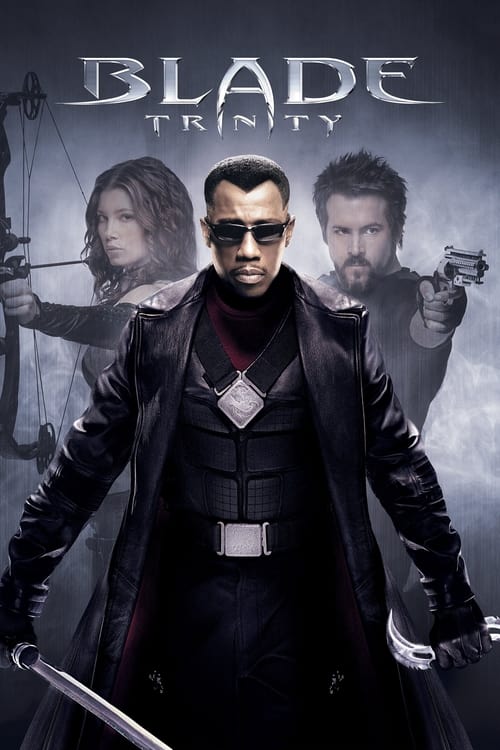
What is the significance of the character Hannibal King in Blade: Trinity?
How does Blade's relationship with Whistler evolve in Blade: Trinity?
What role does Dracula play in Blade: Trinity and how does he differ from other vampires?
What is the purpose of the Nightstalkers in Blade: Trinity?
How does Blade's character struggle with his identity in Blade: Trinity?
Should I watch it?
Ask Your Own Question

What is the plot?
Sorry, we aren't able to watch and write up a full detailed plot yet. Check back in a few days.




What is the ending?
In the ending of "Blade: Trinity," Blade confronts Dracula, who has been resurrected and is attempting to unleash a new era of vampires. With the help of the Nightstalkers, Blade battles Dracula and ultimately defeats him. However, he is left to face the consequences of his actions, as the world now knows about vampires. The film concludes with Blade continuing his fight against the vampire menace, while the Nightstalkers, particularly Hannibal King and Abigail Whistler, prepare to support him in this ongoing battle.
As the climax of "Blade: Trinity" unfolds, the scene shifts to a dark, abandoned warehouse where Blade, played by Wesley Snipes, faces off against the resurrected Dracula, known as Drake, portrayed by Dominic Purcell. The atmosphere is thick with tension, illuminated only by flickering lights and the shadows of the looming figures. Blade, armed with his signature weapons, is determined to stop Drake from unleashing a new breed of vampires upon the world.
The battle begins with a fierce exchange of blows. Blade, fueled by a mix of anger and resolve, fights with a relentless ferocity. Drake, with his supernatural strength and agility, proves to be a formidable opponent. The choreography of their fight is intense, showcasing Blade's martial arts prowess and Drake's vampiric abilities. As they clash, the stakes are high; the fate of humanity hangs in the balance.
Meanwhile, Abigail Whistler, played by Jessica Biel, and Hannibal King, portrayed by Ryan Reynolds, are not far behind. They are working to disable the vampire's plan to use a serum that would turn humans into vampires. Their determination is palpable as they navigate through the chaos, showcasing their skills and resourcefulness. Abigail's fierce loyalty to her father, Whistler, and her desire to avenge his death drive her actions, while Hannibal's cocky demeanor masks a deep-seated commitment to the cause.
As the fight escalates, Blade manages to gain the upper hand. He uses a special serum developed by the Nightstalkers, which is designed to exploit Drake's weaknesses. In a climactic moment, Blade injects Drake with the serum, causing him to weaken significantly. The visual effects highlight Drake's transformation, showcasing the pain and desperation in his eyes as he realizes his impending defeat.
In the final moments of the battle, Blade delivers a decisive blow, ultimately killing Drake. The warehouse is filled with the echoes of their struggle, and as Drake falls, the weight of his defeat reverberates through the air. Blade stands over him, a mix of triumph and sorrow etched on his face. He knows that while he has won this battle, the war against vampires is far from over.
As the dust settles, the scene transitions to the aftermath. The world is now aware of the existence of vampires, and the Nightstalkers are ready to take on the challenge. Abigail and Hannibal, having formed a strong bond with Blade, express their commitment to continue the fight alongside him. Their camaraderie is evident, and they share a moment of understanding and resolve.
Blade, however, remains a solitary figure. He acknowledges the support of his new allies but is aware of the burden he carries. The film closes with Blade walking into the night, a lone warrior against the darkness, while Abigail and Hannibal prepare to follow him. Their fates are intertwined, but Blade's path is one of isolation, driven by his relentless pursuit of justice against the vampire threat.
In the final shot, Blade's silhouette fades into the shadows, symbolizing his ongoing struggle and the sacrifices he must make. The screen fades to black, leaving the audience with a sense of both closure and anticipation for the battles that lie ahead.
Is there a post-credit scene?
In "Blade: Trinity," there is indeed a post-credit scene that adds a layer of intrigue to the film's conclusion. After the credits roll, the scene opens in a dark, abandoned warehouse. The atmosphere is tense and foreboding, illuminated only by the flickering light of a single overhead bulb.
In this dimly lit space, we see a figure lying on a table, shrouded in a white sheet. As the camera slowly zooms in, it becomes clear that the figure is none other than Dracula, also known as Drake, who was portrayed by Dominic Purcell throughout the film. The sheet is pulled back, revealing his face, which is eerily still, suggesting he is in a state of deep slumber or perhaps even death.
Suddenly, a faint sound echoes through the warehouse, and the camera shifts to show a group of shadowy figures entering the room. They are members of the vampire community, and their expressions are a mix of reverence and fear as they approach the table. One of them, a vampire elder, speaks in hushed tones, hinting at the potential resurrection of Drake and the chaos that could ensue if he were to awaken.
The scene closes with a lingering shot of Drake's face, his eyes suddenly snapping open, glowing with a menacing light. This moment leaves the audience with a chilling sense of anticipation, suggesting that the threat of Dracula is far from over and setting the stage for potential future conflicts in the Blade universe. The post-credit scene effectively encapsulates the film's themes of darkness and the ongoing battle between humans and vampires, while also teasing the possibility of further adventures for Blade and his allies.
What is the significance of the character Hannibal King in Blade: Trinity?
Hannibal King, played by Ryan Reynolds, is a former vampire who becomes a key ally to Blade. His character brings a mix of humor and bravado, contrasting with Blade's serious demeanor. King is motivated by a desire for revenge against vampires, particularly after being turned and then cured. His charm and wit serve to lighten the dark tone of the film, while his combat skills and knowledge of vampire lore make him an essential part of the team.
How does Blade's relationship with Whistler evolve in Blade: Trinity?
Blade's relationship with Abraham Whistler, portrayed by Kris Kristofferson, is central to the emotional core of the film. Whistler serves as a father figure and mentor to Blade, and their bond is tested when Whistler is captured by the vampire antagonist, Danica Talos. Whistler's eventual sacrifice to save Blade and the team highlights the depth of their relationship, showcasing Blade's internal struggle with loss and loyalty.
What role does Dracula play in Blade: Trinity and how does he differ from other vampires?
Dracula, known as Drake in the film and played by Dominic Purcell, is portrayed as the original vampire and a powerful antagonist. Unlike other vampires, Drake possesses unique abilities and a regal demeanor, making him a formidable foe. His motivations are rooted in a desire to reclaim his power and dominate the vampire world, which sets him apart from the more typical vampire villains Blade has faced. His interactions with Blade reveal a complex rivalry, as both characters embody different aspects of vampiric existence.
What is the purpose of the Nightstalkers in Blade: Trinity?
The Nightstalkers, led by Abigail Whistler and Hannibal King, serve as a new generation of vampire hunters. Their purpose is to continue the fight against vampires and to support Blade in his mission. The Nightstalkers represent a shift in the battle against vampirism, utilizing advanced technology and teamwork. Their dynamic with Blade showcases the theme of legacy and the passing of the torch, as they bring fresh energy and ideas to the fight.
How does Blade's character struggle with his identity in Blade: Trinity?
Throughout Blade: Trinity, Blade grapples with his identity as a half-vampire, half-human. This internal conflict is exacerbated by his isolation and the perception of him as a monster. His interactions with the Nightstalkers, particularly Abigail, force him to confront his humanity and the possibility of connection. Blade's journey reflects his desire to protect humanity while reconciling his vampiric nature, culminating in moments of vulnerability that reveal his deeper emotional struggles.
Is this family friendly?
"Blade: Trinity" is not considered family-friendly due to its mature themes and graphic content. Here are some potentially objectionable or upsetting aspects that may occur:
-
Graphic Violence: The film features intense action sequences with significant bloodshed, including scenes of vampires being killed in brutal ways.
-
Strong Language: There is frequent use of profanity throughout the film, which may not be suitable for younger audiences.
-
Adult Themes: The movie explores themes of death, betrayal, and the struggle between good and evil, which may be complex and unsettling for children.
-
Horror Elements: As a vampire film, it includes horror elements that may be frightening, such as the appearance of vampires and scenes depicting their predatory nature.
-
Drug Use: There are references to drug use and addiction, which could be inappropriate for younger viewers.
-
Sexual Content: The film contains suggestive themes and some sexual innuendos that may not be suitable for children.
These elements contribute to the film's rating and overall tone, making it more appropriate for mature audiences.






