




Popular
What is Satoru's ability and how does it affect the story?
How does Satoru's relationship with Kayo evolve throughout the series?
What role does Satoru's mother, Sachiko, play in the story?
What is the significance of the character Airi Katagiri in Satoru's journey?
How does the character of Gaku Yashiro impact the story's tension and conflict?
Should I watch it?
Ask Your Own Question

What is the plot?
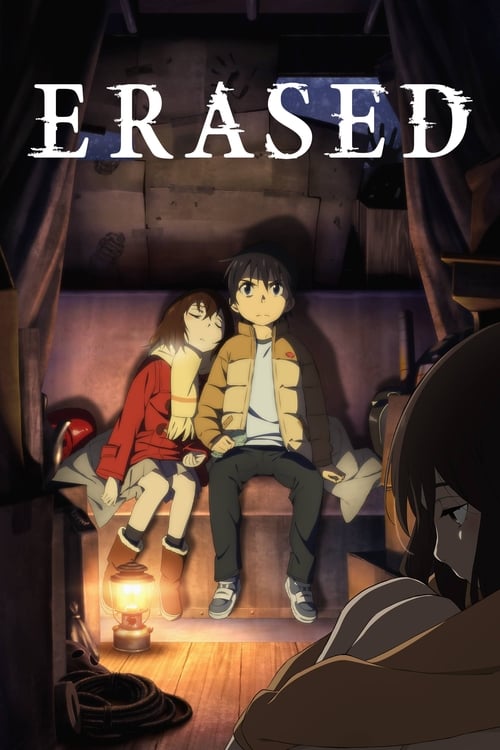
Satoru Fujinuma, a struggling manga artist in his 29th year, experiences a phenomenon he calls "Revival," which allows him to travel back in time to prevent life-threatening incidents. The story begins with Satoru's mundane life, where he works at a pizza delivery job. He often reflects on his childhood and the traumatic events that shaped him, particularly the abduction and murder of his classmate, Kayo Hinazuki, when he was a child.
One day, while delivering pizza, Satoru witnesses a man abducting a child. He instinctively uses his Revival ability to go back in time a few minutes to prevent the abduction. This incident triggers a series of events that lead him to question the nature of his ability and its implications. Shortly after, Satoru's mother, Sachiko, visits him, and they share a warm moment. However, this is cut short when Sachiko is murdered in their home by an unknown assailant.
Satoru, in shock and grief, is transported back to 1988, when he was a child of 10 years old. He realizes that he has a chance to prevent Kayo's death and possibly save his mother. He reconnects with his childhood friends, including Kayo, who is a quiet and withdrawn girl. Satoru's determination to protect Kayo grows as he learns more about her troubled home life and the abuse she suffers at the hands of her mother.
As Satoru navigates his childhood, he begins to gather clues about the potential kidnapper, a man named Gaku Yashiro, who is a teacher at his school. Satoru's interactions with Kayo become more significant as he tries to befriend her and encourage her to speak out about her situation. He also befriends other classmates, including Kenya, who is intelligent and perceptive, and they form a bond that helps Satoru in his quest.
Satoru's efforts to protect Kayo lead him to devise a plan to get her away from her abusive home. He encourages her to join him and their friends for a school trip, hoping to create a safe space for her. However, Kayo's mother becomes suspicious and tries to keep her from attending. Satoru's resolve strengthens as he confronts Kayo's mother, but he is met with resistance and hostility.
As the story progresses, Satoru learns more about the events leading up to Kayo's disappearance. He discovers that Gaku Yashiro has a history of being involved in the cases of missing children. Satoru's investigation leads him to uncover more about the other children who went missing around the same time as Kayo, deepening the mystery surrounding Yashiro.
In a pivotal moment, Satoru manages to convince Kayo to run away with him, and they plan to escape together. However, their plan is thwarted when Kayo's mother finds out and locks her in the house. Satoru, desperate to save her, breaks into Kayo's home, leading to a confrontation with her mother. In the chaos, Kayo manages to escape, but they are soon pursued by Yashiro, who has been watching them closely.
The climax of the story occurs when Satoru and Kayo confront Yashiro in a tense showdown. Satoru's determination to protect Kayo reaches its peak as he fights against Yashiro, who reveals his true nature as a predator. The confrontation is intense, with Satoru using all his strength and wits to protect Kayo. Ultimately, they manage to escape, but not without significant emotional and physical tolls.
After the confrontation, Satoru's actions lead to the police getting involved, and Kayo's situation is finally addressed. Yashiro is arrested, and Kayo is placed in a safe environment away from her mother. Satoru feels a sense of relief but is also haunted by the memories of his mother's murder and the unresolved issues surrounding it.
As the timeline shifts again, Satoru finds himself back in the present, where he has successfully changed the past. He is now a successful manga artist, and the trauma of his childhood has been addressed. However, he still grapples with the loss of his mother and the impact of the events he experienced. The story concludes with Satoru reflecting on his journey, the friendships he formed, and the lives he saved, while also acknowledging the scars that remain from his past.






What is the ending?
In the ending of the TV show "Erased," Satoru Fujinuma successfully prevents the murder of his classmate Kayo Hinazuki and confronts the true identity of the killer, Gaku Yashiro. After a tense confrontation, Satoru is able to save Kayo and her mother, ultimately leading to Yashiro's arrest. The story concludes with Satoru waking up in the present, having lived a full life, and reconnecting with Kayo, who has grown into a strong young woman.
As the final episodes of "Erased" unfold, Satoru Fujinuma finds himself in a race against time to prevent the tragic events of his childhood from repeating. The tension builds as he realizes that the killer, Gaku Yashiro, is not just a figure from his past but a looming threat in the present.
In a pivotal scene, Satoru, now a young adult, confronts Yashiro in a deserted area. The atmosphere is thick with suspense; the air feels charged as Satoru's heart pounds in his chest. He recalls the pain of losing Kayo and the other victims, fueling his determination. Yashiro, with his calm demeanor, taunts Satoru, revealing his manipulative nature. The confrontation escalates, and Satoru's emotions surge--fear, anger, and a desperate need to protect those he loves.
As the scene progresses, Satoru's resolve strengthens. He recalls the moments he shared with Kayo, the warmth of their friendship, and the innocence of their childhood. This memory becomes a driving force, pushing him to act decisively. In a climactic moment, Satoru manages to outsmart Yashiro, leading to a struggle that culminates in Yashiro's arrest. The police arrive just in time, and Satoru feels a wave of relief wash over him as he watches the man who caused so much pain being taken away.
With Yashiro apprehended, Satoru's world begins to shift. He wakes up in the present day, disoriented but filled with hope. The vibrant colors of the city around him contrast sharply with the dark memories of his past. He soon discovers that Kayo is alive and well, having grown into a resilient young woman. Their reunion is filled with unspoken emotions; Satoru feels a profound sense of gratitude and joy as he sees Kayo's strength.
In the final scenes, Satoru and Kayo share a heartfelt conversation, reflecting on their past and the bond that saved them both. Kayo expresses her gratitude for Satoru's efforts, and they both acknowledge the scars left by their experiences. The camera captures their smiles, a symbol of healing and hope for the future.
As the series concludes, Satoru's journey comes full circle. He has not only saved Kayo but has also found a sense of purpose and belonging. The fate of each main character is resolved: Satoru is free from the burdens of his past, Kayo has overcome her trauma, and Yashiro is brought to justice, ensuring that he can no longer harm anyone. The story ends on a note of optimism, emphasizing the power of friendship, resilience, and the possibility of redemption.
Is there a post-credit scene?
In the 2016 anime series "ERASED," there is no post-credit scene. The series concludes with a powerful and emotional finale that wraps up the main storyline. The final episode focuses on Satoru Fujinuma's confrontation with the antagonist and the resolution of the events that have unfolded throughout the series. The absence of a post-credit scene allows the audience to reflect on the themes of redemption, the impact of choices, and the importance of relationships that have been central to Satoru's journey. The ending leaves viewers with a sense of closure regarding Satoru's character development and the fates of those around him, emphasizing the emotional weight of the narrative rather than introducing additional content after the credits.
What is Satoru's ability and how does it affect the story?
Satoru Fujinuma possesses a unique ability known as 'Revival,' which allows him to travel back in time to prevent tragic events from occurring. This ability is triggered by moments of extreme danger or distress. Throughout the series, Satoru uses this power to go back to his childhood, specifically to the year 1988, in an attempt to prevent the kidnapping and murder of his classmate, Kayo Hinazuki, as well as to uncover the identity of the true killer. His internal motivation is driven by guilt and a desire to protect those he cares about, leading him to confront his past and the events that shaped his life.
How does Satoru's relationship with Kayo evolve throughout the series?
Initially, Satoru is a passive observer of Kayo's struggles, as she is bullied and neglected by her family. However, as he travels back in time, he becomes more actively involved in her life, seeking to befriend her and protect her from the fate that awaits her. Their relationship deepens as Satoru learns about Kayo's traumatic experiences, and he becomes determined to save her. He encourages her to express herself and helps her find a sense of belonging, which ultimately leads to a poignant bond between them. Satoru's emotional investment in Kayo's well-being drives much of the narrative, showcasing his growth from a bystander to a protector.
What role does Satoru's mother, Sachiko, play in the story?
Sachiko Fujinuma is a pivotal character in Satoru's life, serving as both a source of support and a catalyst for his actions. In the present timeline, she is a caring and perceptive mother who encourages Satoru's artistic talents. However, her tragic fate becomes a significant motivator for Satoru's time travel. When she is murdered, Satoru's revival ability activates, sending him back to his childhood. Throughout the series, her influence is felt as Satoru reflects on her teachings and the love she provided. Her character embodies the themes of familial bonds and sacrifice, and her death propels Satoru into a desperate quest to change the past.
What is the significance of the character Airi Katagiri in Satoru's journey?
Airi Katagiri is a co-worker of Satoru in the present timeline and plays a crucial role in his life, particularly after he is accused of his mother's murder. Airi's unwavering belief in Satoru's innocence and her determination to help him showcases her loyalty and compassion. As Satoru navigates the complexities of his time travel and the dangers that arise, Airi becomes a vital ally, providing emotional support and practical assistance. Her character represents the theme of friendship and trust, as she stands by Satoru even when the situation seems dire. Airi's involvement highlights the importance of connections in overcoming adversity.
How does the character of Gaku Yashiro impact the story's tension and conflict?
Gaku Yashiro is introduced as a seemingly kind and supportive teacher, but he is later revealed to be the antagonist responsible for the crimes Satoru is trying to prevent. His duality creates a significant tension in the narrative, as Satoru initially trusts him, believing he is a protector of the children. As Satoru uncovers the truth about Yashiro's manipulative nature and his connection to the events surrounding Kayo's disappearance, the stakes escalate. Yashiro's cunning and intelligence pose a formidable challenge for Satoru, leading to intense confrontations that test Satoru's resolve and resourcefulness. The psychological cat-and-mouse dynamic between Satoru and Yashiro heightens the suspense and drives the plot forward.
Is this family friendly?
"ERASED," produced in 2016, is a psychological thriller that contains several elements that may not be suitable for children or sensitive viewers. Here are some potentially objectionable or upsetting aspects:
-
Violence and Threats: The show includes scenes of violence, including physical confrontations and threats that can be intense and distressing.
-
Murder and Kidnapping: The central plot revolves around a series of murders and a kidnapping, which are depicted in a way that may be unsettling for younger audiences.
-
Emotional Trauma: Characters experience significant emotional trauma, including loss, grief, and the impact of past events, which can be heavy and difficult to process.
-
Dark Themes: The narrative explores themes of abuse, neglect, and the consequences of trauma, which may be too mature for younger viewers.
-
Suspenseful and Tense Atmosphere: The overall tone of the series is suspenseful and can create a sense of anxiety, which might be overwhelming for sensitive individuals.
These elements contribute to a narrative that, while compelling, may not be appropriate for all audiences, particularly children.









