






















Popular
What are the abilities of Ajin and how do they differ from regular humans?
What motivates Kei Nagai to embrace his identity as an Ajin?
How does the relationship between Kei Nagai and Kaito confront the theme of friendship?
What role does Sato play in the story and how does he challenge Kei?
How does the government’s treatment of Ajin reflect societal fears and prejudices?
Should I watch it?
Ask Your Own Question

What is the plot?
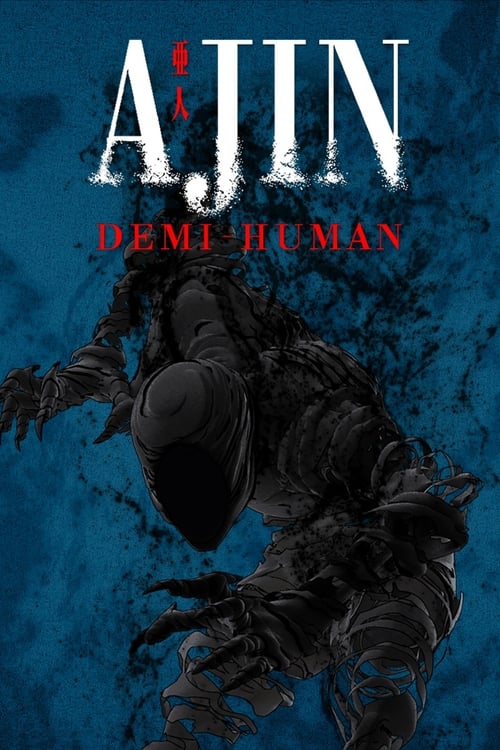
The story begins with Kei Nagai, a high school student in Japan, who is hit by a truck while trying to cross the street. Instead of dying, he miraculously regenerates, revealing himself to be an Ajin, a rare type of immortal being. This event is witnessed by his friend, Kaito, who is horrified and runs away. Kei, confused and frightened by his newfound abilities, tries to understand what has happened to him.
After the accident, Kei learns about Ajin from news reports. He discovers that Ajin are hunted by the government and treated as dangerous entities. The public views them with fear and disdain, leading to a life of persecution. Kei's internal struggle intensifies as he grapples with his identity and the implications of being an Ajin. He decides to go on the run, fearing for his life and the consequences of being captured.
Kei's first encounter with the authorities occurs when he is apprehended by a group of Ajin hunters led by a man named Tosaki. They attempt to capture him, but Kei manages to escape using his Ajin abilities, which include creating a black, shadowy creature known as a "Demi-Human." This creature serves as a manifestation of his Ajin powers and can be used for combat and protection. Kei's escape marks the beginning of his life as a fugitive.
As Kei navigates his new reality, he meets other Ajin, including Sato, a ruthless and cunning Ajin who has a plan to overthrow the government. Sato's motivations are driven by a desire for freedom and revenge against those who oppress Ajin. He recruits Kei, who is initially hesitant but eventually sees the potential in aligning with Sato's cause. This decision leads Kei deeper into the world of Ajin conflict and rebellion.
Kei's relationship with Kaito becomes strained as Kaito struggles to understand Kei's transformation and the choices he has made. Kaito is determined to help Kei, but he is also conflicted about the dangers that come with being associated with an Ajin. Their friendship is tested as Kei becomes more involved in Sato's plans, leading to a rift between them.
Sato's plan involves a series of violent attacks against the government, showcasing his brutal tactics and willingness to sacrifice others for his goals. Kei witnesses the chaos and destruction caused by Sato's actions, which forces him to confront the moral implications of their alliance. He begins to question whether he can support Sato's methods or if he should find a way to stop him.
As the conflict escalates, Kei's internal struggle intensifies. He grapples with his identity as an Ajin and the responsibilities that come with his powers. He is torn between his desire for freedom and the ethical dilemmas posed by Sato's violent approach. This conflict culminates in a pivotal moment where Kei must choose between siding with Sato or taking a stand against him.
In a climactic confrontation, Kei and Sato face off against each other. The battle is intense, with both using their Ajin abilities to their fullest extent. Kei's Demi-Human fights fiercely, but Sato's experience and ruthlessness make him a formidable opponent. The fight showcases the emotional stakes for both characters, as Kei fights not only for his life but also for his beliefs.
Ultimately, Kei manages to outsmart Sato, using his intelligence and strategic thinking to gain the upper hand. He realizes that he cannot condone Sato's methods and decides to take a different path. This decision marks a significant turning point for Kei, as he embraces his identity as an Ajin while also committing to a more ethical approach to his powers.
The series concludes with Kei's journey of self-discovery and acceptance. He learns to navigate the complexities of being an Ajin in a world that fears him, forging a new path that balances his abilities with his moral compass. The final scenes depict Kei's resolve to fight for a better future for Ajin, setting the stage for potential further conflicts and developments in the ongoing struggle for acceptance and understanding.





What is the ending?
In the ending of the TV show "Ajin," Kei Nagai confronts the realities of being an Ajin and the moral complexities surrounding their existence. After a series of intense confrontations, he ultimately decides to fight against the oppressive forces that seek to exploit Ajin. The series concludes with Kei embracing his identity and the potential for change, while other characters face their own fates, including betrayal, sacrifice, and the harsh consequences of their choices.
As the final episodes unfold, the tension escalates dramatically. The scene opens with Kei Nagai, now fully aware of his status as an Ajin, grappling with the implications of his powers. He stands in a desolate area, reflecting on the chaos that has ensued since his revelation. The weight of his decisions presses heavily on him, and he feels the isolation that comes with being hunted.
In the next scene, we see the government's forces, led by the ruthless Satou, preparing for a final confrontation. Satou, a powerful Ajin with a twisted sense of purpose, has been orchestrating a series of violent events to assert dominance over both Ajin and humans. His motivations are clear: he seeks to create a world where Ajin are free from oppression, but his methods are brutal and unforgiving.
Kei, alongside his ally, Kaito, strategizes on how to confront Satou. Kaito, who has been a steadfast friend, is determined to help Kei navigate this treacherous landscape. Their bond is palpable, filled with a mix of camaraderie and the looming threat of betrayal. As they prepare for the inevitable clash, Kei's internal struggle becomes evident; he is torn between his desire for freedom and the fear of becoming like Satou.
The scene shifts to a dark, abandoned facility where Satou has gathered his followers. The atmosphere is tense, filled with the anticipation of violence. Satou delivers a chilling monologue about the future he envisions for Ajin, showcasing his charisma and the dangerous allure of his ideology. His followers, a mix of disillusioned Ajin and humans, hang on his every word, illustrating the deep-seated divisions in society.
As the confrontation begins, Kei and Kaito launch their attack. The animation captures the frenetic energy of the battle, with Kei summoning his black ghost, a manifestation of his Ajin powers. The ghost, a shadowy figure, moves with fluidity and ferocity, reflecting Kei's determination to protect those he cares about. The fight is brutal, showcasing the raw power of Ajin abilities and the desperation of the human forces trying to subdue them.
In a pivotal moment, Kaito sacrifices himself to save Kei, pushing him out of harm's way as Satou unleashes a devastating attack. The emotional weight of this sacrifice hits Kei hard, and he is momentarily paralyzed by grief. Kaito's last words resonate with him, urging Kei to fight for a better future. This moment crystallizes Kei's resolve; he can no longer stand idly by.
Fueled by anger and sorrow, Kei confronts Satou directly. The battle escalates, with both Ajin unleashing their full powers. The animation vividly depicts the clash of their abilities, with explosions and shockwaves rippling through the environment. Kei's internal conflict is mirrored in the chaos around him; he is fighting not just for survival, but for the ideals that Kaito represented.
As the fight reaches its climax, Kei manages to outsmart Satou, using his intelligence and agility to gain the upper hand. In a final, desperate move, he traps Satou, showcasing the evolution of his character from a frightened boy to a determined fighter. The scene is charged with emotion, as Kei realizes the cost of his victory--he has lost a friend and must now carry the burden of leadership.
In the aftermath, the series concludes with Kei standing amidst the ruins of the battle, reflecting on the choices he has made. The government begins to reassess its stance on Ajin, hinting at a potential shift in societal attitudes. Kei's journey is far from over, but he has embraced his identity as an Ajin, ready to fight for a future where both humans and Ajin can coexist.
The fates of the main characters are starkly defined: Kei emerges as a reluctant leader, burdened yet hopeful; Kaito's sacrifice serves as a catalyst for change; and Satou, despite his ambitions, is ultimately defeated, illustrating the dangers of extremism. The series closes on a note of uncertainty, leaving viewers to ponder the complexities of identity, morality, and the potential for redemption in a fractured world.
Is there a post-credit scene?
In the 2016 anime series "Ajin," there is no post-credit scene following the final episode. The series concludes without any additional content after the credits, leaving the story at a pivotal moment. The final episode wraps up the intense conflict between the main characters, particularly focusing on Kei Nagai and his struggles as an Ajin, while also highlighting the broader implications of Ajin existence in society. The absence of a post-credit scene means that viewers are left to reflect on the themes of identity, humanity, and the moral dilemmas surrounding the treatment of Ajin without any further narrative closure or hints at future developments.
What are the abilities of Ajin and how do they differ from regular humans?
Ajin are immortal beings who can regenerate from any injury, making them effectively unkillable. They possess the ability to summon a black phantom, a shadowy entity that can be used for combat and protection. This phantom can interact with the physical world, allowing Ajin to use it as a weapon or a shield. The more experienced an Ajin becomes, the more powerful their phantom can be, showcasing a range of abilities from enhanced strength to the ability to phase through objects.
What motivates Kei Nagai to embrace his identity as an Ajin?
Initially, Kei Nagai is terrified of being discovered as an Ajin after he survives a fatal accident. His motivation shifts when he realizes the potential of his abilities and the freedom they offer. As he grapples with his fear and the societal stigma against Ajin, he becomes increasingly determined to understand his powers and use them to protect himself and others, leading him to confront the government and those who seek to exploit Ajin.
How does the relationship between Kei Nagai and Kaito confront the theme of friendship?
Kaito is one of the few people who stands by Kei after he reveals his identity as an Ajin. Their friendship is tested as Kaito struggles with the implications of Kei's immortality and the dangers that come with it. Kaito's unwavering support highlights the theme of loyalty, as he risks his own safety to help Kei navigate the treacherous world of Ajin hunters and government experiments, ultimately showcasing the strength of their bond amidst adversity.
What role does Sato play in the story and how does he challenge Kei?
Sato is a powerful and ruthless Ajin who becomes one of Kei's primary antagonists. His motivations are driven by a desire for freedom and a belief that Ajin should dominate humanity. Sato's actions, including orchestrating violent attacks and manipulating other Ajin, force Kei to confront the darker aspects of his own identity. Sato's relentless pursuit of power and his willingness to sacrifice others challenge Kei's moral compass and push him to evolve as a character.
How does the government’s treatment of Ajin reflect societal fears and prejudices?
The government views Ajin as threats to national security, leading to their capture and experimentation. This treatment reflects societal fears of the unknown and the prejudices against those who are different. The brutal methods employed by the government to control Ajin, including lethal force and inhumane testing, serve as a commentary on how society often reacts to those it does not understand, creating a climate of fear and hostility that Kei and other Ajin must navigate.
Is this family friendly?
"Ajin," produced in 2016, is not considered family-friendly due to its mature themes and graphic content. Here are some potentially objectionable or upsetting aspects that may affect children or sensitive viewers:
-
Violence and Gore: The series features intense scenes of violence, including graphic depictions of injuries and death. Characters often engage in brutal confrontations, and the aftermath can be quite graphic.
-
Death and Resurrection: The concept of Ajin being immortal leads to scenes where characters die repeatedly, which can be disturbing. The process of dying and the emotional toll it takes on characters is explored in a visceral manner.
-
Psychological Trauma: Characters experience significant psychological distress, including fear, betrayal, and existential dread. The emotional struggles of the protagonists can be heavy and unsettling.
-
Moral Ambiguity: The series delves into complex moral dilemmas, including the treatment of Ajin as subhuman and the ethical implications of their immortality. This can provoke uncomfortable questions about humanity and ethics.
-
Government and Military Violence: The portrayal of government forces and their ruthless tactics against Ajin can be intense, showcasing themes of oppression and dehumanization.
-
Dark Themes: The overarching themes of survival, fear of persecution, and the struggle for identity can be quite dark and may not be suitable for younger audiences.
Overall, "Ajin" contains elements that may be distressing for children and sensitive viewers, making it more appropriate for a mature audience.