






















Popular
What are the abilities of Ajin and how do they differ from regular humans?
How does Kei Nagai's character develop throughout the season?
What role does Sato play in the story and what are his motivations?
How does the government respond to the existence of Ajin and what measures do they take?
What is the significance of the relationship between Kei and his friend Kaito?
Should I watch it?
Ask Your Own Question

What is the plot?
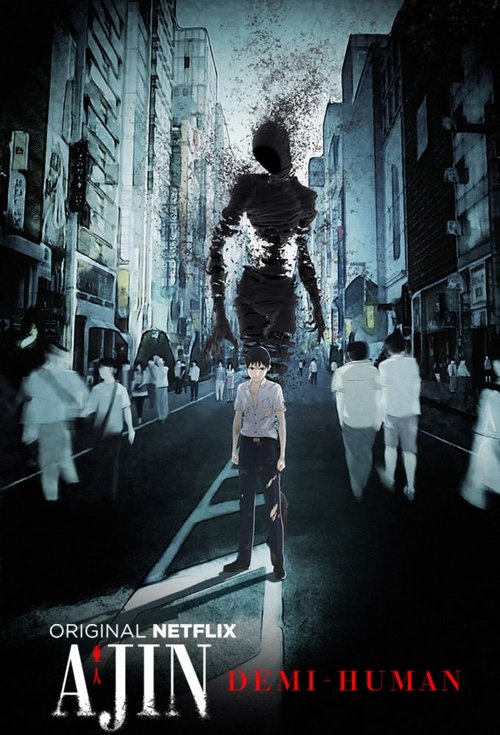
The story begins with a high school student named Kei Nagai, who is a typical teenager focused on his studies and his future. One day, while walking home from school, he is struck by a truck. Instead of dying, Kei miraculously survives the accident, which is the first indication that he is an Ajin, a rare type of immortal being. This revelation is shocking to him, as he is unaware of his true nature.
After the accident, Kei is taken to a hospital where he is examined. During this time, the authorities are alerted to his status as an Ajin. The government has a strict policy regarding Ajin, viewing them as dangerous and capturing them for experimentation. Kei learns about the existence of Ajin through news reports and conversations with others, realizing that he is now a target.
Fearing for his life, Kei escapes from the hospital. He is pursued by government agents, and in a tense sequence, he uses his newfound abilities to evade capture. He discovers that he can summon a black, shadowy creature known as a "Black Ghost," which aids him in his escape. This creature is a manifestation of his Ajin powers, and it becomes a crucial part of his survival strategy.
As Kei navigates his new reality, he encounters other Ajin, including a man named Sato, who is more experienced and has a sinister agenda. Sato is a ruthless individual who revels in the chaos that comes with being an Ajin. He seeks to recruit Kei to join him in his fight against humanity, believing that Ajin should rise up against their oppressors. Kei is conflicted; he is terrified of Sato's violent methods but also intrigued by the idea of fighting back.
Kei's internal struggle intensifies as he grapples with his identity and the implications of being an Ajin. He is haunted by the fear of being captured and experimented on, which drives him to make decisions that prioritize his survival. He begins to form a plan to escape the government's clutches and find a way to live freely.
Meanwhile, Kei's friend, Kaito, becomes involved in the situation. Kaito is loyal and determined to help Kei, even as the danger escalates. He tries to understand what Kei is going through and offers his support, but he is also put at risk due to his association with Kei. Their friendship is tested as they face the harsh realities of Kei's new life.
As the government intensifies its efforts to capture Ajin, Kei learns about a group of Ajin who are fighting back against the authorities. He decides to seek them out, hoping to find allies who can help him navigate this dangerous world. This leads him to a confrontation with Sato, who is already plotting a violent uprising against the government.
In a pivotal moment, Sato orchestrates a brutal attack on a government facility, showcasing his power and the lengths he is willing to go to achieve his goals. Kei witnesses the chaos and destruction, which further complicates his feelings about Sato and the Ajin cause. He realizes that while Sato's methods are extreme, the fear and oppression faced by Ajin are very real.
As the season progresses, Kei's character evolves. He becomes more assertive and begins to embrace his identity as an Ajin. He learns to control his powers better and uses them strategically to protect himself and those he cares about. However, he remains haunted by the moral implications of his actions and the potential for violence that comes with being an Ajin.
The climax of the season builds as Kei and Sato's paths inevitably collide. Sato's plans escalate, leading to a final confrontation where Kei must decide whether to align with Sato or stand against him. The stakes are high, and Kei's choices will determine not only his fate but also the future of all Ajin.
In the final moments of the season, Kei faces a critical decision that will shape his journey moving forward. He must confront the reality of his powers, the dangers of his existence, and the relationships he has forged along the way. The season ends on a cliffhanger, leaving viewers eager to see how Kei will navigate the complexities of being an Ajin in a world that fears and hunts them.




What is the ending?
In the ending of "Ajin" Season 1, Kei Nagai confronts the reality of being an Ajin and the implications of his immortality. After a series of intense confrontations with both the government and other Ajin, he ultimately decides to take a stand against the oppressive forces that seek to control or eliminate Ajin. The season concludes with Kei's determination to fight for the rights of Ajin, setting the stage for future conflicts.
As the final episodes unfold, the tension escalates dramatically. The scene opens with Kei Nagai, now fully aware of his identity as an Ajin, grappling with the weight of his newfound abilities. He is haunted by the knowledge that he is being hunted by the government, which views Ajin as a threat. The emotional turmoil within him is palpable; he feels isolated, betrayed by society, and fearful of what lies ahead.
In a pivotal moment, Kei is cornered by the government forces led by the ruthless officer, Tosaki. The atmosphere is thick with dread as Kei, alongside his ally, the enigmatic Ajin Sato, prepares for a confrontation. Sato, with his own agenda, is a wild card in this scenario, and his motivations are shrouded in mystery. The tension between Kei and Sato is electric, as Kei struggles to trust someone who embodies the very chaos he fears.
The scene shifts to a high-stakes showdown. Kei, using his Ajin abilities, manages to evade capture, showcasing his agility and strategic thinking. The animation captures the fluidity of his movements, emphasizing his desperation and determination. As he escapes, the viewer can feel his internal conflict; he is torn between survival and the moral implications of his powers.
Meanwhile, Sato's actions become increasingly violent and unpredictable. He orchestrates a series of attacks against the government, revealing his belief that Ajin should rise against their oppressors. This creates a stark contrast between Kei's desire for peace and Sato's thirst for vengeance. The emotional stakes are raised as Kei witnesses the collateral damage of Sato's actions, further complicating his feelings about his own identity.
In the climax, Kei is faced with a choice: to align with Sato and embrace the chaos or to forge his own path. The scene is charged with tension as Kei ultimately decides to reject Sato's ideology. This moment is a turning point for him, symbolizing his growth and the acceptance of his role as an Ajin. The animation captures the intensity of his decision, with close-ups of his determined expression.
As the season draws to a close, Kei's fate is left uncertain. He stands at a crossroads, embodying the struggle of all Ajin who seek acceptance in a world that fears them. The final scenes depict Kei looking out over a city that is both familiar and alien to him, a visual metaphor for his internal conflict. The weight of his choices hangs heavy in the air, and the viewer is left with a sense of anticipation for what lies ahead.
In contrast, Sato's fate is sealed in violence. His relentless pursuit of power and revenge leads to a confrontation with the authorities, where he is ultimately cornered. The final moments of his storyline are marked by chaos, leaving his future ambiguous but hinting at the potential for further conflict.
The season concludes with a powerful message about identity, choice, and the struggle for acceptance. Kei's journey is just beginning, and the viewer is left to ponder the implications of his decisions and the fate of all Ajin in a world that refuses to understand them.
Is there a post-credit scene?
In "Ajin" Season 1, there is no post-credit scene. The episodes conclude without any additional content after the credits roll. The focus remains on the main storyline and character development throughout the season, with each episode wrapping up its narrative without extending into a post-credit sequence. The series primarily centers on the struggles of the protagonist, Kei Nagai, as he navigates the challenges of being an Ajin, a being with the ability to regenerate and is hunted by society.
What are the abilities of Ajin and how do they differ from regular humans?
Ajin are humans who possess the ability to regenerate from fatal injuries, making them effectively immortal. This regeneration is accompanied by the manifestation of a black, shadowy entity known as a 'Black Ghost' that can assist them in combat and other situations. The Black Ghost can also be used to create a protective barrier or to attack opponents, showcasing the unique powers that set Ajin apart from regular humans.
How does Kei Nagai's character develop throughout the season?
Kei Nagai starts as a seemingly ordinary high school student who is initially indifferent to the world around him. After discovering he is an Ajin following a fatal accident, he becomes increasingly isolated and paranoid, grappling with the fear of being hunted by the government and society. His character evolves from a passive individual to someone who actively seeks to understand his powers and navigate the dangerous world of Ajin, leading to moments of moral conflict and self-discovery.
What role does Sato play in the story and what are his motivations?
Sato is introduced as a highly intelligent and ruthless Ajin who becomes a significant antagonist in the series. His motivations are driven by a desire for freedom and a disdain for humanity, believing that Ajin should rise against their oppressors. Sato's character is marked by his strategic thinking and willingness to use violence to achieve his goals, making him a formidable opponent for Kei and others. His actions challenge the moral boundaries of the Ajin and force Kei to confront the darker aspects of his own identity.
How does the government respond to the existence of Ajin and what measures do they take?
The government views Ajin as a threat to society and implements extreme measures to capture and contain them. This includes the establishment of special task forces, the use of lethal force, and the development of technology specifically designed to subdue Ajin. The government's response is characterized by fear and paranoia, leading to public campaigns that demonize Ajin, further complicating the lives of those like Kei who are trying to navigate their new reality.
What is the significance of the relationship between Kei and his friend Kaito?
The relationship between Kei and Kaito serves as a crucial emotional anchor in the series. Kaito represents a connection to Kei's past life and humanity, often trying to support him despite the dangers of being associated with an Ajin. Their friendship is tested as Kei's circumstances change, highlighting themes of loyalty, sacrifice, and the struggle to maintain personal connections in a world that views Ajin as monsters. Kaito's unwavering support contrasts with the fear and betrayal Kei faces from others, deepening the emotional stakes of the narrative.
Is this family friendly?
"Ajin" is not considered family-friendly due to its mature themes and graphic content. Here are some potentially objectionable or upsetting aspects that may affect children or sensitive viewers:
-
Violence and Gore: The series features intense scenes of violence, including graphic depictions of injuries and death. Characters are often shown being harmed or killed in brutal ways.
-
Death and Resurrection: The concept of Ajin involves characters who cannot die, leading to scenes where they are repeatedly killed and resurrected, which can be disturbing.
-
Psychological Trauma: Characters experience significant psychological distress, including fear, paranoia, and trauma from their experiences, which may be unsettling.
-
Moral Ambiguity: The show explores complex moral dilemmas, including the treatment of Ajin as subhuman, which can provoke uncomfortable discussions about ethics and humanity.
-
Dark Themes: The narrative delves into themes of discrimination, exploitation, and the struggle for survival, which may be heavy for younger audiences.
Overall, the series contains elements that are more suitable for mature viewers due to its graphic nature and thematic depth.